

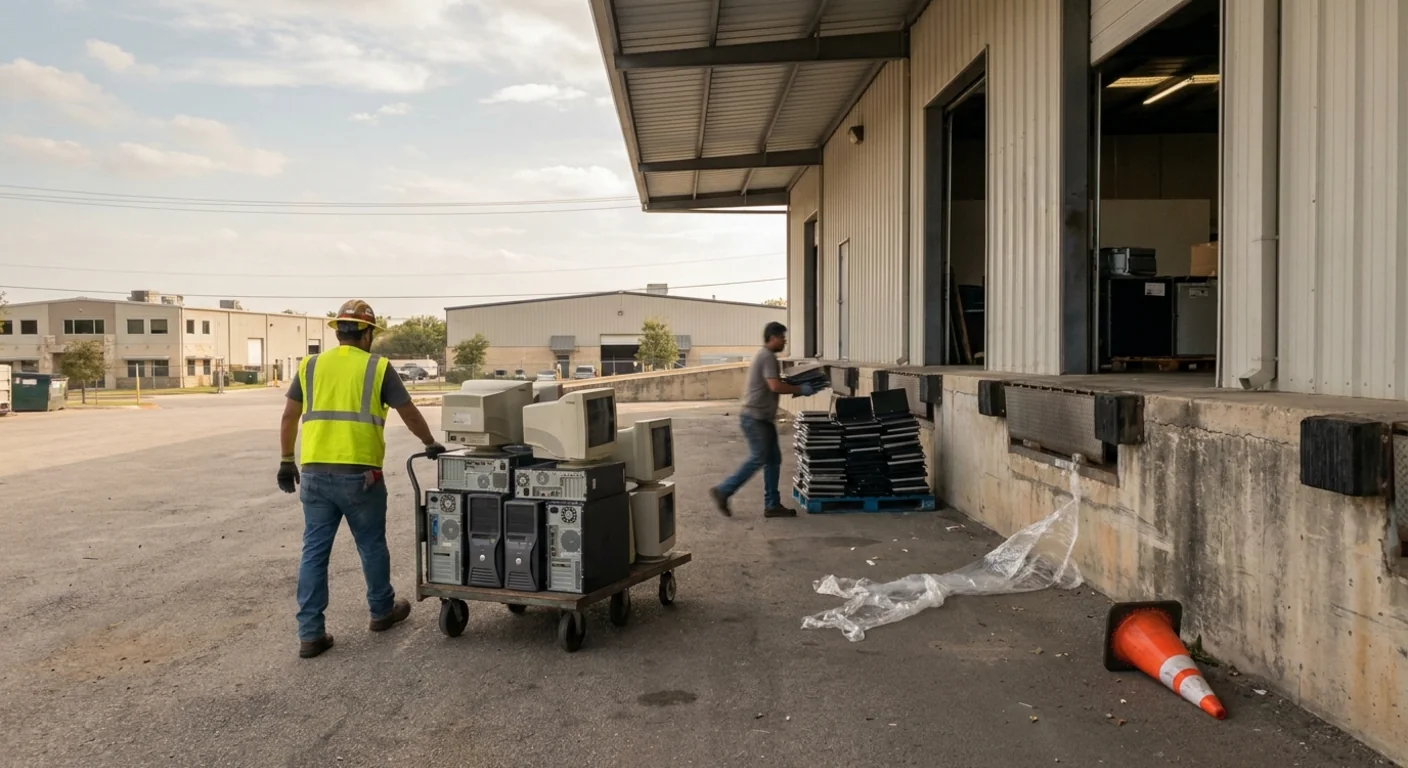
Electronic waste, or e-waste, represents one of the fastest-growing waste streams in the United States. In Illinois, state law prohibits the landfilling of most electronic devices, making proper recycling not just an environmental choice but a legal requirement. Chicago Shredder helps residential customers and businesses across the Chicago metro area navigate these requirements while supporting sustainability goals.
1. Understanding E-Waste and Illinois Regulations
Electronic waste includes any device with a circuit board, battery, or electronic component. This encompasses computers, monitors, televisions, printers, smartphones, tablets, servers, networking equipment, and small appliances. The Illinois Electronic Products Recycling and Reuse Act prohibits residents and businesses from disposing of covered electronic devices in landfills or incinerators.
The law covers computer equipment, monitors, televisions, printers, electronic keyboards, facsimile machines, videocassette recorders, portable digital music players, digital video disc players, video game consoles, electronic mice, scanners, digital converter boxes, cable receivers, satellite receivers, digital video disc recorders, and small-scale servers. Violations can result in fines for businesses and property owners.
This legislation reflects growing recognition that electronics contain both valuable materials worth recovering and hazardous substances requiring careful handling. Circuit boards contain precious metals like gold, silver, and palladium. Screens may contain lead or mercury. Batteries pose fire risks in standard waste streams. Proper recycling channels these materials toward reuse or safe disposal while keeping toxins out of groundwater and soil.
For Chicago area residents and businesses, compliance means partnering with recycling providers who document the handling chain. Industry studies suggest that only 25-40% of electronics are currently recycled through proper channels, with the remainder entering landfills illegally, being exported improperly, or sitting unused in storage.
2. What Electronics Can Be Recycled
Chicago Shredder accepts virtually all electronic devices from both residential and commercial sources. Computer equipment includes desktops, laptops, tablets, all-in-one units, servers, mainframes, and thin clients. Peripherals such as keyboards, mice, cables, power supplies, hard drives, and external storage devices are accepted. Monitors of all types, including CRT, LCD, LED, and plasma displays, are processed regardless of size or condition.
Networking and telecommunications equipment encompasses routers, switches, modems, phones, fax machines, PBX systems, and telecommunication infrastructure. Office equipment includes printers, copiers, scanners, plotters, and multifunction devices. Consumer electronics such as televisions, gaming consoles, DVD and Blu-ray players, stereo systems, and small household electronics are accepted.
Data-bearing devices require special attention. Hard drives, solid-state drives, backup tapes, USB drives, smartphones, and tablets containing sensitive information can be destroyed on-site at the Addison, Illinois facility. The location features an industrial hard drive crusher that physically deforms platters and circuitry, rendering data designed to be unrecoverable without specialized forensic intervention.
Some items require special handling or have restrictions. Batteries are accepted but may be processed separately depending on chemistry. Appliances with refrigerants need qualified technicians to remove coolants before recycling. Chicago Shredder staff can evaluate specific items during the scheduling process to ensure proper preparation.
3. More to Consider
This secure process requires documented tracking of all materials from intake through final disposition. This includes maintaining chain-of-custody records, using only vetted downstream processors, and preventing improper export of hazardous materials to developing nations. The standard addresses worker safety during disassembly, proper handling of hazardous components, and environmental controls for processing areas.
This framework is designed to support compliance requirements for organizations subject to HIPAA, GLBA, SOX, FERPA, and other regulations governing data protection.
This independent oversight provides assurance that electronics are handled responsibly throughout the recycling chain.
4. Residential Versus Business Recycling Options
Chicago Shredder serves both residential customers and commercial organizations, with services tailored to each sector's needs. Residential recycling focuses on convenient drop-off or pickup options for household electronics. Homeowners can schedule pickups for larger loads or ongoing cleanouts, particularly useful when downsizing, moving, or clearing storage areas. Volume requirements are flexible, accommodating everything from a single old computer to an entire home office setup.
Business recycling addresses enterprise-scale needs with higher volume capacity, regular pickup schedules, and documentation for compliance and sustainability reporting. Organizations refreshing computer fleets, closing facilities, or upgrading technology infrastructure often require coordinated logistics to minimize disruption. Chicago Shredder can schedule pickups around business hours, coordinate with building management for loading dock access, and provide appropriate equipment for large volumes.
Certificates of recycling are available for business customers who need documentation for environmental audits, sustainability reports, corporate social responsibility initiatives, or regulatory compliance. These certificates detail the types and approximate weights of materials recycled, the processing methods used, and confirmation that items were handled through processing channels. Organizations tracking Scope 3 emissions or participating in sustainability frameworks like LEED often use these certificates as supporting documentation.
Data destruction services are particularly relevant for business customers. Companies retiring equipment with customer records, financial data, employee information, or proprietary business intelligence require verified destruction to meet legal and contractual obligations. On-site crushing at the Addison facility provides physical destruction, while data wiping services following NIST SP 800-88 guidelines can be arranged for devices being refurbished rather than recycled.
5. Pickup Logistics Across the Chicago Metro Area
Chicago Shredder provides pickup services throughout the Chicago metropolitan area, including the city proper and surrounding suburbs. Service areas extend through Cook County, DuPont County, Lake County, Will County, and Kane County, covering communities from downtown Chicago to outlying suburbs in all directions. The Addison facility's central location enables efficient routing across the region.
Scheduling a pickup begins with contacting Chicago Shredder at 866-770-2650 to describe the volume and types of electronics for collection. Staff typically respond within one business day to confirm service availability, discuss any special requirements, and provide scheduling options. Customers receive advance notice of the pickup window, usually a several-hour range to accommodate route logistics.
Preparation requirements are minimal but important. Electronics should be accessible for loading, whether from a curb, loading dock, or designated staging area. Extremely fragile items like CRT monitors benefit from protective packaging during transport. Data-bearing devices should be identified if destruction documentation is required. Businesses may need to coordinate with building management for loading dock access or freight elevator reservations.
Larger commercial pickups may utilize different equipment depending on volume. Gaylord boxes or pallets work well for organized loads, while loose loading is acceptable for smaller volumes. Chicago Shredder provides appropriate vehicles and staff for the load size, from vans for residential pickups to larger trucks for commercial office cleanouts. Repeat customers can establish regular pickup schedules, whether quarterly, semi-annually, or based on accumulation rates.
Weather, traffic, and seasonal factors occasionally affect scheduling. Late fall through early spring can see increased residential volume as people undertake year-end cleanouts or post-holiday decluttering. Business customers often coordinate recycling with lease renewals, typically concentrated in certain months. Planning ahead helps ensure preferred timing, particularly for organizations with specific deadline requirements.
6. Environmental and Economic Benefits of Proper Electronics Recycling
Recycling electronics through processing channels provides measurable environmental benefits. Industry studies suggest that recycling one million laptops saves the energy equivalent of electricity used by 3,500 homes annually. Recovered metals reduce the need for mining virgin materials, an energy-intensive process with significant environmental impact. Proper handling of hazardous components prevents soil and water contamination that can persist for decades.
Materials recovery represents significant value. A typical computer contains small amounts of gold, silver, copper, and palladium along with aluminum, steel, and plastics. While individual devices contain trace amounts, aggregate volumes become substantial. Circuit boards yield precious metals through specialized refining. Aluminum and steel are remelted for manufacturing. Plastics are sorted by resin type and reprocessed. Glass from monitors enters new products or construction materials.
The economic dimension extends beyond materials value. Electronics recycling supports local employment in collection, processing, refining, and logistics. Illinois has built infrastructure around sustainable recycling, creating jobs that did not exist two decades ago. This regional capacity reduces transportation distances compared to out-of-state processing, lowering both costs and carbon footprints.
For businesses, proper electronics recycling mitigates liability risks associated with improper disposal. Organizations face potential fines for violating Illinois electronic waste laws. Data breaches resulting from inadequate device sanitization carry regulatory penalties and reputational damage. Environmental violations can affect permits, insurance rates, and investor relations. Documented recycling through processors provides defensible evidence of compliance and due diligence.
7. How to Schedule Your Electronics Recycling
Getting started with Chicago Shredder is straightforward. Contact 866-770-2650 to speak with a representative who can assess your needs and explain available options. Be prepared to describe the types and approximate quantities of electronics for recycling. Mention any data-bearing devices requiring destruction documentation, as this affects scheduling and processing.
For residential customers, the conversation typically covers whether drop-off or pickup makes more sense based on volume and convenience. Small loads might be suited for drop-off if accessible, while larger volumes or items like CRT televisions benefit from pickup service. Representatives explain any applicable fees based on item types and service level.
Business customers should discuss their specific requirements during initial contact. This includes volume estimates, preferred scheduling windows, loading dock specifications, any security protocols for device removal, and documentation needs for compliance or reporting. Chicago Shredder can accommodate special requests such as supervised loading, itemized inventories, or witnessed destruction for particularly sensitive equipment.
Once scheduling is confirmed, customers receive pickup details including date range, arrival window, and any preparation instructions. A reminder call typically occurs the day before service. On pickup day, drivers arrive during the scheduled window, load materials efficiently, and provide any requested documentation. Certificates of recycling are generated after processing and delivered electronically or by mail based on customer preference.
Ongoing relationships can be established for organizations with regular recycling needs. This might include quarterly pickups, annual refreshes coinciding with technology replacement cycles, or on-call service as volumes accumulate. Regular customers benefit from streamlined scheduling and familiarity with specific site requirements.
8. Frequently Asked Questions
Is electronics recycling free in Illinois?
Pricing varies based on item types and service level. Some electronics are recycled at no charge, while items requiring special handling like CRT monitors or televisions may involve fees. Chicago Shredder provides transparent pricing during scheduling, with business pickup services typically determined by volume and logistics requirements.
Can I recycle electronics that still work?
Yes, working electronics are accepted and often have reuse value through refurbishment channels. Functional equipment in good condition may be tested, data-wiped following NIST SP 800-88 guidelines, and prepared for remarketing. Items unsuitable for reuse are disassembled for materials recovery through secure processing.
How do I ensure data on my devices is completely destroyed?
Chicago Shredder offers physical destruction using an on-site industrial hard drive crusher at the Addison, Illinois facility. This process deforms platters and circuitry, rendering data designed to be unrecoverable. Certificates of destruction can be provided documenting which devices were processed, supporting compliance requirements for organizations subject to data protection regulations.
What happens to electronics after Chicago Shredder collects them?
Items are sorted, data-bearing devices are sanitized or destroyed, and components are disassembled. Materials are directed to appropriate downstream processors for metals recovery, plastics recycling, or proper disposal. No materials are knowingly disposed of in landfills when recycling alternatives exist.
Do you provide pickup service throughout the Chicago area?
Yes, Chicago Shredder provides pickup services across the Chicago metropolitan area, including Cook County, DuPont County, Lake County, Will County, and Kane County. Service extends to downtown Chicago and surrounding suburbs in all directions. Contact 866-770-2650 to confirm service availability for your specific location.
Can businesses get documentation for sustainability reporting?
Yes, certificates of recycling are available for business customers documenting the types and weights of materials recycled, processing methods used, and confirmation of documented handling.
Electronics recycling in Illinois is both a legal requirement and an opportunity to support environmental sustainability while protecting sensitive data. Whether you are clearing out a home office, managing a corporate technology refresh, or simply disposing of outdated devices responsibly, proper electronics recycling ensures valuable materials are recovered and hazardous components are handled safely. To schedule your electronics recycling pickup or learn more about available services, call Chicago Shredder at 866-770-2650 or visit the website to arrange convenient collection.
Ready to schedule a pickup?
Call 866-770-2650 or request a quote online. Every pickup includes clear service documentation.