

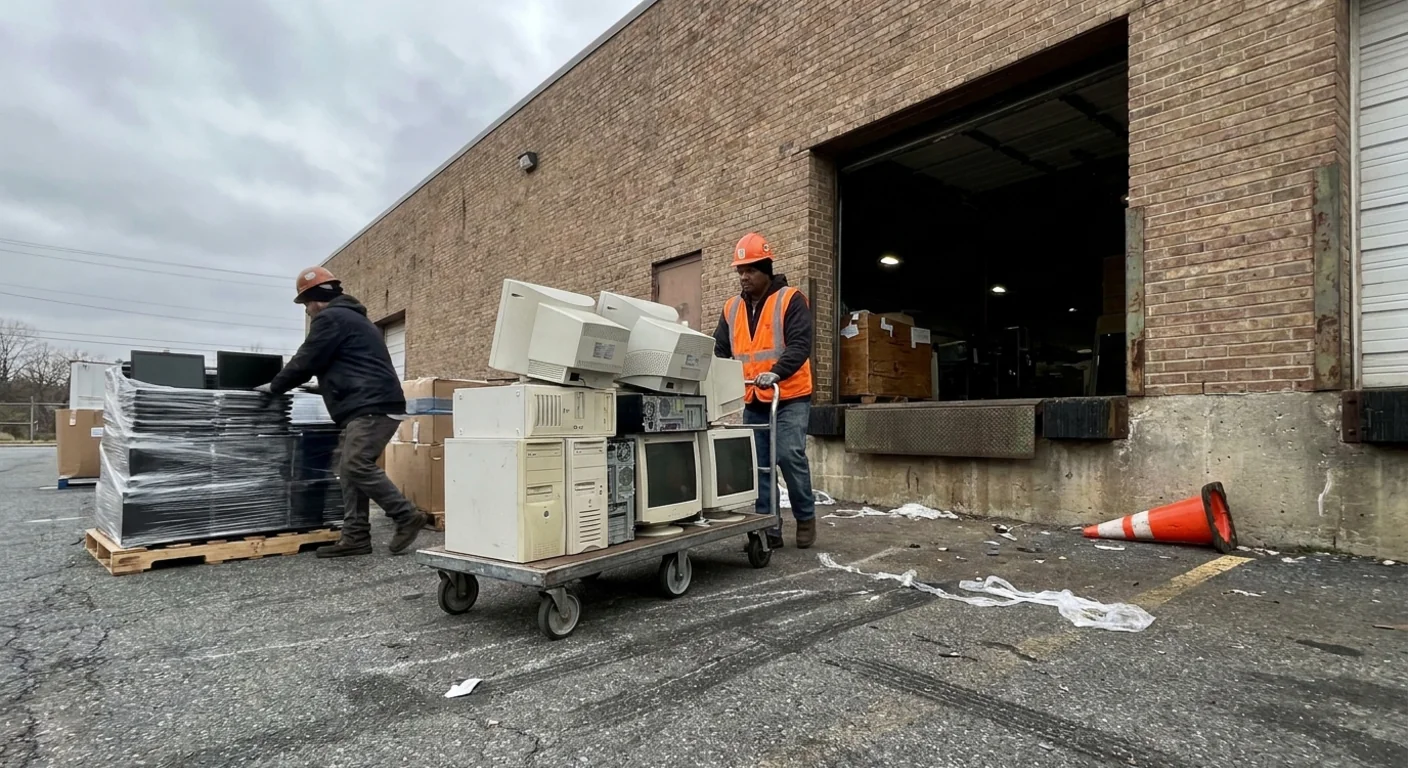
Electronic waste represents one of the fastest-growing waste streams in the United States, and the Baltimore, Columbia, and Towson metropolitan area generates significant volumes annually. From outdated desktop computers and servers to consumer electronics like smartphones and tablets, these devices contain valuable materials that can be recovered and reused. They also contain hazardous substances that pose environmental risks when improperly disposed of.
1. What Is Electronic Waste and Why Proper Disposal Matters
Electronic waste, commonly called e-waste, includes any device with a battery, plug, or circuit board that has reached the end of its useful life. This category encompasses computers, monitors, printers, televisions, mobile phones, networking equipment, medical devices, and small household appliances. These items contain recoverable materials including precious metals like gold, silver, and palladium, along with copper, aluminum, and various plastics.
E-waste also contains potentially hazardous substances such as lead in cathode ray tube monitors, mercury in LCD backlights, cadmium in rechargeable batteries, and flame retardants in plastic housings. When electronics end up in landfills, these materials can leach into soil and groundwater, creating environmental contamination that persists for decades. Many states have enacted legislation restricting or banning electronics from municipal waste streams.
For businesses and institutions in the Baltimore metropolitan area, proper electronics disposal goes beyond environmental stewardship. Organizations subject to data protection regulations must ensure that devices containing sensitive information are processed in ways designed to prevent data breaches. Healthcare providers handling patient information, financial institutions managing account data, and educational facilities maintaining student records all face compliance requirements that extend to equipment disposal.
The economic value of materials contained in electronics creates opportunities for recovery and reuse. Industry studies suggest that one metric ton of circuit boards contains more gold than 17 tons of ore. Recovering these materials through secure recycling reduces the need for virgin resource extraction and supports circular economy principles.
2. What Electronics Can Be Recycled
Nearly all electronic devices can be responsibly recycled through proper channels. Computer equipment including desktop towers, laptops, servers, and workstations are among the most commonly recycled items. Peripheral devices such as keyboards, mice, external hard drives, and USB drives also qualify for recycling. Monitors of all types, from older cathode ray tube models to modern flat-panel displays, require specialized handling due to their component materials.
Networking and telecommunications equipment represents another major category. This includes routers, switches, modems, telephone systems, cell phones, and data center infrastructure. Office equipment such as printers, copiers, scanners, and fax machines contain recyclable components and often include storage devices that require data destruction.
Consumer electronics extend the range of acceptable items. Televisions, gaming consoles, audio equipment, cameras, and small appliances all contain materials suitable for recovery. Battery-powered devices from cordless tools to electric toothbrushes fall under electronics recycling protocols. Batteries themselves, whether single-use alkaline or rechargeable lithium-ion, require separate handling procedures.
Certain items may require special handling or may not be accepted through standard electronics recycling programs. Household hazardous waste such as paint and chemicals typically requires different disposal channels. Large appliances like refrigerators and air conditioners contain refrigerants that must be recovered separately. Checking with your recycling provider about specific items ensures proper processing.
3. More to Consider
Secure processing involves systematic procedures for handling incoming electronics. Devices are inventoried, sorted by type and condition, and evaluated for potential reuse. Equipment determined suitable for remarketing undergoes testing and refurbishment. Items designated for recycling follow documented disassembly and separation processes that maximize material recovery while minimizing environmental impact.
Data-bearing devices receive special attention throughout secure processing. Storage media including hard drives, solid-state drives, and mobile device memory undergo destruction procedures designed to render data unrecoverable. Methods include physical destruction through crushing or shredding, and data wiping using software that overwrites storage sectors multiple times. Documentation of these destruction processes provides organizations with records designed to support compliance requirements.
4. Residential Electronics Recycling Options
Residents of the Baltimore, Columbia, and Towson area have several pathways for recycling personal electronics. Many counties in Maryland operate household hazardous waste facilities or periodic collection events where residents can drop off electronics at no charge. These programs typically accept computers, monitors, televisions, and small electronics from households within the county.
Retailers sometimes offer take-back programs for electronics, particularly when consumers purchase replacement devices. Some programs accept items for free, while others charge fees for larger items like televisions. Manufacturer take-back programs provide another option, especially for brand-specific devices. These programs vary in scope and availability, so checking current offerings before making a trip saves time.
For residents with larger quantities of electronics, such as when clearing out accumulated devices from home offices or storage areas, private recycling services offer pickup options. Professional recyclers typically schedule appointments, provide containers if needed, and generate documentation confirming proper processing.
When selecting a residential recycling option, consider data security for any devices that stored personal information. Computers, tablets, and smartphones often retain data even after factory resets. Removing hard drives from computers before recycling, or ensuring the recycler provides documented data destruction, protects against identity theft and privacy breaches.
5. Business Electronics Recycling and IT Asset Disposal
Organizations in the Baltimore metropolitan area face distinct considerations when recycling business electronics. The volume of equipment typically exceeds residential quantities, and the presence of proprietary data, customer information, and intellectual property creates security requirements that go beyond environmental compliance. Businesses also need documentation that supports sustainability reporting and demonstrates regulatory compliance.
IT asset disposal for businesses begins with asset inventory and evaluation. Organizations should catalog all equipment designated for recycling, including make, model, serial numbers, and any configuration details. This inventory supports internal asset tracking and provides a baseline for reconciling certificates of recycling. Equipment should be assessed for potential reuse value, as remarketing functional devices can offset disposal costs and extend product lifecycles.
Data destruction represents the critical step in business electronics recycling. The DoD 5220.22-M standard specifies overwriting procedures, while NIST SP 800-88 guidelines provide recommendations for sanitizing media. Physical destruction through crushing or shredding offers an alternative that renders drives mechanically inoperable. Organizations handling regulated data types should specify destruction methods in their recycling agreements.
Pickup logistics for business quantities typically involve scheduling, container provision, and transportation. Service providers assess volume and equipment types to determine appropriate container sizes and pickup frequency. Businesses can often schedule regular pickups or request one-time removals for office relocations, data center decommissions, or equipment refresh cycles. Documentation provided after pickup typically includes itemized lists of materials received and certificates confirming processing through processing facilities.
6. Certificates of Recycling for Compliance and Reporting
Certificates of recycling serve as documented evidence that electronics were processed through proper channels. The specific information included in certificates varies by provider, but comprehensive documentation enhances value for organizations with detailed reporting requirements.
A typical certificate of recycling includes the service provider's information, the customer's information, the date of service, and a description of materials received. This description might list general categories like computers and monitors, or provide itemized details with serial numbers for each device. Certificates should document chain of custody and may include processing methods and final material disposition.
For organizations subject to data protection regulations, certificates should specifically address data destruction. This might include references to the destruction methods used, such as physical destruction or multi-pass overwriting, and confirmation that processes followed relevant standards. Some providers offer witnessed destruction services where customer representatives observe the destruction process, though this adds cost and complexity.
Sustainability reporting increasingly requires detailed information about waste diversion and material recovery. Organizations participating in LEED certification programs, filing corporate social responsibility reports, or tracking environmental metrics benefit from certificates that quantify materials by weight and type. Some recyclers provide estimates of carbon offset achieved through recycling, though methodologies for these calculations vary. Certificates supporting compliance and reporting should be retained according to organizational record retention policies, typically three to seven years for most industries.
7. Scheduling Electronics Recycling and Next Steps
The process of arranging electronics recycling varies depending on the type and volume of materials. For small quantities of personal electronics, residents can identify upcoming collection events through county websites or contact local recycling providers to inquire about drop-off options. Researching available programs before accumulating large quantities of e-waste makes disposal more convenient when the time comes.
Businesses planning electronics recycling should begin by assessing their inventory and developing a timeline. Organizations replacing large numbers of computers or closing facilities benefit from advance planning that coordinates equipment removal with operational transitions. Contacting recycling providers several weeks before the target date allows time to arrange logistics, finalize pricing, and prepare necessary documentation.
When contacting recycling providers, be prepared to describe the types and approximate quantities of electronics. Choose a recycler that documents chain of custody and provides a Certificate of Recycling. Request information about pricing structure, whether based on per-item fees, weight, or flat rates for container pickups. Clarify what documentation will be provided and whether certificates of recycling include the level of detail your organization requires.
While Chicago Shredder primarily serves the Chicago and Illinois market, the principles of responsible electronics recycling apply across regions. Organizations in the Baltimore, Columbia, and Towson area should seek providers offering secure processing, documented data destruction, and transparent procedures. Industry associations and state environmental agencies can provide directories of recycling providers serving specific geographic areas.
8. Frequently Asked Questions
What happens to electronics after they are collected for recycling?
Electronics undergo systematic processing at processing facilities. Devices are sorted, with functional equipment potentially refurbished for resale and non-functional items disassembled for material recovery. Components are separated into categories like metals, plastics, and circuit boards, which are then processed to extract raw materials for manufacturing new products.
How can I ensure data on my business computers is completely destroyed?
Specify data destruction requirements when arranging recycling services and request documentation confirming the methods used. Physical destruction through crushing or shredding renders drives mechanically inoperable, while software wiping using standards like DoD 5220.22-M or following NIST SP 800-88 guidelines overwrites data multiple times. Certificates of destruction provide records designed to support compliance requirements.
Are there items that cannot be recycled with regular electronics?
Most electronic devices can be recycled, but certain items require special handling. Batteries often need separate processing from the devices they power, and large appliances containing refrigerants require qualified technicians to recover those substances. Household hazardous waste like chemicals typically follows different disposal pathways than electronics.
Do electronics recycling services charge fees?
Pricing varies by provider and material type. Some recyclers charge per-item fees, particularly for televisions and monitors that are costly to process, while others base fees on weight or offer container-based pricing for business quantities. Items with commodity value, like servers and certain computer equipment, may be accepted at no charge or even generate payments to the customer.
How does electronics recycling support sustainability goals?
Recycling electronics recovers valuable materials, reducing the need for virgin resource extraction and the environmental impacts of mining. It diverts hazardous substances from landfills, preventing soil and water contamination.
Electronics recycling in the Baltimore, Columbia, and Towson metropolitan area provides residents and businesses with pathways to responsibly manage end-of-life devices. Whether you are a homeowner with a few old computers or a business planning a large-scale equipment refresh, working with recycling providers ensures that materials are processed in ways designed to protect the environment and secure sensitive data. For organizations in the Chicago and Illinois region, Chicago Shredder offers secure electronics recycling with documented data destruction. Contact us at 866-770-2650 to discuss your electronics recycling needs or schedule a pickup for your business.
Ready to schedule a pickup?
Call 866-770-2650 or request a quote online. Every pickup includes clear service documentation.