

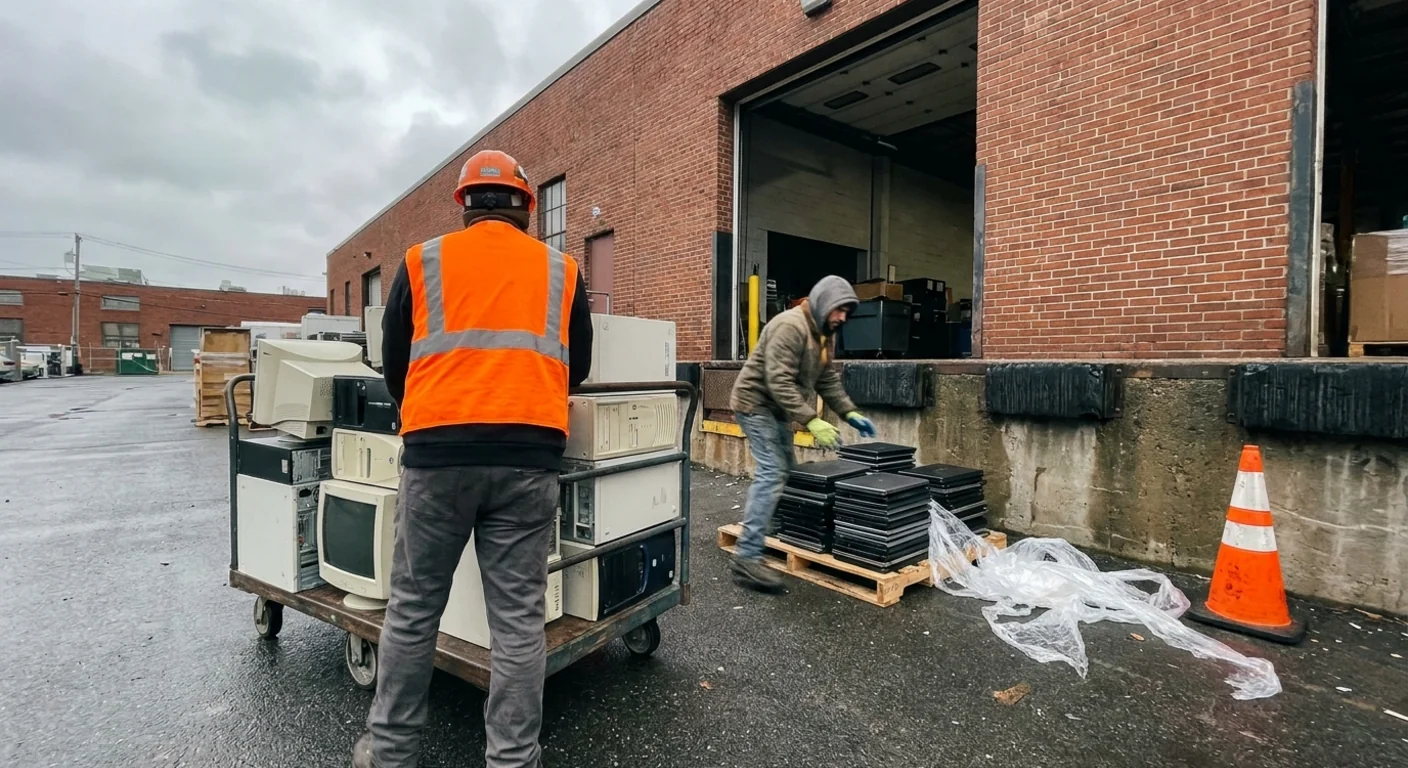
Electronic waste represents one of the fastest-growing waste streams in the United States, and Illinois has taken significant steps to address this challenge through comprehensive legislation. Chicago businesses and residents generate thousands of tons of obsolete computers, monitors, printers, and other electronics annually. Improper disposal of these items creates environmental risks and violates state law. Understanding what qualifies as e-waste, how secure recycling works, and the options available across the Chicago metro area helps organizations and individuals manage their electronics responsibly while meeting regulatory requirements.
1. What Is E-Waste and Why Illinois Bans Landfill Disposal
Electronic waste, or e-waste, includes any discarded electrical or electronic equipment. This category encompasses computers, laptops, monitors, televisions, printers, scanners, networking equipment, servers, mobile devices, and related peripherals. These items contain valuable materials including metals, plastics, and glass that can be recovered and reused in manufacturing.
Illinois enacted the Electronic Products Recycling and Reuse Act to prohibit landfill disposal of many electronic devices. The legislation specifically bans computers, monitors, televisions, printers, and other covered devices from landfills and incinerators. Violating these prohibitions can result in penalties for both individuals and organizations. The law recognizes that electronics contain materials requiring specialized processing to prevent environmental contamination.
Many electronic devices contain small amounts of materials that require careful handling during processing. Cathode ray tube (CRT) monitors and older televisions, for example, include glass with specific compositions that demand specialized recycling techniques. Circuit boards, hard drives, and power supplies contain various components that processors separate and route to appropriate downstream vendors. The complexity of modern electronics makes professional recycling services necessary for compliance and responsible material management.
2. What Electronics Can Be Recycled in Chicago
Chicago Shredder accepts a comprehensive range of electronic equipment for recycling. Computers and laptops of all ages and conditions qualify for recycling, including desktop towers, all-in-one systems, and portable computers. Monitors from CRT models to modern flat-panel displays are accepted. Servers, networking equipment, and data center infrastructure including switches, routers, and rack-mounted systems can be processed through processing channels.
Peripheral devices including printers, scanners, copiers, and fax machines are accepted regardless of size or technology type. Mobile devices, tablets, keyboards, mice, cables, and power adapters can be included with larger electronics shipments. Telecommunications equipment, audio-visual systems, and small appliances with electronic components also qualify for recycling services.
Businesses retiring entire office suites of equipment can schedule coordinated pickups that handle all electronic assets in a single service call. Mixing different device types in one shipment creates no processing complications. The key consideration for any electronic item is whether it contains circuitry or requires electrical power to operate. Items meeting either criterion generally qualify for electronics recycling services across the Chicago metro area.
3. More to Consider
Equipment arriving at the facility undergoes sorting and evaluation. Items suitable for refurbishment and reuse follow testing and certification pathways. Devices designated for material recovery enter disassembly processes where trained technicians separate components according to material composition and downstream requirements.
Secure processing ensures that no materials are knowingly disposed of in landfills. Instead, materials are directed to vetted downstream processors who meet specific environmental and operational standards. Metals, plastics, glass, and other recovered materials flow to manufacturers who incorporate them into new products. This circular approach reduces demand for virgin material extraction while preventing environmental contamination. Organizations choosing secure recycling services demonstrate commitment to responsible business practices and environmental stewardship.
4. Residential and Business Electronics Recycling Options
Chicago area residents have several options for recycling personal electronics. Small quantities of devices can often be dropped off during designated collection events hosted by municipalities throughout the region. Individual items or small loads may qualify for drop-off at participating collection sites. Residents with larger quantities or bulky items can schedule pickup services that eliminate the need for transportation and heavy lifting.
Businesses face different considerations when managing electronic waste. Organizations retiring computers, upgrading server infrastructure, or closing facilities often generate substantial volumes of equipment requiring coordinated logistics. Commercial recycling services provide scalable solutions from small office cleanouts to multi-location enterprise deployments. Businesses can schedule pickups that align with lease expirations, renovation timelines, or technology refresh cycles.
Healthcare facilities, financial institutions, educational organizations, and government agencies often require additional documentation and security protocols when recycling electronics. Services designed to support compliance requirements related to HIPAA, GLBA, SOX, and FERPA provide the specialized handling these sectors demand. Legal firms, accounting practices, and other professional services organizations handling confidential client information benefit from similar security-focused recycling approaches. Chicago Shredder offers both standard recycling and secure data destruction services tailored to these specialized needs.
5. Pickup Logistics Across the Chicago Metro Area
Electronics recycling pickups serve locations throughout Chicago and surrounding communities in the metro area. Service coverage extends to the city's neighborhoods as well as suburban areas across Cook County and neighboring regions. Businesses in downtown Chicago, suburban office parks, and industrial zones all fall within the standard service territory. Residential pickups can be scheduled for properties generating sufficient volumes to justify dedicated collection.
Scheduling begins with an initial consultation to assess the volume, types of equipment, and any special handling requirements. Large monitors, server racks, and other bulky items may require specific equipment or crew sizes. Pickup teams arrive with necessary tools and vehicles to handle safe loading and transportation. Most organizations find that coordinating pickup during business hours minimizes disruption, though alternative timing can be arranged when necessary.
Typical response time after scheduling is one business day, though this varies based on current service demand and geographic location. Organizations planning office moves, lease terminations, or equipment refreshes benefit from scheduling pickups several weeks in advance to ensure availability during preferred timeframes. Last-minute requests can often be accommodated, particularly for businesses experiencing unexpected changes that create urgent disposal needs. Clear communication about volumes, locations, and access requirements helps ensure smooth pickup execution.
6. Certificates of Recycling for Sustainability Reporting
Many organizations track environmental metrics as part of corporate sustainability initiatives, regulatory compliance programs, or voluntary reporting frameworks. Electronics recycling certificates document the responsible disposal of equipment and provide data for these reporting requirements. Certificates typically include pickup dates, item descriptions, quantities processed, and confirmation that materials were handled through processing channels.
Businesses pursuing LEED certification, B Corporation status, or participation in industry-specific sustainability programs often need documented proof of responsible electronics disposal. Annual sustainability reports, ESG (Environmental, Social, and Governance) disclosures, and corporate responsibility communications benefit from verified recycling data. Educational institutions, healthcare systems, and government agencies with public accountability mandates find these certificates valuable for demonstrating stewardship of public resources.
Certificates serve multiple organizational purposes beyond environmental reporting. Audit trails for asset disposition help finance and accounting departments verify that equipment listed on asset registers was properly retired. IT departments use recycling documentation to confirm that decommissioned devices left organizational control through authorized channels. Risk management and compliance teams reference certificates when demonstrating adherence to data security policies and regulatory requirements. The combination of environmental responsibility and operational documentation makes certificates valuable across multiple organizational functions.
7. How to Schedule Electronics Recycling Service
Scheduling electronics recycling with Chicago Shredder begins with a phone call to 866-770-2650. During the initial conversation, details about the types and quantities of equipment help determine appropriate service options. Information about location, access requirements, and preferred timing allows for accurate scheduling and resource allocation. Organizations unsure about exact quantities can provide estimates based on office space or storage areas containing equipment.
For businesses requiring data destruction services in addition to recycling, the scheduling conversation addresses security protocols and documentation requirements. Hard drive destruction, data sanitization methods, and certificate requirements are discussed to ensure services align with organizational policies. Companies with compliance obligations or security concerns receive guidance about options designed to support these requirements.
After scheduling confirmation, pickup teams arrive at the designated time with appropriate equipment and vehicles. No preparation of electronics is required beyond making items accessible to the pickup team. Devices can remain connected, need not be cleaned, and can include cables and peripherals. Following pickup and processing, certificates documenting the recycling service are provided for organizational records. The entire process, from initial contact to final documentation, is designed to make responsible electronics disposal straightforward and efficient for Chicago area businesses and residents.
8. Frequently Asked Questions
Does Illinois law really prohibit throwing electronics in the trash?
Yes, the Illinois Electronic Products Recycling and Reuse Act prohibits disposal of computers, monitors, televisions, printers, and other covered electronic devices in landfills and incinerators. Violating these requirements can result in penalties, making recycling services necessary for legal compliance.
What happens to electronics after Chicago Shredder picks them up?
Equipment undergoes sorting, testing, and processing with materials directed to vetted downstream vendors rather than landfills.
Can I recycle just one or two old computers from my home?
Small quantities of residential electronics can typically be handled through municipal collection events or designated drop-off locations. For larger quantities or if you prefer pickup service, contact Chicago Shredder at 866-770-2650 to discuss options for residential electronics recycling.
How long does it take to schedule an electronics recycling pickup?
Chicago Shredder typically responds to scheduling requests within one business day. Actual pickup timing depends on current service demand and your location, though advance scheduling for planned office moves or equipment refreshes is recommended.
Do I need to remove hard drives before recycling computers?
Hard drives do not need to be removed before pickup. Chicago Shredder offers secure data destruction services including hard drive crushing at the Addison, Illinois facility for organizations requiring documented data sanitization in addition to electronics recycling.
Will I receive documentation proving my electronics were recycled responsibly?
Yes, certificates of recycling are provided documenting pickup dates, equipment types, quantities, and confirmation of secure processing.
Electronics recycling in Chicago requires understanding Illinois regulations, identifying qualified service providers, and coordinating logistics that fit organizational needs. The state's prohibition on landfill disposal of electronics makes secure recycling services necessary for legal compliance. From individual devices to complete data center decommissioning projects, responsible electronics disposal protects the environment while supporting compliance and sustainability objectives. To schedule electronics recycling service or discuss specific requirements for your organization, call Chicago Shredder at 866-770-2650 or visit the website to arrange a pickup.
Ready to schedule a pickup?
Call 866-770-2650 or request a quote online. Every pickup includes clear service documentation.