

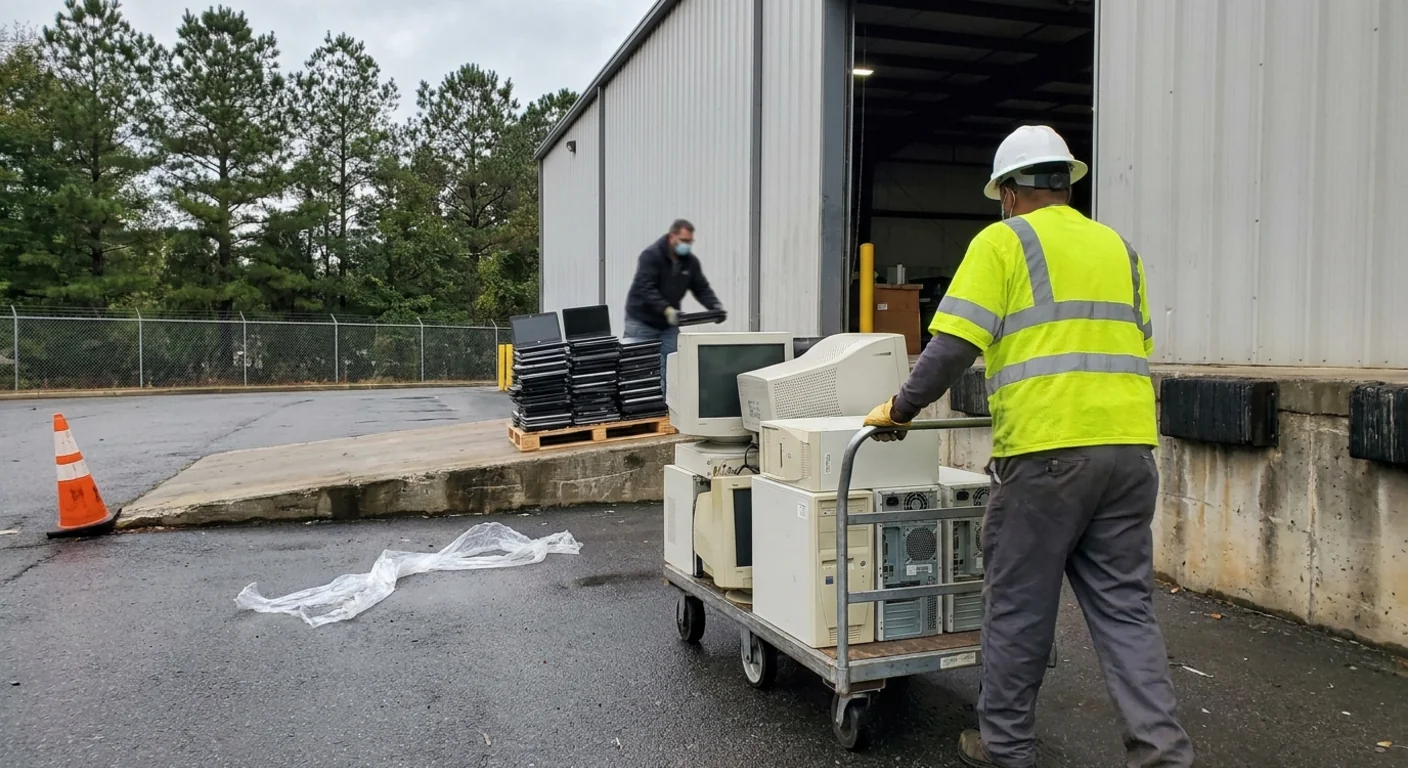
Electronic waste represents one of the fastest-growing waste streams in North America, with millions of tons of devices reaching end-of-life each year. In Charlotte, NC, responsible electronics recycling helps businesses and residents keep hazardous materials out of landfills while recovering valuable resources. This guide covers what qualifies as e-waste, which items can be recycled, how secure processing protects your data and the environment, and how to schedule convenient pickup services for both residential and commercial needs.
1. What Is E-Waste and Why Proper Disposal Matters
Electronic waste, or e-waste, includes any device with a plug, battery, or circuit board that has reached the end of its useful life. This category encompasses computers, monitors, printers, mobile phones, servers, networking equipment, televisions, and small appliances. These items contain valuable materials like copper, gold, and rare earth metals, but they also harbor hazardous substances including lead, mercury, cadmium, and brominated flame retardants.
Improper disposal of electronics creates environmental and health risks. When e-waste enters landfills, toxic materials can leach into soil and groundwater. Many states, including Illinois where Chicago Shredder operates, have enacted laws prohibiting the landfill disposal of certain electronics. While North Carolina has not implemented a statewide electronics landfill ban, sustainable recycling remains the preferred option for environmental stewardship and resource recovery.
Beyond environmental concerns, electronics often contain sensitive data. Discarded hard drives, smartphones, and other devices may store personal information, financial records, customer data, or proprietary business information. Proper electronics recycling includes secure data destruction protocols designed to make information unrecoverable, protecting against identity theft and data breaches.
2. What Electronics Can Be Recycled
Most electronic devices qualify for recycling, though acceptance policies vary by provider. Common recyclable items include desktop computers, laptops, tablets, smartphones, monitors, keyboards, mice, printers, copiers, scanners, servers, networking equipment like routers and switches, phone systems, and audio-visual equipment. Many recyclers also accept televisions, though CRT models may incur fees due to special handling requirements.
Office equipment represents a significant portion of commercial e-waste. Businesses upgrading their IT infrastructure can recycle workstations, conference room displays, telecom equipment, security systems, and point-of-sale terminals. Data centers retiring servers, storage arrays, and rack equipment benefit from recycling programs that handle large volumes while providing documentation for asset tracking and compliance reporting.
Some electronics require special consideration. Batteries, while recyclable, often need separate handling due to fire risk during transport and processing. Items containing refrigerants, like air conditioners or refrigerated equipment, require qualified technicians for proper disposal. When scheduling electronics recycling, providing an inventory helps recyclers prepare appropriate logistics and ensure all items qualify for the program.
3. More to Consider
These standards establish requirements for facility operations, downstream vendor management, data security, and environmental health and safety.
This approach addresses the entire recycling chain. Processing includes tracking materials through disassembly, refurbishment, and downstream processing to ensure no materials are knowingly disposed of in landfills when viable recycling markets exist. This tracking provides transparency and accountability, reducing the risk of e-waste being improperly exported or dumped.
Data security forms a core component of secure, transparent recycling. Processing follows documented data destruction procedures that align with industry standards like NIST SP 800-88 guidelines and DoD 5220.22-M standard. Certificates of recycling and data destruction provide documentation for audit trails and compliance reporting.
4. Residential Electronics Recycling Options
Charlotte area residents have multiple options for recycling household electronics. Many communities offer periodic collection events where residents drop off e-waste at designated locations. Local solid waste departments sometimes maintain permanent collection sites with specific hours for electronics drop-off. Retailers occasionally provide take-back programs for certain product categories, though these typically focus on items the store sells.
For residents with larger quantities or limited transportation options, pickup services offer convenience. Some recyclers provide scheduled pickup for residential customers, particularly when the volume justifies a dedicated stop. Combining electronics recycling with other household cleanout activities, like spring cleaning or moving preparations, helps maximize the efficiency of pickup services.
Residents should prepare electronics for recycling by removing personal data when possible. While recycling providers perform data destruction, taking preliminary steps like factory resets on phones and tablets, deleting user accounts, and removing external storage devices provides additional peace of mind. Grouping similar items together and making devices accessible near the pickup location streamlines the collection process.
5. Business Electronics Recycling Solutions
Commercial organizations face distinct electronics recycling challenges. IT refresh cycles generate recurring volumes of retired equipment. Office relocations, company consolidations, and data center decommissioning create sudden surges of e-waste. Businesses also must maintain chain-of-custody documentation, protect sensitive data, and support sustainability reporting requirements.
Business electronics recycling services typically include on-site pickup scheduled around operational needs. Recyclers work with IT departments to coordinate collection during business hours or after hours to minimize disruption. For large projects, recyclers may station containers on-site for gradual equipment loading over several days or weeks. Services often include asset tagging, inventory documentation, and serialized tracking for audit purposes.
Data security considerations intensify for commercial recycling. Healthcare providers must address HIPAA requirements. Financial institutions work within GLBA frameworks. Educational institutions consider FERPA obligations. While recyclers cannot guarantee regulatory compliance, certified processing services are designed to support compliance requirements through documented data destruction methods, chain-of-custody tracking, and certificates detailing destruction methods used for each device category.
6. Pickup Logistics and Service Areas
Electronics recycling pickup logistics vary based on location, volume, and service provider. For the Charlotte area, national and regional recyclers serve businesses and residents, with service terms depending on quantity and distance. While Chicago Shredder primarily serves the Chicago metropolitan area and Illinois, this model demonstrates typical pickup logistics that Charlotte-based services follow.
Pickup scheduling typically begins with a volume estimate and address confirmation. Providers evaluate whether the quantity justifies dedicated pickup or should combine with other routes. Businesses with regular IT refresh cycles may establish recurring pickup schedules, while one-time pickups suit office cleanouts or specific projects. Lead times vary, though providers typically respond to pickup requests within one business day for scheduling, with actual pickup occurring within one to two weeks depending on routing.
Access considerations affect pickup efficiency. Ground-floor locations with loading dock access simplify collection. Upper-floor offices without elevator access may require additional labor and time. Secure facilities may need escort arrangements and pre-approved visitor clearances. Communicating these logistics during scheduling helps providers allocate appropriate resources and meet building requirements. Detailed pickup instructions, including contact names and phone numbers for the collection day, prevent delays and ensure smooth execution.
7. Certificates of Recycling for Sustainability Reporting
Documentation plays an increasingly important role in corporate sustainability programs. Certificates of recycling provide verifiable proof that electronics were responsibly processed through processing facilities. These certificates typically include pickup date, device categories and quantities, a Certificate of Recycling from the processing facility, and confirmation that materials were handled according to environmental standards.
Sustainability reporting frameworks like the Global Reporting Initiative and CDP (formerly Carbon Disclosure Project) encourage organizations to track waste diversion and responsible disposal practices. Electronics recycling certificates support these reporting requirements by documenting waste streams diverted from landfills. Some certificates include weight-based data, allowing companies to quantify environmental impact in terms of materials recovered and greenhouse gas emissions avoided.
Data destruction certificates complement recycling documentation by confirming that storage devices received appropriate sanitization or physical destruction. These certificates specify destruction methods used, such as shredding to specific particle sizes or data erasure following NIST SP 800-88 guidelines. For organizations subject to data protection regulations or industry security standards, these certificates provide evidence of due diligence in protecting information throughout the disposal process.
8. Frequently Asked Questions
What happens to my electronics after they are picked up for recycling?
Electronics are transported to secure processing facilities where they undergo sorting, data destruction, and disassembly. Materials like metals, plastics, and glass are separated and sent to appropriate recycling streams. Devices in working condition may be refurbished for reuse.
Do I need to remove data from my devices before recycling?
While recycling providers perform data destruction as part of their process, removing personal data before recycling provides additional security. For personal devices, perform factory resets and delete accounts. For business equipment, follow your organization's data security policies. Professional recyclers will apply physical destruction or data sanitization methods designed to make information unrecoverable.
Is there a cost for electronics recycling pickup?
Pricing varies by provider, location, and volume. Some recyclers offer free pickup for certain quantities or equipment types with resale value. Others charge service fees, particularly for items requiring special handling like CRT monitors or televisions. Business pickups may include fees based on volume and distance. Request quotes specific to your situation when scheduling service.
Can businesses get documentation for sustainability reports?
Some providers offer detailed reporting including weight-based metrics and environmental impact calculations. Request documentation requirements when scheduling pickup to ensure the recycler can provide appropriate certificates.
How long does it take to schedule an electronics recycling pickup?
Lead times vary by provider and location. Many recyclers typically respond to scheduling requests within one business day. Actual pickup occurs based on routing efficiency and volume, often within one to two weeks of the initial request. Businesses with large projects or specific timing requirements should schedule several weeks in advance. Emergency or expedited service may be available for an additional fee.
Responsible electronics recycling protects the environment, secures sensitive data, and supports sustainability goals for Charlotte area businesses and residents. Understanding what qualifies as e-waste, which items can be recycled, and how secure processing works helps organizations make informed decisions about end-of-life electronics. Whether you are managing a business IT refresh or clearing household electronics, working with recycling providers ensures materials are handled responsibly. For businesses and residents in the Chicago area seeking secure electronics recycling services, Chicago Shredder offers convenient pickup options and documented processing. Contact us at 866-770-2650 or visit our website to schedule a pickup and receive a certificate of recycling for your sustainability records.
Ready to schedule a pickup?
Call 866-770-2650 or request a quote online. Every pickup includes clear service documentation.