

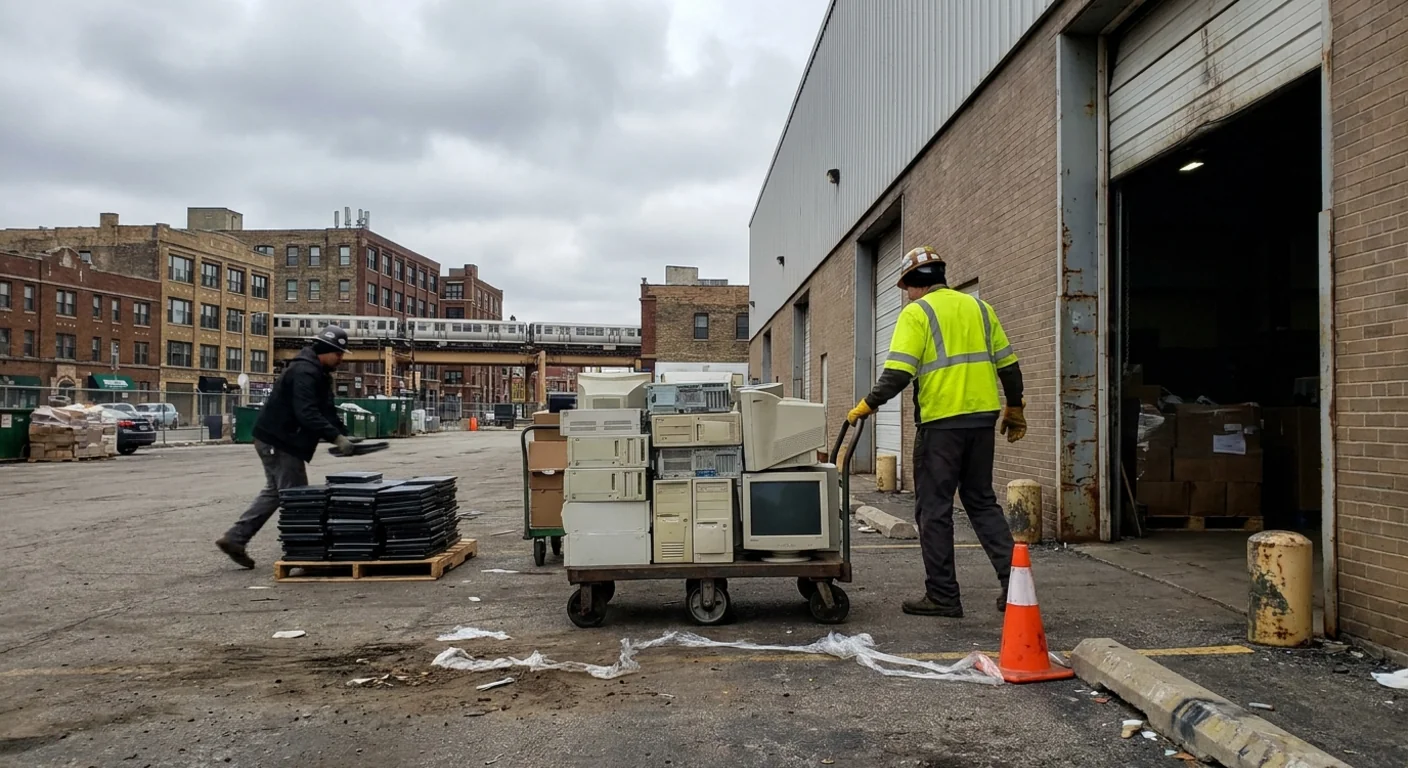
Electronic waste represents one of the fastest-growing waste streams in the United States, and Illinois has taken decisive action to keep it out of landfills. Chicago residents and businesses face specific requirements for disposing of computers, monitors, televisions, and other electronic devices. Understanding what qualifies as e-waste, how to properly recycle it, and which service providers operate processing facilities can help you meet legal obligations while supporting environmental responsibility. This guide covers everything you need to know about electronics recycling in the Chicago metropolitan area.
1. What Qualifies as Electronic Waste in Illinois
Electronic waste, commonly called e-waste, includes any device powered by a battery or electrical cord that has reached the end of its useful life. In Illinois, the Electronic Products Recycling and Reuse Act specifically regulates computers, monitors, televisions, printers, and related peripherals. These items contain valuable materials like copper, gold, and aluminum, but also hazardous substances including lead, mercury, and cadmium that pose environmental risks when improperly disposed.
The definition extends beyond obvious electronics. Laptops, tablets, smartphones, networking equipment, servers, and point-of-sale systems all fall under regulated e-waste categories. Office equipment such as copiers, fax machines, and scanners require proper recycling. Even smaller items like keyboards, mice, cables, and power adapters should be included when recycling electronics to maximize material recovery and minimize environmental impact.
Illinois law prohibits landfilling of covered electronic devices, making proper recycling a legal requirement rather than an optional environmental choice. Manufacturers are required to provide free collection and recycling programs for residential consumers, while businesses must arrange for proper disposal through recycling providers. Understanding these categories helps ensure compliance with state regulations while supporting the circular economy for electronic materials.
2. Why Illinois Banned E-Waste from Landfills
Illinois implemented its electronics recycling law to address the growing volume of discarded devices and the environmental hazards they present. When electronics end up in landfills, toxic materials can leach into groundwater supplies, contaminating drinking water sources. Heavy metals like lead from cathode ray tube monitors and mercury from LCD backlights pose particular risks to human health and ecosystems. The state recognized that diverting these materials from landfills protects both public health and natural resources.
The legislation also addresses resource conservation. Electronics contain significant quantities of recoverable materials that hold economic value. Recycling one million laptops saves the energy equivalent of powering more than 3,500 homes for a year, according to industry studies. By requiring proper processing, Illinois encourages the recovery of precious metals, rare earth elements, and other resources that would otherwise be lost.
Manufacturers bear responsibility under the law for collecting and recycling a specified weight of electronics each year based on their market share in Illinois. This producer responsibility approach shifts disposal costs from taxpayers to the companies that place products in the market. For businesses and institutions, the ban means establishing relationships with recycling providers who can document proper handling and provide compliance records for regulatory reporting.
3. What Electronics Chicago Shredder Accepts
Chicago Shredder accepts a comprehensive range of electronic devices from both residential and commercial customers. Computers and laptops of all ages and conditions are accepted, regardless of manufacturer or operating system. Desktop towers, all-in-one systems, and workstations are processed alongside monitors, including older CRT models and modern flat-panel displays. Servers, networking equipment, and data center infrastructure represent common commercial items that require secure processing.
Peripheral devices and accessories are also accepted. Printers, scanners, copiers, and multifunction devices can be included in pickups or drop-offs. Keyboards, mice, cables, power supplies, and other accessories should be collected together rather than discarded separately. Mobile devices including smartphones and tablets are accepted, though these items typically require additional data security measures before recycling.
Televisions and entertainment electronics fall under Illinois recycling requirements. CRT televisions, flat-screen LCD and LED models, and plasma displays are all accepted. Audio equipment, video game consoles, and DVD players can be included. For businesses retiring point-of-sale systems, cash registers, credit card terminals, and barcode scanners, Chicago Shredder provides secure collection and processing.
4. More to Consider
Proper electronics recycling requires more than simply collecting devices.
This approach requires documented procedures for safely handling hazardous materials, maximizing material recovery, and ensuring downstream vendors meet environmental standards. It includes requirements for data security, protecting sensitive information that may remain on hard drives and other storage media. Regular downstream vendor reviews support compliance with standard requirements, providing assurance that electronics are processed according to best practices rather than simply shipped overseas or dumped in landfills.
This approach addresses the full lifecycle of recycled electronics. Materials are sorted by type, with metals, plastics, and glass separated for appropriate recycling streams. Hazardous components receive special handling to prevent environmental contamination. Components that cannot be recycled through standard processes are managed according to regulatory requirements, with no materials knowingly disposed of in landfills. This comprehensive approach ensures that electronics recycling delivers genuine environmental benefits rather than simply relocating problems to other communities or countries.
5. Residential vs Business Electronics Recycling Options
Residential customers in Chicago have access to free electronics recycling through manufacturer-funded programs as required by Illinois law. Chicago Shredder offers convenient pickup services for households with accumulated electronics, making it easy to clear out old computers, televisions, and other devices without transporting them to a collection site. While manufacturer programs cover basic recycling costs for residential consumers, pickup services may involve fees depending on volume and location within the Chicago metropolitan area.
Businesses, schools, healthcare facilities, and other organizations face different requirements and options. Commercial entities cannot access free manufacturer programs and must arrange for proper recycling through secure providers. Chicago Shredder serves businesses across the Chicago area with flexible pickup scheduling designed to minimize disruption to operations. Volume-based pricing accounts for the quantity and type of electronics being recycled, with larger pickups typically offering better per-unit economics.
Data security needs often differ between residential and commercial recycling. While home users may have personal information on devices, businesses handle customer records, financial data, employee information, and proprietary materials that require documented destruction. Chicago Shredder provides secure data destruction services designed to support compliance requirements for regulations like HIPAA, GLBA, and SOX. Businesses can pair electronics recycling with hard drive shredding, certificate of destruction, and asset inventory tracking to meet both environmental and security obligations.
6. Pickup Logistics Across the Chicago Metropolitan Area
Chicago Shredder serves the entire Chicago metropolitan area from its Addison, IL facility. Pickup services extend throughout Cook County and surrounding counties, covering suburban communities alongside the city proper. Scheduling flexibility accommodates both one-time cleanouts and recurring pickups for organizations that regularly retire electronics. Most pickup requests receive a response within one business day to discuss logistics, timing, and specific requirements.
The pickup process begins with an assessment of what needs to be collected. Information about device types, quantities, and location helps determine appropriate vehicle size and staffing. For large commercial pickups involving palletized electronics or full office decommissions, advance planning ensures efficient loading and transport. Smaller pickups may be combined with other service routes to optimize logistics and reduce costs.
Pickup teams arrive at scheduled times with appropriate equipment for safe loading. Devices can be collected from loading docks, storage areas, or specific offices depending on customer needs. Chicago Shredder's team handles all lifting and loading, minimizing disruption to your facility. For organizations requiring asset tracking, serial numbers and inventory details can be recorded during pickup to support internal records. Equipment is transported directly to the Addison facility for processing, maintaining chain of custody for sensitive materials.
7. Certificates of Recycling for Sustainability Reporting
Organizations increasingly need to document environmental performance for sustainability reports, corporate responsibility initiatives, and stakeholder communications. Chicago Shredder provides certificates of recycling that detail what materials were collected, when processing occurred, and how items were handled. These certificates support environmental reporting requirements and demonstrate commitment to responsible electronics disposal.
The certificate includes information about the items recycled, typically categorized by type such as computers, monitors, and peripherals. Total weight provides a quantifiable metric for environmental impact reporting. This documentation helps organizations meet environmental management system requirements and respond to customer or investor questions about waste management practices.
For organizations tracking carbon footprint or waste diversion rates, recycling certificates provide the data foundation for environmental calculations. The weight of electronics diverted from landfills can be incorporated into sustainability metrics and compared year over year to demonstrate progress. Businesses pursuing LEED certification, B Corporation status, or other environmental credentials can use these certificates as supporting documentation for waste reduction and responsible procurement practices.
8. Frequently Asked Questions
What electronics are illegal to throw in the trash in Illinois?
Illinois law prohibits disposing of computers, monitors, televisions, printers, and related electronic devices in landfills. This includes laptops, desktop computers, CRT and flat-panel monitors, all types of televisions, and computer peripherals. Businesses and residents must recycle these items through proper channels.
Does Chicago Shredder charge for electronics recycling?
Pricing depends on whether you are a residential or commercial customer and the volume of electronics being recycled. Illinois law requires manufacturers to provide free recycling for residential consumers, though pickup services may involve fees. Commercial customers receive volume-based pricing tailored to their specific needs.
How do I prepare electronics for recycling pickup?
Remove any personal belongings, external media, or accessories you want to keep. For security-sensitive devices, consider whether you need data destruction services beyond standard recycling. Businesses should compile an inventory if asset tracking is required, but Chicago Shredder handles all physical preparation and loading during pickup.
What happens to my electronics after Chicago Shredder picks them up?
Devices are sorted by material type, data-bearing devices receive secure processing, and materials are separated for appropriate recycling streams with no materials knowingly disposed of in landfills.
Can I get documentation that my electronics were properly recycled?
Yes, Chicago Shredder provides certificates of recycling that document what materials were collected, processing dates, and confirmation of responsible handling through processing facilities.
How far outside Chicago does pickup service extend?
Chicago Shredder serves the entire Chicago metropolitan area from its Addison, IL location. Service extends throughout Cook County and surrounding counties, covering both Chicago proper and suburban communities. Contact Chicago Shredder to confirm service availability for your specific location.
Electronics recycling in Chicago involves more than environmental responsibility. It represents a legal requirement under Illinois law and an opportunity to protect sensitive data while recovering valuable materials. Whether you are a homeowner clearing out old devices or a business retiring IT equipment, working with a recycling provider ensures proper handling and provides documentation for compliance and sustainability reporting. To schedule a pickup or discuss your electronics recycling needs, call 866-770-2650 or visit the website to arrange service.
Ready to schedule a pickup?
Call 866-770-2650 or request a quote online. Every pickup includes clear service documentation.