

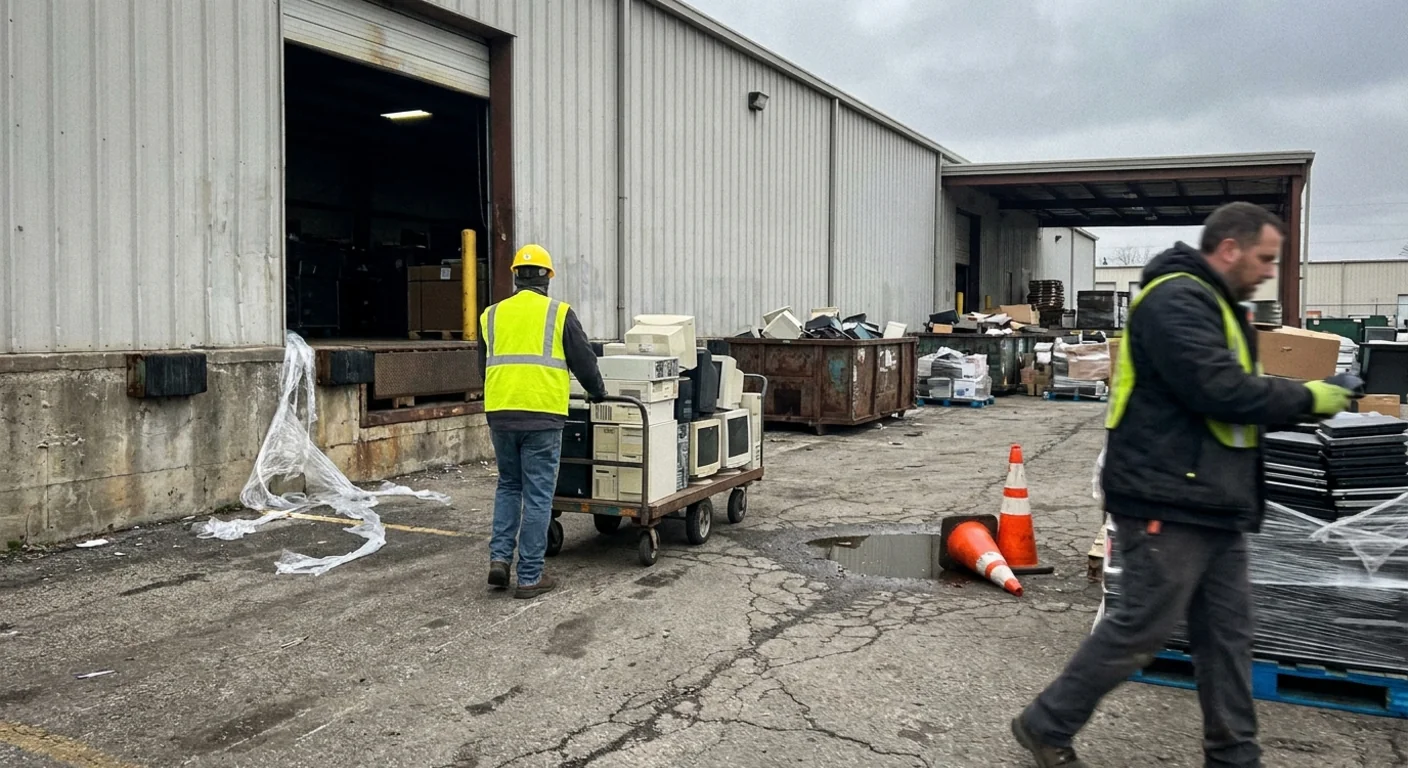
Electronic waste, or e-waste, includes discarded computers, monitors, printers, servers, and other electronic devices that contain valuable materials and hazardous components. As technology lifecycles shorten and equipment upgrades become more frequent, proper electronics recycling has become essential for environmental protection and regulatory compliance. While Chicago Shredder primarily serves the Chicago and Illinois market, understanding electronics recycling best practices benefits organizations nationwide.
1. What Qualifies as Electronic Waste
Electronic waste encompasses a broad range of devices containing circuit boards, batteries, and other electronic components. Common items include desktop computers, laptops, tablets, smartphones, monitors, televisions, printers, copiers, scanners, servers, networking equipment, and telecommunications devices. Peripheral equipment such as keyboards, mice, cables, and power adapters also fall into this category.
Many electronic devices contain valuable materials including precious metals like gold, silver, and palladium, along with recoverable copper, aluminum, and steel. However, these same devices often contain hazardous substances such as lead, mercury, cadmium, and brominated flame retardants. When electronics end up in landfills, these toxic materials can leach into soil and groundwater, creating environmental and health risks.
In Illinois, the Electronic Products Recycling and Reuse Act prohibits residents from disposing of certain electronics in landfills or incinerators. This legislation specifically targets computers, monitors, printers, televisions, and other consumer electronics. While Columbus, Ohio has different state regulations, the environmental reasoning behind proper electronics recycling remains consistent across regions. Organizations that generate electronic waste should prioritize secure recycling regardless of local mandates to minimize environmental impact and support sustainability goals.
2. The Importance of Secure Electronics Processing
Not all electronics recycling services follow the same standards or practices. Secure processing ensures that electronics are handled according to recognized environmental, health, and safety protocols.
This prevents e-waste from being shipped to developing countries where informal recycling practices create worker hazards and environmental contamination.
Secure processing also addresses data security concerns inherent in electronic devices. Hard drives, solid-state drives, and other storage media require specialized destruction methods to render data unrecoverable. Industry studies suggest that a significant percentage of used electronics still contain sensitive information when discarded. Working with recycling providers helps organizations mitigate data breach risks while fulfilling environmental responsibilities. For businesses in regulated industries, this dual focus on environmental compliance and data protection is designed to support requirements under frameworks like HIPAA, GLBA, and SOX.
3. Residential versus Business Electronics Recycling
Electronics recycling needs differ significantly between residential consumers and business organizations. Residential recycling typically involves smaller quantities of mixed consumer electronics, collected through drop-off events, permanent collection sites, or occasional pickup services. Many communities offer periodic e-waste collection days where residents can bring unwanted electronics for proper disposal.
Business electronics recycling involves larger volumes, often including specialized IT equipment, servers, networking hardware, and fleet refreshes where dozens or hundreds of computers are retired simultaneously. Commercial operations generate ongoing streams of electronic waste as equipment reaches end-of-life or becomes obsolete. Healthcare facilities, financial institutions, educational organizations, and government agencies face particular challenges due to data security requirements and compliance obligations.
Chicago Shredder specializes in serving business clients throughout the Chicago metropolitan area with scheduled pickup services designed to accommodate commercial volumes and logistical requirements. Organizations can arrange regular pickups on monthly, quarterly, or annual schedules, or request one-time collections for major IT refreshes. This flexibility allows businesses to integrate electronics recycling into broader asset management and sustainability programs. While our primary service area focuses on Chicago and Illinois, the principles of efficient commercial e-waste management apply to businesses in Columbus and other markets seeking to establish documented chain of custody recycling practices.
4. Understanding Pickup Logistics and Service Areas
Effective electronics recycling programs require reliable logistics to move equipment from business locations to secure processing facilities. Pickup services eliminate the burden on organizations to transport bulky or heavy electronic equipment, reducing liability risks and employee safety concerns associated with loading and hauling e-waste.
Chicago Shredder provides scheduled pickup services throughout the Chicago metropolitan area, including the city of Chicago and surrounding communities. When organizations contact us at 866-770-2650, we typically respond within one business day to discuss equipment types, quantities, and preferred pickup timing. Our team can accommodate pickups from ground-floor loading docks, upper-floor offices, server rooms, and storage areas, adapting to each facility's specific access requirements.
Establishing a relationship with a qualified local provider ensures consistent service and simplifies ongoing electronics disposal needs.
5. Certificates of Recycling for Sustainability Reporting
Many organizations now track environmental metrics and report sustainability performance to stakeholders, investors, and regulatory bodies. Certificates of recycling provide documented proof that electronic waste was handled responsibly, supporting these reporting requirements and demonstrating commitment to environmental stewardship.
This documentation helps organizations quantify their environmental impact by tracking pounds or tons of electronics diverted from landfills and calculating associated carbon footprint reductions.
Chicago Shredder provides certificates of recycling to clients upon Choose a recycler that documents chain of custody and provides a Certificate of Recycling. For publicly traded companies or organizations subject to environmental disclosure requirements, maintaining detailed recycling records demonstrates due diligence and supports compliance with evolving reporting standards. The ability to document electronics recycling activities has become increasingly important as stakeholders demand greater transparency around environmental practices.
6. Data Security Considerations in Electronics Recycling
Electronic devices frequently contain sensitive information that must be destroyed before equipment leaves organizational control. Hard drives, solid-state drives, smartphones, tablets, and even multifunction printers may store confidential business data, customer information, financial records, or protected health information that could create liability if improperly disclosed.
Chicago Shredder operates an on-site hard drive crusher at our Addison, Illinois facility, providing physical destruction services that render data unrecoverable. Physical destruction through crushing or shredding meets the NIST SP 800-88 guidelines for media sanitization and exceeds software-based data wiping methods in security assurance. For organizations with stringent data protection requirements, physical destruction provides the highest level of certainty that information cannot be reconstructed.
Some recycling programs offer data wiping services that use software to overwrite storage media multiple times according to standards such as DoD 5220.22-M. While software wiping can be appropriate for devices being refurbished and redeployed, physical destruction is typically preferred for end-of-life equipment or when compliance frameworks require documented destruction. Organizations in healthcare, finance, legal, and government sectors should prioritize recyclers that offer secure data destruction services and provide certificates documenting the destruction process. This documentation supports compliance requirements designed to protect sensitive information under regulations like HIPAA and GLBA.
7. How to Schedule Electronics Recycling Services
Establishing an electronics recycling program begins with identifying a recycling provider and determining the scope of services needed. Organizations should inventory their current electronic waste, estimate future generation rates based on equipment refresh cycles, and decide whether ongoing scheduled pickups or periodic collection makes more sense for their operations.
For Chicago-area businesses, scheduling with Chicago Shredder is straightforward. Call 866-770-2650 to speak with our team about your electronics recycling needs. We will discuss the types and quantities of equipment, any data security requirements, preferred pickup timing, and facility access considerations. Our team can provide guidance on preparing electronics for pickup, including whether items need to be palletized or if loose equipment can be collected directly from designated areas.
Businesses should plan electronics recycling pickups to align with IT refresh cycles, office moves, or facility cleanouts to maximize efficiency. Some organizations prefer quarterly or semi-annual pickups to maintain clear workspace and ensure timely disposal of retired equipment. Others schedule pickups as needed when sufficient quantities accumulate. For businesses in Columbus or other markets outside our service area, the same scheduling principles apply when working with local recycling providers. Establishing clear communication, documenting service expectations, and maintaining recycling records supports long-term program success and helps organizations meet sustainability objectives.
8. Frequently Asked Questions
What types of electronics can be recycled?
Most electronic devices with circuit boards can be recycled, including computers, monitors, printers, servers, networking equipment, telecommunications devices, tablets, smartphones, and televisions. Peripheral equipment such as keyboards, mice, cables, and power adapters are also accepted at most secure recycling facilities.
Why is secure electronics recycling important?
Secure recycling ensures electronics are processed according to recognized environmental and safety standards, preventing hazardous materials from entering landfills and ensuring downstream vendors handle materials responsibly.
How does electronics recycling support data security?
Secure electronics recyclers offer data destruction services including physical destruction methods like hard drive crushing or shredding that render data designed to be unrecoverable. These services support compliance requirements under frameworks like HIPAA and GLBA that mandate secure disposal of devices containing sensitive information.
What is a certificate of recycling and why do I need one?
A certificate of recycling documents that your electronic waste was handled responsibly and processed through processing facilities.
How often should businesses schedule electronics recycling pickups?
Pickup frequency depends on how quickly electronic waste accumulates at your facility. Many organizations schedule quarterly or semi-annual pickups, while others coordinate collections with IT refresh cycles or arrange pickups as needed when sufficient quantities accumulate.
Does Chicago Shredder serve businesses outside the Chicago area?
Chicago Shredder primarily serves the Chicago metropolitan area and Illinois.
Proper electronics recycling protects the environment, supports data security, and demonstrates corporate responsibility. Whether you operate in Chicago, Columbus, or another market, choosing recycling providers ensures your electronic waste is handled according to recognized standards that prioritize environmental protection and information security. Chicago Shredder serves businesses throughout the Chicago area with convenient pickup services, secure processing through our secure partner facility, and comprehensive documentation to support your sustainability goals. No materials are knowingly disposed of in landfills, and our on-site hard drive crusher provides secure data destruction for sensitive equipment. To schedule electronics recycling services in the Chicago metropolitan area, call 866-770-2650 or visit our website to arrange a pickup that fits your timeline and operational needs.
Ready to schedule a pickup?
Call 866-770-2650 or request a quote online. Every pickup includes clear service documentation.