

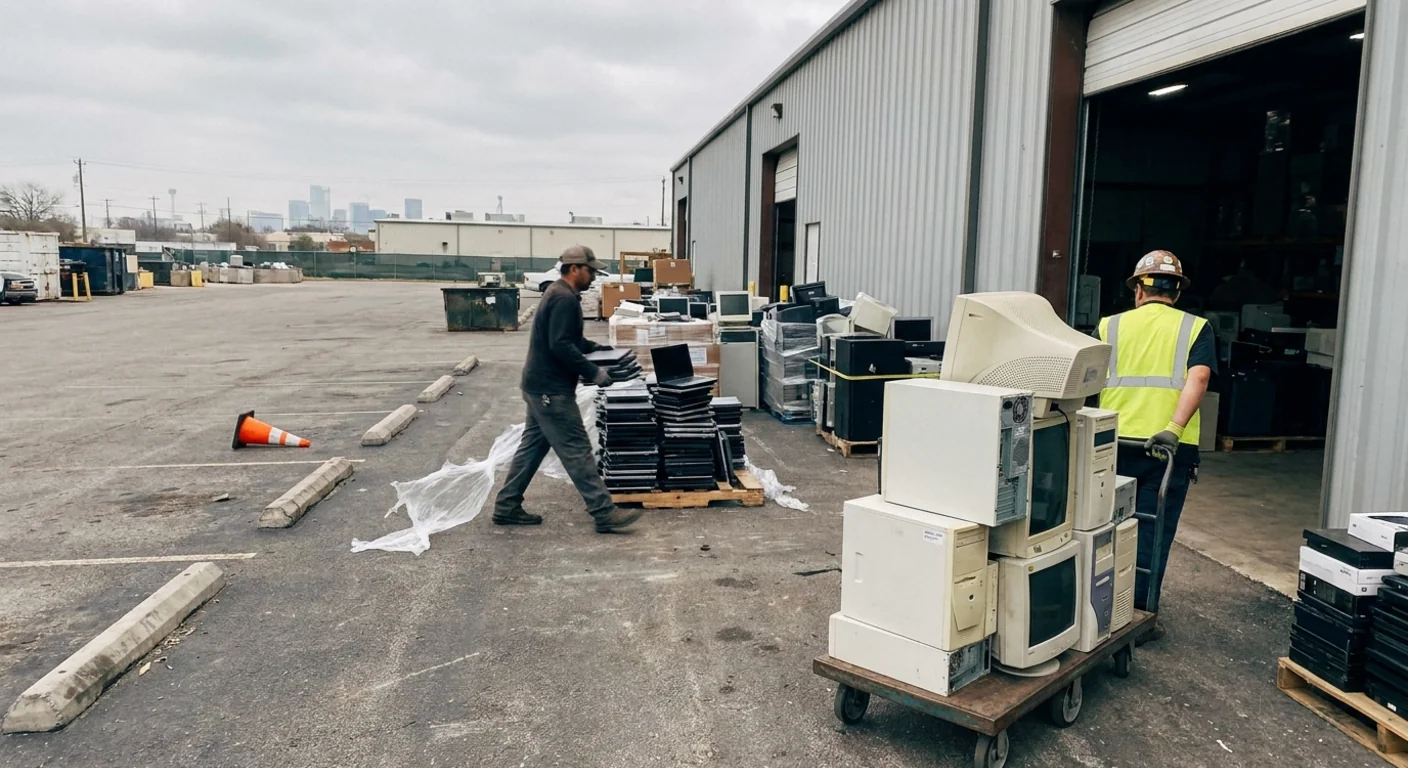
Electronic waste represents one of the fastest-growing waste streams in the United States, and Illinois has implemented strict regulations to keep these materials out of landfills. Whether you manage an office in Chicago, a healthcare facility in the suburbs, or a manufacturing operation across the metro area, understanding your electronics recycling obligations and options is essential. Chicago Shredder provides secure electronics recycling services designed to support compliance with Illinois e-waste laws while protecting your data and the environment.
1. What Qualifies as Electronic Waste in Illinois
Electronic waste, commonly called e-waste, includes any device containing circuit boards, batteries, or electronic components. Illinois law specifically regulates the disposal of computers, monitors, televisions, printers, keyboards, mice, laptops, tablets, and similar equipment. These items contain valuable materials like copper, aluminum, and precious metals, along with potentially hazardous substances including lead, mercury, and cadmium.
Beyond the items explicitly covered by Illinois law, businesses generate additional electronic waste including networking equipment, servers, copiers, telecommunication devices, audio-visual equipment, and medical electronics. All of these items benefit from proper recycling rather than disposal. Industry studies suggest that approximately 70 percent of heavy metals in landfills come from discarded electronics, making proper recycling both an environmental and regulatory priority.
Chicago Shredder accepts all types of business electronics for recycling. This comprehensive approach means businesses can recycle virtually any electronic equipment through a single service provider.
2. Illinois E-Waste Landfill Ban and Compliance Requirements
Illinois banned the landfilling of electronic waste in 2012 through the Electronic Products Recycling and Reuse Act. This legislation makes it illegal to dispose of covered electronic devices in regular trash or landfills anywhere in the state. The law applies to both businesses and residents, though enforcement and documentation requirements differ significantly between these groups.
For businesses, compliance involves more than simply avoiding landfill disposal. Many organizations need to demonstrate proper disposal practices for sustainability reporting, regulatory audits, or corporate responsibility initiatives. Industries handling sensitive information face additional requirements under frameworks designed to support compliance with regulations like HIPAA, GLBA, and SOX, which address data security during equipment disposal.
Chicago Shredder provides certificates of recycling that document the types and quantities of electronics processed, the date of service, and confirmation that no materials are knowingly disposed of in landfills. The review process creates a clear chain of custody from your facility through final processing.
3. What Electronics Can Be Recycled
Nearly all business electronics can be recycled through proper channels. Common items include desktop computers, laptops, monitors, servers, networking equipment, printers, copiers, scanners, and telecommunication devices. Mobile devices including phones and tablets are accepted, along with peripherals like keyboards, mice, cables, and power supplies.
Larger equipment recycling includes audio-visual systems, conference room technology, security systems, access control equipment, and point-of-sale terminals. Medical facilities can recycle diagnostic equipment, monitoring devices, and specialized medical electronics. Manufacturing and laboratory environments generate test equipment, control systems, and measurement devices that all qualify for electronics recycling.
Data-bearing devices receive special attention during the recycling process. Hard drives, solid-state drives, backup tapes, and other storage media are processed separately to ensure data destruction before material recovery. Chicago Shredder's Addison, Illinois facility includes an on-site hard drive crusher that physically destroys storage devices, rendering data designed to be unrecoverable while allowing the materials to proceed through the recycling stream. This integrated approach addresses both data security and environmental responsibility in a single process.
4. Business Electronics Recycling Services
Chicago Shredder focuses on serving businesses, institutions, and organizations across the Chicago metropolitan area. Services are designed around the practical realities of business operations, including equipment retirement schedules, office moves, technology refreshes, and ongoing disposal needs. Whether processing a single server or clearing an entire data center, the approach remains consistent and secure.
Pickup services are available throughout the Chicago metro area, eliminating the need for businesses to transport equipment. Scheduling accommodates business hours and operational requirements, with logistics coordinated to minimize disruption. Typical response time is within one business day of initial contact, though specific scheduling depends on volume and location.
For organizations with ongoing electronics disposal needs, regular pickup schedules can be established. This approach works particularly well for businesses with continuous equipment turnover, such as technology companies, healthcare systems, educational institutions, and financial services firms. Regular service ensures that retired equipment is removed promptly rather than accumulating in storage areas, reducing security risks and freeing valuable space.
5. More to Consider
This documented framework requires documented processes, regular audits, and verified downstream processing.
The processing facility approach means electronics are processed according to established standards rather than informal methods. Materials are sorted, tested for potential reuse, and systematically disassembled when recycling is appropriate. Hazardous components are separated and handled according to regulations. Valuable materials are recovered for productive use. The process is designed to maximize material recovery while minimizing environmental impact.
Downstream vendors who receive materials from the processing facility are also vetted and tracked, creating accountability throughout the recycling chain. This multi-tier approach addresses concerns about electronics ending up in uncontrolled recycling operations or being exported to facilities with substandard practices.
6. Data Security During Electronics Recycling
Data security represents a critical concern when recycling business electronics. Storage devices contain everything from customer information and financial records to proprietary business data and employee information. Simply deleting files or formatting drives does not make data designed to be unrecoverable, creating potential security and compliance risks.
Chicago Shredder addresses data security through multiple methods. The on-site hard drive crusher at the Addison, Illinois facility physically destroys hard drives and solid-state drives, deforming platters and circuit boards to the point where data recovery becomes impractical. This physical destruction method is considered more reliable than software-based erasure for maximum security applications. Data destruction services are designed to support compliance requirements under frameworks like HIPAA, GLBA, and SOX.
For organizations requiring detailed documentation, certificates of destruction are provided that list serial numbers of destroyed devices, date of destruction, and method used. The combination of physical destruction and detailed documentation creates a complete chain of custody for sensitive storage media.
7. How to Schedule Electronics Recycling in the Chicago Metro Area
Scheduling electronics recycling with Chicago Shredder begins with a phone call to 866-770-2650 or submitting a pickup request through the website. The initial contact gathers information about the types and quantities of equipment, location, and any specific requirements such as data destruction documentation or hard drive destruction.
Based on this information, logistics are coordinated to schedule a pickup time that works with your operational schedule. For larger volumes or complex situations like data center decommissioning, an on-site assessment may be recommended to ensure appropriate resources and planning. Most standard pickups are scheduled within one business day of initial contact, though timing varies based on volume and location.
Pickup day involves trained personnel arriving at your facility to load equipment. If hard drive destruction is part of the service, storage devices are identified and separated for processing at the Addison facility. All other electronics are inventoried and loaded for transport to the secure processing facility. Following processing, certificates of recycling are provided documenting the service, materials processed, and confirmation that no materials are knowingly disposed of in landfills.
8. Frequently Asked Questions
Is electronics recycling required by law in Illinois?
Yes, Illinois law prohibits the landfilling of covered electronic devices including computers, monitors, televisions, printers, and similar equipment. This requirement applies statewide to both businesses and residents, making proper recycling legally mandatory rather than optional.
What happens to data on hard drives during electronics recycling?
Chicago Shredder uses an on-site hard drive crusher at the Addison, Illinois facility to physically destroy storage devices.
Do you provide documentation for recycled electronics?
Yes, certificates of recycling are provided documenting the types and quantities of electronics processed, date of service, and confirmation that no materials are knowingly disposed of in landfills.
What types of businesses use electronics recycling services?
Chicago Shredder serves organizations across industries including healthcare facilities, financial services firms, educational institutions, technology companies, manufacturing operations, legal practices, and government agencies. Any business that retires electronic equipment benefits from secure recycling services.
How quickly can you schedule a pickup in the Chicago area?
Chicago Shredder typically responds within one business day of initial contact. Actual pickup scheduling depends on the volume of equipment, location within the Chicago metro area, and your operational schedule, but most standard pickups are coordinated promptly.
Electronics recycling in Illinois involves more than environmental responsibility. It represents a legal requirement, a data security necessity, and an operational consideration for businesses across the Chicago metropolitan area. Working with a secure provider ensures that retired equipment is handled according to established standards, data is properly destroyed, and documentation supports your compliance and sustainability initiatives. Chicago Shredder brings local service and secure processing together, providing businesses with a reliable solution for ongoing electronics disposal needs. To schedule a pickup or discuss your specific requirements, call 866-770-2650 or visit the website to request service across the Chicago metro area.
Ready to schedule a pickup?
Call 866-770-2650 or request a quote online. Every pickup includes clear service documentation.