

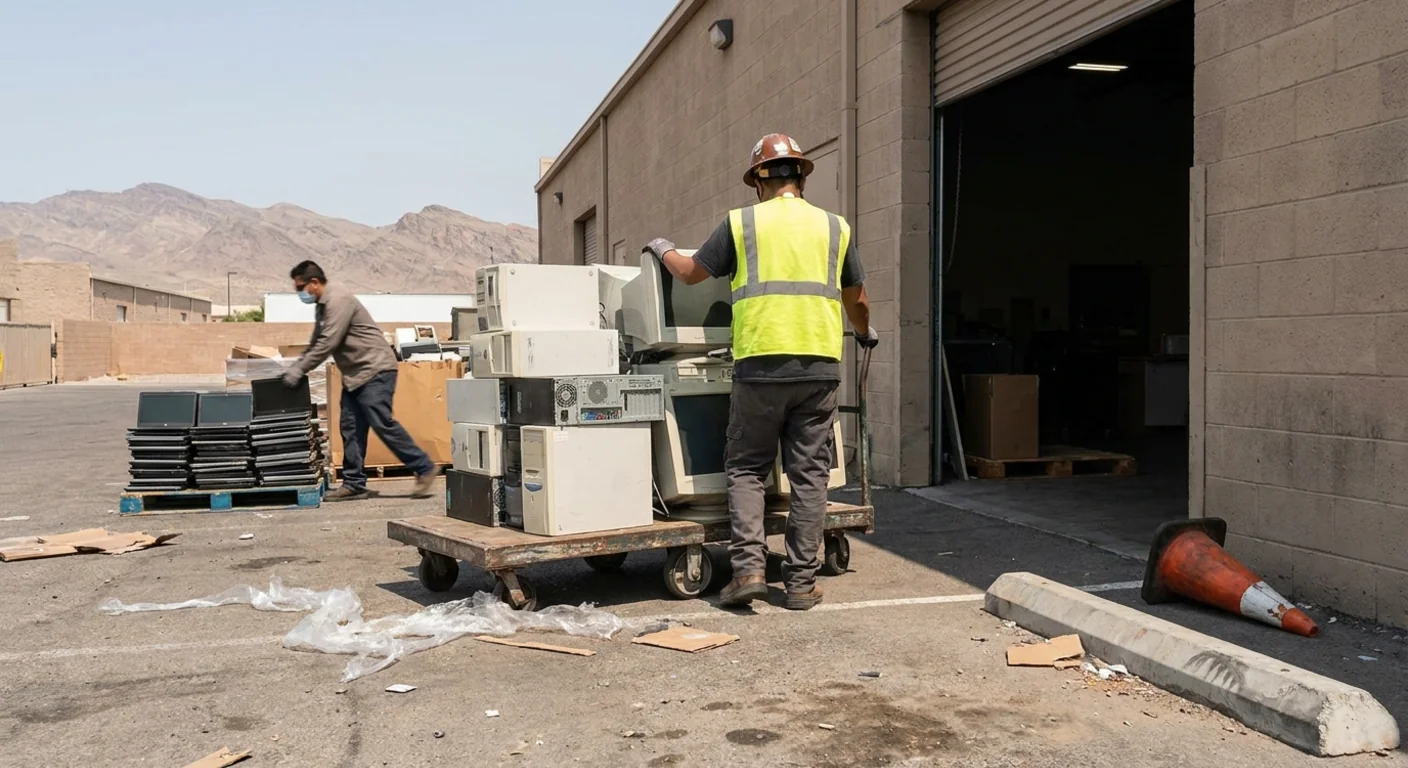
The Las Vegas metropolitan area, including Henderson and Paradise, generates significant volumes of electronic waste from residential, commercial, and hospitality sectors. While Chicago Shredder operates primarily in the Chicago region, understanding electronics recycling principles applies across jurisdictions. This guide covers what qualifies as e-waste, why proper disposal matters, what items can be recycled, and how secure processing protects both environmental and data security interests. Whether you manage IT assets for a casino, healthcare facility, or office complex, responsible electronics disposal supports regulatory compliance and sustainability goals.
1. What Qualifies as Electronic Waste
Electronic waste, or e-waste, encompasses any device with a circuit board, battery, or electronic component. Common examples include desktop computers, laptops, monitors, servers, networking equipment, printers, copiers, smartphones, tablets, and peripherals like keyboards and mice. Larger items such as televisions, audio equipment, and medical devices also fall into this category.
Many electronic devices contain recoverable materials including aluminum, copper, steel, gold, silver, and rare earth elements. They also frequently contain hazardous substances such as lead, mercury, cadmium, and brominated flame retardants. These materials pose environmental risks when disposed of improperly.
In Illinois, the Electronic Products Recycling and Reuse Act prohibits landfill disposal of most consumer electronics. While Nevada regulations differ, the environmental and data security principles remain consistent. Businesses across industries face growing pressure to document proper disposal practices through sustainability reporting and compliance frameworks.
2. Why Landfilling Electronics Creates Problems
When electronics reach landfills, toxic substances can leach into groundwater supplies. Lead from cathode ray tubes, mercury from LCD backlights, and cadmium from rechargeable batteries represent persistent environmental hazards. These contaminants accumulate in soil and water systems, creating long-term cleanup challenges.
Beyond environmental concerns, discarded electronics often contain sensitive data. Hard drives, solid-state drives, and embedded memory chips store financial records, personal information, customer databases, and proprietary business data. Simply deleting files or reformatting drives does not render data unrecoverable. Forensic recovery tools can retrieve information from devices that appear wiped.
Illinois law recognizes these dual risks by mandating electronics recycling. Companies operating in Nevada face similar data security requirements under industry-specific regulations. Healthcare organizations must address HIPAA privacy rules, financial institutions handle GLBA requirements, and educational entities manage FERPA obligations. Proper electronics recycling addresses both environmental stewardship and information security.
3. More to Consider
This secure process requires documented procedures for asset tracking, data destruction verification, and downstream vendor management. Facilities must demonstrate that materials move through audited channels rather than informal markets where environmental and labor standards may not apply. This documented framework helps organizations demonstrate due diligence in sustainability reporting.
Facilities must employ tested methods that render data unrecoverable through standard forensic techniques. For clients requiring maximum security, physical destruction options ensure that storage media cannot be reassembled or reconstructed.
4. What Electronics Can Be Recycled
Chicago Shredder accepts most business and residential electronics. Computer equipment includes desktops, laptops, servers, workstations, and thin clients. Peripheral devices such as monitors, keyboards, mice, webcams, and docking stations qualify for recycling. Networking equipment like routers, switches, modems, and access points can be processed.
Office equipment recycling covers printers, copiers, scanners, fax machines, and multifunction devices. Mobile devices including smartphones, tablets, and cellular hotspots contain recoverable materials and require data sanitization. Audio-visual equipment such as projectors, televisions, DVD players, and sound systems also qualify.
Data storage devices receive specialized handling. Hard drives, solid-state drives, backup tapes, USB drives, and external storage arrays undergo documented destruction processes. Chicago Shredder maintains an on-site hard drive crusher at its Addison, Illinois facility, providing witnessed destruction for clients requiring maximum security assurance. Certificates of destruction document the serial numbers and destruction methods for audit purposes.
Some items require special handling due to hazardous materials content. CRT monitors and televisions contain lead in their glass components. Batteries from laptops and mobile devices require separate processing streams. Mercury-containing backlights from older LCD displays need careful extraction.
5. Residential vs Business Recycling Options
Residential electronics recycling typically involves smaller volumes and less stringent documentation requirements. Households disposing of old computers, televisions, or mobile devices focus primarily on convenient drop-off locations or periodic collection events. Data security remains important for personal devices, but formal certificates of destruction are less common.
Business recycling presents different requirements. Organizations manage larger volumes, often involving complete IT refresh cycles or office closures. They need documented proof of proper disposal for auditing purposes, sustainability reporting, and regulatory compliance. Many businesses require certificates of recycling that detail what materials were processed, when collection occurred, and where items were sent.
Compliance frameworks drive business recycling decisions. Healthcare organizations handle devices that processed protected health information. Financial services firms manage systems containing customer financial data. Educational institutions dispose of devices used by students and faculty. Each sector faces specific requirements designed to support compliance with privacy and security regulations.
Chicago Shredder serves both residential and business clients in the greater Chicago area. Business accounts receive customized pickup scheduling, asset tracking, and detailed documentation. The approach scales from single-device pickups to complete data center decommissions involving hundreds of servers and networking components.
6. Pickup Logistics and Service Areas
Chicago Shredder provides pickup services throughout the Chicago metropolitan area from its Addison, Illinois facility. Service coverage includes Cook County, DuPage County, Lake County, Will County, and McHenry County. Pickup scheduling accommodates business operational requirements, including after-hours and weekend appointments when necessary.
The pickup process begins with an inventory assessment. Clients provide details about equipment types, quantities, and any special handling requirements. This information helps determine appropriate vehicle size and staffing. For large-scale projects involving complete office moves or data center closures, on-site project management ensures efficient coordination.
Data-bearing devices receive chain-of-custody documentation from the point of pickup. Serial numbers are recorded, and items are sealed in tamper-evident containers for transport to the processing facility. This documentation trail supports audit requirements and provides verification that assets reached their intended destination.
Typical response time for pickup requests is within one business day, though scheduling depends on current service volume and geographic location within the coverage area. Rush services can often be arranged for urgent situations such as office lease expirations or emergency IT replacements.
7. Certificates of Recycling for Sustainability Reporting
Organizations increasingly face stakeholder expectations around environmental stewardship. Sustainability reports document waste diversion rates, recycling volumes, and responsible disposal practices.
A comprehensive certificate details the materials received, processing date, total weight by category, and final disposition methods. For publicly traded companies or organizations pursuing sustainability certifications, this documentation supports disclosure requirements.
Data destruction certificates complement recycling documentation. These certificates list specific hard drives or storage devices by serial number, describe the destruction method employed, and confirm that data sanitization met recognized standards. Some organizations require both data destruction certificates and recycling certificates to satisfy different reporting frameworks.
Chicago Shredder provides detailed certificates as standard practice for business accounts. Digital certificates allow easy archiving and retrieval for multi-year reporting cycles.
8. Frequently Asked Questions
Does Chicago Shredder service the Las Vegas metropolitan area?
Chicago Shredder primarily serves the greater Chicago region from its Addison, Illinois facility.
What happens to data on hard drives during electronics recycling?
All data-bearing devices undergo sanitization processes designed to render information unrecoverable. Chicago Shredder maintains an on-site hard drive crusher at its Addison facility for clients requiring physical destruction. Certificates document serial numbers and destruction methods for compliance purposes.
Can I recycle old televisions and monitors?
Yes, both CRT and flat-panel displays can be recycled. These items contain recoverable materials but also require special handling due to lead content in CRT glass and mercury in some LCD backlights.
How long does the pickup process take?
Chicago Shredder typically responds to pickup requests within one business day, though actual scheduling depends on service volume and location within the coverage area. Large-scale projects receive coordinated scheduling to minimize disruption to business operations.
What documentation is provided after electronics recycling?
Business clients receive certificates of recycling detailing materials processed, total weights, and processing dates. When data-bearing devices are included, separate certificates of destruction document serial numbers and sanitization methods. This documentation supports audit requirements and sustainability reporting.
Are there items that cannot be recycled?
Most business and consumer electronics qualify for recycling. Items containing hazardous materials require special processing streams but can still be accepted. Specific questions about unusual equipment types can be addressed during the initial consultation process.
Responsible electronics recycling addresses environmental protection, data security, and regulatory compliance requirements. While Chicago Shredder operates in the greater Chicago area rather than Las Vegas, the principles of secure processing, documented data destruction, and sustainable materials management apply across all jurisdictions. Organizations seeking to Choose a recycler that documents chain of custody and provides a Certificate of Recycling. Contact Chicago Shredder at 866-770-2650 to discuss your electronics recycling needs or schedule a pickup.
Ready to schedule a pickup?
Call 866-770-2650 or request a quote online. Every pickup includes clear service documentation.