

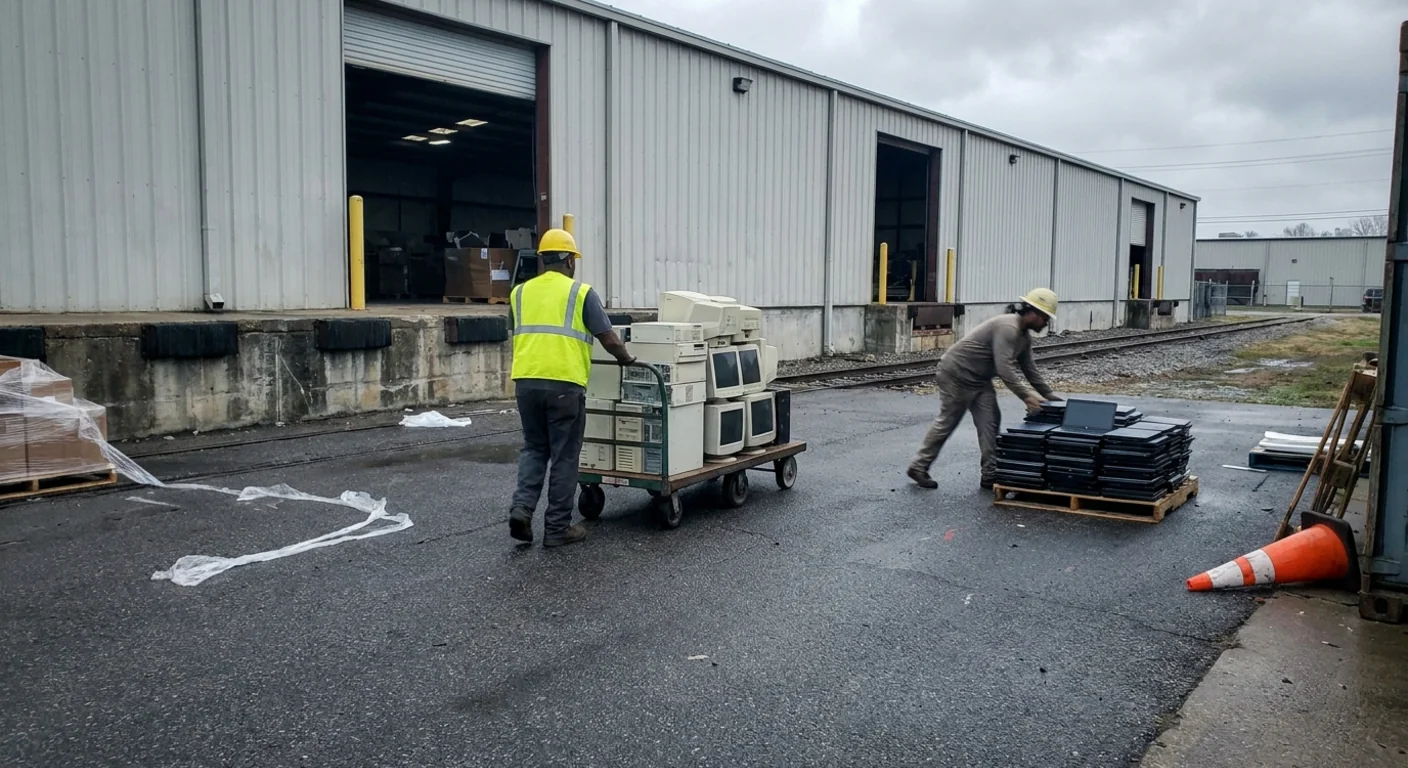
The Memphis metropolitan area spanning Tennessee, Mississippi, and Arkansas generates significant volumes of electronic waste annually. Proper electronics recycling prevents toxic materials from entering landfills while recovering valuable resources like copper, gold, and rare earth elements. This guide covers what qualifies as electronic waste, why proper disposal matters, and how to access recycling services throughout the Memphis area.
1. What Qualifies as Electronic Waste
Electronic waste, commonly called e-waste, includes any device with a circuit board, battery, or electrical cord. Computers and laptops represent the most common items, along with monitors, keyboards, mice, and printers. Televisions of all types including CRT, LCD, LED, and plasma models qualify as e-waste requiring specialized handling.
Mobile phones, tablets, and their charging accessories contain recoverable materials and should never enter standard trash streams. Networking equipment like routers, modems, switches, and servers from both residential and commercial settings require proper recycling. Office equipment including copiers, fax machines, scanners, and point-of-sale terminals also falls under the e-waste category.
Smaller electronics often get overlooked but still require responsible disposal. Game consoles, DVD players, stereo equipment, and kitchen appliances with digital components contain valuable materials and potentially hazardous substances. Even cables, power supplies, and peripherals merit recycling rather than landfill disposal. Industry studies suggest that proper e-waste recycling recovers up to 95% of materials for reuse in manufacturing.
2. Why Proper Electronics Disposal Matters
Electronic devices contain heavy metals including lead, mercury, cadmium, and chromium that pose environmental and health risks when improperly disposed. Cathode ray tube monitors and older televisions contain several pounds of lead in their glass panels. When these materials leach into soil and groundwater from landfills, they create long-term contamination problems affecting water supplies and ecosystems.
Many electronics also contain flame retardants and other chemicals classified as persistent organic pollutants. These substances accumulate in living organisms and resist natural degradation. Burning electronics releases toxic fumes containing dioxins and other carcinogens into the atmosphere.
Beyond environmental protection, electronics recycling recovers finite resources. Circuit boards contain precious metals including gold, silver, platinum, and palladium used in connections and components. Proper processing facilities extract these materials for remanufacturing, reducing the need for destructive mining operations. Plastics, aluminum, copper, and steel recovered from electronics reduce energy consumption compared to virgin material production.
3. More to Consider
Responsible electronics recycling requires facilities with documented processes and environmental controls. These standards address data security, worker safety, environmental protection, and downstream vendor accountability. Facilities meeting these standards demonstrate proper handling from receiving through final disposition.
Processing facilities must maintain proper permits, worker training programs, and environmental monitoring systems.
Data security represents a critical component of responsible electronics recycling. Hard drives and storage devices require destruction methods designed to render information unrecoverable. NIST SP 800-88 guidelines outline best practices for media sanitization, while standards like DoD 5220.22-M provide frameworks for secure data destruction.
4. Residential Electronics Recycling Options
Memphis area residents have several options for recycling personal electronics. Many municipalities sponsor periodic collection events where residents drop off items at designated locations. These events typically accept common household electronics free of charge, though some restrict quantities or specific item types.
Retailers often provide take-back programs for electronics purchased from their stores. Some accept items regardless of purchase location, while others limit acceptance to specific brands or product categories. These programs work well for individual items but may not accommodate bulk quantities from home cleanouts or business closures.
Private recycling services offer convenient alternatives, particularly for larger volumes or items requiring pickup. Scheduling typically involves contacting the provider to describe items and quantities. Services designed to support residential clients often waive fees for standard electronics, generating revenue through recovered materials rather than customer charges. Pickup scheduling provides convenience for households unable to transport bulky items like televisions and older computer equipment.
5. Business Electronics Recycling Services
Commercial operations face distinct challenges when retiring IT equipment and other electronics. Businesses replacing computer fleets, upgrading server infrastructure, or closing facilities generate volumes beyond residential recycling options.
Companies in healthcare, finance, education, and legal sectors handle sensitive information subject to regulations including HIPAA, GLBA, SOX, and FERPA. Electronics recycling for these organizations must include data destruction processes designed to support compliance requirements. Certificates of destruction document serial numbers, destruction methods, and dates to satisfy audit requirements and internal policies.
IT asset disposition services extend beyond basic recycling to include inventory management, asset tracking, and remarketing when appropriate. Businesses benefit from detailed reporting showing environmental impact metrics, materials diverted from landfills, and carbon footprint reductions. These reports support sustainability initiatives and corporate responsibility programs. Scheduling commercial pickups typically involves coordinating with facility managers to minimize disruption, with services designed to accommodate loading dock access, security protocols, and specific timing requirements.
6. Pickup Logistics and Service Areas
Professional electronics recycling services typically operate on scheduled pickup models. Businesses and residents contact providers to describe items requiring disposal, including approximate quantities and equipment types. This information helps recyclers determine appropriate vehicle size, labor requirements, and any specialized equipment needed for safe removal.
Pickup scheduling flexibility varies by provider and service area. Some offer next-day service for urgent needs, while others schedule several days in advance. Commercial clients with regular equipment retirement cycles often establish recurring pickup schedules, reducing administrative burden and ensuring consistent disposal practices.
Service areas for Memphis-based recycling often extend throughout the metropolitan region, including Shelby County, DeSoto County in Mississippi, and portions of Arkansas near the Tennessee border. Minimum quantities may apply for distant locations to ensure efficient routing. Providers typically respond to inquiries within one business day with scheduling options and any applicable service requirements. Urban areas generally receive more frequent service routing, while rural locations may require advance scheduling to coordinate efficient pickup routes.
7. Certificates of Recycling and Reporting
Documentation proves critical for businesses tracking sustainability metrics and meeting regulatory requirements. Certificates of recycling provide detailed records of materials processed, including item descriptions, quantities, and disposition methods.
Some providers calculate environmental impact metrics showing carbon dioxide equivalent reductions, energy savings compared to virgin material production, and water conservation figures. This data helps organizations quantify sustainability achievements and set future reduction goals.
Data destruction certificates serve distinct purposes from recycling documentation. These records verify specific hard drives or storage media received destruction designed to render data unrecoverable. Serial numbers, destruction methods, and dates create audit trails for compliance purposes. Organizations subject to data protection regulations or internal information security policies rely on these certificates to demonstrate proper handling of retired equipment containing sensitive information. Maintaining these records supports both environmental stewardship and data governance programs.
8. Frequently Asked Questions
What electronics can be recycled in the Memphis area?
Most electronics with circuit boards, batteries, or electrical cords qualify for recycling. This includes computers, monitors, televisions, mobile devices, printers, networking equipment, and office electronics. Even small items like cables and peripherals should be recycled rather than discarded in regular trash.
Do I need to remove data from devices before recycling?
While removing personal data before recycling is recommended, secure recycling services provide data destruction designed to render information unrecoverable. Professional services document destruction methods and provide certificates verifying proper handling of storage devices.
Is there a cost for electronics recycling pickup?
Costs vary by provider, item types, and quantities. Many services waive fees for standard electronics, generating revenue through recovered materials. Some items like CRT monitors may involve processing fees due to specialized handling requirements.
How long does pickup scheduling take?
Response times vary by provider and current demand. Services typically respond to inquiries within one business day with available scheduling options. Actual pickup timing depends on service routing, item quantities, and location within the service area.
What happens to electronics after collection?
Electronics collected in the Memphis area are transported to secure processing facilities where they undergo sorting, data destruction, and material recovery.
Can businesses get documentation for sustainability reporting?
Yes, commercial electronics recycling services typically provide certificates detailing items processed, weights diverted from landfills, and environmental impact metrics.
Responsible electronics recycling in the Memphis metropolitan area protects the environment while recovering valuable resources. Understanding what qualifies as e-waste, why proper disposal matters, and how secure processing works helps residents and businesses make informed decisions. Professional recycling services provide convenient pickup options, data security measures, and documentation supporting sustainability goals. Whether disposing of a single computer or retiring an entire IT infrastructure, working with secure providers ensures materials receive proper handling throughout the recycling process. For electronics recycling services, contact Chicago Shredder at 866-770-2650 to discuss your needs and schedule a pickup that meets your timeline and requirements.
Ready to schedule a pickup?
Call 866-770-2650 or request a quote online. Every pickup includes clear service documentation.