

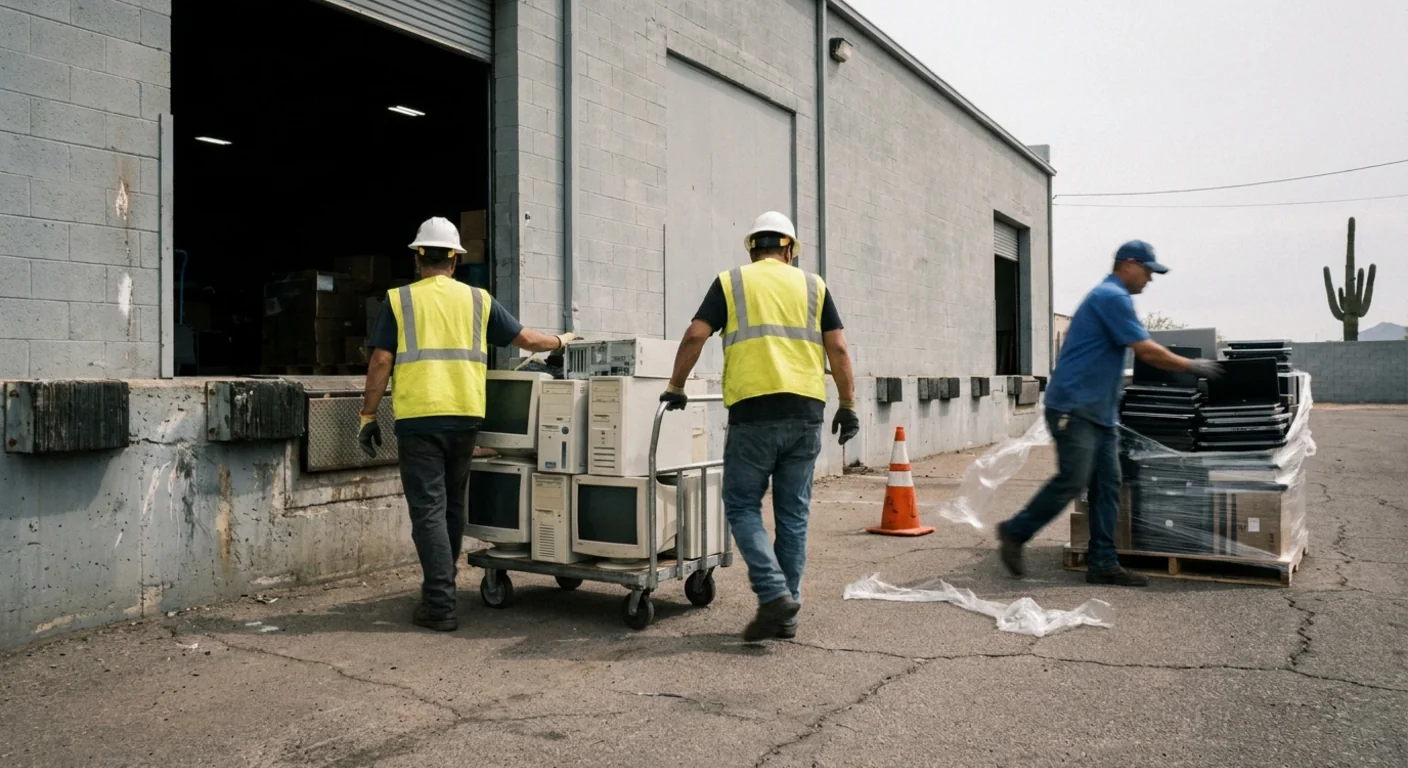
Electronic waste, commonly known as e-waste, presents unique challenges for individuals and businesses across Phoenix, Arizona. From outdated computers and monitors to printers and networking equipment, these devices contain materials that require specialized handling and processing. Understanding what qualifies as e-waste, how secure recycling works, and the options available for both residential and commercial clients helps ensure responsible disposal.
1. What Qualifies as E-Waste and Why Proper Disposal Matters
Electronic waste encompasses a broad range of devices that have reached end-of-life status. This includes computers, laptops, servers, monitors, keyboards, mice, printers, copiers, networking equipment, tablets, smartphones, and related peripherals. These items contain valuable materials like copper, aluminum, and precious metals, alongside potentially hazardous components such as lead, mercury, and cadmium.
Many states have enacted legislation restricting the disposal of electronics in standard landfills due to environmental and health concerns. While Illinois law prohibits landfilling of most electronics, Arizona regulations differ. However, sustainable recycling remains the recommended approach regardless of legal requirements. Landfilling electronics wastes recoverable resources and risks soil and groundwater contamination as devices break down over time.
Beyond environmental considerations, businesses face data security risks when disposing of electronics through non-processing channels. Hard drives, solid-state drives, and other storage media may retain sensitive information even after deletion.
2. More to Consider
This secure process requires documented processes for handling, testing, and processing electronic equipment. Facilities must track materials through the recycling chain, ensuring components reach appropriate end markets rather than improper disposal channels. This secure process addresses worker safety, pollution prevention, and responsible management of focus materials like mercury-containing devices and cathode ray tubes.
These audits examine facility operations, documentation practices, downstream vendor qualifications, and environmental management systems. For businesses with compliance obligations under frameworks like HIPAA, GLBA, or SOX, working with certified processors provides documented assurance that electronics disposal meets industry-recognized standards designed to support regulatory requirements.
3. What Electronics Can Be Recycled
The range of acceptable electronics spans virtually all information technology and office equipment. Desktop computers and laptops represent the most common items, along with their associated peripherals including monitors, keyboards, mice, and external drives. Servers, networking equipment like routers and switches, and telecommunications hardware all qualify for recycling.
Printing and imaging equipment accepts laser printers, inkjet printers, multifunction devices, copiers, scanners, and fax machines. Mobile devices including smartphones, tablets, and e-readers can be processed, along with their charging accessories. Audio-visual equipment such as projectors, conference room displays, and video conferencing systems also qualify.
Certain items require special handling due to their component materials. Cathode ray tube monitors and televisions contain lead and other materials requiring specific processing protocols. Batteries, particularly lithium-ion batteries from laptops and mobile devices, need separate handling. Mercury-containing devices like older LCD backlights follow distinct processing paths.
4. Residential vs Business Electronics Recycling Options
Residential clients in Phoenix typically accumulate smaller quantities of electronics over time. A household might have a few outdated laptops, an old desktop computer, a printer that no longer functions, and various cables and peripherals. For these volumes, scheduling a one-time pickup provides a convenient solution. Service extends throughout the Phoenix metropolitan area, accommodating both individual homes and multi-family residential properties.
Businesses face different requirements based on their industry, size, and technology refresh cycles. Companies replacing desktop computers every three to five years may generate dozens or hundreds of units simultaneously. Medical offices upgrading diagnostic equipment must ensure HIPAA-compliant data destruction. Financial institutions disposing of workstations need processes designed to support GLBA requirements. Educational institutions managing computer lab refreshes require volume capacity and appropriate documentation.
Commercial clients often benefit from scheduled recurring service, particularly during planned technology refresh cycles. Large volume pickups can be coordinated for office moves, consolidations, or facility closures. For businesses maintaining ongoing IT asset disposition needs, establishing a relationship with a recycling provider streamlines the process and ensures consistent handling of electronics throughout their lifecycle.
5. Pickup Logistics and Service Areas in Phoenix
Chicago Shredder provides pickup service throughout the Phoenix metropolitan area, including Phoenix proper, Scottsdale, Tempe, Mesa, Chandler, Glendale, and surrounding communities. Service extends to both Maricopa County and adjacent areas based on volume and scheduling availability. The pickup process begins with an initial consultation to assess the quantity and types of electronics requiring recycling.
For smaller quantities, items can often be consolidated in a designated area for efficient pickup. Businesses with larger volumes may require dock access or freight elevator coordination. The pickup team typically arrives with appropriate equipment for safe loading, including hand trucks, pallet jacks, and securing materials. Most residential pickups complete within 30 minutes, while commercial pickups vary based on volume and facility layout.
Scheduling typically follows a straightforward process. Clients contact Chicago Shredder at 866-770-2650 to describe their electronics recycling needs. The team typically responds within one business day to discuss volume, location, and timing. For urgent situations like office closures or lease expirations, expedited scheduling may be available. Once scheduled, clients receive confirmation with the pickup window and any preparation instructions specific to their situation.
6. Data Destruction and Security Protocols
Data security remains a critical concern when recycling electronics containing storage media. Hard drives, solid-state drives, smartphones, and tablets may retain sensitive information including financial records, customer data, employee information, or proprietary business details. Simply deleting files or reformatting drives leaves data potentially recoverable through forensic tools.
Chicago Shredder maintains an on-site hard drive crusher at its Addison, Illinois facility. This physical destruction method renders drives inoperable and data unrecoverable. The crusher applies thousands of pounds of pressure, permanently deforming platters, circuit boards, and enclosures. This approach meets standards including DoD 5220.22-M and follows NIST SP 800-88 guidelines for media sanitization.
For clients requiring documented proof of destruction, certificates of recycling and data destruction are available. These certificates detail the items processed, destruction methods applied, and processing dates. Businesses maintaining compliance programs or sustainability reporting initiatives use these certificates as evidence of responsible electronics disposal and data security practices. The documentation supports audit requirements and demonstrates due diligence in protecting sensitive information.
7. Certificates of Recycling for Sustainability Reporting
Many organizations now track electronics recycling as part of corporate sustainability initiatives or environmental management programs. Certificates of recycling provide documented evidence of responsible disposal, supporting both internal reporting and external disclosures.
Businesses pursuing LEED certification for facilities, participating in industry-specific sustainability frameworks, or reporting under ESG (Environmental, Social, and Governance) criteria benefit from maintaining comprehensive recycling documentation. The certificates demonstrate diversion of materials from landfills and responsible end-of-life management for IT assets.
Beyond sustainability reporting, certificates serve compliance and audit functions. Organizations subject to data protection regulations can document proper disposal of devices containing sensitive information. Companies managing intellectual property need records showing secure destruction of development hardware. Government contractors and regulated entities use certificates to satisfy record-keeping requirements. The documentation provides an audit trail connecting asset disposal to secure processing.
8. Frequently Asked Questions
Does Chicago Shredder provide electronics recycling service in Phoenix, Arizona?
Yes, Chicago Shredder provides pickup service throughout the Phoenix metropolitan area, including Phoenix, Scottsdale, Tempe, Mesa, Chandler, Glendale, and surrounding communities. Service accommodates both residential and commercial clients across Maricopa County and adjacent areas.
What types of electronics can be recycled through this service?
Acceptable items include computers, laptops, servers, monitors, printers, copiers, networking equipment, tablets, smartphones, and related peripherals.
What happens to data on hard drives and storage devices?
Chicago Shredder maintains an on-site hard drive crusher at its Addison, Illinois facility that physically destroys drives, rendering data designed to be unrecoverable. This method follows DoD 5220.22-M standards and NIST SP 800-88 guidelines, with certificates of destruction available for documentation and compliance purposes.
How long does the pickup scheduling process typically take?
After contacting Chicago Shredder at 866-770-2650, the team typically responds within one business day to discuss your electronics recycling needs. Scheduling depends on volume, location, and timing requirements, with expedited options potentially available for urgent situations.
Responsible electronics recycling in Phoenix requires understanding what qualifies as e-waste, Choose a recycler that documents chain of custody and provides a Certificate of Recycling. Certificates of recycling and data destruction support sustainability reporting and compliance documentation. To schedule electronics recycling pickup in Phoenix or discuss your specific requirements, call 866-770-2650 or visit the website to arrange service.
Ready to schedule a pickup?
Call 866-770-2650 or request a quote online. Every pickup includes clear service documentation.