

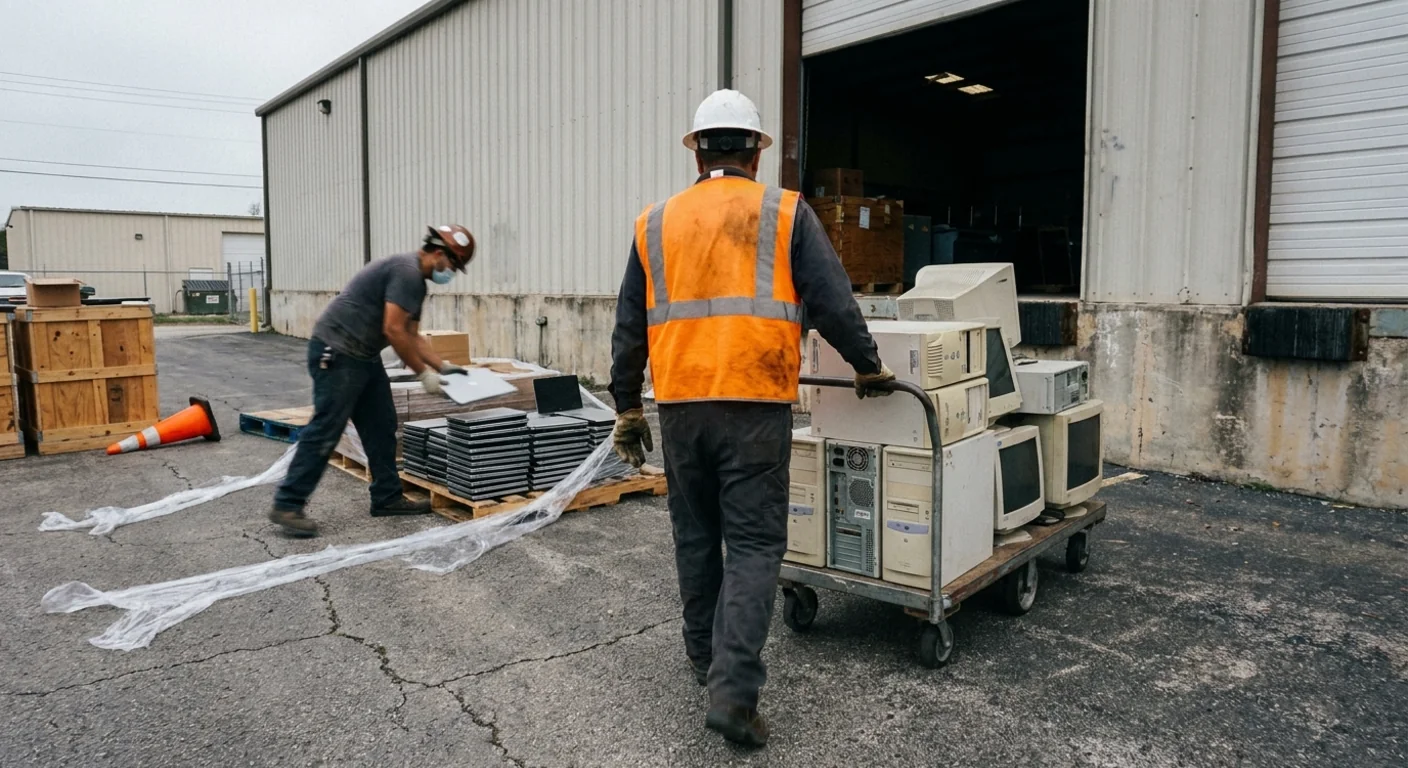
Electronic waste continues to accumulate in homes and businesses across the Chicago metropolitan area. Illinois law prohibits landfilling certain electronics, making secure recycling services essential. This guide covers what qualifies as e-waste, available recycling options for residential and commercial clients, the role of secure processing facilities, and how to schedule electronics pickup throughout the Chicago region.
1. Understanding E-Waste and Illinois Landfill Restrictions
Electronic waste, commonly called e-waste, includes any discarded device containing circuit boards, batteries, or electronic components. Computers, monitors, televisions, printers, mobile phones, tablets, networking equipment, and small appliances all fall under this category. These items contain valuable materials like copper, aluminum, and precious metals, along with potentially hazardous substances including lead, mercury, and cadmium.
Illinois enacted the Electronic Products Recycling and Reuse Act to address growing e-waste concerns. This legislation prohibits residents and businesses from disposing of certain electronics in municipal waste streams. Covered items include computers, monitors, televisions, printers, and electronic keyboards. Violating these disposal restrictions can result in penalties for businesses and creates environmental risks when hazardous materials enter landfills.
The state's approach recognizes that electronic devices require specialized handling. Standard waste management facilities lack the equipment and processes needed to safely dismantle electronics and recover valuable materials. Secure recycling operations employ trained technicians who systematically break down devices, separate component materials, and channel them toward appropriate downstream processors.
Proper electronics recycling prevents soil and groundwater contamination while recovering resources for reuse in manufacturing. Industry studies suggest that recycling one million laptops saves energy equivalent to powering 3,500 homes for a year. Chicago residents and businesses play a direct role in this resource conservation by choosing secure recycling services over improper disposal methods.
2. What Electronics Can Be Recycled
Chicago Shredder accepts a comprehensive range of electronic equipment from residential and commercial sources. Standard items include desktop computers, laptops, servers, monitors, keyboards, mice, and all related peripherals. Printers, copiers, fax machines, and multifunction devices qualify for recycling regardless of age or working condition. Networking equipment such as routers, switches, modems, and cabling also receives proper processing.
Telecommunication devices represent another major category. Cell phones, smartphones, tablets, landline phones, and PBX systems all contain recyclable materials. Audio-visual equipment including televisions, projectors, DVD players, stereo systems, and speakers can be processed through processing channels. Small electronics like calculators, digital cameras, gaming consoles, and portable music players round out the acceptable items list.
Batteries require special attention during the recycling process. Laptop batteries, UPS backup batteries, rechargeable batteries, and lithium-ion cells all demand careful handling due to fire risks and chemical content. These items receive separate processing to ensure safety and maximize material recovery. Circuit boards from all devices undergo systematic dismantling to extract precious metals and separate hazardous components.
Data-bearing devices receive additional security protocols. Hard drives, solid-state drives, USB drives, memory cards, and backup tapes contain sensitive information requiring destruction before material recycling. Chicago Shredder operates an on-site hard drive crusher at the Addison, Illinois facility, providing physical destruction that renders data recovery extremely difficult. This service addresses security concerns while allowing the remaining device components to proceed through standard recycling channels.
3. More to Consider
Regular reviews confirm ongoing adherence to these standards. This approach ensures that collected electronics follow responsible pathways rather than entering unregulated export channels or substandard processing operations.
Initial sorting separates devices by type and identifies items requiring special handling. Technicians remove batteries, assess equipment for potential reuse, and document materials for client reporting. Dismantling operations use specialized tools to efficiently separate plastics, metals, circuit boards, and hazardous components. Each material stream proceeds to appropriate downstream processors who refine raw materials for manufacturing applications.
This approach also addresses data security throughout the recycling process. Facilities maintain chain-of-custody documentation, secure storage areas, and destruction protocols designed to support compliance requirements under regulations like HIPAA, GLBA, and FERPA.
4. Residential vs Business Electronics Recycling Options
Residential clients in the Chicago area have several options for electronics recycling. Individual households can schedule pickups for larger quantities of electronics or deliver items directly to collection points. The service accommodates home office equipment, personal computers, entertainment electronics, and small appliances. Residents downsizing, moving, or upgrading technology find this service particularly valuable for responsible disposal of accumulated devices.
Businesses face different challenges when managing electronic waste. Office closures, technology refreshes, and regular equipment rotation generate substantial volumes requiring coordinated logistics. Chicago Shredder provides commercial clients with scalable solutions ranging from single pickups to ongoing scheduled service. IT departments can arrange for the removal of surplus computers, outdated servers, retired networking equipment, and decommissioned peripherals without disrupting daily operations.
Commercial recycling services often include asset inventory documentation. Businesses receive detailed manifests listing collected equipment by type, quantity, and serial number when applicable. This documentation supports internal asset tracking, insurance requirements, and sustainability reporting initiatives. Organizations pursuing environmental certifications or maintaining corporate social responsibility programs benefit from the detailed records recycling providers provide.
Data security considerations differentiate business recycling from residential service. Companies retiring equipment containing customer information, financial records, personnel files, or proprietary data require verified destruction before recycling. Chicago Shredder addresses these concerns through on-site hard drive crushing at the Addison facility, followed by processing through processing channels. This approach gives businesses confidence that sensitive information remains protected while equipment materials receive proper recycling.
5. Pickup Logistics Across the Chicago Metropolitan Area
Chicago Shredder provides pickup services throughout the Chicago metropolitan region, covering the city proper and surrounding suburbs. Service areas extend across Cook County and into neighboring counties including DuPage, Lake, Will, and Kane. This coverage area accommodates both urban businesses in downtown Chicago and suburban operations in communities throughout the region. The logistics network allows for efficient routing that minimizes wait times while maintaining service quality.
Scheduling a pickup typically begins with a phone call to 866-770-2650 or an online request through the company website. Clients describe the type and approximate quantity of electronics requiring recycling. This information allows the logistics team to assign appropriate vehicle capacity and crew size. Small pickups involving a few boxes of equipment require different resources than large-scale office cleanouts with pallets of computers and monitors.
The company typically responds to pickup requests within one business day during normal operations. Scheduling accommodates client preferences for specific dates and time windows. Businesses can arrange pickups during off-hours to avoid disrupting daily operations. Residential clients receive flexible scheduling that works around personal commitments. The pickup crew handles all loading activities, eliminating the need for clients to move heavy equipment or prepare items beyond basic consolidation.
Pickup services include several convenient features. No minimum quantity requirements mean clients can schedule service for a single computer or entire office worth of equipment. The crew performs a final count of collected items, providing documentation for client records. For businesses requiring asset tags or serial number recording, this information can be captured during the pickup process. Transportation to the processing facility follows secure chain-of-custody protocols designed to support compliance requirements and prevent unauthorized access to collected equipment.
6. Certificates of Recycling for Sustainability Reporting
Environmental reporting has become standard practice for businesses of all sizes. Stakeholders including customers, investors, employees, and regulators increasingly expect organizations to demonstrate responsible waste management. Electronics recycling certificates provide documentation that supports these reporting requirements while demonstrating commitment to environmental stewardship. Chicago Shredder provides clients with detailed certificates following the processing of collected equipment.
Recycling certificates typically include several key elements. The document identifies the client organization, lists the date of service, and describes collected materials by category and weight. Some certificates Choose a recycler that documents chain of custody and provides a Certificate of Recycling. This information gives clients the documentation needed to quantify their environmental impact and report recycling metrics in sustainability disclosures.
Corporate sustainability initiatives rely on accurate data about waste diversion and resource recovery. Electronics recycling certificates contribute to calculations of materials diverted from landfills, greenhouse gas emissions avoided, and resources conserved through recycling. Organizations pursuing LEED certification, B Corporation status, or industry-specific environmental programs use these certificates as supporting documentation. The secure processing pathway provides assurance that reported recycling actually occurred through responsible channels.
Regulatory compliance represents another application for recycling certificates. Certain industries face specific requirements for electronic waste handling. Healthcare organizations managing devices containing patient data, financial institutions disposing of equipment with customer information, and educational institutions recycling student technology all benefit from documented proof of proper disposal. The certificates serve as evidence that organizations took appropriate steps to protect sensitive information and comply with applicable regulations including those designed to support HIPAA, GLBA, and FERPA requirements.
7. How to Schedule Electronics Recycling Service
Initiating electronics recycling service with Chicago Shredder follows a straightforward process. Clients can call 866-770-2650 to speak directly with a service representative who can answer questions and schedule pickups. Phone scheduling allows for real-time discussion of specific needs, unusual items, or special handling requirements. Representatives can provide immediate confirmation of service availability and coordinate logistics.
Online scheduling through the company website offers an alternative for clients preferring digital communication. The online form captures essential information including contact details, service address, equipment types, estimated quantities, and preferred scheduling windows. Submitted requests receive prompt attention, with the team typically responding within one business day to confirm details and finalize arrangements. Email communication provides a written record of service requests and confirmations.
Preparing for a scheduled pickup requires minimal effort. Clients should consolidate equipment in an accessible location where the pickup crew can easily load items. Ground-level access simplifies the process, though crews can navigate stairs or elevators when necessary. Businesses with data security concerns should identify any devices requiring hard drive destruction and communicate these requirements during scheduling. This allows the team to plan appropriate handling and documentation.
Special circumstances receive customized solutions. Large-scale projects involving entire office buildings, warehouse cleanouts, or data center decommissioning require detailed planning and potentially multiple pickup events. Chicago Shredder works with clients to develop project timelines, coordinate with building management, and schedule crews during periods that minimize disruption. The flexibility extends to both timing and scope, ensuring that projects of any size receive appropriate attention and resources.
8. Frequently Asked Questions
Does Illinois law require businesses to recycle electronics?
Illinois law prohibits disposing of certain electronics in landfills, including computers, monitors, televisions, and printers. Businesses must use secure recycling services to comply with the Electronic Products Recycling and Reuse Act and avoid potential penalties.
What happens to data on hard drives during the recycling process?
Chicago Shredder operates an on-site hard drive crusher at the Addison, Illinois facility that physically destroys drives, making data recovery extremely difficult.
Can I recycle broken or non-working electronics?
Yes, electronics are accepted regardless of working condition. Broken monitors, non-functional computers, damaged printers, and obsolete equipment all qualify for recycling since the focus is on material recovery rather than reuse.
How long does it take to schedule a pickup in the Chicago area?
The team typically responds to pickup requests within one business day. Actual pickup scheduling depends on client preferences and current logistics, with flexible options available for both residential and commercial clients throughout the Chicago metropolitan area.
Do you provide documentation for corporate sustainability reporting?
Yes, clients receive certificates of recycling that document collected materials by type and weight.
Is there a minimum quantity required for pickup service?
No minimum quantity is required. Chicago Shredder provides pickup service for everything from a single computer to entire office buildings worth of electronics, with logistics scaled appropriately to match the scope of each project.
Responsible electronics recycling protects the environment, supports regulatory compliance, and contributes to resource conservation. Chicago-area residents and businesses have access to secure recycling services that handle everything from individual devices to large-scale commercial projects. Understanding what qualifies as e-waste, the importance of secure processing, available service options, and pickup logistics helps organizations make informed decisions about electronic waste management. To schedule electronics recycling pickup throughout the Chicago metropolitan area, call 866-770-2650 or visit the website to request service.
Ready to schedule a pickup?
Call 866-770-2650 or request a quote online. Every pickup includes clear service documentation.