

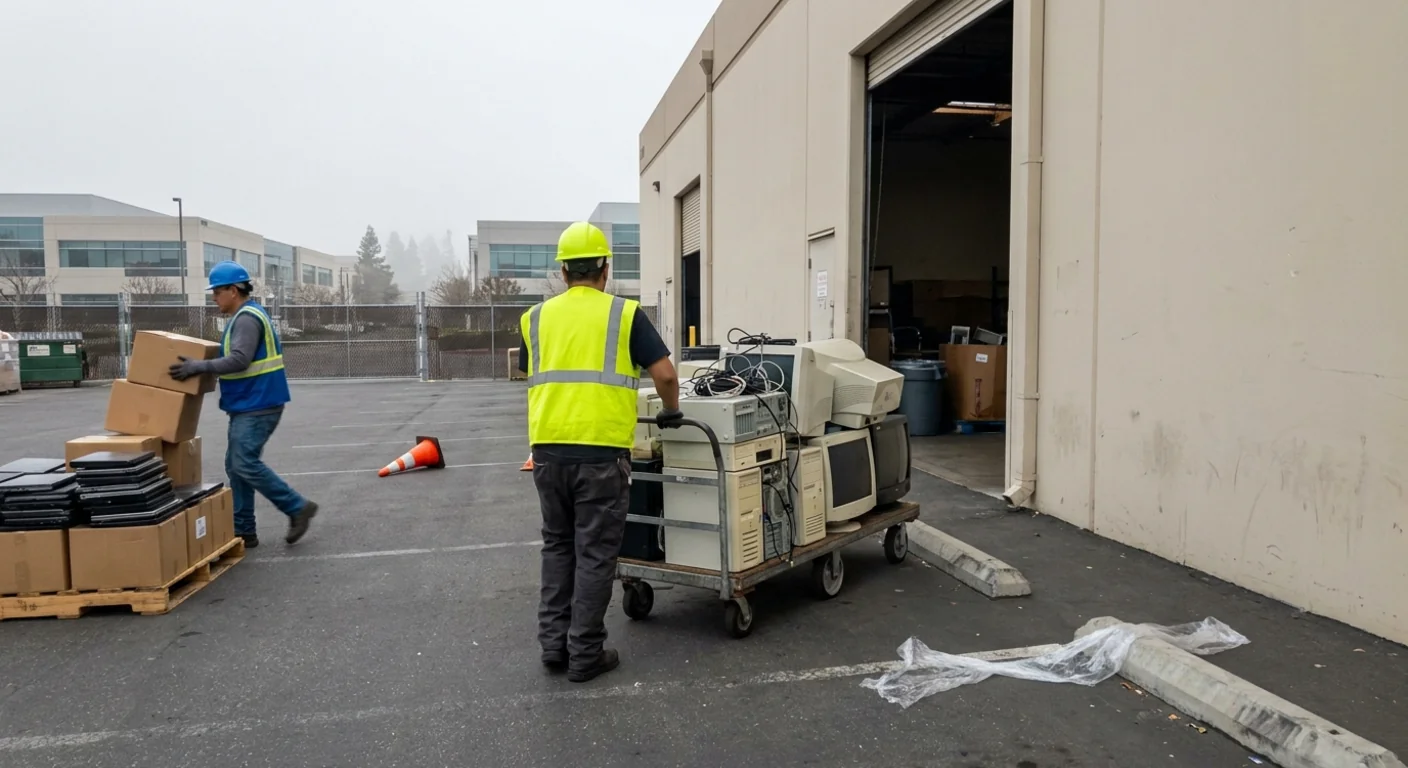
Electronic waste represents one of the fastest-growing waste streams in California and across the United States. San Jose residents and businesses generate significant volumes of outdated computers, monitors, printers, and mobile devices each year. Proper electronics recycling prevents hazardous materials from entering landfills while recovering valuable resources like copper, gold, and rare earth elements.
1. Understanding Electronic Waste and California Regulations
Electronic waste, commonly called e-waste, includes any discarded device with a circuit board, battery, or electrical component. This category encompasses computers, laptops, monitors, televisions, printers, copiers, servers, networking equipment, mobile phones, tablets, and small appliances. Many of these items contain hazardous substances including lead, mercury, cadmium, and brominated flame retardants that pose environmental and health risks when improperly disposed.
California maintains strict regulations governing electronic waste disposal. The state banned cathode ray tube (CRT) devices from landfills in 2003, later expanding restrictions to cover flat-panel displays and other electronics. The Electronic Waste Recycling Act established a funding mechanism through consumer fees to support sustainable recycling infrastructure.
Violations of California e-waste regulations can result in substantial penalties for businesses. Organizations that knowingly dispose of covered electronic devices in regular trash face fines and potential liability for environmental contamination.
While Chicago Shredder primarily serves the Illinois market, understanding California's regulatory framework illustrates the nationwide trend toward stricter electronics recycling requirements. Illinois implemented similar landfill bans for electronics, and organizations with multi-state operations benefit from consistent recycling practices across all locations.
2. What Electronics Can Be Recycled
Secure electronics recyclers accept a comprehensive range of devices and equipment. Computer systems including desktop towers, all-in-one units, and laptops qualify for recycling regardless of age or working condition. Monitors of all types, from legacy CRT displays to modern LED screens, require specialized processing due to their material composition. Printers, scanners, copiers, and multifunction devices contain recyclable metals, plastics, and circuit boards.
Networking and telecommunications equipment represents another major recycling category. Servers, routers, switches, modems, and telephone systems contain valuable materials and may store sensitive data requiring secure destruction. Mobile devices including smartphones, tablets, and cellular phones qualify for recycling, along with their charging accessories and cases. Peripheral devices such as keyboards, mice, cables, and external drives also enter the recycling stream.
Televisions and home entertainment electronics require proper recycling channels. Flat-panel TVs, projection systems, DVD players, gaming consoles, and audio equipment all contain recyclable components. Small electronics including calculators, digital cameras, external hard drives, and power supplies round out the acceptable items list. Battery backup systems and uninterruptible power supplies (UPS units) require specialized handling due to their battery components.
Some items face restrictions or require additional processing steps. Devices containing refrigerants, such as certain server room cooling units, need qualified technicians to safely remove these substances before recycling. Equipment with intact data storage requires secure destruction services before material recovery can begin.
3. More to Consider
This secure process ensures materials follow documented chains of custody, preventing export of hazardous components to developing nations where unsafe processing methods threaten worker health and environmental quality.
The standard requires documented data destruction procedures aligned with industry frameworks like NIST SP 800-88 guidelines. Organizations recycling equipment that previously stored customer records, financial data, health information, or proprietary business intelligence benefit from these structured data sanitization requirements.
Precious metals, ferrous and non-ferrous metals, plastics, and glass undergo separation and processing for reintroduction into manufacturing supply chains. Materials that cannot be recovered through available technologies are managed through permitted disposal facilities, with no materials knowingly directed to landfills. This comprehensive approach supports circular economy principles by keeping valuable resources in productive use.
4. Residential Electronics Recycling Options
San Jose area residents have multiple pathways for responsible electronics disposal. Municipal collection programs often provide periodic e-waste collection events where residents can drop off household electronics at designated locations. These events typically accept computers, monitors, televisions, and common household electronics free of charge for residents. However, event schedules may be limited to quarterly or semi-annual dates, requiring residents to store unwanted electronics until the next collection opportunity.
Retail take-back programs offer another residential option. Major electronics retailers and office supply chains operate recycling programs accepting specific device categories. These programs typically accommodate smaller items like phones, tablets, and accessories during regular business hours. Some retailers limit acceptance to products they sell or impose quantity restrictions, potentially requiring multiple trips for households with diverse electronics to recycle.
Secure electronics recyclers provide comprehensive residential services beyond municipal and retail programs. These services accommodate larger volumes, accept broader equipment categories, and offer scheduled pickup options for bulky items. Residents downsizing homes, settling estates, or clearing accumulated electronics benefit from the convenience of scheduled service and the assurance of secure processing.
For Illinois residents, Chicago Shredder provides residential electronics recycling with flexible scheduling options. The company typically responds to inquiries within one business day, arranging pickups that accommodate household schedules. This service eliminates the need to transport heavy equipment or store unwanted electronics waiting for collection events.
5. Business Electronics Recycling and IT Asset Disposition
Commercial and institutional organizations face distinct challenges when recycling electronics. Businesses accumulating outdated computers from refresh cycles, failed servers from data center consolidations, or surplus equipment from office relocations require scalable recycling solutions that minimize operational disruption. IT asset disposition (ITAD) services address these needs through structured processes for equipment decommissioning, data destruction, and material recycling.
Data security stands as the primary concern for business electronics recycling. Devices previously used in corporate environments typically contain sensitive information including employee records, customer data, financial details, and proprietary business intelligence. Simply deleting files or reformatting drives leaves data vulnerable to recovery using widely available forensic tools. Professional ITAD services employ secure data destruction methods designed to render information unrecoverable.
Chicago Shredder maintains an on-site hard drive crusher at its Addison, Illinois facility, providing physical destruction that deforms drive platters and destroys data at a molecular level. This mechanical destruction method complements software-based data sanitization following NIST SP 800-88 guidelines and DoD 5220.22-M standards. Organizations with compliance requirements under regulations like HIPAA, GLBA, SOX, or FERPA utilize these services as part of programs designed to support their compliance obligations.
Documentation represents another critical element of business electronics recycling. Organizations pursuing environmental certifications, reporting sustainability metrics, or responding to stakeholder inquiries about responsible disposal practices require verified records of recycling activities. Certificates of recycling provide itemized documentation of materials processed, destruction methods employed, and final disposition pathways. These certificates support environmental reporting frameworks including CDP, GRI, and SASB standards while demonstrating commitment to corporate social responsibility.
6. Pickup Logistics and Service Area Coverage
Efficient logistics separate professional electronics recycling services from inconsistent collection programs. For San Jose area businesses and residents, understanding available service options helps identify the most practical recycling pathway. National ITAD providers often maintain minimum volume requirements or impose service fees that make small-scale recycling economically impractical.
Chicago Shredder serves the greater Chicago metropolitan area with scheduled pickup services designed for both business and residential customers. The service territory extends throughout the Illinois region, accommodating organizations and households across suburban and urban locations. Pickup scheduling typically involves a brief assessment of materials, volume estimation, and coordination of logistics to minimize disruption to normal operations or household activities.
The company typically responds to service inquiries within one business day, providing estimates and scheduling information promptly. For businesses planning office moves, equipment refreshes, or facility consolidations, advance scheduling ensures recycling services align with project timelines. Residential customers benefit from flexible scheduling that accommodates work schedules and personal commitments, eliminating the need to adjust plans around limited collection event dates.
Volume flexibility represents another logistics advantage. While some recyclers impose minimum quantities or charge disproportionate fees for small loads, professional services accommodate everything from single-device pickups to full truckload quantities. This scalability serves diverse customer needs, from individuals recycling a home office computer to corporations decommissioning entire data centers. Organizations with ongoing recycling needs may establish regular pickup schedules, creating predictable processes for continuous equipment retirement.
7. Environmental Impact and Sustainability Reporting
Electronics recycling generates measurable environmental benefits beyond landfill diversion. Material recovery from recycled electronics reduces demand for virgin mining of metals, lessening associated environmental disruption, energy consumption, and carbon emissions. Industry studies suggest that recycling one million laptops saves energy equivalent to powering more than 3,500 homes for a year. The greenhouse gas emissions avoided through electronics recycling contribute meaningfully to corporate and community climate action goals.
Resource conservation extends beyond energy savings. Precious metals recovered from circuit boards, including gold, silver, palladium, and platinum, re-enter manufacturing supply chains without requiring new extraction. Base metals like copper and aluminum undergo processing for reuse in various industries. Plastics separated during electronics recycling feed into polymer processing facilities, reducing reliance on petroleum-based virgin plastic production. These material flows exemplify circular economy principles, keeping resources in productive use across multiple product lifecycles.
Organizations increasingly face stakeholder expectations for transparent environmental performance reporting. Investors, customers, employees, and regulatory bodies request documented evidence of responsible waste management practices. These documents detail quantities recycled, processing methods employed, and downstream material pathways.
Chicago Shredder provides comprehensive documentation supporting environmental reporting requirements. Organizations pursuing zero-waste goals, carbon neutrality targets, or environmental management certifications utilize this documentation as evidence of program implementation and continuous improvement in waste diversion performance.
8. Frequently Asked Questions
What types of electronics does Chicago Shredder accept for recycling?
Chicago Shredder accepts comprehensive electronics including computers, laptops, monitors, televisions, printers, copiers, servers, networking equipment, mobile devices, tablets, and peripherals. The company also processes small electronics, cables, battery backup systems, and IT accessories regardless of age or working condition.
Which regulatory requirements may apply to this topic?
Chicago Shredder employs multiple data destruction methods including an on-site hard drive crusher at its Addison, Illinois facility that physically destroys storage media. Software-based sanitization following NIST SP 800-88 guidelines and DoD 5220.22-M standards provides additional security layers designed to render data unrecoverable.
How quickly can Chicago Shredder schedule an electronics pickup?
Chicago Shredder typically responds to service inquiries within one business day, providing scheduling options that accommodate both business operations and residential customer needs. Advance scheduling is available for planned equipment refreshes or facility moves.
Are there minimum quantities required for electronics recycling pickup?
Chicago Shredder accommodates volumes ranging from single devices to full truckload quantities, providing flexibility for both residential customers and businesses. The company designs services to meet diverse customer needs without imposing restrictive minimum volume requirements.
Responsible electronics recycling protects environmental quality, conserves natural resources, and supports data security for San Jose area residents and businesses. While Chicago Shredder primarily serves the Illinois market, the principles of secure processing, secure data destruction, and comprehensive documentation apply universally to electronics recycling programs nationwide. To schedule electronics recycling, request service information, or discuss specific disposal requirements, contact Chicago Shredder at 866-770-2650 or visit the website to arrange a pickup that fits your timeline and supports your sustainability objectives.
Ready to schedule a pickup?
Call 866-770-2650 or request a quote online. Every pickup includes clear service documentation.