

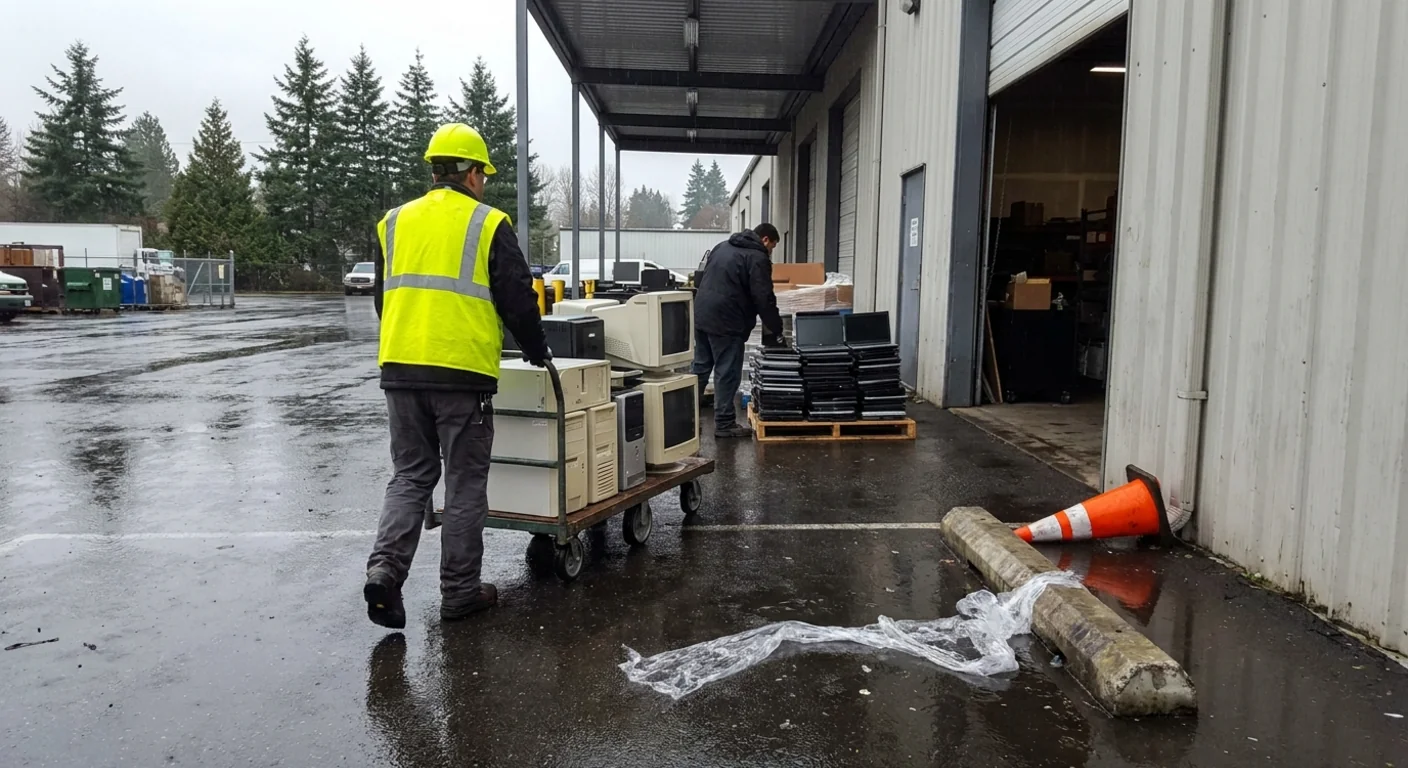
Electronic waste, commonly called e-waste, represents one of the fastest-growing waste streams in the United States. In Illinois, landfilling electronics is illegal under the Electronic Products Recycling and Reuse Act, making proper disposal not just environmentally responsible but legally required.
1. What Is E-Waste and Why Illinois Law Prohibits Landfilling
E-waste encompasses any discarded electronic device containing circuitry or electrical components. This broad category includes computers, monitors, televisions, printers, copiers, networking equipment, servers, cell phones, tablets, and other electronic devices. These items contain valuable materials like copper, gold, aluminum, and rare earth elements, but also hazardous substances including lead, mercury, cadmium, and brominated flame retardants.
The Illinois Electronic Products Recycling and Reuse Act, effective since 2012, prohibits residents and businesses from disposing of covered electronic devices in landfills or incinerators. This legislation addresses both environmental concerns and resource recovery opportunities. When electronics end up in landfills, toxic materials can leach into soil and groundwater, creating long-term environmental hazards. The law covers most common electronics, with manufacturers required to provide recycling programs and meet annual collection targets.
Violating Illinois e-waste disposal laws can result in fines for both individuals and businesses. Organizations with environmental, social, and governance commitments or those seeking LEED certification must demonstrate proper e-waste management. Chicago Shredder helps businesses and residents meet these requirements while contributing to the circular economy through responsible materials recovery.
2. What Electronics Can Be Recycled
Chicago Shredder accepts a comprehensive range of electronic devices for recycling. Computer equipment includes desktop towers, laptops, servers, workstations, and networking hardware such as routers, switches, and modems. Display devices like LCD monitors, LED monitors, CRT monitors, flat-screen televisions, and projection televisions all qualify for recycling. Office equipment including printers, copiers, scanners, fax machines, and multifunction devices are accepted, along with telecommunications equipment like desk phones, cell phones, and PBX systems.
Additional recyclable items include audio-visual equipment, gaming consoles, tablets, e-readers, external hard drives, keyboards, mice, cables, power supplies, and uninterruptible power supplies (UPS units). Small consumer electronics and peripherals typically can be recycled as well. For businesses undergoing technology refreshes or office closures, Chicago Shredder handles bulk quantities of mixed electronics, simplifying the decommissioning process.
Certain items require special handling or may have restrictions. Batteries, particularly lithium-ion batteries, need separate processing due to fire risks. Appliances containing refrigerants require qualified technicians for proper disposal. When scheduling service, providing an inventory helps ensure appropriate resources and vehicles are allocated. Chicago Shredder's team can guide you through what qualifies for standard electronics recycling versus items needing alternative processing channels.
3. More to Consider
Environmental responsibility extends beyond collection to how electronics are ultimately processed.
This secure process requires documented downstream vendor management, ensuring materials don't end up in substandard facilities domestically or abroad. This chain-of-custody approach means your recycled electronics are dismantled and processed according to strict environmental and safety protocols. Commodities recovered from electronics, such as ferrous metals, non-ferrous metals, plastics, and circuit boards, are directed to downstream processors. This systematic approach minimizes environmental impact while maximizing materials recovery.
processing facilities must implement comprehensive environmental management systems, maintain proper insurance and financial assurance, and follow hierarchy-of-management principles prioritizing reuse and recycling over disposal. For organizations tracking Scope 3 emissions or pursuing sustainability certifications, working with processors provides verifiable documentation of responsible end-of-life management for retired IT equipment.
4. Residential Versus Business Electronics Recycling Options
Chicago Shredder serves both residential and commercial clients, with service models tailored to each sector's needs. Residential customers typically have smaller quantities of electronics accumulated from personal use, such as old computers, televisions replaced during upgrades, or obsolete devices stored in basements and garages.
Business electronics recycling involves different considerations. Companies face regulatory compliance requirements, internal IT asset management policies, data security protocols, and sustainability reporting obligations. Healthcare organizations must address HIPAA considerations when disposing of devices that processed protected health information. Financial institutions have GLBA requirements, while educational institutions navigate FERPA regulations.
Commercial clients often need scheduled pickups coordinating with office moves, technology refresh cycles, or decommissioning projects. Businesses may require multiple pickups throughout the year as equipment reaches end-of-life. Volume pricing and recurring service agreements can streamline budgeting and logistics. Residential clients typically need one-time or occasional service.
5. Pickup Logistics Across the Chicago Metropolitan Area
Chicago Shredder provides electronics recycling pickup services throughout the Chicago metropolitan area, including the city of Chicago and surrounding suburbs. Service territory extends across Cook County, DuPage County, Lake County, Will County, and Kane County, covering communities from downtown Chicago to outlying suburban areas. The Addison, Illinois facility serves as the central processing location, strategically positioned for efficient service across the region.
Scheduling a pickup begins with contacting Chicago Shredder to discuss your electronics inventory and service requirements. The team will ask about the types and quantities of equipment, location details such as loading dock access or stair navigation, and preferred pickup dates. For businesses, advance planning around office moves, lease expirations, or technology refresh timelines helps ensure service availability. The company typically responds to inquiries within one business day, working to accommodate scheduling preferences when possible.
Pickup logistics consider factors like equipment volume, weight, access limitations, and whether devices contain data requiring secure chain-of-custody handling. Large-scale decommissioning projects may involve multiple trips or specialized equipment. Smaller residential pickups might combine multiple customers in a service area for efficiency. Upon arrival, the pickup team inventories equipment, loads items securely, and provides documentation as needed. All collected electronics are transported to the Addison facility for processing, with data-bearing devices handled according to secure data destruction protocols before materials recovery begins.
6. Certificate of Recycling for Sustainability Reporting
Organizations increasingly face stakeholder expectations for environmental transparency. Investors, customers, employees, and regulators want verifiable proof that companies manage waste responsibly. Electronics recycling certificates document the proper disposal of IT equipment, supporting corporate sustainability reporting, ESG disclosures, and environmental compliance audits.
These certificates serve multiple business functions. Sustainability teams incorporate recycling data into annual environmental reports, calculating waste diversion rates and materials recovery metrics. Facilities managers use documentation to demonstrate LEED building compliance, where responsible waste management contributes to certification points. Procurement departments may need recycling certificates to satisfy vendor environmental requirements or circular economy commitments. Legal and compliance teams maintain recycling documentation as evidence of regulatory adherence under Illinois e-waste laws.
This documentation provides audit trail assurance that retired electronics were handled according to environmental best practices. For companies setting science-based targets or pursuing B Corporation certification, comprehensive waste tracking including electronics recycling becomes essential supporting evidence of environmental stewardship beyond basic regulatory compliance.
7. How to Schedule Electronics Recycling Service
Scheduling electronics recycling with Chicago Shredder follows a straightforward process designed for both individual and commercial customers. Begin by calling 866-770-2650 to speak with a service representative who will gather information about your recycling needs. Be prepared to describe the types of electronics you need recycled, estimated quantities or total volume, and your location within the Chicago metropolitan area. For businesses, mention any specific requirements like data destruction certificates, sustainability documentation, or coordination with office moves.
After the initial consultation, Chicago Shredder will provide service options and scheduling availability. For standard pickups, you can typically schedule service within days to a couple of weeks, depending on current demand and your flexibility. Rush service may be available for urgent situations like emergency office closures or lease deadline pressures. The team will confirm pickup date, estimated arrival window, and any preparation steps like consolidating equipment in an accessible location or removing batteries from certain devices.
On pickup day, the crew will arrive during the scheduled window, verify the equipment inventory, and load items for transport to the Addison facility. You'll receive documentation confirming the pickup, with formal certificates of recycling provided after processing is complete.
8. Frequently Asked Questions
Is electronics recycling free in Chicago?
Pricing depends on the types and quantities of electronics being recycled. Some materials have commodity value that may offset processing costs, while items like CRT monitors require specialized handling. Chicago Shredder provides quotes based on your specific recycling needs, considering factors like equipment type, volume, and pickup logistics.
What happens to data on devices I recycle?
Data-bearing devices like hard drives, computers, and servers require secure destruction before materials recycling. Chicago Shredder's Addison facility features an on-site hard drive crusher for physical destruction, rendering data unrecoverable.
Can I recycle business electronics from outside the Chicago area?
Chicago Shredder primarily serves the Chicago metropolitan area including Cook, DuPage, Lake, Will, and Kane counties. For locations outside this service territory, contact the team at 866-770-2650 to discuss options. Large-volume commercial accounts may have expanded service availability, or arrangements for drop-off at the Addison facility might be possible.
How long does it take to receive a certificate of recycling?
Processing timelines vary based on current volume, but most customers receive documentation within two to three weeks of pickup. If you need certificates by a specific deadline for reporting or audit purposes, mention this when scheduling service.
What should I do with electronics that still work?
Functional electronics may have reuse value, either within your organization or through donation to schools, nonprofits, or community organizations. If reuse isn't practical, recycling remains the responsible option.
Do you recycle electronics containing hazardous materials?
Most electronics contain some hazardous substances like lead in solder, mercury in backlights, or brominated flame retardants in plastics. Items like CRT monitors and televisions, which contain significant lead, are accepted and processed according to environmental regulations designed to prevent toxic material release.
Electronics recycling in Chicago involves more than just clearing out old equipment. Whether you're a homeowner with a few old devices or a business managing a technology refresh, proper electronics recycling protects both your organization and the environment. To schedule a pickup or discuss your electronics recycling needs, call Chicago Shredder at 866-770-2650 or visit the website to request service.
Ready to schedule a pickup?
Call 866-770-2650 or request a quote online. Every pickup includes clear service documentation.