

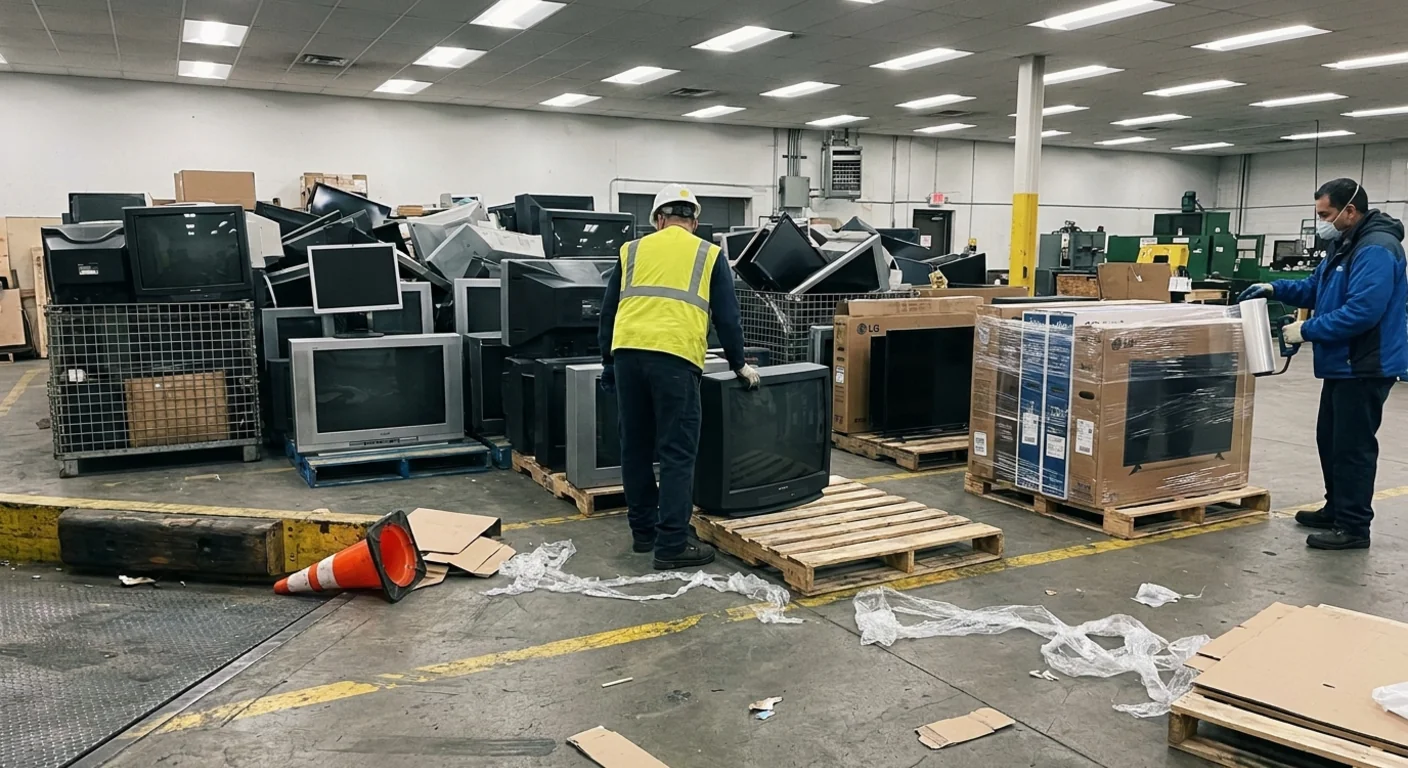
Television recycling in Chicago and throughout Illinois is not just an environmental best practice, it is a legal requirement. State law prohibits the disposal of electronic waste in landfills due to the hazardous materials contained in screens, circuit boards, and other components. Whether you are a homeowner replacing an old TV or a business upgrading equipment, understanding your recycling options ensures compliance while protecting the environment. This guide covers everything you need to know about Chicago TV recycling programs, from what materials can be recycled to how secure processing works.
1. Understanding E-Waste and Illinois Landfill Restrictions
Electronic waste, or e-waste, refers to discarded electronic devices including televisions, computers, monitors, printers, and other equipment containing circuit boards and electronic components. These items contain valuable materials like copper, aluminum, and precious metals, but also hazardous substances including lead, mercury, cadmium, and flame retardants that pose environmental and health risks.
Illinois law specifically prohibits the landfill disposal of covered electronic devices. The Electronic Products Recycling and Reuse Act requires manufacturers to provide recycling programs and bans residents and businesses from placing these items in regular trash. Violations can result in fines, and for businesses, potential regulatory complications. The restriction applies to CRT televisions, flat-panel TVs, computer monitors, desktop and laptop computers, and other devices containing electronic components.
Televisions present particular challenges because older CRT models contain several pounds of lead in the glass tube, while newer flat-panel displays use mercury in backfacility equipment and complex layered materials. When these materials enter landfills, they can leach into soil and groundwater, creating long-term contamination. Industry studies suggest that e-waste represents only two percent of landfill volume but contributes approximately seventy percent of heavy metal contamination.
Responsible handling diverts these materials from landfills and allows valuable components to re-enter manufacturing supply chains. Plastics are separated and reprocessed, metals are extracted and refined, and glass is cleaned for reuse. The goal is to ensure that no materials are knowingly disposed of in landfills while maximizing resource recovery.
2. What Electronics Can Be Recycled
Chicago Shredder accepts a comprehensive range of electronic equipment beyond just televisions. All types of TVs qualify for recycling, including CRT models, LCD screens, LED displays, plasma televisions, and projection units of any size. There are no restrictions based on age, condition, or working status.
Computer equipment includes desktop towers, all-in-one systems, laptops, notebooks, tablets, monitors, keyboards, mice, and peripherals. Servers, networking equipment, and data center hardware are also accepted. Business clients frequently recycle entire IT infrastructure during office moves or technology refresh cycles.
Office electronics such as printers, copiers, fax machines, scanners, and multifunction devices are processed alongside telecommunications equipment including desk phones, cell phones, and PBX systems. Small appliances, audio equipment, and other consumer electronics containing circuit boards can typically be included in recycling pickups.
The key is that items should contain electronic components or circuit boards. If you are uncertain whether a specific item qualifies, Chicago Shredder staff can provide guidance when scheduling your pickup. Mixing different types of electronics in a single pickup is not only acceptable but encouraged for efficiency.
3. More to Consider
This secure process represents the electronics recycling industry's most rigorous standard, covering environmental health and safety practices, data security protocols, and downstream vendor management.
This secure process requires documented tracking of all materials from intake through final disposition. Every television and electronic device is logged, weighed, and processed according to strict handling procedures. Components are separated using specialized equipment, and materials are sorted into categories for appropriate recycling streams. Downstream vendors who receive materials for further processing must also meet supplier requirements, ensuring responsible handling throughout the entire chain.
Before any device containing data storage is processed for materials recovery, data destruction procedures are applied. For businesses disposing of equipment that may have contained sensitive information, this dual focus on environmental responsibility and data security is designed to support compliance requirements under various regulations.
These audits verify that procedures match documented standards, that employee training is current, and that environmental controls function properly. The result is a transparent, accountable system that provides assurance to both residential and commercial clients.
4. Residential vs Business Recycling Options
Residential TV recycling in Chicago typically involves scheduling a pickup for items accumulated at home. Homeowners replacing older televisions, clearing out basements, or downsizing can arrange for Chicago Shredder to collect equipment directly from their residence. There is no minimum quantity requirement for residential pickups, though combining multiple items in a single appointment improves efficiency.
Businesses face different considerations when recycling electronics. Commercial clients often have larger volumes, require documentation for asset tracking or sustainability reporting, and need to address data security concerns. Chicago Shredder works with businesses across industries including healthcare, finance, education, retail, and manufacturing to develop customized recycling solutions that fit operational requirements.
Commercial pickups can be scheduled as one-time events for office cleanouts or technology refreshes, or arranged on recurring schedules for ongoing equipment disposal. Businesses with multiple locations across the Chicago metro area can coordinate pickups to occur simultaneously or in sequence based on logistics preferences. Flexible scheduling accommodates business hours and loading dock availability.
The primary differences lie in volume capacity, scheduling flexibility, and the availability of documentation such as certificates of recycling.
5. Pickup Logistics Across the Chicago Metro Area
Chicago Shredder provides pickup services throughout Chicago and the surrounding metropolitan area. Service extends across Cook County, including suburbs in all directions, as well as portions of DuPage, Lake, Will, and Kane counties. The Addison, Illinois facility serves as the central processing location, allowing efficient route planning throughout the region.
Scheduling a pickup typically begins with a phone call to 866-770-2650 or submitting a request through the website. Staff will ask about the types and approximate quantities of electronics to be recycled, the pickup location, and any access considerations such as stairs, elevators, or loading dock availability. This information helps determine the appropriate vehicle and crew size for efficient service.
Pickup appointments are typically scheduled within one week of the initial request, though urgent needs can often be accommodated more quickly. Staff typically respond to inquiries within one business day to confirm scheduling details. For large commercial pickups involving significant volumes of equipment, site visits can be arranged to assess logistics and provide accurate quotes.
On pickup day, the crew arrives during the scheduled window, loads all designated electronics, and provides a receipt documenting the items collected.
6. Certificates of Recycling for Sustainability Reporting
Many businesses track environmental metrics for sustainability reporting, corporate social responsibility initiatives, or regulatory compliance purposes. Certificates of recycling provide the documentation needed to quantify environmental impact and demonstrate responsible disposal practices.
Businesses use these certificates in various contexts. Sustainability reports often include metrics on waste diversion and recycling rates. Companies in regulated industries use certificates to demonstrate environmental compliance during audits. Some organizations include recycling documentation in stakeholder communications or annual reports to illustrate environmental commitments.
Certificates are available to commercial clients upon request at the time of scheduling. There is no additional fee for standard documentation, though highly detailed reports itemizing specific device types and serial numbers may involve additional administrative work depending on complexity. For most business clients, the standard certificate provides sufficient detail for typical reporting needs.
7. How to Schedule Your TV Recycling Pickup
The scheduling process is designed to be straightforward whether you have a single television or multiple truckloads of electronic equipment. Begin by gathering basic information about what you need to recycle. Note the types of items, approximate quantities, and any special considerations such as size or weight of individual pieces.
Call 866-770-2650 to speak with a Chicago Shredder representative who can answer questions and schedule your pickup. Be prepared to provide your address, describe the electronics to be recycled, and indicate any access challenges. If you are a business client requiring a certificate of recycling or other documentation, mention this during the initial conversation so it can be noted in your service request.
Alternatively, visit the Chicago Shredder website to submit a pickup request online. The web form captures the same basic information and typically generates a response within one business day to confirm scheduling details. Online requests work well for straightforward residential pickups, while complex commercial projects may benefit from a phone conversation to discuss logistics.
Once your pickup is scheduled, prepare the electronics for collection by consolidating items in an accessible location. If you are disposing of equipment that contained business data, consider whether on-site hard drive destruction is needed before the equipment leaves your facility. Chicago Shredder can coordinate data destruction services in conjunction with electronics recycling to provide comprehensive asset retirement solutions.
After pickup, your electronics are transported to the Addison facility for processing.
8. Frequently Asked Questions
Is there a fee for TV recycling pickup in Chicago?
Pricing varies based on factors including volume, location, and specific service requirements. Residential pickups of a few items may incur a service fee, while large commercial volumes often qualify for no-cost pickup. Contact Chicago Shredder at 866-770-2650 for a quote based on your specific situation.
Can I recycle a broken or non-working television?
Yes, televisions are accepted regardless of working condition. Broken screens, non-functional units, and damaged equipment are all processed through the same secure recycling channels. The value is in the recoverable materials, not the functionality of the device.
How long does it take to schedule a pickup?
Pickups are typically scheduled within one week of your request, though timing can be faster or slightly longer depending on current demand and your location. Staff typically respond to inquiries within one business day to begin the scheduling process.
Do I need to remove the stand or base from my TV before recycling?
No preparation is necessary. Televisions can be recycled with stands, bases, and cables attached. The disassembly and separation of components happens during the secure processing stage at the facility.
What happens to my TV after it is picked up?
Components are separated, materials are sorted into recycling streams, and valuable resources are recovered while ensuring that no materials are knowingly disposed of in landfills.
Can businesses get documentation for recycled electronics?
Yes, commercial clients can request certificates of recycling that document material types, weights, and processing details. Indicate your documentation needs when scheduling your pickup.
Recycling your television and other electronics in Chicago is both a legal obligation and an environmental responsibility. Understanding the options available, from residential pickup services to comprehensive commercial recycling programs, makes it easy to dispose of equipment properly while ensuring secure processing through responsible channels. Whether you have a single TV to recycle or an entire office worth of equipment, Chicago Shredder provides the expertise and service needed to handle electronics recycling efficiently. To schedule your TV recycling pickup or learn more about services available throughout the Chicago metro area, call 866-770-2650 or visit the website to request a pickup today.
Ready to schedule a pickup?
Call 866-770-2650 or request a quote online. Every pickup includes clear service documentation.