

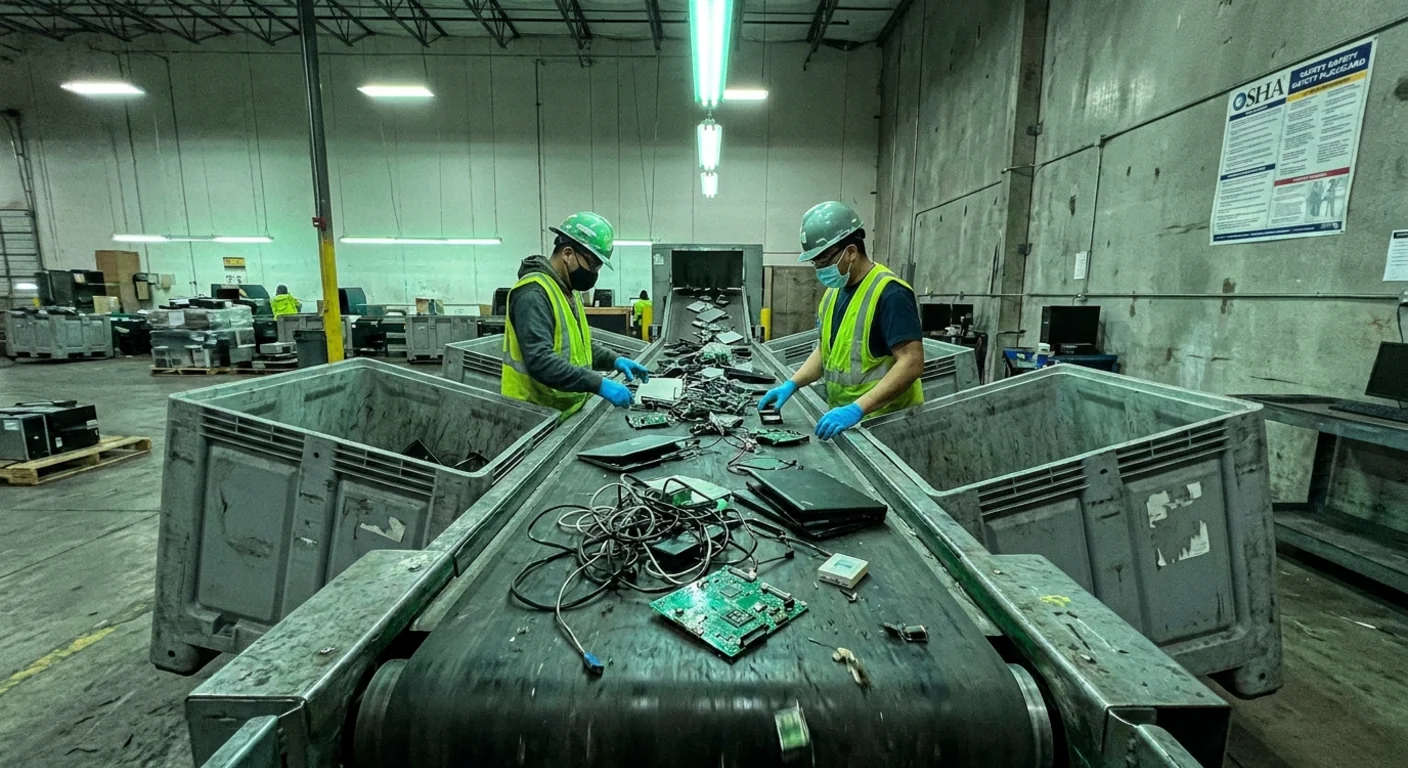
Selecting the right electronics recycling service is a critical decision for Illinois businesses. With state regulations prohibiting electronics disposal in landfills and growing data security concerns, partnering with a qualified provider protects your organization from compliance risks and potential data breaches. Chicago Shredder offers comprehensive IT asset disposal and electronics recycling services designed to meet the needs of businesses throughout the Chicago metropolitan area.
1. Understanding Illinois Electronics Waste Regulations
Illinois law prohibits the disposal of electronics in landfills, making proper recycling a legal requirement rather than an optional practice. The Electronic Products Recycling and Reuse Act covers computers, monitors, televisions, printers, and other common business equipment. Businesses that fail to comply with these regulations face potential fines and legal liability.
Beyond state mandates, responsible electronics recycling addresses environmental concerns associated with hazardous materials found in electronic devices. Components like lead, mercury, cadmium, and flame retardants require specialized processing to prevent soil and groundwater contamination. When Choose a recycler that documents chain of custody and provides a Certificate of Recycling.
Chicago Shredder operates within this regulatory framework, ensuring no materials are knowingly disposed of in landfills.
2. More to Consider
This secure process represents the current version of this standard, incorporating updated requirements for downstream vendor management and data security.
This structure ensures that materials collected from your business location receive proper handling at a secure processing center.
When comparing providers, Choose a recycler that documents chain of custody and provides a Certificate of Recycling. Collection-only services that lack relationships with processors may route materials through less rigorous channels, potentially exposing your business to compliance and reputational risks.
3. Data Security Considerations for Business Electronics
Electronic devices used in business operations typically contain sensitive information, from financial records to customer data and proprietary business intelligence. Simply deleting files or reformatting drives does not render this information unrecoverable. Industry studies suggest that significant percentages of used hard drives sold through secondary markets contain recoverable data from previous owners.
Effective data destruction requires physical methods that make information retrieval technically infeasible. Chicago Shredder maintains an on-site hard drive crusher at our Addison, Illinois facility, providing physical destruction that renders data unrecoverable. This approach complies with standards including DoD 5220.22-M and follows guidelines outlined in NIST SP 800-88 for media sanitization.
For organizations operating under regulatory frameworks like HIPAA, GLBA, SOX, or FERPA, data destruction processes must be designed to support compliance requirements. Proper documentation, including certificates of destruction, provides auditable records demonstrating your organization's due diligence in protecting sensitive information throughout the asset disposal process.
4. Types of Electronics Accepted for Business Recycling
Most business electronics qualify for recycling, though acceptance policies vary by provider. Common items include desktop computers, laptops, servers, network equipment, monitors, printers, copiers, and telecommunications equipment. Many businesses also need disposal solutions for peripherals like keyboards, mice, cables, and uninterruptible power supplies.
Chicago Shredder accepts a comprehensive range of business electronics and IT assets. Beyond standard office equipment, we handle specialized items including medical electronics, laboratory equipment, and industrial control systems. Our team can evaluate unusual or large-scale items to determine appropriate recycling pathways.
Batteries require special mention, as lithium-ion batteries present fire hazards during transportation and processing. Proper handling protocols separate battery-containing devices from other electronics streams. When scheduling pickups, identify any equipment containing batteries so appropriate safety measures can be implemented during collection and transport.
5. Pickup Logistics and Service Areas
Convenience matters when selecting an electronics recycling partner, particularly for businesses managing multiple locations or regular equipment refreshes. Providers should offer flexible scheduling that accommodates your operational requirements without disrupting business activities. Chicago Shredder serves businesses throughout the Chicago metropolitan area, including the city and surrounding suburbs in Cook, DuPage, Lake, Will, and Kane counties.
Pickup logistics depend on volume and frequency. Single-event pickups work well for office moves, major equipment upgrades, or annual cleanouts. Businesses with ongoing disposal needs may benefit from recurring pickup schedules that prevent accumulation of obsolete equipment in storage areas. We typically respond to service requests within one business day to maintain efficient processing timelines.
For organizations managing electronics across multiple sites, coordinated pickup schedules ensure consistent practices company-wide. This approach simplifies internal procedures, supports centralized record-keeping, and demonstrates organizational commitment to environmental responsibility across all locations.
6. Documentation and Sustainability Reporting
Proper documentation serves multiple business purposes, from compliance verification to sustainability reporting. A certificate of recycling provides written confirmation that your electronics were processed responsibly, including details about materials collected, processing methods, and final disposition. These certificates support internal audit requirements and external reporting initiatives.
Many organizations now incorporate environmental metrics into corporate sustainability reports, investor communications, and public-facing disclosures. Electronics recycling data contributes to scope 3 emissions calculations and circular economy initiatives. Detailed documentation from your recycling partner enables accurate reporting and demonstrates measurable environmental impact.
Chicago Shredder provides comprehensive documentation for business clients, including certificates of recycling and data destruction certificates when applicable.
7. Cost Structures and Value Considerations
Electronics recycling pricing varies based on factors including equipment type, volume, condition, and service requirements. Some items with commodity value may offset processing costs, while others require fees due to specialized handling needs. Transparent pricing allows businesses to budget accurately and compare providers on equal terms.
Beware of providers offering payments for all electronics without assessing actual equipment value. Legitimate recyclers price services based on actual processing costs and material values rather than inflated payment promises.
The lowest price rarely represents the best value when considering risk factors. Inadequate data destruction exposes businesses to breach liability far exceeding recycling cost savings. Similarly, using non-processors creates environmental liability and reputational risks.
8. Frequently Asked Questions
Does Chicago Shredder charge for electronics recycling services?
Pricing depends on the type and volume of electronics being recycled. Some items have commodity value that may offset costs, while others require processing fees. We provide transparent quotes based on your specific needs and equipment inventory.
How quickly can you schedule a pickup for business electronics?
We typically respond to service requests within one business day. Actual pickup scheduling depends on your location and volume, but we work to accommodate urgent requests and specific timing requirements whenever possible.
Do you provide certificates of recycling for our records?
Yes, we provide detailed certificates of recycling documenting the materials collected from your business and confirming proper processing. We also provide data destruction certificates when hard drives or data-bearing devices are included in your recycling service.
Can you handle electronics recycling for multiple business locations?
Absolutely. We coordinate pickups across multiple sites throughout the Chicago metropolitan area, providing consistent service and centralized documentation. This approach simplifies management for organizations with distributed operations.
What happens to data on our old computers and servers?
Data-bearing devices receive secure destruction using our on-site hard drive crusher at our Addison, Illinois facility. This physical destruction process is designed to render data unrecoverable, following DoD 5220.22-M standards and NIST SP 800-88 guidelines for media sanitization.
Choose a recycler that documents chain of custody and provides a Certificate of Recycling. Illinois businesses need providers who Choose a recycler that documents chain of custody and provides a Certificate of Recycling. To schedule a pickup or discuss your organization's electronics recycling needs, contact our team at 866-770-2650. We serve businesses throughout the Chicago metropolitan area with flexible scheduling designed to accommodate your operational requirements.
Ready to schedule a pickup?
Call 866-770-2650 or request a quote online. Every pickup includes clear service documentation.