

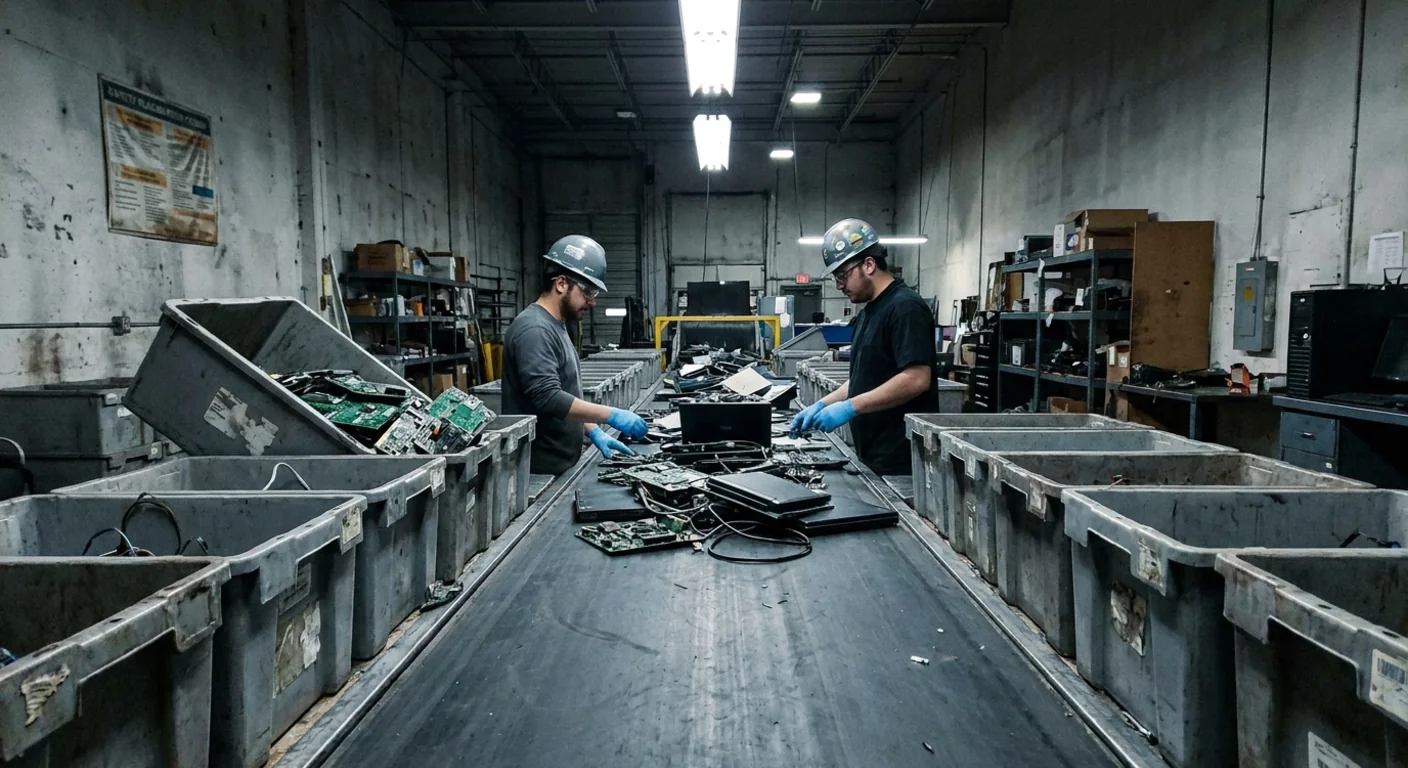
Electronic waste presents unique challenges for Chicago businesses and residents. From outdated laptops to broken printers, disposing of electronics properly is not just environmentally responsible, it's legally required in Illinois. State law prohibits landfilling most electronic devices, making secure recycling programs essential. This guide covers what qualifies as e-waste, which items can be recycled, how secure processing works, and the pickup options available throughout the Chicago metropolitan area.
1. Understanding E-Waste and Illinois Landfill Regulations
Electronic waste, or e-waste, refers to discarded electrical or electronic devices. This category includes computers, monitors, televisions, printers, phones, tablets, networking equipment, and other electronics containing circuit boards or batteries. These items contain valuable materials like copper, aluminum, and precious metals, but also potentially hazardous substances including lead, mercury, and cadmium.
Illinois law specifically bans the landfill disposal of many electronic devices through the Electronic Products Recycling and Reuse Act. The legislation targets computers, monitors, televisions, printers, and other consumer electronics. Businesses and residents cannot simply throw these items in regular trash. Violating these regulations can result in fines and penalties, making proper recycling channels necessary rather than optional.
The environmental rationale behind these restrictions is substantial. When electronics break down in landfills, toxic materials can leach into soil and groundwater. Heavy metals and flame retardants pose risks to ecosystems and human health. Recycling recovers valuable materials while ensuring hazardous components receive appropriate handling. Industry studies suggest that recycling one million laptops saves the energy equivalent of electricity used by 3,500 homes annually.
2. What Electronics Can Be Recycled
Chicago Shredder accepts a comprehensive range of electronic equipment for recycling. Computer equipment includes desktops, laptops, servers, mainframes, and workstations from any manufacturer or age. Monitors and displays of all types qualify, including CRT monitors, LCD screens, LED displays, and televisions. Peripheral devices like keyboards, mice, scanners, and external drives are accepted alongside printers, copiers, and fax machines.
Networking and telecommunications equipment represents another major category. Routers, switches, hubs, phone systems, and cabling all qualify for recycling. Mobile devices including smartphones, tablets, and cell phones can be processed. Audio-visual equipment such as projectors, cameras, and stereo components are accepted. Data center equipment, including storage arrays, UPS systems, and server racks, can be recycled through business programs.
Batteries require special handling due to their chemical content. Lithium-ion, nickel-cadmium, and sealed lead-acid batteries from electronics are accepted. Most electronic accessories, cables, power supplies, and adapters can be recycled. Items containing refrigerants or certain specialized medical equipment may require separate handling arrangements. When uncertain about specific items, contacting Chicago Shredder directly at 866-770-2650 provides clarification on acceptance criteria.
3. More to Consider
This secure process represents the electronics recycling industry's most rigorous standard, covering environmental health and safety, data security, and downstream accountability.
The processing facility follows strict protocols to ensure materials are handled responsibly. Upon arrival, electronics undergo initial sorting and assessment. Items with data storage capabilities are segregated for secure data destruction. Components are systematically dismantled, separating materials by type. Precious metals, ferrous and non-ferrous metals, plastics, and glass are sorted for commodity recovery. Circuit boards undergo specialized processing to recover valuable materials while managing hazardous components.
Downstream material management represents a critical aspect of secure recycling. No materials are knowingly disposed of in landfills. Plastics are processed for reuse in manufacturing. Metals are sent to smelters and refineries. Glass from CRT monitors receives specialized treatment to manage lead content. This comprehensive approach ensures Chicago electronics are recycled responsibly rather than exported to regions with lower environmental standards.
4. Residential Electronics Recycling Options
Chicago residents have multiple pathways for recycling personal electronics. For smaller quantities, the City of Chicago operates household chemical and computer recycling facilities that accept electronics from residents at no charge. These permanent drop-off locations provide convenient options for individuals with a few items. Community collection events also occur periodically throughout the year in various neighborhoods.
For larger quantities or bulkier items, Chicago Shredder offers pickup services for residential clients. This option suits residents clearing out home offices, decluttering basements, or managing estate cleanouts. Pickup scheduling accommodates Chicago city limits and surrounding suburbs including Evanston, Oak Park, Cicero, Skokie, and other nearby communities. Minimum quantities may apply for residential pickup services depending on location and volume.
Residential recycling typically does not include certificates of recycling, as these documents primarily serve business sustainability reporting requirements. However, residents concerned about data security on personal devices can request hard drive destruction services. On-site hard drive crushing is available at Chicago Shredder's Addison, Illinois facility, providing visual confirmation that data storage devices have been physically destroyed.
5. Business Electronics Recycling Programs
Businesses face distinct requirements when recycling electronics. Organizations must often document proper disposal for regulatory compliance, sustainability reporting, insurance requirements, and audit purposes. Chicago Shredder provides certificates of recycling that document the date, description, and quantity of materials recycled.
Corporate IT asset disposal involves additional considerations beyond basic recycling. Businesses often need coordinated logistics for office closures, technology refreshes, or data center decommissioning. Chicago Shredder handles projects ranging from single server removals to complete facility cleanouts. Services include equipment de-installation, packing, loading, and transport. Scheduling can accommodate business hours restrictions and security requirements.
Data security represents the paramount concern for business electronics recycling. Hard drives, solid-state drives, and other data storage devices must be rendered unrecoverable before leaving business premises or undergoing recycling. Chicago Shredder's Addison facility features an on-site hard drive crusher that physically destroys drives, making data recovery designed to be unrecoverable through conventional means. This physical destruction method provides certainty beyond software-based data erasure, which may not address all security scenarios.
6. Pickup Logistics Across the Chicago Metro Area
Chicago Shredder provides pickup services throughout the Chicago metropolitan area. Service areas include Chicago proper and surrounding communities in Cook, DuPage, Lake, Kane, Will, and McHenry counties. Coverage extends to suburbs including Naperville, Aurora, Joliet, Schaumburg, Palatine, Arlington Heights, and other communities within reasonable proximity to the Addison facility.
Scheduling pickup begins with contacting Chicago Shredder at 866-770-2650 or submitting a request through the website. The team typically responds within one business day to discuss volume, location, equipment types, and access requirements. For large projects, on-site assessments can be arranged to develop accurate quotes and logistics plans. Pricing considers factors including volume, weight, equipment types, and accessibility.
Pickup execution accommodates various business environments. Loading dock access simplifies larger jobs, but ground-floor and limited-access locations can be managed with appropriate planning. Businesses with ongoing recycling needs can establish regular pickup schedules, while one-time projects receive dedicated coordination. For organizations requiring immediate data security, on-site hard drive destruction services can be arranged, allowing IT staff to witness physical drive crushing before equipment leaves the premises.
7. Certificates of Recycling for Sustainability Reporting
Certificates of recycling serve important documentation purposes for businesses and institutions. These documents provide verifiable records that electronics were disposed of through secure recycling channels rather than landfills or unverified outlets. Organizations use these certificates to demonstrate environmental stewardship, support sustainability reports, satisfy regulatory requirements, and maintain audit trails.
Chicago Shredder's certificates of recycling include essential documentation details. This documentation demonstrates the chain of custody from collection through secure processing. Organizations can file these certificates with environmental reports, compliance documentation, or internal sustainability tracking systems.
For businesses subject to specific regulations, proper documentation takes on additional importance. Healthcare organizations managing HIPAA-regulated data, financial institutions handling customer information under GLBA, or educational institutions protecting student records under FERPA need documentation designed to support compliance requirements. While certificates of recycling do not constitute compliance guarantees, they provide evidence of responsible disposal practices. Organizations with specific documentation needs should discuss requirements when scheduling services to ensure all necessary information is captured.
8. Frequently Asked Questions
What electronics are illegal to throw away in Illinois?
Illinois law prohibits landfill disposal of computers, monitors, televisions, printers, and most consumer electronics containing circuit boards. These items must be recycled through secure programs. Violating these regulations can result in fines for both businesses and residents.
How much does electronics recycling cost in Chicago?
Pricing varies based on volume, equipment types, and service requirements. Some residential drop-off programs through the City of Chicago are free for small quantities. Business pickup services are quoted based on specific needs, with factors including weight, accessibility, and data destruction requirements affecting final costs.
What happens to my data when recycling computers?
Chicago Shredder offers hard drive destruction services to ensure data designed to be unrecoverable. The Addison facility features an on-site hard drive crusher that physically destroys drives. This mechanical destruction makes data recovery designed to be unrecoverable, providing security beyond software erasure methods.
Can I get a certificate proving my electronics were recycled properly?
Yes, Chicago Shredder provides certificates of recycling for business clients.
Do you provide pickup service or do I need to drop off electronics?
Both options are available. Chicago Shredder offers pickup services throughout the Chicago metropolitan area for businesses and residential clients with larger quantities. Service areas include Chicago and surrounding suburbs in Cook, DuPage, Lake, Kane, Will, and McHenry counties.
Whether you're a Chicago resident with a few old devices or a business managing a complete IT refresh, secure recycling programs ensure materials are handled properly. Chicago Shredder provides convenient pickup services across the metropolitan area, certificates of recycling for documentation purposes, and secure data destruction options. To schedule electronics recycling pickup or discuss your specific requirements, call 866-770-2650 or visit the website to request service.
Ready to schedule a pickup?
Call 866-770-2650 or request a quote online. Every pickup includes clear service documentation.