

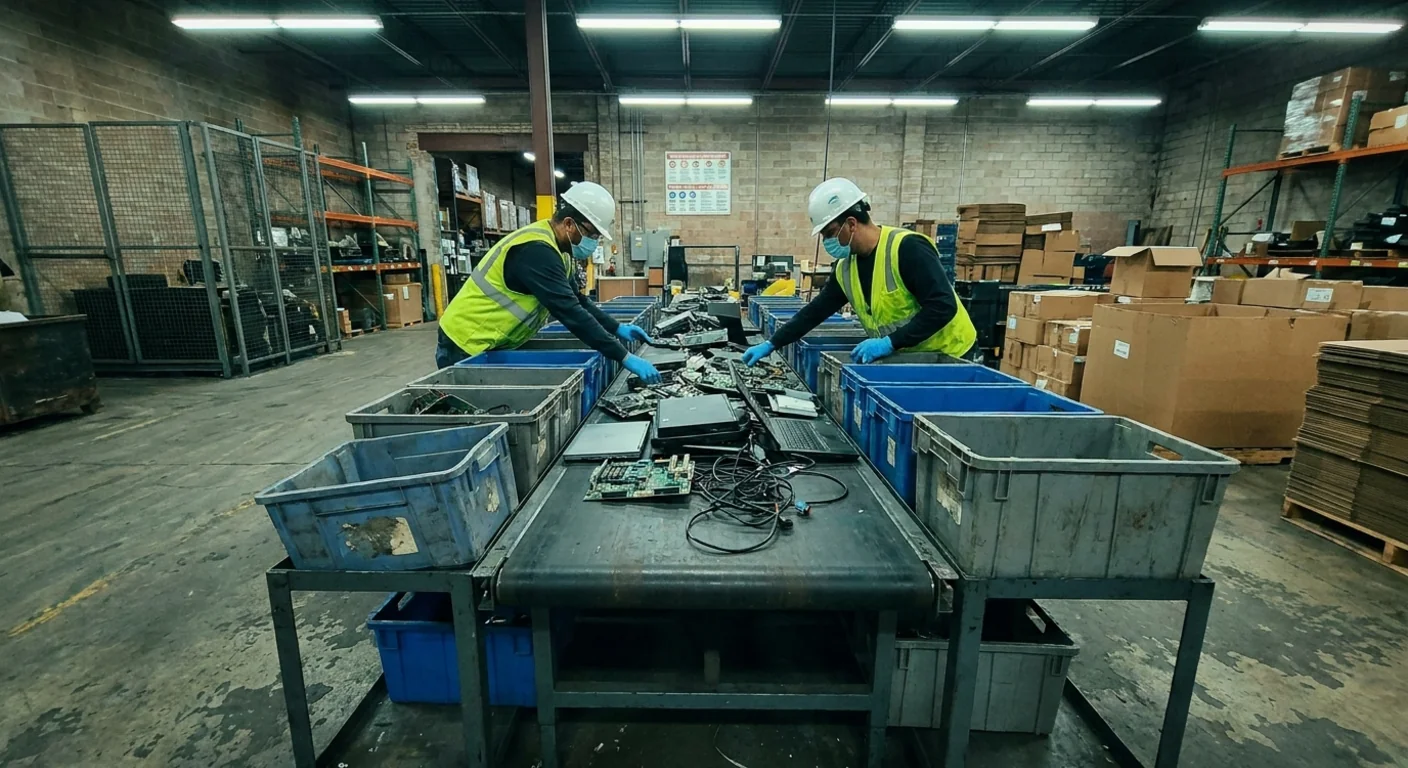
Electronic waste poses significant environmental and security challenges for Chicago-area residents and businesses. Illinois law prohibits landfilling of most electronics, making proper recycling not just environmentally responsible but legally required. Chicago Shredder provides convenient electronics recycling services throughout the Chicago metropolitan area, with all materials processed through processing facilities.
1. What Is Electronic Waste and Why Illinois Bans Landfilling
Electronic waste, or e-waste, includes any discarded device with a circuit board or electronic components. Common examples include computers, monitors, laptops, servers, printers, copiers, tablets, smartphones, and networking equipment. These devices contain valuable materials like copper, gold, and aluminum, but also hazardous substances including lead, mercury, cadmium, and flame retardants.
Illinois enacted the Electronic Products Recycling and Reuse Act in 2008, which prohibits residents and businesses from disposing of covered electronic devices in landfills or incinerators. Covered devices include computers, monitors, televisions, printers, and other common electronics. The law reflects growing awareness that e-waste represents both an environmental hazard and a resource recovery opportunity.
Landfilling electronics creates multiple problems. Heavy metals can leach into groundwater, while toxic materials may release into the air if incinerated. Meanwhile, valuable materials that could be recovered and reused are permanently lost. Proper recycling recovers these materials while preventing environmental contamination.
Businesses face additional considerations beyond environmental responsibility. Many organizations must demonstrate proper disposal of electronic equipment for compliance frameworks, sustainability reporting, and brand reputation management. Certificate of recycling documentation provides the necessary proof that materials were handled appropriately.
2. What Electronics Can Be Recycled in Chicago
Chicago Shredder accepts a comprehensive range of electronic equipment from both residential and commercial sources. Computer equipment includes desktop towers, laptops, servers, workstations, and tablets. Peripherals such as keyboards, mice, cables, and power supplies are accepted alongside the core equipment.
Display devices represent another major category. Monitors, televisions, and digital signage all qualify for recycling services. Office equipment including printers, copiers, scanners, fax machines, and multifunction devices are commonly recycled by businesses upgrading their technology infrastructure.
Networking and telecommunications equipment includes routers, switches, modems, phone systems, and related hardware. Data center equipment such as rack-mounted servers, storage arrays, UPS systems, and related components represent specialized electronics that require proper handling due to their data storage capabilities.
Smaller consumer electronics are also accepted, including smartphones, tablets, digital cameras, and gaming consoles. The key consideration is whether the item contains electronic components requiring specialized processing. Items with minimal electronic content, such as furniture or basic office supplies, fall outside the scope of electronics recycling services.
3. More to Consider
This secure process includes provisions for responsible handling of hazardous materials, proper data destruction protocols, and verification that materials sent to downstream processors are handled appropriately.
This secure processing approach ensures that electronics are not knowingly disposed of in landfills or exported to countries lacking proper recycling infrastructure. Components are separated, materials are recovered for reuse in manufacturing, and items that cannot be recycled are handled according to environmental regulations.
4. Residential Electronics Recycling Options
Chicago-area residents have straightforward options for recycling personal electronics. Small quantities of household electronics can often be dropped off at designated collection events or permanent collection sites throughout the region. These options work well for individuals disposing of a few items like an old laptop or outdated television.
For larger quantities, such as during home cleanouts, estate sales, or significant technology upgrades, pickup services provide more convenient solutions. Chicago Shredder can arrange pickup for residential quantities that justify truck dispatch, particularly when combined with secure document shredding services.
Residents should prepare electronics for recycling by removing batteries when possible and ensuring items are reasonably accessible for pickup crews. While data destruction is included in the processing of hard drives and other storage devices, individuals may want to perform basic deletion of personal files before recycling, though professional data destruction methods will be applied during processing.
No payment is required for standard electronics recycling services for residential customers. The value recovered from processing the materials offsets the collection and processing costs. This approach removes financial barriers to responsible electronics disposal and supports Illinois's goal of diverting e-waste from landfills.
5. Business Electronics Recycling and Asset Disposal
Commercial customers have distinct needs when retiring electronic equipment. Businesses typically dispose of larger quantities of similar items, such as when upgrading office computers, replacing copiers, or decommissioning server equipment. These organized retirement cycles allow for scheduled pickup services that minimize disruption to business operations.
IT asset disposition for businesses goes beyond simple recycling. Many organizations require documentation proving that equipment was properly disposed of and that any data storage devices were destroyed or sanitized. Chicago Shredder provides certificates of recycling detailing what was collected and confirming that materials were processed through processing facilities.
Data security represents a critical consideration for business electronics containing hard drives, solid-state drives, or other storage media. Chicago Shredder's Addison, Illinois facility includes an on-site hard drive crusher, providing physical destruction of storage devices. This mechanical destruction renders data designed to be unrecoverable, addressing security concerns for businesses disposing of equipment that may have contained sensitive information.
Businesses across industries use electronics recycling services when closing offices, upgrading technology infrastructure, or retiring equipment that has reached end-of-life. Healthcare organizations, financial services firms, educational institutions, and professional services companies all generate electronic waste requiring proper disposition. Services are designed to support compliance requirements under frameworks like HIPAA, GLBA, and other regulations governing data protection.
6. Pickup Logistics Across the Chicago Metropolitan Area
Chicago Shredder serves the entire Chicago metropolitan area, including the city proper and surrounding suburbs. Service areas extend throughout Cook County and neighboring counties, covering communities from the city center to outlying suburban areas. This geographic coverage ensures convenient access for both residential and commercial customers across the region.
Pickup scheduling begins with a simple phone call or online request. Customers describe what items need recycling and their location. Chicago Shredder typically responds within one business day to schedule a convenient pickup time. For businesses, pickups can often be arranged during specific time windows to accommodate operational requirements.
The pickup process is designed for minimal customer involvement. Collection crews handle the loading and removal of equipment, though customers should ensure items are accessible and, for building locations, that elevator access or loading dock arrangements are communicated in advance. For larger commercial pickups involving significant quantities of equipment, Chicago Shredder can coordinate logistics to ensure efficient collection.
No special preparation is required beyond making items accessible. Customers do not need to sort different types of electronics or remove components. The processing facility handles separation and categorization. For items containing data storage, customers may want to identify these specifically if they have particular security concerns, though all hard drives go through destruction processes during standard recycling operations.
7. Certificate of Recycling for Sustainability Reporting
Many organizations now track and report on sustainability metrics, including proper disposal of electronic waste. Environmental, social, and governance reporting frameworks often require documentation showing that materials were responsibly recycled rather than landfilled or improperly exported.
Chicago Shredder provides certificates of recycling documenting what materials were collected and confirming that items were processed through processing facilities. These certificates typically include the collection date, a description or inventory of items collected, total weight, and confirmation that materials went to appropriate downstream processors.
The certificate serves multiple purposes for business customers. It provides evidence for internal sustainability tracking, supports external reporting to stakeholders or regulatory bodies, and creates an audit trail demonstrating responsible disposal practices. Organizations pursuing sustainability certifications or participating in environmental reporting initiatives use these certificates as supporting documentation.
For businesses operating in regulated industries, proper documentation of electronics disposal may be required under specific compliance frameworks. The documentation shows that the organization took appropriate steps to ensure proper handling of potentially sensitive equipment and environmentally significant materials.
8. Frequently Asked Questions
Is there a cost for electronics recycling in Chicago?
Standard electronics recycling services through Chicago Shredder do not require payment for most items. The materials recovered during processing offset collection and handling costs. Some specialized items or services may involve fees, which are communicated upfront during scheduling.
What happens to data on hard drives and other storage devices?
All hard drives are physically destroyed at Chicago Shredder's Addison, Illinois facility using an on-site crusher. This mechanical destruction renders data designed to be unrecoverable, providing security for information that may have been stored on the devices.
Can businesses schedule regular electronics recycling pickups?
Yes, commercial customers can arrange ongoing pickup schedules aligned with their technology refresh cycles or operational needs.
How quickly can Chicago Shredder schedule a pickup?
Chicago Shredder typically responds to pickup requests within one business day. Actual pickup timing depends on location, quantity of materials, and scheduling availability, but most pickups can be arranged within several business days of the initial request.
Do items need to be working for electronics recycling?
No, electronics do not need to be functional for recycling. Broken, obsolete, or non-working equipment is accepted. The recycling process focuses on material recovery and proper disposal of components regardless of operational status.
Proper electronics recycling protects the environment, supports Illinois legal requirements, and provides businesses with documentation for compliance and sustainability initiatives. Whether disposing of a few household items or managing a large-scale IT asset retirement, Chicago-area customers have access to professional electronics recycling services. To schedule a pickup or discuss your electronics recycling needs, call 866-770-2650 or visit the website to request service.
Ready to schedule a pickup?
Call 866-770-2650 or request a quote online. Every pickup includes clear service documentation.