

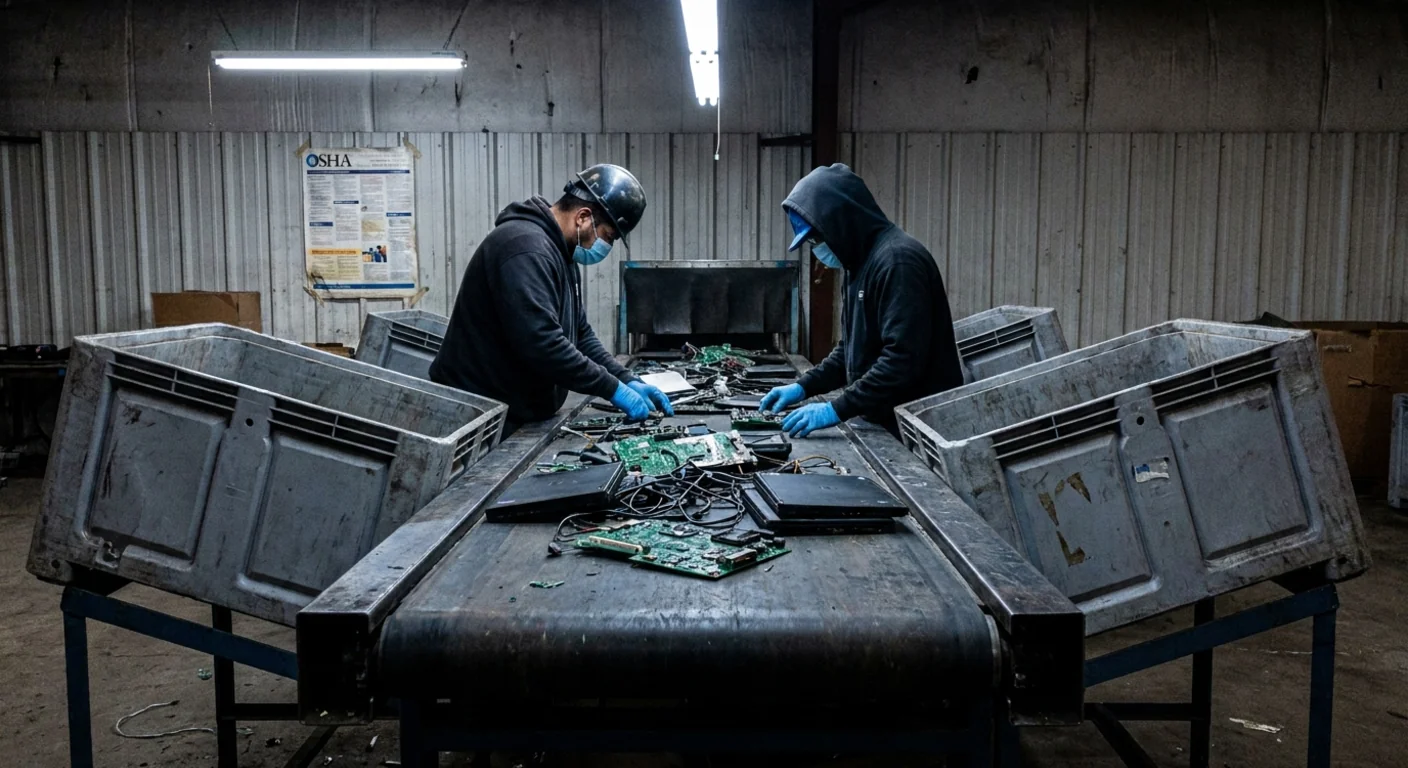
Large corporations generate significant volumes of electronic waste through regular equipment upgrades, lease returns, and technology refreshes. Managing this e-waste responsibly is not only an environmental imperative but also a strategic business decision. Chicago Shredder provides comprehensive electronics recycling services designed to help corporations meet these challenges efficiently and cost-effectively.
1. Understanding Electronic Waste and Illinois Regulations
Electronic waste, or e-waste, includes any discarded electronic devices containing circuit boards or electronic components. This encompasses computers, monitors, servers, laptops, tablets, printers, networking equipment, and mobile devices. Illinois law specifically prohibits the landfilling of covered electronic devices, recognizing the environmental hazards posed by materials like lead, mercury, and cadmium commonly found in older electronics.
The Illinois Electronic Products Recycling and Reuse Act requires manufacturers to provide recycling options and prohibits residents and businesses from disposing of covered devices in landfills or incinerators. Violations can result in fines and regulatory complications that impact operations.
Corporations face additional complexity because their e-waste often contains sensitive business data, intellectual property, and confidential information. Simply complying with disposal regulations is insufficient. Companies must ensure that data destruction meets industry standards and supports compliance with frameworks like HIPAA, GLBA, and SOX. This dual requirement for environmental compliance and data security makes partnering with qualified recyclers essential for corporate IT asset management.
2. What Electronics Can Be Recycled Through Corporate Programs
Corporate electronics recycling programs accept virtually all business technology equipment. Desktop computers, laptops, and workstations from any manufacturer can be processed, regardless of age or condition. Servers, networking equipment, routers, switches, and telecommunications hardware are all accepted. Peripheral devices including monitors, keyboards, mice, printers, scanners, and copiers are also recyclable.
Mobile devices represent another significant category. Smartphones, tablets, and cellular equipment can be recycled securely, with data destruction protocols applied before processing. Businesses upgrading employee devices or retiring test equipment can include these items in pickup requests. Battery-powered devices are handled according to appropriate safety protocols during transportation and processing.
Storage media requires special attention due to data security concerns. Hard drives, solid-state drives, backup tapes, and other storage devices undergo dedicated destruction processes. At Chicago Shredder's Addison, Illinois facility, an on-site hard drive crusher physically destroys drives, rendering data unrecoverable before materials enter the recycling stream. This approach provides corporations with verification that sensitive information has been permanently eliminated.
Less common equipment is also accepted, including laboratory equipment with electronic components, medical devices, point-of-sale systems, and industrial electronics. The key criterion is that devices contain circuit boards or electronic assemblies. If uncertainty exists about whether specific items qualify, Chicago Shredder's team can provide guidance during the scheduling process to ensure pickup efficiency.
3. More to Consider
This secure process provides corporations with assurance that their retired equipment is handled according to recognized best practices.
It requires recycling providers to track materials through the recycling chain and verify that downstream vendors also meet environmental and safety standards. This chain-of-custody approach helps corporations avoid reputational risks associated with improper e-waste disposal, such as equipment ending up in unregulated overseas markets or informal recycling operations.
Processing at a processing facility means materials are sorted, tested, and channeled appropriately. Functional equipment may be refurbished for resale in secondary markets, extending product lifecycles and reducing the environmental impact of manufacturing new devices. Non-functional items are disassembled, and materials like metals, plastics, and glass are separated for commodity recycling. This approach ensures that no materials are knowingly disposed of in landfills.
For corporations with sustainability reporting requirements, working with processors provides documentation that supports environmental claims. Certificates of recycling detail the types and quantities of equipment processed, the methods used, and the responsible disposition of materials. These records integrate into corporate sustainability reports, ESG disclosures, and environmental management system documentation.
4. Data Security Protocols for Corporate Equipment
Data security represents a primary concern when corporations retire IT equipment. Hard drives and storage media often contain customer records, financial data, employee information, trade secrets, and other sensitive materials. Inadequate data destruction can lead to data breaches, regulatory violations, and significant reputational damage. Chicago Shredder addresses these risks through multiple destruction methods designed to make data recovery infeasible.
Physical destruction provides the highest level of security assurance. The on-site hard drive crusher at the Addison, Illinois facility physically deforms drives, destroying platters and electronic components. This mechanical destruction method is effective across all drive types, including traditional magnetic hard drives and solid-state drives. After crushing, drives proceed to material recycling, with metals and components recovered for commodity markets.
For corporations requiring documentation, certificates of destruction detail the serial numbers of destroyed drives, the destruction method used, and the date of processing. These certificates support audit requirements and provide evidence of proper data sanitization. Companies subject to regulatory frameworks like HIPAA, which requires the destruction of electronic protected health information, can use these certificates to demonstrate compliance efforts.
Data destruction follows recognized standards rather than proprietary methods. The DoD 5220.22-M standard provides a methodology for software-based data sanitization, though physical destruction is generally preferred for decommissioned equipment. NIST SP 800-88 guidelines inform protocols for different media types, ensuring that destruction methods match the security requirements of the data involved. This standards-based approach gives corporations confidence that their data protection measures align with industry expectations.
5. Pickup Logistics Across the Chicago Metropolitan Area
Chicago Shredder provides pickup services throughout the Chicago metropolitan area, accommodating corporate locations in the city and surrounding suburbs. The service area extends across Cook County and neighboring counties, covering major business districts, office parks, and industrial areas. This geographic coverage allows corporations with multiple locations to consolidate recycling services through a single provider.
Scheduling pickups is designed for corporate convenience. Companies can arrange one-time pickups for equipment refreshes or establish recurring schedules for ongoing IT asset disposal. Volume requirements vary by location and access constraints, with pickups typically requiring sufficient equipment to justify truck deployment. During the scheduling process, logistics coordinators work with corporate contacts to determine appropriate volumes and timing.
Pickup teams are experienced in corporate environments and understand the operational constraints businesses face. They can work around business hours when necessary, coordinate with building security and loading dock protocols, and adapt to access requirements in multi-tenant facilities. Equipment does not need to be palletized or packaged in specific ways, though consolidating items in a designated area facilitates faster pickup and reduces disruption to business operations.
For corporations with ongoing disposal needs, establishing a relationship with Chicago Shredder streamlines future transactions. Contact information remains on file, pickup procedures are documented, and invoicing can be standardized.
6. Certificates of Recycling for Sustainability Reporting
Corporate sustainability reporting has evolved from voluntary initiatives to expected business practice. Investors, customers, regulatory bodies, and employees increasingly demand transparency about environmental performance. Electronics recycling contributes to multiple sustainability metrics, including waste diversion rates, circular economy participation, and carbon footprint reduction. Proper documentation transforms recycling activities from operational tasks into reportable sustainability achievements.
Chicago Shredder provides certificates of recycling that detail the materials processed from corporate pickups. These certificates typically include the types of equipment recycled, quantities by weight or unit count, the processing methods employed, and confirmation that materials were handled according to environmental standards. This documentation provides the evidence necessary to support sustainability claims in annual reports, ESG disclosures, and environmental management system audits.
The environmental impact of electronics recycling extends beyond waste diversion. Recovering metals, plastics, and glass from e-waste reduces the need for virgin material extraction, lowering the environmental footprint of electronics manufacturing. Industry studies suggest that recycling one million laptops saves energy equivalent to the electricity used by thousands of homes annually. Corporations can reference these broader impacts when communicating their recycling efforts to stakeholders.
For companies pursuing green building certifications, environmental management system certification, or industry-specific sustainability standards, documented electronics recycling supports credit achievement. LEED-secure buildings, for example, earn points for waste diversion, and proper e-waste recycling contributes to those metrics.
7. Cost Considerations and Value Recovery
Electronics recycling costs vary based on several factors, including equipment types, volumes, location, and whether items retain residual value. Some corporate electronics, particularly newer equipment and devices containing precious metals, may offset recycling costs through material recovery value. Older equipment or items with minimal commodity value typically incur processing fees. Chicago Shredder provides transparent pricing during the scheduling process, allowing corporations to budget accurately.
Corporations should consider the total cost of equipment disposal, not merely the recycling fee. Improper disposal can result in regulatory fines, data breach costs, and reputational damage that far exceed recycling expenses. Environmental violations in Illinois can lead to penalties, while data breaches involving improperly disposed equipment can trigger notification requirements, credit monitoring obligations, and potential litigation.
Some equipment may qualify for refurbishment and resale rather than immediate recycling. Functional devices that have been data-sanitized can enter secondary markets, extending their useful life and providing residual value. Corporations should discuss equipment condition during scheduling to determine whether value recovery options exist. Even when resale is not feasible, commodity recovery from metals and materials provides some economic offset to processing costs.
Tax considerations may also apply to corporate equipment disposal. Businesses should consult tax advisors about potential deductions related to equipment retirement and charitable donation options for functional devices. While Chicago Shredder focuses on recycling services rather than tax advice, understanding the broader financial implications of IT asset disposition helps corporations optimize their equipment lifecycle management strategies.
8. Frequently Asked Questions
How much electronic waste does a typical corporation need before scheduling a pickup?
Pickup volume requirements vary by location and logistics, but companies typically schedule pickups when they have accumulated enough equipment to justify truck deployment. During the scheduling process, coordinators help determine appropriate volumes based on your specific situation and location within the Chicago metro area.
Can we get documentation proving our hard drives were destroyed for compliance purposes?
Yes, Chicago Shredder provides certificates of destruction that detail serial numbers, destruction methods, and processing dates. These certificates support audit requirements and help demonstrate compliance with data protection frameworks like HIPAA, GLBA, and SOX.
What happens to corporate electronics after pickup?
Equipment is evaluated, data-bearing devices are destroyed, and materials are sorted for refurbishment or commodity recycling. No materials are knowingly disposed of in landfills, and downstream processing follows standards.
How long does it take to schedule a corporate pickup in Chicago?
Chicago Shredder typically responds to pickup requests within one business day. Actual pickup timing depends on volume, location, and current scheduling, but the team works to accommodate corporate timelines and operational requirements when coordinating service.
Are there any electronics that cannot be accepted for recycling?
Most business electronics containing circuit boards or electronic components are accepted. If you have unusual equipment or are uncertain whether specific items qualify, the scheduling team can provide guidance to ensure your pickup includes all appropriate materials.
Can we schedule recurring pickups for ongoing IT equipment disposal?
Yes, corporations with regular equipment refresh cycles can establish recurring pickup schedules.
Electronics recycling delivers measurable benefits for corporations operating in Illinois, from regulatory compliance and data security to sustainability reporting and risk mitigation. By partnering with recycling providers who understand corporate requirements, businesses transform equipment disposal from a compliance obligation into a strategic component of environmental and information security programs. To schedule a pickup or discuss your corporation's electronics recycling needs, call Chicago Shredder at 866-770-2650 or visit the website to arrange service.
Ready to schedule a pickup?
Call 866-770-2650 or request a quote online. Every pickup includes clear service documentation.