

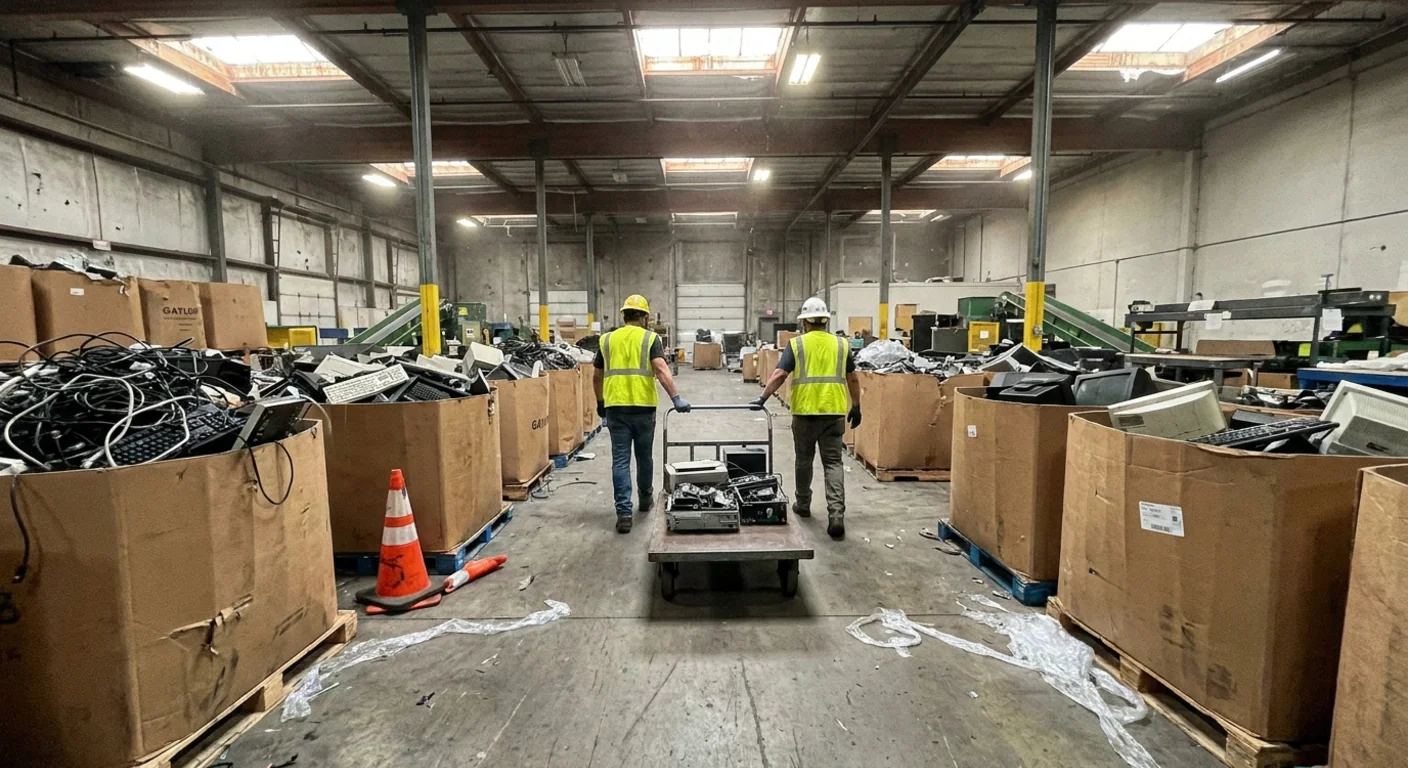
Electronic waste represents one of the fastest-growing waste streams in the United States, and Illinois has taken definitive steps to address the environmental risks associated with improper disposal. The state's electronics recycling laws prohibit landfilling of most consumer electronics, recognizing that devices contain both valuable materials worth recovering and hazardous substances that require proper handling.
1. Understanding Electronic Waste and Illinois Regulations
Electronic waste, commonly called e-waste, includes any device with a circuit board or electronic components. This category encompasses computers, monitors, televisions, printers, networking equipment, mobile devices, and countless other items found in homes and businesses throughout the Chicago metropolitan area. Illinois law specifically prohibits the disposal of covered electronic devices in landfills or incinerators, making proper recycling a legal requirement rather than an optional choice.
The hazardous materials found in electronics create significant environmental concerns when devices reach landfills. Lead in cathode ray tubes, cadmium in batteries, and brominated flame retardants in plastic casings can leach into soil and groundwater over time. Beyond these environmental risks, electronics contain valuable materials including precious metals, copper, aluminum, and engineered plastics that represent recoverable resources when processed correctly.
Illinois residents and businesses must arrange for electronics to be collected by registered electronics recyclers or retailers offering takeback programs. This regulatory framework ensures that devices move through documented chains of custody to facilities equipped to handle both the recovery of valuable materials and the proper management of hazardous components. The state's approach reflects a broader recognition that electronics require specialized processing infrastructure rather than treatment as ordinary solid waste.
2. What Electronics Can Be Recycled
Chicago Shredder accepts a comprehensive range of electronic devices from both residential and commercial sources. Computer equipment including desktops, laptops, servers, and workstations qualifies for recycling along with all associated peripherals such as keyboards, mice, and external drives. Display technologies spanning flat panels, LCD monitors, LED screens, and older CRT monitors all require proper recycling due to their varied material compositions and potential hazardous components.
Office electronics represent a significant category for business clients, including multifunction printers, copiers, fax machines, scanners, and individual printer units. Networking infrastructure such as routers, switches, modems, and telecommunications equipment can be recycled along with data center components including rack-mounted servers, storage arrays, and uninterruptible power supplies. Consumer electronics like televisions, gaming consoles, DVD players, and audio equipment also qualify for proper recycling services.
Mobile devices, tablets, and their charging accessories require recycling consideration due to their lithium-ion batteries and compact electronic assemblies. Small appliances with electronic controls, power tools with circuit boards, and various consumer gadgets fall within acceptable materials. Items containing refrigerants or requiring special handling beyond standard electronics recycling may need alternative processing arrangements. Organizations managing large volumes of mixed equipment can benefit from guidance on sorting and preparation to streamline the recycling process.
3. More to Consider
4. Environmental Benefits of Proper Electronics Recycling
Diverting electronics from landfills prevents the release of hazardous substances into the environment while recovering materials that would otherwise require new mining and manufacturing. A single computer contains small quantities of gold, silver, palladium, and copper that, when aggregated across thousands of devices, represent significant material recovery opportunities. Industry studies suggest that recycling one million laptops saves the energy equivalent to the electricity used by more than 3,500 homes annually, demonstrating the energy conservation benefits of material recovery.
The manufacturing of new electronics requires substantial energy inputs and generates greenhouse gas emissions during raw material extraction, refining, and component production. Recovered materials re-entering manufacturing supply chains reduce the demand for virgin resources and the associated environmental impacts. Plastics recovered from electronics casings can be processed into new products, reducing petroleum consumption. Metals extracted from circuit boards and components offset the need for mining operations that generate tailings, consume water, and disturb landscapes.
Proper recycling also addresses the growing global concern about electronic waste exports to developing regions where informal processing methods expose workers and communities to toxic substances. Organizations Choose a recycler that documents chain of custody and provides a Certificate of Recycling.
5. Residential and Business Recycling Options
Residential customers throughout the Chicago metropolitan area can schedule electronics pickup for decluttering projects, moves, or estate cleanouts. Individual households accumulating outdated computers, old televisions, and obsolete devices can arrange collection services that eliminate the need to transport items to drop-off locations. This convenience factor helps increase participation in proper recycling programs by removing logistical barriers that might otherwise lead to devices sitting in basements and garages indefinitely.
Business clients typically generate electronics through regular technology refresh cycles, office closures, or equipment upgrades. Corporate IT departments managing fleet replacements, schools updating computer labs, healthcare facilities retiring medical office equipment, and financial institutions decommissioning branch technology all require scalable recycling solutions. Commercial recycling services accommodate varying volumes from small office cleanouts to large-scale data center decommissioning projects spanning hundreds or thousands of devices.
Organizations with ongoing electronics disposal needs can establish regular pickup schedules or maintain on-call relationships for equipment that accumulates between refresh cycles. The flexibility to schedule collections based on volume thresholds or timeline requirements helps businesses manage storage space while ensuring that end-of-life equipment moves promptly into proper recycling channels. Residential and commercial customers both benefit from the removal of items from their premises, eliminating concerns about proper disposal methods and regulatory compliance.
6. Pickup Logistics Across the Chicago Metro Area
Chicago Shredder provides pickup services throughout the Chicago metropolitan region including the city proper and surrounding suburbs across multiple counties. The service area encompasses communities throughout Cook County, extending into DuPage, Lake, Will, Kane, and McHenry counties to serve the broader Chicagoland business community. This geographic coverage ensures that organizations throughout the region can access convenient electronics recycling without arranging long-distance transportation.
Scheduling typically begins with a phone consultation to discuss the types and quantities of equipment requiring pickup, access considerations at the pickup location, and timing preferences. Representatives typically respond to inquiries within one business day to begin coordinating logistics. For larger commercial pickups involving palletized equipment or items requiring freight handling, advance planning helps ensure appropriate truck capacity and labor resources. Smaller collections may combine multiple stops to optimize routing efficiency.
Pickup appointments are scheduled based on equipment volume, location, and available service windows. Businesses can often arrange pickups during standard operating hours to coincide with IT staff availability for equipment release. Ground-floor access, loading dock availability, elevator capacity, and parking restrictions all factor into pickup planning for commercial locations. The Addison, IL facility serves as the processing hub for collected materials, providing a central location where Chicago-area electronics undergo sorting, data destruction, and preparation for downstream processing through processing channels.
7. Certificates of Recycling for Sustainability Reporting
Certificates of recycling provide formal records that specific quantities and types of electronics were collected and processed through secure recycling channels. These documents typically detail the materials recycled by category and weight, the collection date, and a Certificate of Recycling for the processing facility.
Corporate sustainability teams use recycling certificates to quantify waste diversion metrics, calculate environmental impact reductions, and populate disclosures for sustainability reports or ESG (Environmental, Social, and Governance) frameworks. Educational institutions tracking waste diversion to support green campus initiatives rely on documentation from service providers. Property management companies coordinating tenant move-outs or building renovations may need recycling certificates to demonstrate proper disposal of tenant equipment or building infrastructure.
The documentation provided through recycling providers supports organizations seeking third-party validation of environmental claims or pursuing certifications like LEED for existing buildings. Recycling data helps quantify scope 3 emissions reductions in greenhouse gas inventories by accounting for avoided emissions from material recovery versus virgin production. For companies with zero-waste goals or waste diversion targets, certificates provide the verifiable data needed to track progress and report results to stakeholders. This documentation transforms electronics recycling from an operational necessity into a measurable component of environmental performance.
8. Frequently Asked Questions
Why is it illegal to throw electronics in the trash in Illinois?
Illinois law prohibits landfill disposal of covered electronic devices due to hazardous materials like lead, mercury, and cadmium that can contaminate soil and groundwater. The state requires electronics to be recycled through registered collectors to ensure proper handling of both hazardous components and recoverable materials.
What happens to electronics after Chicago Shredder picks them up?
All collected electronics are transported to the Addison, IL facility where they undergo sorting and preparation.
Can residential customers schedule electronics pickup in Chicago?
Yes, residential customers throughout the Chicago metropolitan area can arrange pickup services for their electronics. This includes homes in Chicago proper and surrounding suburbs, making it convenient for households to properly recycle computers, televisions, and other devices without transporting them to drop-off locations.
Do businesses receive documentation of their electronics recycling?
Organizations can obtain certificates of recycling that document the types and quantities of electronics collected and processed.
How far in advance should I schedule an electronics pickup?
The scheduling timeline varies based on equipment volume and location, but Chicago Shredder typically responds to inquiries within one business day. For larger commercial collections or time-sensitive projects, earlier coordination helps ensure appropriate resources and preferred scheduling windows.
The environmental benefits of electronics recycling extend from preventing hazardous material contamination to conserving energy and natural resources through material recovery. Illinois regulations recognize these benefits by requiring proper recycling of electronic devices, creating a framework that protects both environmental and public health. Organizations and residents throughout the Chicago area can fulfill these requirements while supporting sustainability goals through secure recycling services that document proper material handling. To schedule electronics pickup or discuss recycling options for residential or commercial equipment, call 866-770-2650 to speak with a representative about your specific needs.
Ready to schedule a pickup?
Call 866-770-2650 or request a quote online. Every pickup includes clear service documentation.