

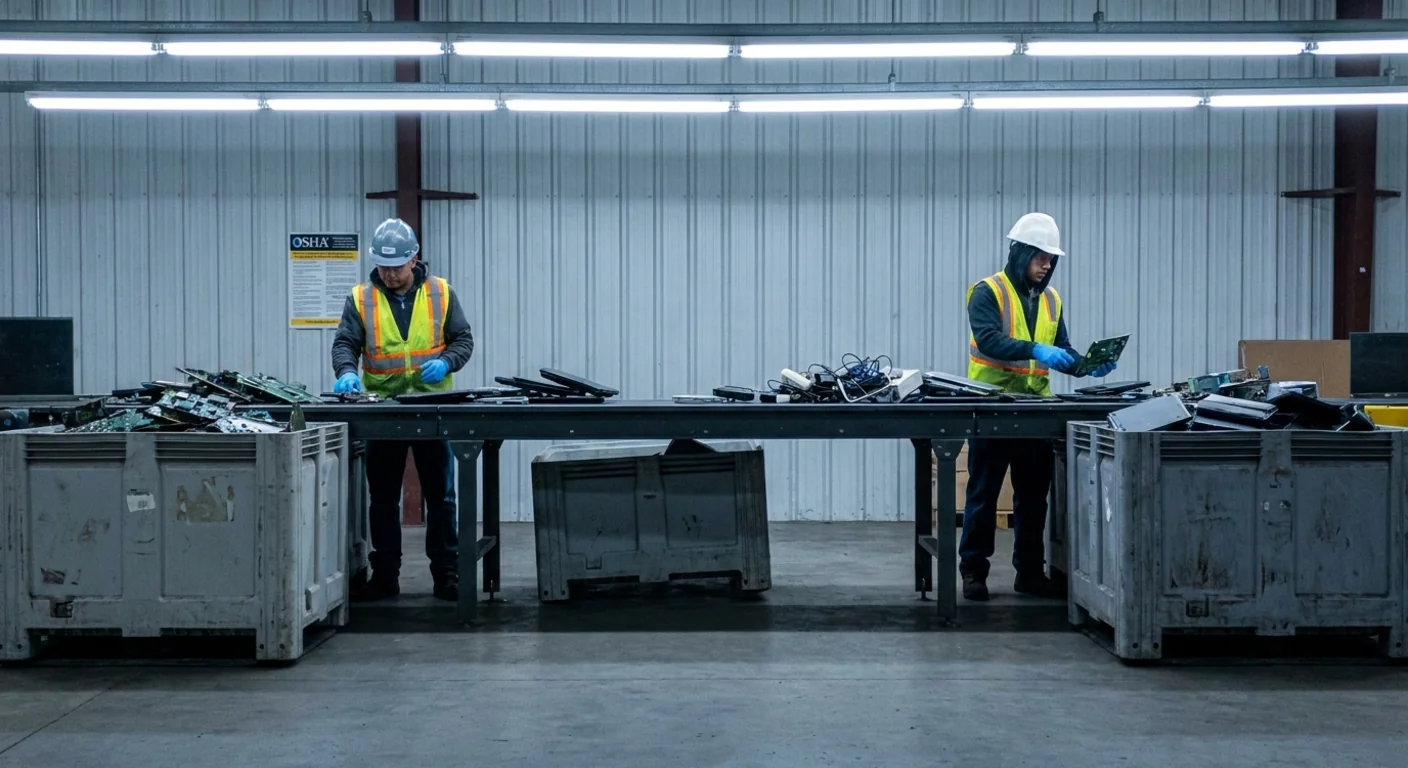
Electronics recycling continues to evolve as technology advances and regulatory requirements become more stringent. Illinois businesses and residents face growing pressure to manage electronic waste responsibly, particularly as landfill disposal remains illegal under state law. Understanding emerging trends in this industry helps organizations plan for sustainable IT asset management while meeting compliance requirements. Chicago Shredder remains committed to responsible electronics processing through secure partnerships, ensuring materials are handled according to current best practices and environmental standards.
1. Understanding Electronic Waste in Illinois
Electronic waste, commonly called e-waste, encompasses discarded devices containing electronic components or circuitry. This category includes computers, monitors, servers, networking equipment, mobile devices, printers, and peripherals. Illinois law specifically prohibits disposing of these items in municipal landfills due to hazardous materials like lead, mercury, and cadmium found in many electronics.
The Illinois Electronic Products Recycling and Reuse Act established mandatory recycling programs for manufacturers and outlined proper disposal channels for consumers and businesses. Violations can result in significant penalties for organizations that knowingly landfill covered electronic devices. This regulatory environment has accelerated adoption of secure recycling programs across the Chicago metropolitan area.
As technology refresh cycles shorten, the volume of e-waste generated by businesses continues to increase. Industry studies suggest that the average computer workstation is replaced every three to four years, creating ongoing disposal challenges for IT departments. Healthcare facilities, financial institutions, and educational organizations face particular scrutiny due to data security requirements tied to equipment disposal.
2. More to Consider
This secure process represents adherence to rigorous environmental, health, safety, and security standards specifically developed for the electronics recycling industry.
Secure processing ensures that materials are tracked through documented chains of custody, preventing unauthorized export to countries lacking proper environmental controls. Downstream vendors undergo regular auditing to verify compliance with applicable regulations. This systematic approach provides transparency that generic recycling operations cannot match.
No materials are knowingly disposed of in landfills when processed through processing channels. Components are systematically separated into commodity streams including metals, plastics, and glass. Materials that cannot be recovered for reuse enter approved disposal pathways that meet regulatory requirements.
3. Emerging Trends Shaping Electronics Recycling
Several developments are transforming how organizations approach electronics recycling. Extended Producer Responsibility (EPR) programs continue expanding, placing greater responsibility on manufacturers for end-of-life management of their products. These programs create new collection infrastructure and funding mechanisms that make recycling more accessible to businesses and consumers.
Urban mining, the practice of recovering valuable materials from discarded electronics, has gained economic viability as precious metal prices increase and raw material supplies tighten. Modern electronics contain recoverable gold, silver, palladium, and rare earth elements. Processors invest in specialized equipment to maximize material recovery rates while maintaining environmental controls.
Circular economy principles are influencing equipment design and disposal practices. Manufacturers increasingly design products for easier disassembly and material recovery. This shift creates opportunities for refurbishment and component harvesting that extend useful life beyond initial deployment. Organizations participating in these programs can reduce total cost of ownership while supporting sustainability objectives.
Automation and artificial intelligence applications are improving sorting accuracy and processing efficiency. Robotic systems can identify and separate components faster than manual labor while reducing worker exposure to potentially hazardous materials. These technological advances make recycling operations more economically sustainable.
4. Data Security Considerations in Electronics Disposal
Data security remains paramount when disposing of electronic equipment containing storage media. Hard drives, solid-state drives, and other memory devices require proper sanitization before equipment leaves organizational control. Chicago Shredder operates an on-site hard drive crusher at its Addison, Illinois facility, providing physical destruction that renders data unrecoverable.
Physical destruction offers advantages over software-based wiping methods for certain applications. Crushing physically deforms platters and circuit boards, eliminating the possibility of data recovery through any known forensic method. This approach aligns with NIST SP 800-88 guidelines for media sanitization and supports compliance requirements under HIPAA, GLBA, SOX, and FERPA.
Certificates of destruction provide documented evidence that storage media were properly processed. These certificates support audit requirements and demonstrate due diligence in protecting sensitive information. Organizations subject to regulatory oversight particularly value this documentation for compliance reporting.
DoD 5220.22-M represents a widely recognized standard for electronic data sanitization through overwriting methods. While appropriate for certain applications, many security-conscious organizations prefer physical destruction for devices containing highly sensitive information or when equipment age makes software methods impractical.
5. Residential and Business Recycling Options
Chicago Shredder serves both residential and commercial clients throughout the Chicago metropolitan area. Residential customers can drop off electronics at the Addison facility during business hours or participate in periodic collection events. These services provide convenient options for households managing personal electronics disposal.
Business clients typically require more comprehensive solutions including on-site pickup, inventory documentation, and certificates of recycling. Organizations with substantial equipment volumes benefit from scheduled pickups that minimize disruption to operations. IT departments can coordinate decommissioning timelines with pickup schedules to maintain efficient workspace management.
Healthcare facilities, financial institutions, educational organizations, and professional services firms represent key business segments requiring specialized handling. These industries face stringent data security requirements and often need detailed documentation for compliance reporting. Service packages can be customized to address industry-specific requirements.
Pickup logistics vary based on volume, equipment type, and location within the service area. Organizations planning large-scale equipment refreshes should schedule pickups in advance to ensure adequate resources are allocated. Chicago Shredder typically responds to service requests within one business day to accommodate time-sensitive projects.
6. Certificates of Recycling for Sustainability Reporting
Corporate sustainability initiatives increasingly require documented evidence of responsible electronics disposal. Certificates of recycling provide verification that equipment was processed through processing channels rather than landfilled or exported to unregulated facilities. These documents support ESG (Environmental, Social, and Governance) reporting requirements that stakeholders and investors expect.
Certificates typically include detailed inventories of processed equipment, total weight of materials recovered, and confirmation of processing methods used. This information feeds directly into sustainability metrics that organizations track for annual reporting. Companies pursuing LEED certification or participating in industry-specific sustainability programs particularly value this documentation.
Organizations can reference these certifications in sustainability communications without conducting their own facility audits.
Regulatory requirements under Illinois law mandate proper electronics disposal, but many organizations pursue goals beyond mere compliance. Documented recycling practices demonstrate corporate citizenship and environmental stewardship that resonate with customers, employees, and community members. These practices support brand reputation while fulfilling operational requirements.
7. How to Schedule Electronics Recycling Services
Scheduling electronics recycling with Chicago Shredder begins with an assessment of equipment type, volume, and location. Organizations can contact the service team at 866-770-2650 to discuss specific requirements and receive guidance on preparing equipment for pickup. Advance notice helps ensure appropriate resources are allocated for efficient collection.
Equipment preparation typically involves removing peripheral cables and consolidating items in accessible locations. IT departments should complete data backup procedures before scheduling pickup, though hard drives will undergo physical destruction regardless of their state. Organizations can request witnessed destruction for high-security applications requiring additional assurance.
Pickup scheduling accommodates business operational requirements, with services available throughout the Chicago metropolitan area. Facilities in Addison and surrounding suburbs can often receive same-week service, while locations farther from the facility may require additional lead time. Volume and access considerations affect scheduling, particularly for organizations in multi-tenant buildings or facilities with loading dock restrictions.
Following pickup, clients receive certificates documenting the recycling process and confirming that materials were handled according to regulatory requirements. Organizations establishing ongoing recycling programs can arrange recurring pickups that align with equipment refresh cycles.
8. Frequently Asked Questions
What electronics can Chicago Shredder recycle?
Chicago Shredder accepts computers, servers, monitors, laptops, networking equipment, printers, mobile devices, and most business electronics.
Is electronics recycling required by Illinois law?
Yes, Illinois law prohibits landfill disposal of covered electronic devices including computers and monitors. The Electronic Products Recycling and Reuse Act established mandatory recycling requirements for manufacturers and proper disposal channels for businesses and residents.
How does Chicago Shredder handle data security?
Chicago Shredder operates an on-site hard drive crusher at the Addison, Illinois facility. Physical destruction renders data unrecoverable and aligns with NIST SP 800-88 guidelines, supporting compliance requirements under HIPAA, GLBA, SOX, and FERPA.
What documentation is provided after electronics recycling?
Clients receive certificates of recycling documenting equipment processed, total weight recovered, and confirmation of proper handling. Certificates of destruction are provided for hard drives and storage media, supporting audit requirements and compliance reporting.
Does Chicago Shredder serve residential customers?
Yes, residential customers can drop off electronics at the Addison facility during business hours. Business clients receive on-site pickup services throughout the Chicago metropolitan area with scheduling based on volume and location.
Electronics recycling continues evolving through technological innovation, regulatory development, and changing business practices. Illinois organizations benefit from understanding these trends while partnering with processors who maintain compliance with current standards. Chicago Shredder provides comprehensive electronics recycling services designed to support both regulatory requirements and corporate sustainability goals through secure processing channels. Whether managing routine equipment refreshes or large-scale decommissioning projects, businesses throughout the Chicago metropolitan area can access sustainable recycling solutions that protect data security while recovering valuable materials. Contact Chicago Shredder at 866-770-2650 to discuss your electronics recycling requirements and schedule a pickup that aligns with your operational timeline.
Ready to schedule a pickup?
Call 866-770-2650 or request a quote online. Every pickup includes clear service documentation.