

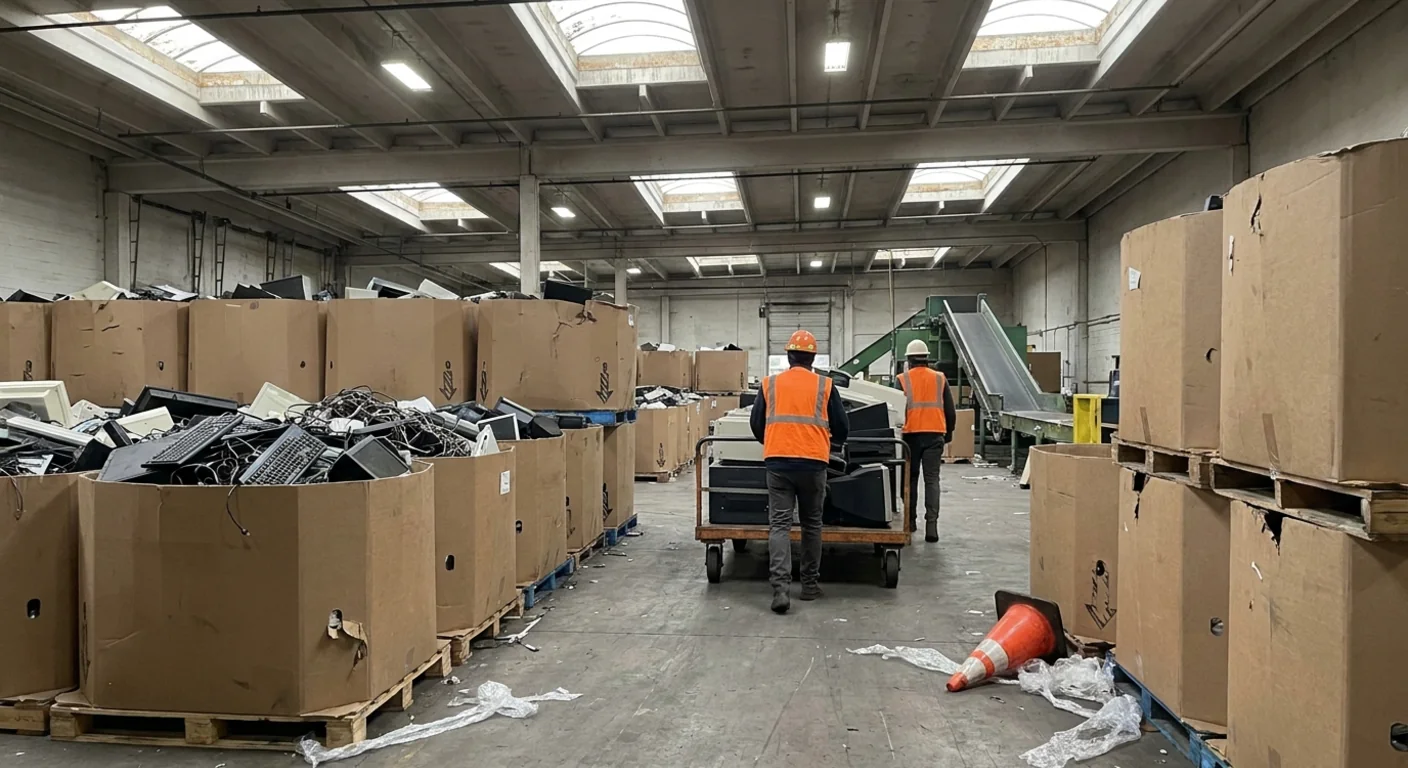
Electronic waste, or e-waste, includes any discarded electronic device containing circuit boards, batteries, or electrical components. In Illinois, disposing of most electronics in landfills is illegal due to state regulations designed to protect the environment from hazardous materials like lead, mercury, and cadmium. Understanding which items qualify as e-waste and how to properly recycle them helps businesses and residents manage e-waste responsibly while supporting resource recovery.
1. What Qualifies as E-Waste in Illinois
Illinois law prohibits landfill disposal of computers, monitors, televisions, printers, and other covered electronic devices. The state's Electronic Products Recycling and Reuse Act applies to both residential and commercial settings, making proper disposal a legal requirement rather than an optional environmental practice.
E-waste encompasses desktop computers, laptops, tablets, smartphones, monitors, televisions, keyboards, mice, printers, scanners, fax machines, copiers, and external hard drives. The category also includes networking equipment like routers and switches, audio-visual equipment, gaming consoles, and small electronic accessories. Each of these items contains materials that can be recovered and reused, including precious metals, plastics, glass, and steel.
Devices containing data storage present additional considerations beyond environmental compliance. Hard drives, solid-state drives, smartphones, and tablets require secure data destruction before material recovery. Chicago Shredder addresses this through on-site hard drive crushing at the Addison, Illinois facility, followed by processing through secure recycling channels.
Batteries and certain other components may require separation during the recycling process. Lithium-ion batteries, nickel-cadmium batteries, and sealed lead-acid batteries are handled according to specific protocols designed to prevent thermal events and recover valuable materials safely.
2. Most Frequently Recycled Business Electronics
Organizations replacing IT equipment generate predictable categories of e-waste. Desktop computers and monitors represent the largest volume for most businesses, particularly during hardware refresh cycles that occur every three to five years. These devices contain substantial amounts of recoverable materials and often store sensitive data requiring documented destruction.
Laptops and tablets follow closely, especially in environments that have transitioned to mobile-first strategies. These devices present unique challenges due to integrated batteries and smaller form factors that complicate disassembly. Processing facilities use specialized equipment to safely separate components and recover materials without damaging lithium-ion cells.
Printers, copiers, and multifunction devices contain combinations of metals, plastics, and consumables like toner cartridges. While these items may not store data in the traditional sense, some modern networked devices include hard drives that cache document images. Secure processing addresses both the material recovery and any potential data security concerns.
Networking equipment including routers, switches, and servers contains valuable materials and frequently stores configuration data or network credentials.
3. Common Residential Electronics for Recycling
Households generate e-waste through normal product lifecycles and technology upgrades. Televisions represent a significant portion of residential recycling, particularly older CRT models that contain lead-bearing glass and tube assemblies. Flat-panel displays including LCD and LED televisions continue this trend as consumers upgrade to newer technologies.
Personal computers, laptops, and tablets from home offices or family use require the same secure processing as business equipment. These devices often contain personal information, financial records, photos, and other sensitive content. Even when files are deleted, data remnants may persist without proper destruction methods.
Small electronics including old phones, tablets, e-readers, digital cameras, and gaming consoles accumulate in drawers and closets. While individually small, these items collectively represent substantial material recovery opportunities and contain batteries that should not enter landfills.
Home office equipment like printers, scanners, and external storage devices round out typical residential e-waste streams. External hard drives and USB drives particularly benefit from secure destruction services before material recovery, protecting personal information from potential exposure.
4. More to Consider
Facilities meeting this standard follow documented procedures for testing, refurbishment when appropriate, and material recovery.
Data-bearing devices receive special attention during processing. Hard drives are crushed on-site at the Addison facility using industrial equipment designed to render platters physically destroyed. This mechanical destruction method complies with the DoD 5220.22-M standard and follows NIST SP 800-88 guidelines, creating conditions designed to make data unrecoverable.
After data destruction, separated materials enter commodity recovery streams. Ferrous metals, non-ferrous metals, plastics, and glass are sorted and processed for reintroduction into manufacturing supply chains. No materials are knowingly disposed of in landfills, supporting circular economy principles and reducing demand for virgin resource extraction.
5. Pickup Options for Chicago Area Businesses and Residents
Chicago Shredder offers pickup services throughout the Chicago metropolitan area, accommodating both one-time disposals and recurring service schedules. Businesses replacing equipment or clearing storage areas can arrange pickups sized to their volume, from small loads measured in individual boxes to full trailer-loads from data center decommissions.
Residential pickups provide convenient solutions for households without transportation options for bulky electronics. Scheduling typically involves a brief phone conversation to assess volume and arrange a time window. The service area covers Chicago and surrounding suburbs, with routing designed to provide efficient coverage across the region.
Pickup logistics vary based on volume and accessibility. Small loads may be collected during regular service routes, while larger volumes might require dedicated trucks and crews. Businesses with loading docks and material handling equipment can facilitate faster pickups, while residential services account for carrying items from inside homes.
Organizations managing ongoing equipment retirement benefit from establishing recurring pickup schedules. This approach prevents e-waste accumulation in storage areas and creates predictable processing for budgeting purposes. Chicago Shredder typically responds to scheduling requests within one business day, allowing organizations to plan around operational needs.
6. Certificates of Recycling for Sustainability Reporting
Documentation supports corporate sustainability initiatives and regulatory compliance requirements. After processing, Chicago Shredder provides certificates of recycling that detail the materials collected, processing methods applied, and disposition of components. These certificates serve as evidence of responsible disposal for internal records and external reporting.
Many organizations incorporate recycling documentation into environmental, social, and governance (ESG) reporting frameworks. Certificates provide quantifiable data about diverted waste, including weight measurements and material categories. This information supports metrics like waste diversion rates and circular economy participation.
Businesses subject to data protection regulations benefit from the documentation trail connecting device collection through final destruction. While certificates do not constitute compliance guarantees, they demonstrate implementation of processes designed to support requirements under frameworks like HIPAA, GLBA, SOX, and FERPA. The documentation shows that devices containing potentially sensitive information received secure processing.
This information satisfies audit requirements and provides assurance to stakeholders that electronics disposal aligned with recognized industry practices rather than informal or undocumented methods.
7. How to Schedule Electronics Recycling Service
Beginning the recycling process requires minimal preparation. Businesses and residents can call 866-770-2650 to discuss their electronics disposal needs and arrange service. The conversation typically covers the types and approximate quantities of items, pickup location details, and preferred timing.
For organizations with specific data security requirements, the scheduling process can address chain of custody documentation, witnessed destruction options, and other security measures. Chicago Shredder can accommodate various organizational policies while maintaining efficient processing workflows.
Pickup scheduling considers factors like building access, loading area availability, and any time constraints. Businesses may prefer pickups during specific hours to minimize disruption, while residential customers often require weekend or evening options. Flexibility in scheduling helps accommodate diverse needs across commercial and residential customer bases.
After scheduling, Chicago Shredder coordinates logistics and confirms appointment details. On the scheduled date, crews arrive with appropriate equipment for safe handling and transportation. Following pickup, items are transported to the Addison facility for processing, data destruction when applicable, and material recovery through processing channels.
8. Frequently Asked Questions
Can I recycle old cell phones and tablets?
Yes, smartphones and tablets are accepted for recycling. These devices often contain personal information and benefit from secure data destruction before material recovery. Chicago Shredder processes these items through processing facilities designed to handle both data security and environmental requirements.
What happens to data on hard drives during recycling?
Hard drives are physically destroyed using an on-site crusher at the Addison, Illinois facility. This mechanical process crushes the drive platters, creating conditions designed to make data unrecoverable according to DoD 5220.22-M standards and NIST SP 800-88 guidelines.
Do you provide documentation for recycled electronics?
Yes, certificates of recycling are provided after processing.
Is there a minimum quantity required for pickup service?
Chicago Shredder accommodates various volumes, from small household quantities to large commercial loads. Contact 866-770-2650 to discuss your specific situation and determine the most appropriate service option.
How quickly can you schedule a pickup?
Chicago Shredder typically responds to scheduling requests within one business day. Actual pickup timing depends on volume, location, and current service routes, but the team works to accommodate time-sensitive needs when possible.
What areas do you serve for electronics recycling?
Service covers Chicago and the surrounding metropolitan area. Call to confirm coverage for your specific location and discuss pickup logistics based on your address and volume requirements.
Properly recycling electronics protects the environment, supports regulatory compliance, and enables material recovery that reduces demand for virgin resources. Illinois law prohibits landfill disposal of most electronic devices, making secure recycling a legal requirement for businesses and residents. Documentation provided after processing supports sustainability reporting and demonstrates responsible disposal practices. To schedule electronics recycling pickup or learn more about services available throughout the Chicago area, call 866-770-2650 or visit the website to arrange a convenient appointment.
Ready to schedule a pickup?
Call 866-770-2650 or request a quote online. Every pickup includes clear service documentation.