

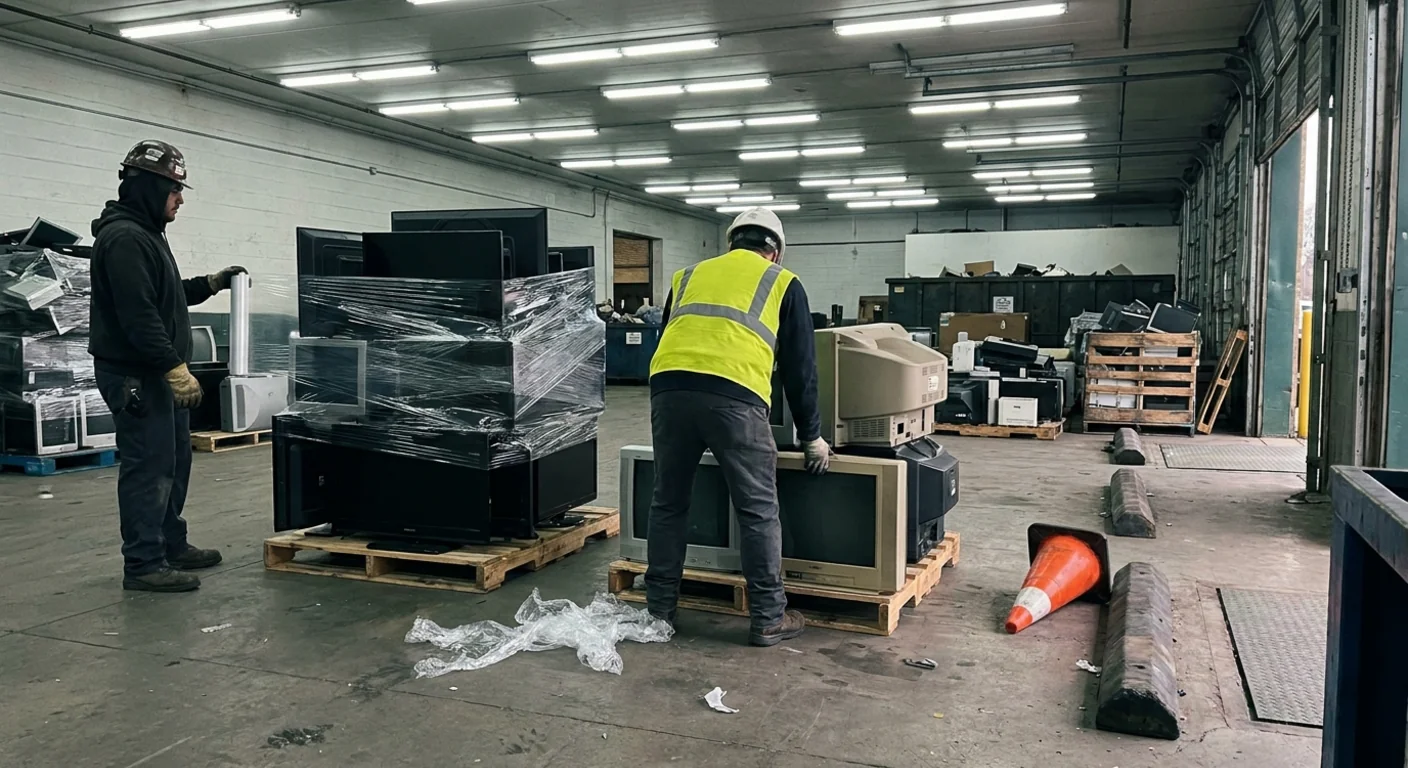
Televisions contain hazardous materials like lead, mercury, and cadmium that pose serious environmental and health risks when improperly disposed of. With the rapid pace of technology upgrades, millions of outdated TVs enter the waste stream annually, creating significant e-waste challenges. Illinois law prohibits landfilling electronic devices, making proper recycling not just environmentally responsible but legally required.
1. Understanding E-Waste and Illinois Landfill Regulations
Electronic waste, or e-waste, encompasses discarded electronic devices including televisions, computers, monitors, and other consumer electronics. These items contain valuable recoverable materials like copper, gold, and aluminum, but also hazardous substances that can contaminate soil and groundwater if landfilled. The Environmental Protection Agency estimates that electronics represent a small percentage of total municipal waste by weight but contribute significantly to toxic materials in landfills.
Illinois enacted the Electronic Products Recycling and Reuse Act to address this growing problem. The law prohibits residents and businesses from disposing of covered electronic devices, including all television types, in standard trash or landfills. Violating these regulations can result in fines and legal consequences for individuals and organizations. The legislation requires manufacturers to provide collection and recycling programs, though availability and convenience vary significantly across the state.
CRT (cathode ray tube) televisions present particular challenges due to their lead content, with older models containing four to eight pounds of lead in the glass funnel and screen. Flat-screen LCD and LED televisions contain mercury in backfacility equipment components and other toxic materials in circuit boards and plastics. Plasma TVs include additional hazardous substances requiring specialized processing. All television types demand proper recycling through processing facilities equipped to safely extract and manage these materials.
This documented framework addresses proper downstream management, worker safety, and environmental protection throughout the recycling process.
2. National TV Recycling Program Landscape
Television recycling programs across the United States vary considerably by state, with some offering robust statewide systems while others provide limited options. Extended Producer Responsibility (EPR) laws in states like California, Washington, and New York require manufacturers to fund collection and recycling programs, creating more accessible options for consumers. These programs typically operate through retail take-back initiatives, collection events, and permanent drop-off locations.
Retail chains including Best Buy operate national recycling programs accepting televisions at many locations, though fees often apply for larger screens. Staples provides electronics recycling but with size and quantity restrictions. These corporate programs offer convenience but may limit acceptance based on store capacity or regional regulations. Availability changes periodically, so confirming current policies before transporting equipment is advisable.
Municipality-sponsored collection events occur regularly in many communities, offering free or low-cost TV recycling on designated dates. County and city websites typically post schedules for these events, which may operate monthly, quarterly, or annually depending on local resources. While convenient, these events require residents to wait for scheduled dates and transport items themselves, creating challenges for businesses or households with immediate disposal needs.
Chicago Shredder provides scheduled pickup services across the Chicago metropolitan area, eliminating transportation challenges and ensuring consistent processing through processing facilities regardless of TV type, size, or quantity.
3. What Electronics Can Be Recycled Beyond Televisions
Chicago Shredder accepts comprehensive electronics categories beyond televisions, providing complete e-waste solutions for residential and commercial clients. Computer equipment including desktops, laptops, servers, and workstations can be recycled along with peripherals like monitors, keyboards, mice, and external drives. All major computer brands and configurations are accepted regardless of age or working condition, with data-bearing devices receiving secure data destruction services.
Office electronics represent another significant category, encompassing printers, copiers, fax machines, scanners, and multifunction devices. Telecommunications equipment including desk phones, mobile devices, networking hardware, and PBX systems are processed through processing channels. Audio-visual equipment beyond televisions, such as projectors, DVD players, audio receivers, and speaker systems, also qualifies for sustainable recycling.
Smaller consumer electronics including tablets, e-readers, gaming consoles, cameras, and similar devices are accepted as part of comprehensive pickup services. These items often accumulate in storage areas as technology evolves, creating disposal challenges when aggregated. Commercial clients particularly benefit from single-source recycling for diverse electronics inventories generated through office upgrades, facility closures, or equipment refresh cycles.
All collected materials are transported to processing facilities where trained technicians sort components, extract valuable materials, and ensure hazardous substances are managed appropriately. Circuit boards undergo precious metal recovery, plastics are separated by resin type for recycling, and glass from CRT displays receives specialized processing. This systematic approach maximizes material recovery while preventing environmental contamination, supporting circular economy principles and resource conservation.
4. More to Consider
Environmental and data security standards in electronics recycling vary dramatically across providers, making Ask providers for chain-of-custody records and a Certificate of Recycling.
This secure process requires documented tracking of all materials through the recycling chain, ensuring components reach appropriate end markets rather than informal processing operations or landfills. Facilities undergo regular audits verifying compliance with environmental regulations, proper handling of hazardous materials, and adherence to data security protocols. This framework addresses concerns about e-waste export to developing nations where unsafe processing practices harm workers and communities.
Data security represents a critical consideration when recycling electronics containing storage media. Televisions with smart capabilities, DVRs, and media centers may retain personal information, viewing histories, or account credentials. Chicago Shredder employs data destruction protocols designed to support compliance requirements under privacy regulations, using methods aligned with NIST SP 800-88 guidelines for media sanitization. Hard drives and storage devices are processed through physical destruction when data sensitivity warrants, with an on-site hard drive crusher located at the Addison, Illinois facility.
Businesses subject to environmental reporting requirements, sustainability initiatives, or industry-specific regulations benefit from working with processors who provide documentation supporting compliance efforts. This professional approach ensures television recycling meets both legal obligations and corporate responsibility standards.
5. Residential vs. Business Recycling Options in Chicago
Residential customers throughout the Chicago metropolitan area can schedule television pickup services directly through Chicago Shredder, eliminating the need to transport heavy or bulky items to distant collection points. The service accommodates single televisions or multiple units accumulated from household upgrades, with flexible scheduling designed for homeowner convenience. Pickup services extend throughout Cook County and surrounding communities, providing accessible recycling options regardless of TV size or technology type.
Small business clients face unique challenges when disposing of electronics used in lobbies, conference rooms, break areas, or customer-facing spaces. Hotels, restaurants, medical offices, and professional services firms may need to recycle multiple televisions simultaneously during renovation projects or technology refreshes. Chicago Shredder provides commercial pickup services scaled to business needs, from individual units to large-volume removals coordinated with construction or moving timelines.
Larger commercial and institutional clients including corporate offices, educational institutions, healthcare facilities, and government agencies generate substantial electronics waste requiring systematic management. These organizations often face regulatory requirements around environmental compliance, data security, and sustainability reporting that demand secure recycling partners. Scheduled pickup services can be established on recurring bases, supporting ongoing technology lifecycle management and decommissioning programs.
All service tiers receive the same secure processing through processing facilities, ensuring consistent environmental and security standards regardless of client size. The approach differs from municipal programs that may restrict business participation or charge premium rates for commercial materials. Flexible scheduling and professional service make electronics recycling a straightforward operational consideration rather than a complex logistical challenge for organizations of any size.
6. Pickup Logistics Across the Chicago Metro Area
Chicago Shredder provides television recycling pickup services throughout the Chicago metropolitan area, covering urban neighborhoods, suburban communities, and surrounding counties. Service areas include all of Cook County along with portions of DuPage, Lake, Will, and Kane Counties, ensuring broad accessibility for residential and commercial clients. The geographic coverage eliminates transportation barriers that often prevent proper electronics recycling, particularly for individuals without vehicle access or businesses lacking dedicated logistics resources.
Scheduling pickup services begins with contacting Chicago Shredder at 866-770-2650 to discuss recycling needs, quantity of items, and preferred timing. The team typically responds within one business day to coordinate logistics and confirm service details. For straightforward residential pickups involving standard televisions, scheduling often occurs within days depending on route optimization and current service demand. Larger commercial projects may involve site visits to assess volume, access requirements, and any special handling considerations.
Pickup teams arrive with appropriate equipment to safely load and transport televisions of all sizes, from compact bedroom sets to large commercial displays. Professional handling protects property during removal while ensuring worker safety when maneuvering heavy CRT units or oversized screens. Clients are not required to package or prepare items beyond ensuring reasonable access, though communicating any unusual circumstances like narrow stairways or restricted access areas helps crews plan appropriately.
Flexibility in scheduling accommodates both immediate disposal needs and planned technology refreshes. Businesses coordinating office moves, renovations, or equipment upgrades can schedule pickups aligned with project timelines, ensuring electronics removal does not delay other activities. Residential clients appreciate weekend and flexible timing options that work around personal schedules.
7. Certificates of Recycling for Sustainability Reporting
Organizations with environmental, social, and governance (ESG) commitments, sustainability reporting requirements, or industry-specific compliance obligations increasingly need documentation of responsible electronics disposal.
For organizations reporting to frameworks like the Global Reporting Initiative (GRI), Carbon Disclosure Project (CDP), or industry-specific standards, this documentation demonstrates commitment to circular economy principles and hazardous waste management. The certificates help quantify environmental impact metrics including materials diverted from landfills and hazardous substances properly managed.
Businesses subject to environmental regulations under federal, state, or local law benefit from comprehensive documentation establishing proper disposal chains. Healthcare organizations, financial institutions, educational facilities, and government agencies often maintain detailed records of all waste streams, making recycling certificates valuable additions to environmental compliance files.
The documentation also supports internal sustainability initiatives and public communications around corporate responsibility. Companies publishing annual sustainability reports or participating in environmental certification programs can cite specific metrics around electronics recycling volumes and secure processing. This transparency builds stakeholder confidence and demonstrates tangible environmental commitments beyond general policy statements, particularly valuable as investors and consumers increasingly prioritize environmental performance.
8. Frequently Asked Questions
Are there fees for television recycling services in Illinois?
Pricing varies based on service type, quantities, and specific circumstances. Contact 866-770-2650 for specific pricing information based on your situation.
Can I recycle broken or non-working televisions?
Yes, televisions are accepted regardless of working condition. The recycling process focuses on material recovery and proper hazardous waste management rather than functional status. Broken screens, damaged cases, or completely non-functional units are all processed through the same processing channels.
How should I prepare televisions for pickup?
Minimal preparation is required, though disconnecting power cords and removing stands or mounts when easily detachable helps streamline pickup. Ensure reasonable access to items and communicate any special circumstances like tight spaces or heavy units requiring additional crew members. The pickup team handles safe loading and transport.
What happens to the materials after televisions are collected?
Hazardous materials like lead glass and mercury-containing components receive specialized processing, while valuable materials including metals and certain plastics are recovered for reuse. No materials are knowingly disposed of in landfills, with comprehensive tracking ensuring responsible downstream management.
Does Chicago Shredder serve locations outside the immediate Chicago area?
Service coverage extends throughout the Chicago metropolitan region including Cook County and portions of surrounding counties. For locations outside standard service areas, contact Chicago Shredder to discuss options, as accommodations can sometimes be made for larger volume pickups or special circumstances. The team typically responds within one business day to service inquiries.
Can businesses recycle televisions containing proprietary or sensitive information?
Yes, televisions with smart capabilities, integrated computers, or storage media receive data destruction protocols designed to support compliance requirements. Chicago Shredder employs methods aligned with NIST SP 800-88 guidelines for media sanitization, with physical destruction available for devices warranting the highest security levels. Certificates documenting data destruction can be provided for compliance and audit purposes.
Whether disposing of a single household television or managing large commercial electronics inventories, working with established local providers offers reliability and accountability that fragmented national programs often lack. Contact Chicago Shredder at 866-770-2650 to discuss your television recycling needs and schedule a convenient pickup that ensures your electronics are processed safely and responsibly.
Ready to schedule a pickup?
Call 866-770-2650 or request a quote online. Every pickup includes clear service documentation.