
When Illinois companies retire computers, servers, and other IT equipment, the hardware itself may have reached end-of-life, but the data stored on hard drives remains accessible without proper destruction. Data security in IT asset disposition is not simply an IT concern. It is a legal, financial, and reputational imperative. Organizations across healthcare, finance, education, and professional services must ensure that sensitive information stored on decommissioned drives is rendered unrecoverable. Chicago Shredder provides secure data destruction services designed to support compliance requirements and protect business-critical information through physical destruction methods that make data recovery infeasible.
1. Why Physical Destruction Matters for Data Security
Software-based data wiping has a role in IT asset management, but it carries inherent risks. Wiping depends on drive functionality. If a drive has firmware corruption, bad sectors, or physical damage, software cannot reliably overwrite every storage location. Hidden protected areas and wear-leveling algorithms in solid-state drives can leave data remnants that specialized forensic tools might recover.
Physical destruction eliminates these uncertainties. When a hard drive is crushed, shredded, or otherwise rendered mechanically inoperable, the platters that store magnetic data are deformed or fragmented beyond any practical recovery method. This approach does not rely on software execution, drive cooperation, or verification logs that could be incomplete.
For organizations handling protected health information, financial records, student data, or confidential business intelligence, physical destruction provides a definitive endpoint. It is the method recommended when data sensitivity outweighs any potential value in drive reuse. The assurance that data cannot be reconstructed is central to risk management in IT asset disposition.
2. On-Site Hard Drive Crusher at the Addison, Illinois Facility
Chicago Shredder operates an on-site hard drive crusher at its Addison, Illinois facility. This industrial crusher applies hydraulic force to physically deform hard drives, bending platters and destroying the magnetic surfaces where data resides. The process is immediate and irreversible.
On-site destruction means drives do not leave the facility intact. From the moment equipment arrives, hard drives are removed, inventoried, and processed through the crusher under secure conditions. This reduces the window of vulnerability and supports chain-of-custody protocols that many compliance frameworks expect.
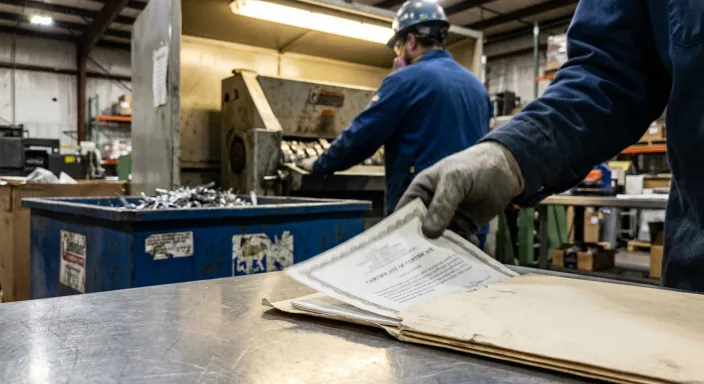
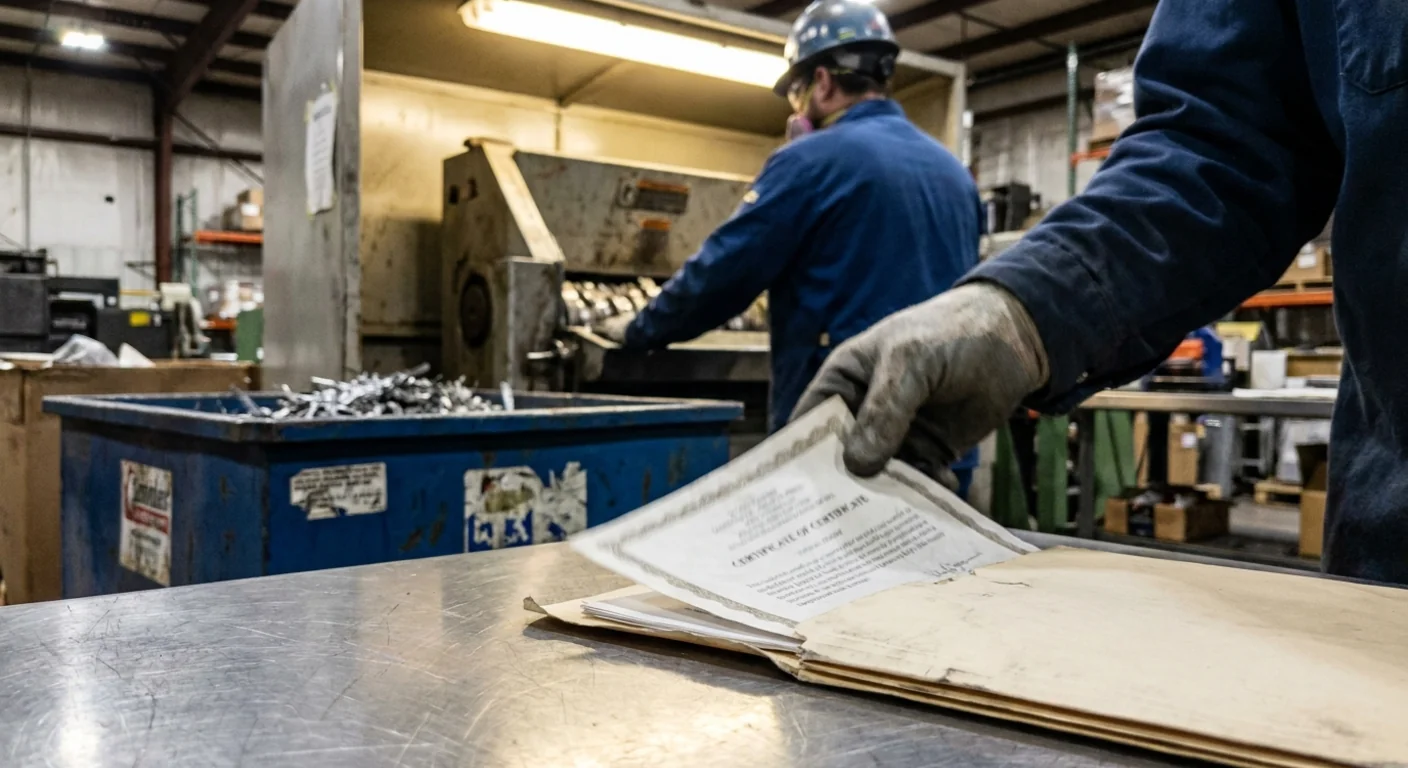
Clients who require witnessed destruction can arrange to observe the crushing process. This transparency is valuable for auditors, compliance officers, and internal teams who need to verify that destruction occurred as documented. The crusher produces visibly damaged drives that clearly cannot function, and the destruction event is logged and included in the certificate of destruction provided to the client.
3. Shredding, Punching, and Wiping: Understanding the Methods
Three primary methods are used in the industry for rendering hard drive data inaccessible: shredding, punching, and wiping. Each has distinct characteristics and appropriate use cases.
Shredding involves feeding hard drives into an industrial shredder that reduces them to small fragments. This method is thorough and produces material suitable for downstream recycling. Punching uses a mechanical punch to drive a hardened rod through the drive, creating holes that destroy platters. It is faster than shredding for high volumes and still results in mechanical destruction.
Wiping, by contrast, uses software to overwrite data multiple times according to recognized standards. The DoD 5220.22-M standard, for example, specifies a multi-pass overwrite process. NIST SP 800-88 guidelines provide a risk-based framework for media sanitization, including Clear, Purge, and Destroy methods. Wiping falls under Clear or Purge, while physical destruction is categorized as Destroy.
Chicago Shredder focuses on physical destruction methods aligned with the Destroy category, which NIST SP 800-88 guidelines describe as appropriate for media that will not be reused and where data recovery must be infeasible. For Illinois companies managing sensitive data, physical destruction is often the most straightforward path to compliance and risk mitigation.
4. Certificate of Destruction and Chain of Custody
A certificate of destruction is a formal document that verifies hard drives and other media have been destroyed. It typically includes the date of destruction, a description of the method used, serial numbers or inventory identifiers when available, and the signature of the responsible party. This certificate serves as evidence for audits, regulatory inquiries, and internal documentation.
Chicago Shredder provides certificates of destruction for all data destruction services. These certificates are generated after the crushing or shredding process is complete and can be customized to include specific client requirements such as asset tags or chain-of-custody references.
Chain of custody refers to the documented trail that tracks IT assets from the point they leave the client's control to final destruction. This includes pickup logs, transport records, facility intake documentation, and destruction records. Maintaining an unbroken chain of custody is important for organizations that must demonstrate continuous control over sensitive media.
5. Compliance Support for HIPAA, GLBA, and FACTA
Healthcare organizations subject to HIPAA must ensure that electronic protected health information on retired devices is rendered unreadable and indecipherable. The HIPAA Security Rule does not prescribe specific destruction methods, but it requires covered entities to implement policies and procedures that address final disposition of electronic media. Physical destruction is widely recognized as meeting this standard.
Financial institutions governed by the Gramm-Leach-Bliley Act (GLBA) face similar obligations. The Safeguards Rule requires measures to protect customer information throughout its lifecycle, including secure disposal. The Federal Trade Commission's Disposal Rule under the Fair and Accurate Credit Transactions Act (FACTA) mandates that consumer information be properly disposed of to prevent unauthorized access.
Chicago Shredder's services are designed to support compliance requirements under HIPAA, GLBA, and FACTA. By providing documented physical destruction, chain-of-custody tracking, and certificates of destruction, the company helps Illinois businesses demonstrate that they have taken reasonable and appropriate measures to protect sensitive information during IT asset disposition.
6. Why Local Chicago and Illinois Businesses Choose Chicago Shredder
Proximity matters in IT asset disposition. Working with a local provider based in Addison, Illinois, means shorter transport times, easier coordination for pickups, and the option for on-site witnessed destruction. Chicago Shredder serves businesses across the Chicago metropolitan area and throughout Illinois, offering flexibility in scheduling and responsive customer service.
Local businesses in healthcare, legal services, accounting, education, and other sectors benefit from a partner that understands regional compliance expectations and can respond quickly to asset retirement projects. Whether disposing of a single server or decommissioning an entire data center, Chicago Shredder's team typically responds within one business day to inquiries and can arrange pickups that fit client timelines.
The company's focus on transparent service, including the provision of destruction certificates and the ability to witness the crushing process, aligns with the needs of organizations that must maintain rigorous internal controls and satisfy external auditors. For questions or to schedule a pickup, businesses can reach Chicago Shredder at 866-770-2650.
7. Frequently Asked Questions
What is the difference between data wiping and physical destruction?
Data wiping uses software to overwrite information on a hard drive multiple times, rendering it difficult to recover. Physical destruction involves crushing, shredding, or punching the drive to mechanically damage the platters where data is stored, making recovery infeasible. Physical destruction is recommended when data sensitivity is high or when drive functionality cannot be guaranteed.
Can I witness the destruction of my company's hard drives?
Yes. Chicago Shredder offers witnessed destruction services at its Addison, Illinois facility. Clients can observe the crushing process and verify that their hard drives are physically destroyed. This option is valuable for compliance officers and auditors who need firsthand confirmation of the destruction event.
What is included in a certificate of destruction?
A certificate of destruction typically includes the date of destruction, the method used, a description or serial numbers of the destroyed media, and the signature of the party responsible for the destruction.
How does physical destruction support HIPAA compliance?
HIPAA requires that electronic protected health information be rendered unreadable and indecipherable when devices are retired. Physical destruction methods such as crushing or shredding meet this standard by making data recovery infeasible. Chicago Shredder's documented processes and certificates of destruction are designed to support HIPAA compliance requirements.
What happens to the destroyed hard drives after crushing?
After hard drives are crushed at the Addison facility, the destroyed materials are processed for recycling. No materials are knowingly disposed of in landfills, and commodities are recovered in accordance with sustainable recycling standards.
Does Chicago Shredder serve businesses outside of Chicago?
Yes. While based in Addison, Illinois, Chicago Shredder serves businesses throughout the Chicago metropolitan area and across Illinois. The company can arrange pickups for IT asset disposition projects of various sizes and typically responds to inquiries within one business day.
Data security in IT asset disposition is a critical responsibility for Illinois companies handling sensitive information. Physical destruction provides a definitive and verifiable method to ensure that data on retired hard drives is designed to be unrecoverable. By choosing local, transparent, and services, businesses can reduce risk, satisfy regulatory requirements, and protect their reputations. For secure IT asset disposition and hard drive destruction in the Chicago area, call Chicago Shredder at 866-770-2650 or schedule a pickup today.
Ready to schedule a pickup?
Call 866-770-2650 or request a quote online. Every pickup includes clear service documentation.