
When a computer or server reaches end of life, simply deleting files or reformatting the hard drive leaves your data vulnerable to recovery. Professional hard drive destruction eliminates this risk by rendering drives physically unrecoverable. For Chicago businesses handling customer records, financial data, or employee information, proper drive destruction is not just good practice but often a compliance requirement. Chicago Shredder provides secure hard drive destruction services designed to protect your organization from data breaches while supporting regulatory obligations.
1. Why Physical Destruction Matters
Data stored on hard drives persists even after deletion or formatting. Standard file removal simply marks storage space as available but leaves the actual data intact until overwritten. Sophisticated recovery tools can restore this information, creating significant security risks if drives are discarded without proper destruction.
Physical destruction addresses this vulnerability by damaging the platters where data resides. When a hard drive is crushed or shredded, the magnetic surfaces that store information become fragmented and unreadable. This method provides assurance that no recovery tool or technique can reconstruct your files.
For organizations in healthcare, finance, legal services, or any sector handling sensitive information, physical destruction represents the most reliable endpoint for data lifecycle management. The risk of improper disposal includes potential regulatory penalties, reputation damage, and legal liability if confidential information falls into unauthorized hands.
2. On-Site Hard Drive Crusher at Our Addison Facility
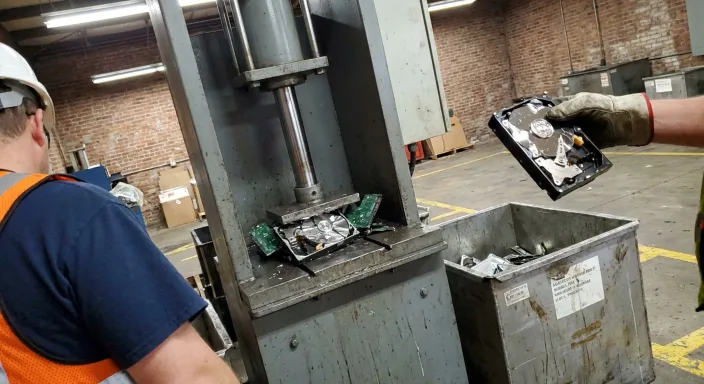
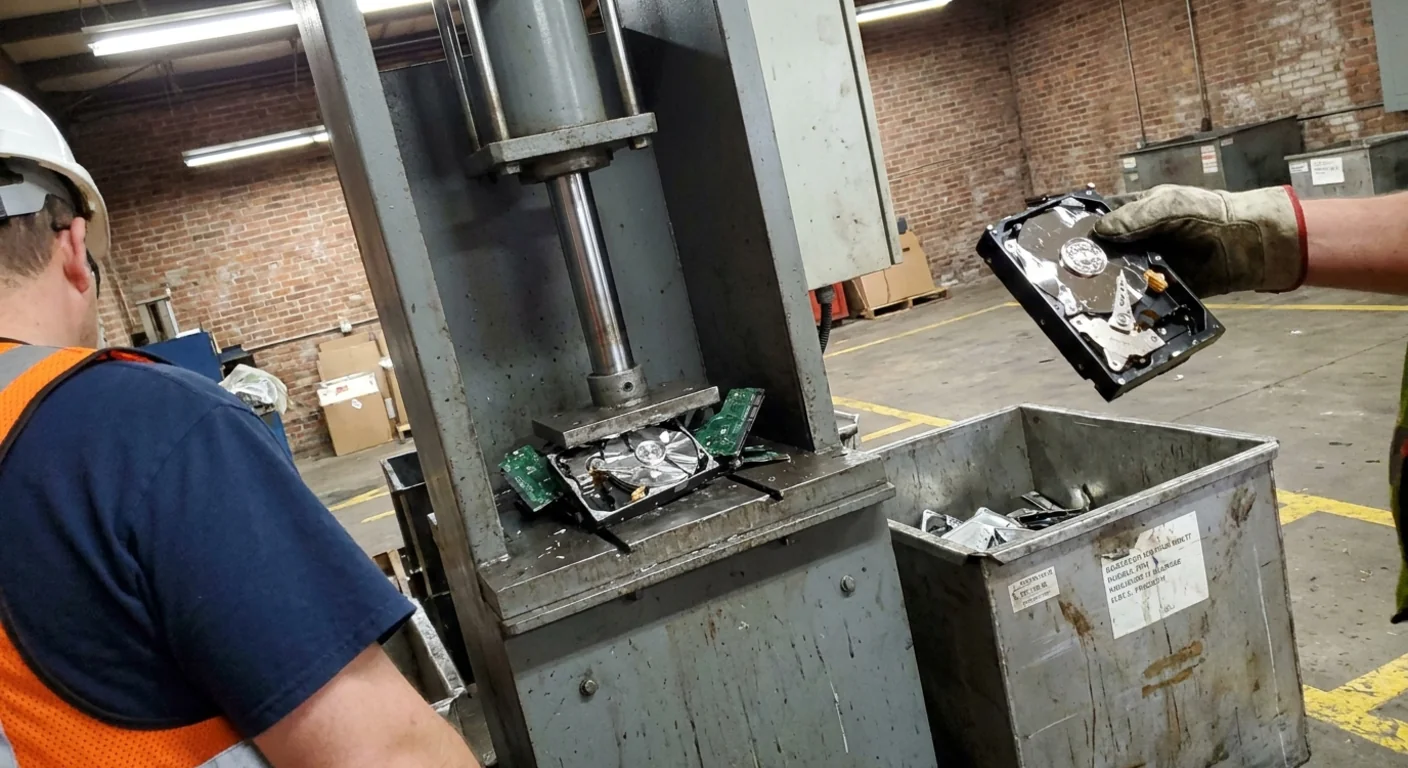
Chicago Shredder operates an on-site hard drive crusher at our Addison, Illinois facility, providing immediate physical destruction for drives collected throughout the Chicago area. This industrial equipment applies thousands of pounds of pressure to bend and fracture drive platters, making data recovery designed to be unrecoverable.
The on-site crusher allows us to process drives promptly after collection, reducing the window during which devices remain intact. Clients who prefer to witness destruction can arrange to observe the crushing process, adding an additional layer of verification to our chain of custody procedures.
All hard drives processed through our facility follow documented handling protocols from pickup through final destruction.
3. Shredding vs Punching vs Wiping: Understanding Your Options
Organizations have several methods available for hard drive sanitization, each with distinct characteristics. Software wiping uses specialized programs to overwrite data multiple times, following patterns aligned with the DoD 5220.22-M standard or NIST SP 800-88 guidelines. While effective for functioning drives, wiping requires time and cannot address damaged or non-operational drives.
Hole punching creates physical damage by drilling through drive platters at specific points. This method is faster than wiping but may leave portions of the platter intact, depending on punch placement and the number of holes created. Some recovery techniques can potentially retrieve data from unpunctured sections of the disk.
Shredding and crushing provide the most comprehensive physical destruction. Industrial shredders reduce drives to small fragments, while crushers bend and fracture platters beyond recognition. These methods work on any drive regardless of operational status and eliminate concerns about incomplete data removal. For maximum security, many Chicago businesses prefer physical destruction over software-based approaches.
4. Alignment with DoD 5220.22-M Standard and NIST SP 800-88 Guidelines
The DoD 5220.22-M standard outlines data sanitization procedures originally developed for Department of Defense applications. This standard specifies overwrite patterns designed to prevent data recovery from magnetic media. While software wiping can align with DoD 5220.22-M requirements, physical destruction exceeds the standard's objectives by making recovery designed to be unrecoverable through any means.
NIST SP 800-88 guidelines provide a framework for media sanitization across various device types and security classifications. These guidelines recognize physical destruction as appropriate for high-security applications and for media that cannot undergo software-based clearing procedures. NIST specifically addresses scenarios where destruction offers advantages over other sanitization methods.
Chicago Shredder's destruction processes are designed to align with both DoD 5220.22-M and NIST SP 800-88 frameworks. Our procedures support organizations seeking to meet federal guidelines for data sanitization while ensuring no materials are knowingly disposed of in landfills.
5. Certificate of Destruction and Chain of Custody Documentation
Every hard drive destruction service includes a Certificate of Destruction that documents the sanitization process. This certificate lists the number and type of devices destroyed, the destruction method employed, and the date of processing. Organizations can retain these certificates as evidence of proper data disposal practices during audits or compliance reviews.
Chain of custody documentation tracks drives from initial pickup through final destruction. This record identifies who handled devices at each stage, when transfers occurred, and where drives were located throughout the process. Maintaining unbroken chain of custody helps demonstrate that drives remained secure and that no unauthorized access occurred before destruction.
For Chicago businesses subject to regulatory oversight, these documents provide critical audit support. Certificates and custody records demonstrate due diligence in protecting sensitive information and help satisfy documentation requirements under various compliance frameworks. Chicago Shredder provides these materials as standard components of our destruction services.
6. Supporting Compliance with HIPAA, GLBA, and FACTA
Healthcare organizations must protect patient information under HIPAA regulations, which require secure disposal of electronic media containing protected health information. Hard drive destruction designed to support HIPAA compliance requirements ensures that patient records designed to be unrecoverable after devices leave service. Chicago medical practices, hospitals, and clinics rely on documented destruction processes to demonstrate proper data handling.
Financial institutions face similar obligations under the Gramm-Leach-Bliley Act, which mandates safeguards for customer financial information. GLBA requires proper disposal of consumer information, including data stored on electronic media. Banks, credit unions, accounting firms, and investment advisors throughout Chicago use hard drive destruction services designed to support these regulatory requirements.
The Fair and Accurate Credit Transactions Act imposes disposal requirements on businesses handling consumer credit information. FACTA applies to retailers, lenders, and any organization maintaining credit reports or related data. Professional hard drive destruction helps satisfy FACTA disposal rules while reducing the risk of identity theft from improperly discarded devices. Our services are designed to support compliance requirements across these regulatory frameworks.
7. Why Chicago Businesses Choose Chicago Shredder
Local businesses throughout Chicago, Naperville, Oak Park, Evanston, and surrounding Illinois communities select Chicago Shredder for convenient, secure hard drive destruction. Our Addison facility provides quick turnaround for organizations throughout the metropolitan area, with pickup services available for locations unable to transport drives themselves.
This integrated approach addresses both security and sustainability objectives.
Our team typically responds to service requests within one business day, providing certificates of destruction and chain of custody documentation as standard practice. Call 866-770-2650 to discuss your hard drive destruction needs.
8. Frequently Asked Questions
Is physical destruction more secure than software wiping for hard drives?
Physical destruction eliminates data recovery risks by damaging the platters where information is stored, making recovery designed to be unrecoverable. Software wiping can be effective but requires functioning drives and leaves the physical media intact. For maximum security, especially with non-operational drives, physical destruction provides the most comprehensive approach.
What happens to hard drives after they are destroyed at your facility?
Materials are recovered according to sustainable recycling standards, and no materials are knowingly disposed of in landfills. Clients receive certificates documenting the destruction process.
Do you provide documentation for compliance audits?
Yes, every hard drive destruction service includes a Certificate of Destruction and chain of custody documentation. These records detail the number of drives destroyed, the destruction method used, and handling throughout the process, supporting audit requirements under HIPAA, GLBA, FACTA, and other regulatory frameworks.
Can I witness the destruction of my hard drives?
Organizations can arrange to observe the crushing process at our Addison, Illinois facility for additional verification. This option provides direct confirmation that drives undergo physical destruction and can be particularly valuable for highly sensitive data or specific compliance requirements.
How quickly can you process hard drives for Chicago area businesses?
Chicago Shredder typically responds to service requests within one business day. Processing time depends on volume and specific requirements, but our local Addison facility allows for quick turnaround throughout the Chicago metropolitan area. Contact us at 866-770-2650 to discuss your timeline.
What types of hard drives can you destroy?
Our on-site crusher processes all types of hard drives regardless of size, manufacturer, or operational status. This includes desktop drives, laptop drives, server drives, and external drives. Both functioning and damaged drives can be destroyed, making physical destruction suitable for any hard drive requiring secure disposal.
Proper hard drive destruction protects your organization from data breaches, supports compliance with regulatory requirements, and demonstrates responsible information management practices. For Chicago businesses handling sensitive customer, patient, or financial data, physical destruction provides the most reliable method to prevent unauthorized data recovery. Chicago Shredder's on-site crushing facility in Addison, Illinois offers secure, documented destruction services designed to meet the needs of healthcare providers, financial institutions, legal practices, and businesses throughout the metropolitan area. Call 866-770-2650 or schedule a pickup.
Ready to schedule a pickup?
Call 866-770-2650 or request a quote online. Every pickup includes clear service documentation.