

When businesses retire computers, servers, or storage devices, a common question arises: can hard drives truly be destroyed beyond recovery? The short answer is yes, but the method matters. Simple deletion or formatting leaves data vulnerable to sophisticated recovery techniques. Physical destruction, when performed correctly, renders hard drives completely unusable and data unrecoverable.
1. Why Physical Destruction Matters for Data Security
Data wiping software can be effective when executed properly, but it requires functional hardware, time, and verification. Many organizations face situations where drives are damaged, corrupted, or contain firmware-level malware that resists software-based erasure. Physical destruction eliminates these variables by making the storage media itself inoperable.
Hard drives contain magnetic platters that store data in microscopic patterns. Even when files are deleted or drives are formatted, those magnetic patterns often remain intact. Forensic recovery tools can sometimes reconstruct data from these remnants. Physical destruction breaks apart the platters, bends them beyond recognition, or pulverizes them into small pieces, making data reconstruction effectively impossible.
For organizations subject to regulatory requirements or those handling confidential customer information, physical destruction provides an extra layer of assurance. It creates a clear, verifiable endpoint in the data lifecycle that can be documented and audited.
2. The On-Site Crusher at Chicago Shredder's Addison Facility
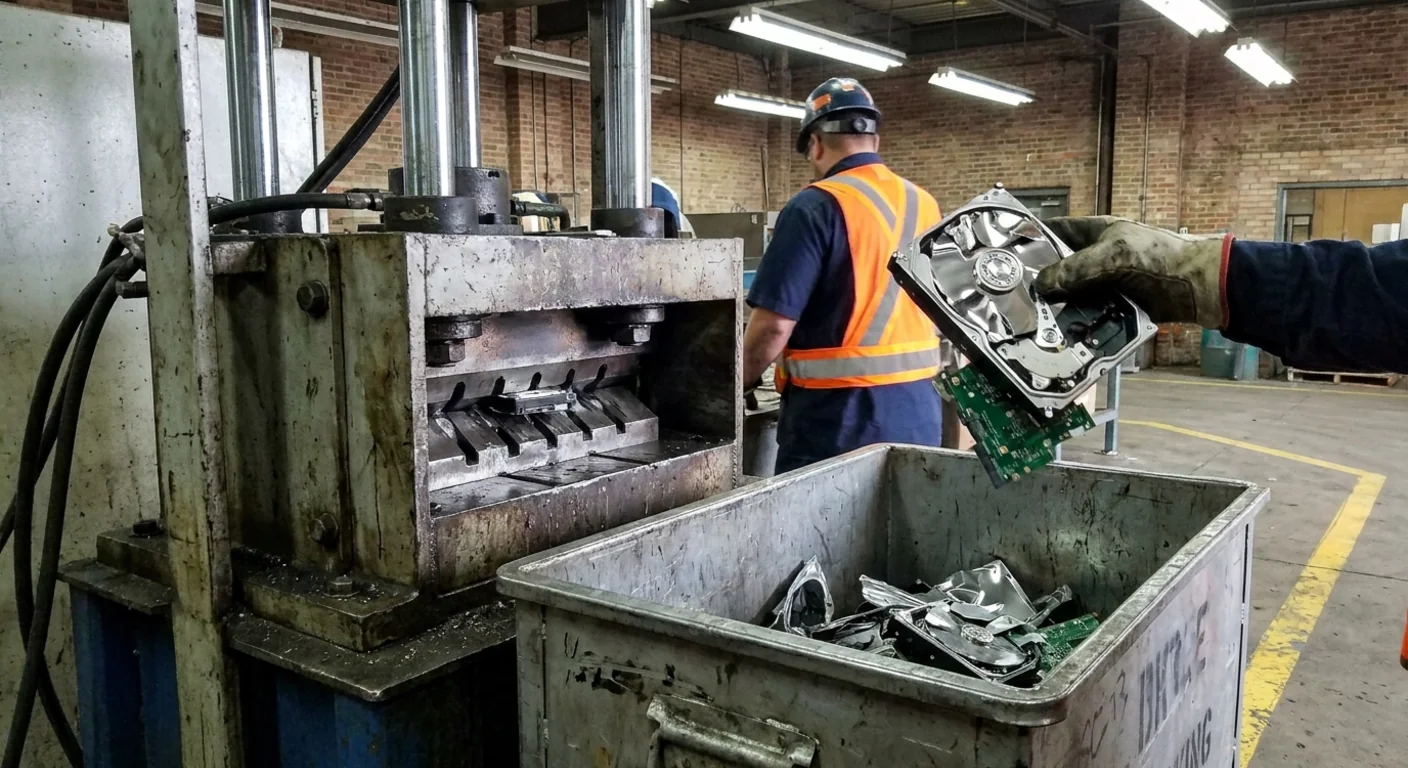
Chicago Shredder operates an on-site hard drive crusher at our Addison, Illinois facility. This industrial equipment applies thousands of pounds of force to physically deform hard drives, rendering them completely inoperable. The crushing process bends and breaks the internal platters, circuit boards, and read/write heads, creating permanent damage that makes data recovery attempts futile.
The crusher handles various drive form factors, from standard 3.5-inch desktop drives to smaller 2.5-inch laptop drives and solid-state drives. Each device is fed into the machine, which deforms the casing and internal components in seconds. The result is a visibly destroyed unit that no longer resembles a functional storage device.
Clients who prefer to witness the destruction process can arrange to visit the Addison facility. This transparency helps organizations verify that their specific devices have been destroyed and allows security officers or compliance managers to fulfill oversight responsibilities. After destruction, Chicago Shredder provides certificates of destruction that document the process and list serial numbers when provided.
3. Shredding vs Crushing vs Data Wiping Methods
Three primary methods exist for hard drive sanitization: software wiping, crushing, and shredding. Each serves different scenarios and risk profiles. Software wiping overwrites data multiple times according to patterns specified in the DoD 5220.22-M standard or NIST SP 800-88 guidelines. This approach works well for functional drives being redeployed or resold, but requires working hardware and significant time per drive.
Crushing physically deforms the drive using hydraulic pressure. The process is fast, creates clear visual evidence of destruction, and works on damaged or non-functional drives. Crushing is often sufficient for most business applications and provides a practical balance between security and efficiency.
Shredding takes destruction further by cutting drives into small particles, typically less than two inches in size. Industrial shredders process entire devices, including casings and circuit boards, creating confetti-like pieces.
Organizations with highly sensitive data or stringent compliance requirements often choose shredding for the highest level of physical destruction. Healthcare providers, financial institutions, and government contractors frequently specify shredding to meet their internal security policies.
4. Alignment with DoD and NIST Standards
The DoD 5220.22-M standard outlines procedures for clearing and sanitizing storage media, including both software-based and physical methods. While this standard primarily addresses software wiping patterns, it also recognizes physical destruction as an acceptable sanitization method for certain classifications of media. Chicago Shredder's crushing and shredding processes align with the physical destruction guidelines described in these frameworks.
NIST SP 800-88 guidelines provide a more recent framework for media sanitization, categorizing methods as Clear, Purge, or Destroy. Physical destruction falls under the Destroy category, which NIST describes as rendering media unusable and preventing data recovery even with state-of-the-art laboratory techniques. The guidelines specifically mention disintegration, pulverization, melting, and incineration as acceptable physical destruction methods.
While neither DoD 5220.22-M nor NIST SP 800-88 are certifications, they provide industry-recognized frameworks that help organizations make informed decisions about data sanitization.
5. Certificate of Destruction and Chain of Custody
Proper documentation separates professional destruction services from informal disposal methods. Chicago Shredder provides certificates of destruction for all hard drive destruction projects. These certificates include the date of destruction, the method used, and can include serial numbers or asset tags when clients provide that information prior to destruction.
Chain of custody documentation tracks devices from the moment they leave your facility until they are destroyed. This paper trail demonstrates that drives were handled securely throughout the process and were not diverted, lost, or accessed inappropriately. For regulated industries, this documentation often forms part of the evidence needed during compliance audits.
Some organizations require video documentation of the destruction process. Chicago Shredder can accommodate these requests, allowing clients to receive video evidence showing their specific devices being destroyed. This level of verification helps security teams demonstrate due diligence and provides concrete evidence that sensitive data was properly sanitized.
6. Compliance Support for HIPAA, GLBA, and FACTA
Healthcare organizations subject to HIPAA regulations must ensure that electronic protected health information (ePHI) is rendered unrecoverable when disposing of equipment. The HIPAA Security Rule requires covered entities to implement policies and procedures for disposing of ePHI and the hardware that stored it. Physical hard drive destruction is designed to support these requirements by creating an irreversible endpoint for data.
Financial institutions operating under GLBA face similar obligations to protect customer information throughout its lifecycle, including disposal. The Safeguards Rule requires financial institutions to develop comprehensive security programs that include appropriate disposal of consumer information. Chicago Shredder's destruction services are designed to support compliance with these disposal requirements.
FACTA, the Fair and Accurate Credit Transactions Act, requires proper disposal of consumer report information. Businesses that maintain credit reports or information derived from credit reports must take reasonable measures to protect against unauthorized access during disposal. Physical destruction of hard drives containing such information helps organizations meet these obligations.
While Chicago Shredder's services are designed to support compliance requirements, organizations remain responsible for ensuring their overall programs meet applicable regulations.
7. Why Chicago Businesses Choose Chicago Shredder
Local businesses throughout the Chicago metropolitan area choose Chicago Shredder for several practical reasons. Our Addison facility provides convenient access for organizations in Cook County, DuPage County, and surrounding areas. We offer flexible pickup scheduling that accommodates business operations, and we typically respond to inquiries within one business day.
Many organizations appreciate the combination of local service and enterprise-grade processing capabilities. This connection provides the reliability of a larger organization while maintaining the responsiveness of a local provider.
Transparency matters when selecting a destruction vendor. Chicago Shredder welcomes facility tours and witnessed destruction appointments. Organizations can verify our equipment, observe our processes, and meet the team handling their sensitive materials. This openness builds confidence and helps security managers fulfill their oversight responsibilities.
Pricing structures are straightforward, with no materials knowingly disposed of in landfills. After hard drives are destroyed, the resulting materials enter proper recycling streams. Metals are separated and processed according to commodity specifications, and all downstream vendors are vetted to ensure environmental compliance. This approach helps organizations meet sustainability goals while addressing data security requirements.
8. Frequently Asked Questions
Can data be recovered after a hard drive is physically crushed?
Once a hard drive has been crushed with sufficient force to bend the platters and destroy the read/write mechanisms, data recovery becomes effectively impossible. The crushing process creates permanent physical damage that prevents the drive from functioning and makes the magnetic patterns unreadable, even with sophisticated forensic tools.
How long does the hard drive destruction process take?
The physical destruction of an individual hard drive takes only seconds using industrial crushing equipment. However, total project time depends on volume, scheduling, and whether clients require witnessed destruction or detailed inventory tracking. Chicago Shredder can typically accommodate most requests with flexible scheduling.
Do I need to remove hard drives from computers before service?
No, Chicago Shredder can handle complete units including desktops, laptops, and servers. Our team can remove hard drives on-site or at our facility as part of the service. For organizations with IT staff, removing drives beforehand can streamline the process, but it is not required.
What happens to the materials after hard drives are destroyed?
After destruction, hard drive components enter proper recycling streams. Metals are separated and processed according to commodity specifications.
Can I get documentation proving my hard drives were destroyed?
Yes, Chicago Shredder provides certificates of destruction for all projects. These certificates include the date and method of destruction and can include serial numbers or asset tags when provided. Chain of custody documentation and video evidence are available for organizations with heightened security or compliance requirements.
Is physical destruction required for compliance with HIPAA or other regulations?
While regulations like HIPAA do not mandate specific destruction methods, they require that data be rendered unrecoverable. Physical destruction is widely recognized as an effective method for meeting these requirements. Organizations should consult with their compliance officers or legal advisors to determine appropriate methods for their specific situations and risk profiles.
Hard drives can absolutely be destroyed beyond any possibility of data recovery when the right methods and equipment are used. Physical destruction through crushing or shredding provides verifiable, permanent sanitization that supports compliance requirements and protects sensitive information. Chicago Shredder's Addison facility offers local businesses throughout the Chicago area access to industrial destruction equipment, transparent processes, and professional documentation. Whether your organization handles healthcare records, financial data, or proprietary business information, proper hard drive destruction forms a critical component of comprehensive data security. To schedule a pickup or discuss your specific requirements, call Chicago Shredder at 866-770-2650 or visit our Addison facility to see our equipment in action.
Ready to schedule a pickup?
Call 866-770-2650 or request a quote online. Every pickup includes clear service documentation.