

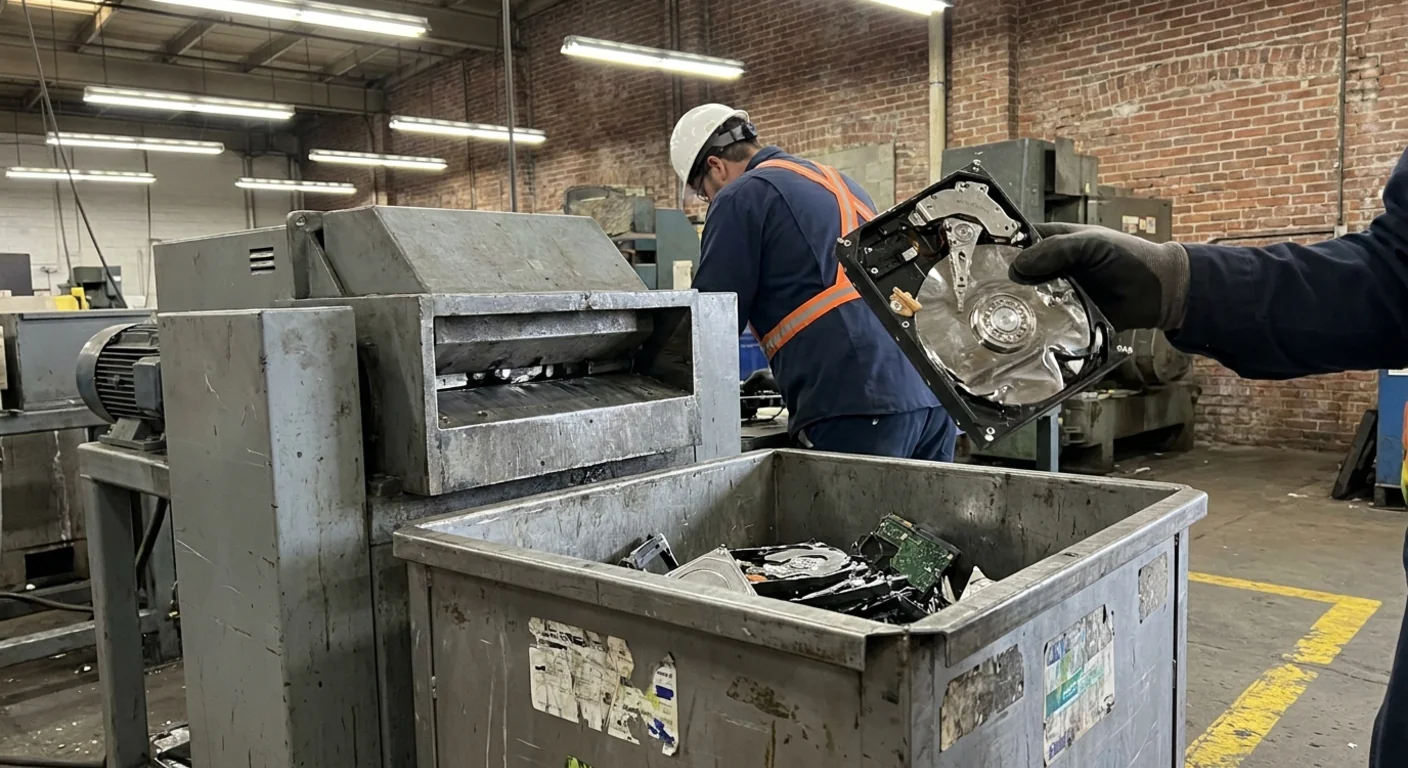
When organizations in Chicago need to dispose of hard drives containing sensitive data, physical destruction remains the most secure option. Simply deleting files or formatting drives leaves data vulnerable to recovery. For businesses handling protected information under HIPAA, GLBA, FACTA, or other regulations, professional hard drive destruction provides peace of mind that data is permanently unrecoverable. Chicago Shredder offers secure hard drive destruction services designed to support compliance requirements, complete with certificates of destruction and documented chain of custody.
1. Why Physical Destruction Matters for Data Security
Software-based data wiping has its place, but physical destruction provides the highest level of certainty that data designed to be unrecoverable. When hard drives are physically destroyed, the platters that store data are rendered unusable. This eliminates the risk that sophisticated recovery techniques could retrieve sensitive information.
Organizations in healthcare, financial services, legal, and government sectors face strict requirements for data disposal. A single hard drive can contain thousands of patient records, client financial information, or proprietary business data. Physical destruction ensures this information is designed to be unrecoverable, even by advanced forensic methods.
Chicago Shredder operates an on-site hard drive crusher at our Addison, Illinois facility. This industrial equipment physically destroys hard drives by applying extreme pressure to bend and break the internal platters. The destruction process is immediate and irreversible, providing the most secure method for end-of-life hard drive disposal.
2. Destruction Methods: Shredding, Punching, and Crushing
Different physical destruction methods offer varying levels of security and efficiency.
Hard drive shredding uses industrial shredders to reduce drives into small particles, typically 1 to 2 inches or smaller. This method ensures complete destruction of all components. Punching creates holes through the drive platters, making data unreadable while leaving the drive partially intact. Crushing, the method used at Chicago Shredder's Addison facility, applies hydraulic pressure to deform the drive casing and break internal platters.
Each method has advantages depending on volume, compliance requirements, and documentation needs. Crushing and shredding are generally preferred for sensitive data because they provide the most thorough destruction. For organizations with ongoing destruction needs, establishing a regular pickup schedule ensures drives never accumulate, reducing the risk of data breaches from stored devices.
3. Alignment with DoD 5220.22-M Standard and NIST SP 800-88 Guidelines
When evaluating hard drive destruction services, understanding industry standards helps ensure your provider meets security best practices. The DoD 5220.22-M standard outlines data sanitization methods originally developed for Department of Defense use.
NIST SP 800-88 guidelines, published by the National Institute of Standards and Technology, provide a framework for media sanitization. These guidelines recognize physical destruction as the most secure method for certain device types, particularly when drives are damaged, end-of-life, or contain highly sensitive data. The guidelines recommend destruction methods that render data recovery infeasible.
Chicago Shredder's physical destruction processes are designed to align with these frameworks. This secure process demonstrates adherence to sustainable recycling practices, environmental standards, and data security protocols throughout the destruction and recycling process.
4. Certificates of Destruction and Chain of Custody Documentation
Regulatory compliance requires more than just destroying hard drives. Organizations must document the entire process from collection to final destruction. A certificate of destruction provides legal proof that drives were securely destroyed, including details such as date of destruction, serial numbers when available, and the destruction method used.
Chain of custody documentation tracks hard drives from the moment they leave your facility until destruction is complete. This creates an auditable record showing who handled the drives, when transfers occurred, and where destruction took place.
Chicago Shredder provides detailed certificates of destruction for every service. These certificates include the quantity of drives destroyed, the date and location of destruction, and confirmation that materials were processed according to environmental and security standards. This documentation supports compliance efforts for HIPAA, GLBA, FACTA, and other regulations that mandate secure data disposal.
5. Compliance Support for HIPAA, GLBA, and FACTA Requirements
Healthcare organizations must comply with HIPAA requirements for protecting patient information throughout its entire lifecycle, including disposal. The HIPAA Security Rule requires covered entities to implement policies and procedures for final disposition of electronic protected health information. Physical destruction of hard drives containing patient data helps satisfy these requirements.
Financial institutions operating under GLBA face similar obligations for customer information. The Safeguards Rule requires financial institutions to protect customer records and information, including proper disposal methods. FACTA further requires proper destruction of consumer information to prevent unauthorized access. Industry studies suggest that improper data disposal remains a common source of data breaches.
Working with a professional destruction service designed to support compliance requirements reduces risk for Chicago businesses. Chicago Shredder understands the documentation and security protocols necessary for regulated industries.
6. Why Local Chicago Businesses Choose Chicago Shredder
Organizations throughout Chicago and surrounding Illinois communities select Chicago Shredder for hard drive destruction because of our local presence, secure processes, and comprehensive service. Based in Addison, Illinois, we serve businesses across the Chicago metropolitan area with flexible pickup options designed to accommodate schedules and volumes of all sizes.
Our on-site crusher at the Addison facility means drives can be destroyed locally rather than transported long distances to regional facilities. This reduces transit time, minimizes chain of custody complexity, and provides faster turnaround for certificates of destruction. For organizations with urgent destruction needs, local processing offers significant advantages.
This means organizations can consolidate vendors for all end-of-life technology needs. From desktop computers and servers to networking equipment and hard drives, we provide secure, environmentally responsible solutions that no materials are knowingly disposed of in landfills.
7. How to Schedule Hard Drive Destruction Services
Starting hard drive destruction services with Chicago Shredder is straightforward. Call 866-770-2650. We typically respond within one business day to inquiries.
For ongoing needs, Chicago Shredder can establish regular pickup schedules, whether monthly, quarterly, or at other intervals. This ensures drives are destroyed promptly rather than accumulating in storage areas where they pose security risks. We also accommodate one-time purges when organizations decommission data centers, close offices, or complete technology refresh projects.
Pickup services include secure containers for collecting drives until destruction. This helps organizations maintain security and organization while accumulating drives for pickup. Upon request, we can provide witnessed destruction services where client representatives observe the destruction process, providing additional assurance for highly sensitive materials.
8. Frequently Asked Questions
What is the most secure method for destroying hard drives?
Physical destruction methods like crushing or shredding provide the highest level of security because they render the data-storing platters physically unusable. Unlike software wiping, physical destruction ensures data is designed to be unrecoverable even with advanced forensic techniques.
Do I receive documentation after hard drive destruction?
Yes, Chicago Shredder provides a certificate of destruction for every service.
Can you destroy hard drives that have been removed from computers?
Absolutely. We accept hard drives that have already been removed from devices as well as complete computers and servers where drives will be removed as part of our processing. Both loose drives and complete units can be included in pickups.
How quickly can you schedule a hard drive destruction pickup?
We typically respond within one business day to schedule pickups. Depending on your location in the Chicago area and current service volume, pickups can often be arranged within several business days. For urgent needs, contact us at 866-770-2650 to discuss expedited options.
What happens to hard drives after physical destruction?
After destruction, materials are processed for recycling. No materials are knowingly disposed of in landfills, and metals and other recoverable materials are recycled according to environmental standards.
Do you serve businesses outside of Chicago?
Yes, while based in Addison, Illinois, Chicago Shredder serves organizations throughout the Chicago metropolitan area and surrounding Illinois communities. Contact us to confirm service availability for your specific location and discuss pickup logistics.
Selecting the right hard drive destruction provider protects your organization from data breaches while supporting compliance requirements. Whether you need one-time destruction or ongoing scheduled pickups, our team provides flexible solutions for Chicago businesses. Call 866-770-2650 today to discuss your hard drive destruction needs or schedule a pickup for your organization.
Ready to schedule a pickup?
Call 866-770-2650 or request a quote online. Every pickup includes clear service documentation.