
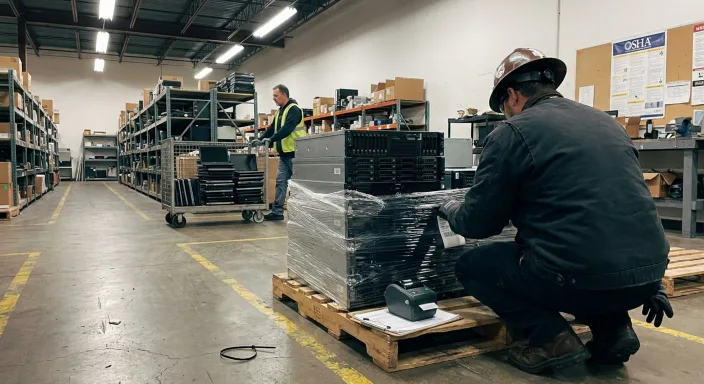
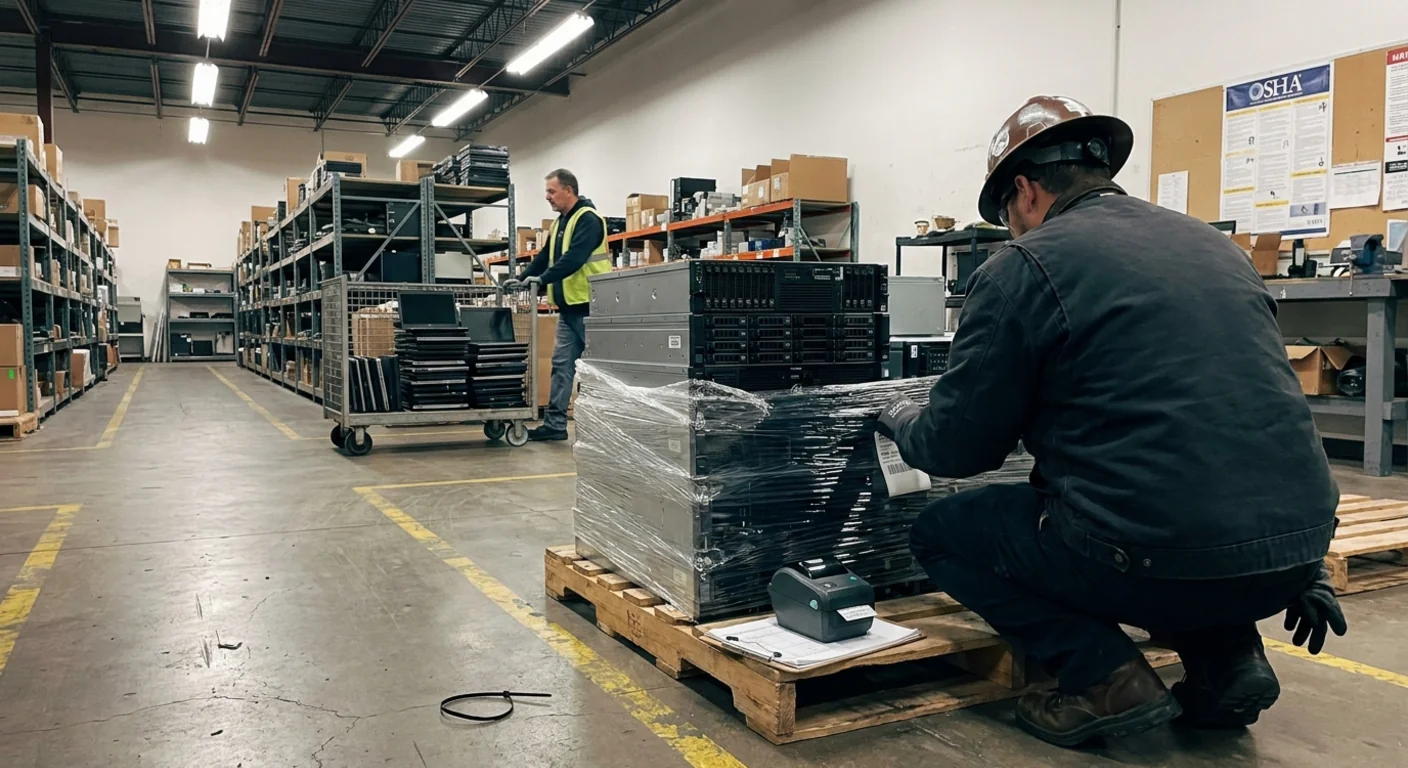
IT asset disposition (ITAD) is the process businesses use to securely retire technology equipment while protecting sensitive data and meeting environmental responsibilities. For Chicago-area organizations, proper ITAD combines secure data destruction, detailed asset tracking, and sustainable recycling through processing facilities. Chicago Shredder provides comprehensive ITAD services designed to support compliance requirements while maximizing asset recovery value.
1. Understanding IT Asset Disposition
IT asset disposition encompasses the entire lifecycle of retiring business technology, from initial assessment through final processing. The process begins when equipment reaches end-of-life status, whether due to lease expiration, technology refresh cycles, or functional obsolescence.
Effective ITAD programs require specialized expertise that most businesses lack internally. Technology assets contain regulated materials including lead, mercury, and lithium that require proper handling. Simultaneously, these devices often store customer data, financial records, and proprietary information that create significant liability if compromised. Professional ITAD providers bridge this gap by combining secure data destruction capabilities with secure recycling infrastructure.
Chicago businesses benefit from local ITAD providers who understand regional compliance requirements and can respond quickly to equipment retirement needs. Geographic proximity reduces transportation costs, shortens project timelines, and simplifies logistics coordination for multi-location asset pickups across the metropolitan area.
2. Asset Inventory and Chain of Custody Documentation
Comprehensive asset tracking begins the moment equipment leaves your facility. Professional ITAD services document each device by serial number, manufacturer, model, and asset tag, creating a detailed inventory that matches against your internal records.
Chain of custody protocols track every hand-off and processing step from initial pickup through final disposition. Each asset receives a unique identifier that follows the device through data destruction, testing, refurbishment decisions, and recycling processes. This continuous tracking prevents loss, supports internal audit requirements, and demonstrates proper handling to regulatory authorities.
Chicago Shredder provides detailed reporting that includes pickup manifests, processing certificates, and disposition summaries. These records specify which assets were refurbished for resale, which components were harvested for parts recovery, and which materials were recycled.
3. Secure Data Destruction Integration
Data destruction represents the most critical component of IT asset disposition. Hard drives, solid-state drives, and mobile devices retain information even after standard deletion or reformatting. Professional ITAD services employ multiple destruction methods appropriate to device type, data sensitivity, and organizational security policies.
For hard drives containing highly sensitive information, physical destruction provides the highest security assurance. Chicago Shredder operates an on-site hard drive crusher at its Addison, Illinois facility that renders drives completely unusable. This mechanical destruction method physically deforms platters and destroys read-write heads, designed to make data recovery effectively impossible. The process provides immediate verification and eliminates concerns about data persistence.
Devices approved for resale or donation undergo secure data sanitization using methods aligned with NIST SP 800-88 guidelines. These software-based sanitization processes overwrite existing data multiple times, designed to render information unrecoverable through standard forensic techniques. Chicago Shredder provides certificates of destruction documenting the sanitization method, software version, and completion verification for each processed device. This documentation supports compliance requirements under HIPAA, GLBA, and other data protection regulations.
4. Refurbish Versus Recycle Decision Process
Not all retired IT assets require immediate recycling. Many devices retain functional value that can offset ITAD program costs through resale or remarketing channels. Professional ITAD providers evaluate each asset against current market conditions, cosmetic condition, functional status, and refurbishment costs to determine the optimal disposition path.
Functional equipment typically enters testing protocols that assess hardware performance, battery life, screen quality, and component functionality. Devices meeting quality thresholds undergo data sanitization and cosmetic refurbishment before entering secondary markets. This process recovers value for your organization while extending equipment lifecycle and reducing demand for new manufacturing.
Equipment that fails functional testing or holds minimal resale value proceeds directly to recycling processes. Components like memory modules, processors, and precious metal-bearing boards may be harvested for parts recovery before the remaining materials enter commodity recycling streams. This tiered approach maximizes value recovery while ensuring no functional equipment enters landfills unnecessarily.
5. Secure Processing and Downstream Accountability
This secure process demonstrates adherence to industry best practices for worker safety, environmental protection, and responsible downstream placement. The facility maintains documented relationships with downstream processors and prohibits export of non-functional electronics to developing nations where inadequate recycling infrastructure creates environmental and health hazards.
processing facilities track materials through final disposition, ensuring commodities like copper, aluminum, steel, and precious metals reach appropriate recycling channels. Hazardous components receive specialized handling through permitted facilities equipped to manage substances like mercury from LCD backlights and lithium from batteries. This systematic approach ensures no materials are knowingly disposed of in landfills, supporting your organization's environmental sustainability objectives.
6. Data Disposal Considerations
Healthcare organizations, financial institutions, educational facilities, and government agencies face specific requirements for IT asset disposition. HIPAA regulations mandate secure destruction of electronic protected health information. GLBA requires financial institutions to protect customer data throughout the disposal process. FERPA governs educational records security, while various state laws impose additional data breach notification requirements.
The combination of physical destruction capabilities, secure sanitization procedures, and detailed chain of custody documentation provides the evidence compliance officers need to demonstrate proper handling during audits and regulatory reviews.
This paperwork supports regulatory compliance while reducing liability exposure from improper disposal. For organizations subject to multiple regulatory frameworks, working with a local ITAD provider simplifies coordination and ensures consistent handling across all asset categories.
7. Chicago-Area Logistics Advantages
Geographic proximity significantly impacts ITAD program efficiency and cost-effectiveness. Local providers offer faster response times, lower transportation costs, and simplified coordination for multi-site pickups across the Chicago metropolitan area. Companies with locations in suburban office parks, downtown business districts, and industrial areas benefit from providers familiar with access requirements, loading dock protocols, and local traffic patterns.
Chicago Shredder operates from Addison, Illinois, providing convenient access to organizations throughout Cook, DuPage, Lake, Kane, and Will counties. This central location enables rapid response to urgent retirement projects, scheduled pickups aligned with office moves or lease expirations, and flexible service windows that minimize business disruption. Transportation efficiency reduces carbon footprint while lowering program costs compared to regional or national providers shipping equipment across long distances.
Local ITAD relationships also simplify ongoing service needs. Businesses generate retired equipment continuously as individual devices fail, employees separate, or departments complete technology refreshes. Establishing a relationship with a Chicago-area provider creates a reliable outlet for ongoing disposition needs rather than managing ad-hoc solutions or accumulating equipment in storage areas where it creates security risks and occupies valuable space.
8. Frequently Asked Questions
What types of IT assets can be processed through ITAD services?
ITAD services handle desktop computers, laptops, servers, networking equipment, mobile devices, tablets, printers, copiers, monitors, and peripheral equipment. Most providers also process data center equipment including rack-mounted servers, storage arrays, and telecom infrastructure. Chicago Shredder accepts virtually all business technology equipment regardless of age, condition, or functional status.
How long does the IT asset disposition process typically take?
Timeline depends on project scope and scheduling requirements. Single-location pickups often occur within one week of initial contact, while multi-site projects require coordination across locations. Processing and documentation typically complete within two to four weeks after pickup. Chicago Shredder typically responds to inquiries within one business day to begin scheduling.
What documentation will I receive after ITAD services are complete?
You receive detailed asset inventories listing each device by serial number and model, certificates of destruction documenting data sanitization or physical destruction methods, and final disposition reports specifying which assets were refurbished, recycled, or destroyed.
Can ITAD services accommodate equipment containing extremely sensitive data?
Yes, professional ITAD providers offer physical destruction services for devices containing highly classified or sensitive information. Chicago Shredder operates an on-site hard drive crusher at its Addison facility that physically destroys storage media, designed to render data unrecoverable. This method provides the highest security assurance for organizations with stringent data protection requirements.
How does asset remarketing work and who receives the recovered value?
Functional equipment undergoes testing, data sanitization, and refurbishment before entering secondary markets through wholesale channels or direct resale. The recovered value typically offsets service costs, and agreements can be structured to share proceeds with the original owner. Chicago Shredder evaluates each asset's market value and cosmetic condition to determine the optimal disposition path that maximizes overall program value.
What happens to equipment that cannot be refurbished or resold?
Non-functional equipment enters commodity recycling processes where materials are separated by type and processed through appropriate channels. No materials are knowingly disposed of in landfills, and all processing follows secure, transparent recycling standards.
Comprehensive IT asset disposition protects sensitive data, supports compliance requirements, and demonstrates environmental responsibility. Chicago businesses benefit from local ITAD providers who combine secure data destruction capabilities with secure recycling infrastructure and detailed documentation. Our Addison location provides convenient access throughout the Chicago metropolitan area with flexible scheduling designed to minimize business disruption. Contact Chicago Shredder at 866-770-2650 to discuss your IT asset disposition needs or schedule a pickup for retired technology equipment.
Ready to schedule a pickup?
Call 866-770-2650 or request a quote online. Every pickup includes clear service documentation.