

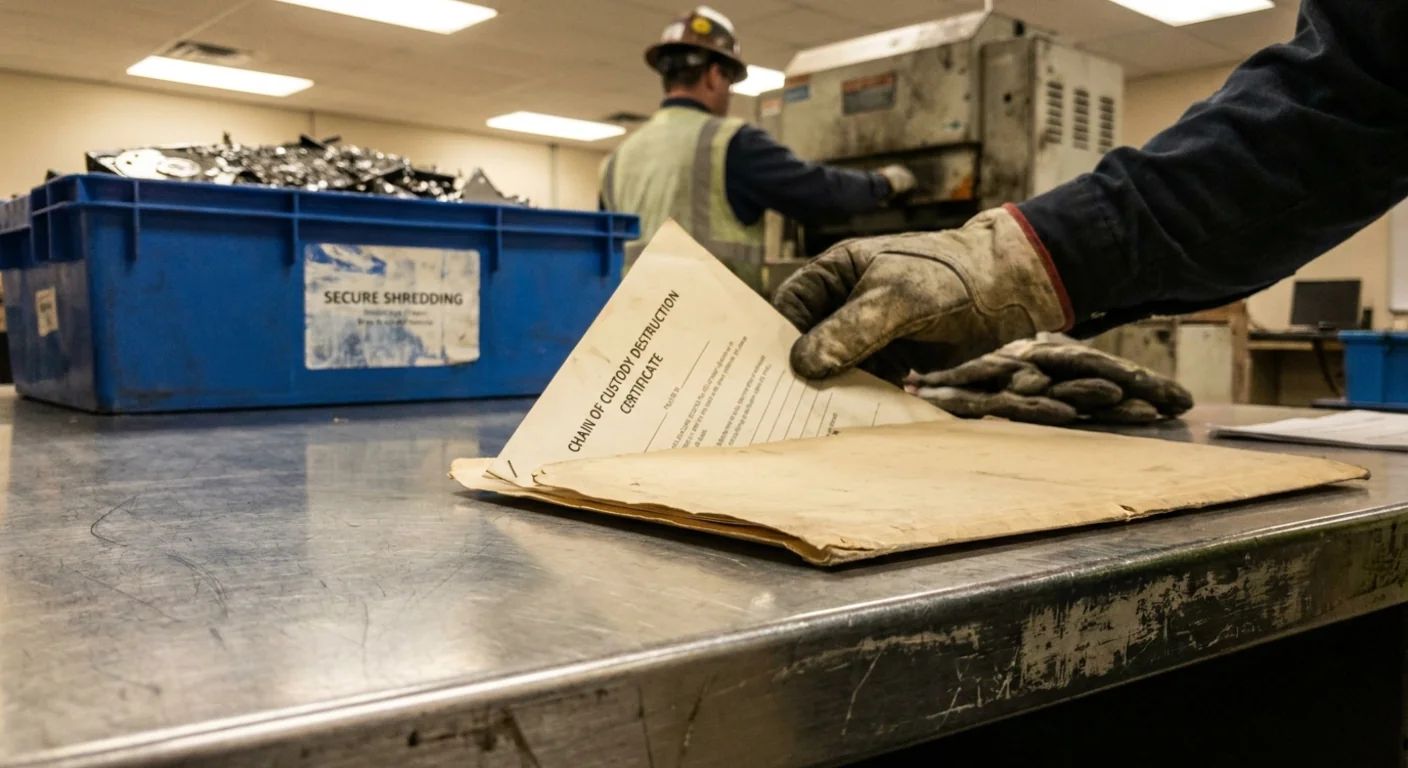
When Chicago businesses retire computers, servers, or storage devices, proper data destruction is not optional. Sensitive information remains on hard drives even after deletion or formatting, creating liability risks if improperly handled. Chicago Shredder delivers comprehensive IT asset disposition and data destruction services from our Addison, Illinois facility, combining physical destruction methods with documented chain of custody.
1. Why Physical Destruction Matters for Data Security
Software-based data deletion methods leave room for potential recovery. When drives are reformatted or files are deleted through operating system commands, the data still exists on the physical platters until overwritten. Sophisticated recovery tools can reconstruct this information, creating security vulnerabilities for organizations handling customer records, financial data, or protected health information.
Physical destruction eliminates this risk by rendering the storage media mechanically unusable. When hard drive platters are crushed, shredded, or punctured, the magnetic surfaces that store data are physically destroyed. This makes data reconstruction effectively impossible, even with advanced forensic tools. For organizations with strict security requirements or compliance obligations, physical destruction provides the highest level of assurance.
Chicago Shredder's approach prioritizes physical destruction methods that align with recognized standards. Our processes are designed to support compliance requirements under regulations including HIPAA, GLBA, and FACTA. Every destruction event is documented with certificates that detail the serial numbers, destruction method, date, and authorized personnel involved.
2. The On-Site Crusher at Our Addison, Illinois Facility
The crusher applies thousands of pounds of force to hard drives, permanently deforming the platters and rendering data unrecoverable. This industrial equipment handles various drive sizes and form factors, from standard 3.5-inch desktop drives to compact 2.5-inch laptop drives and enterprise SAS drives.
On-site crushing offers several advantages for Chicago-area businesses. Drives never leave our controlled facility before destruction, maintaining chain of custody integrity. Clients can schedule witnessed destruction sessions, observing the crushing process in person for added verification. This transparency builds confidence that sensitive data receives proper handling from the moment equipment arrives at our dock.
The crushing process is fast and efficient, allowing us to process high volumes while maintaining detailed inventory tracking. Each drive is logged by serial number before destruction, and certificates of destruction reference these specific identifiers. This documentation supports audit requirements and provides the evidence organizations need to demonstrate proper data disposal practices.
3. Shredding vs. Punching vs. Wiping: Understanding Destruction Methods
Different destruction methods offer varying levels of security and cost-effectiveness. Software wiping, which overwrites data multiple times, leaves the drive intact and potentially reusable but requires functional hardware and significant time. The DoD 5220.22-M standard specifies a three-pass overwrite method, though this standard is often misunderstood as a certification rather than a documented process. NIST SP 800-88 guidelines provide a more current framework that includes both sanitization and physical destruction options.
Physical punching uses a spike to penetrate the drive casing and platters, creating holes that interrupt data tracks. While faster than wiping, punching may leave portions of platters intact, potentially allowing partial data recovery in extreme cases. This method works well for high-volume scenarios where drives have minimal sensitivity or when combined with other security measures.
Shredding and crushing represent the most secure physical destruction methods. Shredding reduces drives to small particles, typically less than one inch in size, while crushing deforms platters beyond recognition. Both methods make data recovery effectively impossible. Chicago Shredder's crushing process aligns with the physical destruction recommendations in NIST SP 800-88, designed to render data unrecoverable through mechanical destruction of the storage media.
4. Alignment with DoD 5220.22-M Standard and NIST SP 800-88 Guidelines
The DoD 5220.22-M standard has historically served as a reference point for data sanitization, specifying multi-pass overwrite procedures. However, this standard addresses software-based sanitization rather than physical destruction and is no longer actively maintained by the Department of Defense. Organizations should Choose a recycler that documents chain of custody and provides a Certificate of Recycling.
NIST SP 800-88 provides more comprehensive and current guidelines for media sanitization, covering both electronic sanitization and physical destruction. These guidelines recognize that physical destruction is the most appropriate method for media that cannot be effectively sanitized through software or when maximum security assurance is required. The guidelines categorize sanitization into clear, purge, and destroy methods, with physical destruction falling under the destroy category.
Chicago Shredder's hard drive crushing process is designed to meet the physical destruction criteria outlined in NIST SP 800-88. By mechanically destroying the platters and rendering them unreadable, our process addresses the core objective: making data recovery infeasible with current technology. This approach is particularly relevant for organizations in healthcare, finance, legal services, and other sectors handling sensitive information.
5. Certificate of Destruction and Chain of Custody Documentation
Proper documentation separates professional data destruction from basic disposal. Chicago Shredder provides certificates of destruction for every service, detailing the assets processed, destruction method applied, date of destruction, and location. These certificates include serial numbers when available, creating an audit trail that connects specific assets to their final disposition.
Chain of custody tracking begins when equipment leaves your facility. Our drivers document pickup details, inventory items at our facility upon arrival, and maintain secure storage until destruction. This controlled process ensures accountability at every stage, reducing the risk of equipment loss or unauthorized access. For organizations subject to regulatory oversight, this documentation demonstrates due diligence in protecting sensitive information.
Certificates of destruction serve multiple purposes beyond compliance documentation. They provide evidence for insurance purposes, support internal audit requirements, and create records for asset management systems. When organizations need to demonstrate that retired equipment was properly disposed of, these certificates offer the verification required by auditors, regulators, and internal stakeholders.
6. Compliance Support for HIPAA, GLBA, and FACTA Requirements
Healthcare organizations face strict requirements under HIPAA for protecting electronic protected health information. When disposing of equipment that has stored patient records, covered entities must ensure that data is rendered unusable and unrecoverable.
Financial institutions operating under GLBA have similar obligations to protect customer financial information. The Safeguards Rule requires written policies for disposing of consumer information, including the destruction of hardware containing such data. Our destruction processes and detailed certificates help organizations meet these documentation requirements while ensuring that customer data receives appropriate security measures through final disposition.
FACTA disposal requirements extend to any business handling consumer credit information. The Red Flags Rule mandates proper disposal of sensitive information to prevent identity theft, including data stored on electronic media. Organizations across retail, healthcare, professional services, and other sectors use our services to support their regulatory obligations.
7. Why Local Chicago Businesses Choose Chicago Shredder
Location matters when selecting a data destruction provider. Chicago Shredder's Addison facility serves the entire Chicago metropolitan area, from downtown Loop businesses to suburban office parks throughout Cook, DuPage, Lake, Kane, and Will counties. Local service means faster response times, typically within one business day, and the flexibility to accommodate urgent requests when organizations need immediate equipment removal.
Materials recovery, proper disposal of hazardous components, and environmental stewardship are integrated into our operations. No materials are knowingly disposed of in landfills when recycling alternatives exist, aligning with the sustainability goals many Chicago organizations have adopted.
Local businesses appreciate working with a provider who understands Chicago's business environment. We serve organizations across industries, from manufacturing facilities along the industrial corridors to professional services firms in suburban office buildings.
8. Frequently Asked Questions
What is the difference between data wiping and physical hard drive destruction?
Data wiping uses software to overwrite information multiple times, leaving the drive intact but requiring functional hardware and significant time. Physical destruction crushes or shreds the drive platters, making data recovery designed to be unrecoverable regardless of drive condition. For maximum security, physical destruction is the preferred method for sensitive data.
Can I witness the destruction of my company's hard drives?
Yes, Chicago Shredder offers witnessed destruction services at our Addison facility. You can observe the crushing process in person, providing additional verification that your specific drives receive proper destruction. We coordinate scheduling to accommodate your timeline and security requirements.
What information is included on the certificate of destruction?
Our certificates document the assets destroyed by serial number when available, the destruction method used, the date of destruction, and the location where services occurred. This documentation creates an audit trail for compliance purposes and internal record-keeping requirements.
How does Chicago Shredder's process support HIPAA compliance?
Our physical destruction methods are designed to support HIPAA requirements by rendering electronic protected health information unrecoverable. We provide chain of custody documentation and destruction certificates that demonstrate proper disposal practices during audits, helping covered entities meet their regulatory obligations.
What happens to the materials after hard drives are destroyed?
Metals and other materials are recovered for recycling, and no materials are knowingly disposed of in landfills when recycling alternatives exist, supporting environmental responsibility.
How quickly can Chicago Shredder pick up equipment from our Chicago location?
We typically respond to service requests within one business day for locations throughout the Chicago metropolitan area. Our Addison facility's central location allows efficient routing to businesses in Cook, DuPage, Lake, Kane, and Will counties, with flexibility for urgent requests requiring immediate equipment removal.
Proper IT asset disposition and data destruction require more than basic recycling services. Chicago Shredder's on-site crushing capabilities, comprehensive chain of custody tracking, and detailed certificates of destruction address these needs while supporting regulatory obligations across healthcare, finance, and other sensitive industries. From single drive destruction to large-scale equipment decommissioning projects, our Addison facility serves Chicago-area organizations with the security and documentation modern data protection demands. Contact Chicago Shredder at 866-770-2650 to discuss your data destruction requirements or schedule a pickup for your retired IT equipment.
Ready to schedule a pickup?
Call 866-770-2650 or request a quote online. Every pickup includes clear service documentation.