
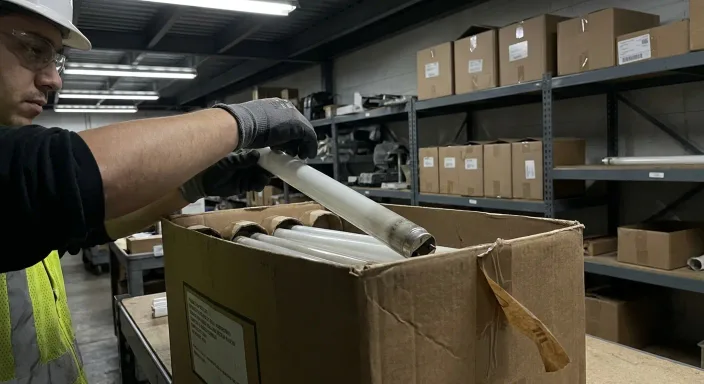
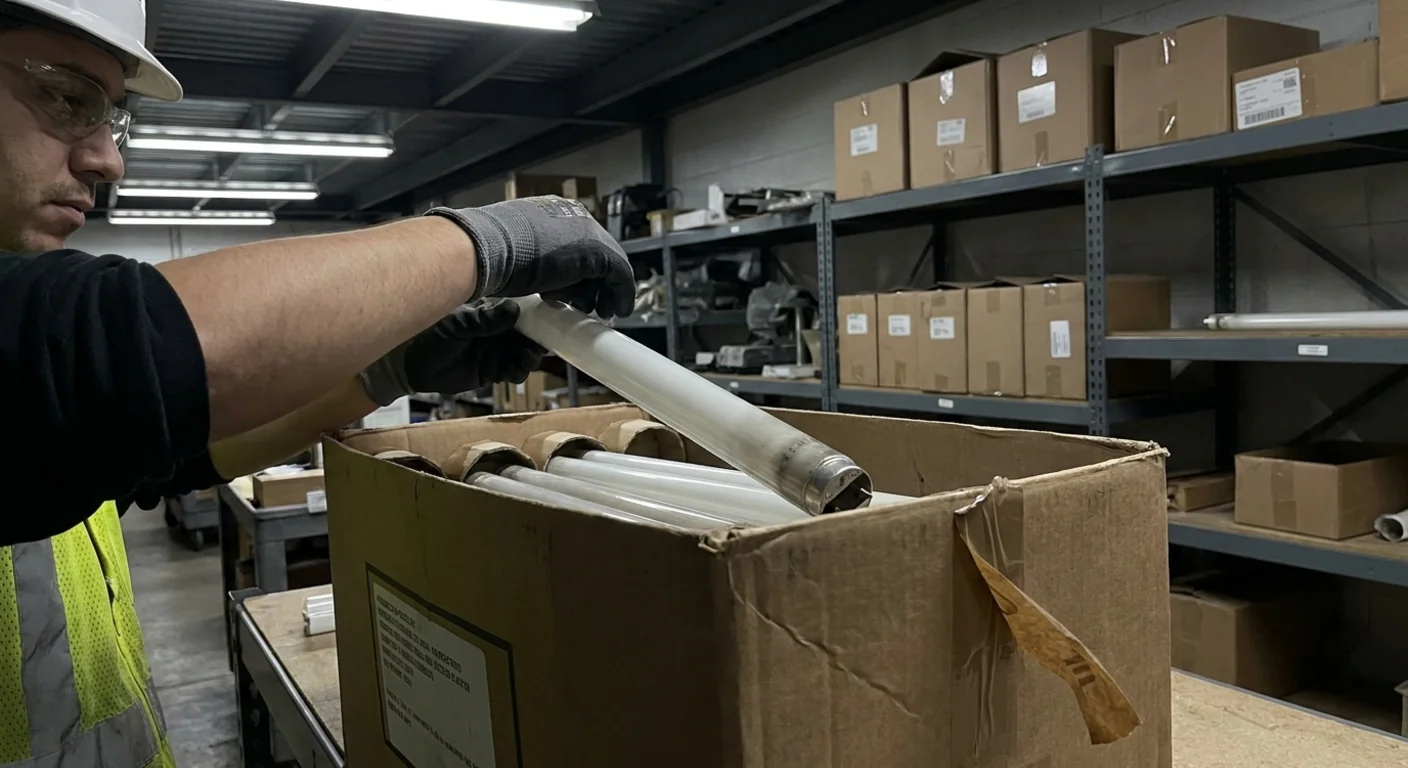
Fluorescent lamps contain mercury and other hazardous materials that require specialized handling and disposal. For Chicago-area businesses, proper fluorescent lamp recycling is not just an environmental responsibility but often a regulatory requirement. Whether you operate a retail store, office building, manufacturing facility, or healthcare organization, understanding your options for safe lamp disposal protects your company from liability while supporting environmental stewardship. This guide covers everything Illinois businesses need to know about fluorescent lamp recycling programs, regulations, and best practices.
1. Why Fluorescent Lamp Recycling Matters for Chicago Businesses
Fluorescent lamps, including compact fluorescent lights (CFLs) and tube-style fixtures, contain small amounts of mercury that can contaminate soil and water if disposed of improperly. The EPA classifies spent fluorescent lamps as universal waste, requiring businesses to follow specific handling and disposal procedures. Illinois has adopted these federal standards and enforces them at the state level.
For businesses in Cook County and surrounding areas, improper lamp disposal can result in significant fines and environmental liability. Mercury exposure poses serious health risks to workers and communities, making proper recycling a critical component of responsible facility management. Industry studies suggest that recycling fluorescent lamps recovers up to 99% of mercury content, preventing environmental contamination.
Beyond regulatory compliance, recycling fluorescent lamps supports corporate sustainability goals that many customers and stakeholders now expect. Companies that demonstrate environmental responsibility often see improved brand reputation and employee satisfaction. When combined with comprehensive electronics recycling programs, lamp recycling becomes part of a broader waste diversion strategy that reduces landfill contributions and supports circular economy principles.
2. Understanding EPA and Illinois Regulations for Lamp Disposal
The EPA's Universal Waste Rule simplifies hazardous waste management for certain common items, including fluorescent lamps. Under these regulations, businesses can store universal waste on-site for up to one year before recycling or disposal. However, companies must maintain proper documentation, prevent releases to the environment, and use authorized recyclers or disposal facilities.
Illinois regulations mirror federal requirements but add specific state-level enforcement mechanisms. The Illinois Environmental Protection Agency (IEPA) oversees universal waste management and conducts inspections to verify compliance. Businesses must label containers clearly, train staff on proper handling procedures, and keep records of all lamp shipments to recycling facilities.
Large quantity generators face additional requirements, including more stringent recordkeeping and reporting obligations. Violations can result in civil penalties, criminal charges in severe cases, and costly remediation requirements if mercury contamination occurs.
3. Types of Lamps That Require Specialized Recycling
Most businesses use several types of lighting that require specialized recycling. Linear fluorescent tubes, commonly found in office buildings and warehouses, contain the highest mercury concentrations per lamp. These four-foot, eight-foot, and specialty-length tubes must be handled carefully to prevent breakage during storage and transportation.
Compact fluorescent lamps (CFLs) replaced many incandescent bulbs over the past two decades and now appear in desk lamps, exit signs, and general lighting fixtures. While individual CFLs contain less mercury than linear tubes, their smaller size makes them more prone to breakage. High-intensity discharge (HID) lamps, including metal halide and high-pressure sodium lights used in parking lots and industrial facilities, also contain mercury and fall under universal waste regulations.
LED lighting has largely replaced fluorescent technology in new installations, but most Chicago-area businesses still maintain significant inventories of fluorescent fixtures. The transition period between technologies means facilities often generate both legacy fluorescent lamps and newer LED products simultaneously. Even some LED products require proper recycling due to electronic components, though they do not contain mercury.
4. Setting Up a Lamp Recycling Program for Your Facility
An effective lamp recycling program begins with designated collection areas that prevent breakage and contain any accidental releases. Use sturdy containers specifically designed for lamp storage, which typically feature cardboard dividers or foam inserts to separate individual lamps. Label all containers clearly with the universal waste label and the accumulation start date.
Train maintenance staff, custodians, and anyone who handles lamps on proper removal, storage, and spill response procedures. Even small lamp breakages require careful cleanup using specialized kits that prevent mercury vapor exposure. Many facilities designate a universal waste coordinator responsible for program oversight, vendor management, and regulatory compliance.
Establish a regular pickup schedule based on your generation rate and storage capacity. Some Chicago-area businesses schedule quarterly pickups, while larger facilities with higher lamp turnover may require monthly service. Track all shipments in a waste management log that includes dates, quantities, and recycler information.
5. How Fluorescent Lamps Are Processed and Recycled
Specialized recycling facilities use automated systems to safely process fluorescent lamps and recover valuable materials. The crushing and separation process occurs in sealed chambers that capture mercury vapor through filtration systems. Glass components are separated from aluminum end caps, phosphor powder, and mercury, with each material stream directed to appropriate recovery processes.
Glass from recycled lamps often returns to manufacturing as raw material for new lighting products or fiberglass insulation. Aluminum end caps enter metal recycling streams for reuse in various applications. Mercury is distilled, purified, and either reused in industrial applications or safely stored in specialized facilities designed for long-term containment.
Phosphor powder, which contains rare earth elements and small amounts of mercury, requires careful processing to separate valuable materials from contaminated components. This comprehensive approach maximizes recycling rates while minimizing environmental impact.
6. Combining Lamp Recycling with IT Asset Disposal Services
Many Chicago businesses discover significant efficiency gains by coordinating fluorescent lamp recycling with electronics recycling and IT asset disposal services. Facilities undergoing renovations, relocations, or technology upgrades often generate both electronic waste and spent lighting simultaneously. Single-vendor solutions streamline logistics, reduce administrative burden, and often lower overall costs.
Chicago Shredder provides comprehensive services that address multiple waste streams during a single pickup event. When upgrading office spaces, companies can schedule removal of obsolete computers, monitors, printers, and networking equipment alongside fluorescent lamp disposal.
For facilities implementing LED retrofit projects, combining old lamp disposal with electronics recycling for legacy ballasts and controls creates a complete solution. Many older fluorescent systems include electronic components that require proper recycling separate from the lamps themselves. Coordinated service eliminates the complexity of managing multiple specialized recyclers and ensures all materials reach appropriate processing facilities.
7. Costs and Considerations for Chicago-Area Businesses
Fluorescent lamp recycling costs vary based on lamp types, quantities, and service frequency. Linear tubes typically cost less per unit than specialty lamps or HID fixtures due to processing efficiencies. Businesses can reduce costs by segregating lamp types, maintaining organized storage areas, and scheduling pickups to maximize truck capacity utilization.
Some recyclers charge by the lamp, while others use weight-based pricing or flat fees for standard container sizes. Chicago Shredder works with businesses to identify the most cost-effective approach based on their specific generation patterns and facility requirements. Volume discounts often apply for larger quantities or regular service schedules.
When evaluating recycling costs, consider the total value proposition including compliance support, documentation, liability protection, and administrative efficiency. Industry studies suggest that businesses face average fines of $10,000 to $50,000 for universal waste violations, making proper recycling a sound investment in risk management.
8. Frequently Asked Questions
Are Chicago businesses required by law to recycle fluorescent lamps?
Illinois regulations prohibit disposal of fluorescent lamps in regular trash due to mercury content. Businesses must manage these items as universal waste under EPA and IEPA rules. While the law does not mandate recycling specifically, it requires proper handling and disposal through authorized facilities, which typically means recycling.
How should we store fluorescent lamps before recycling pickup?
Store lamps in their original packaging when possible, or use specialized lamp recycling containers with protective dividers. Keep containers in a secure area away from high-traffic zones to prevent breakage. Label containers with the universal waste label and accumulation start date, and ensure they remain closed except when adding lamps.
What happens if a fluorescent lamp breaks in our facility?
Evacuate the immediate area and ventilate the space for 15 minutes before cleanup. Use a mercury spill kit containing specialized materials to collect glass fragments and contaminated materials. Never use a standard vacuum, as this spreads mercury vapor. Place all cleanup materials in a sealed container labeled as universal waste and contact your recycling provider for proper disposal guidance.
Can we recycle LED bulbs through the same program as fluorescent lamps?
LED bulbs do not contain mercury and are not classified as universal waste, but they do contain electronic components that benefit from proper recycling. Many recyclers, including Chicago Shredder, accept LED bulbs alongside fluorescent lamps for convenience. However, the regulatory requirements differ between the two lighting types.
How long can we store fluorescent lamps on-site before recycling?
Universal waste regulations allow storage for up to one year from the accumulation start date marked on each container. However, many businesses schedule more frequent pickups to minimize storage requirements and reduce the risk of breakage. Facilities with limited storage space or high lamp generation rates often benefit from quarterly or monthly service.
Which regulatory requirements may apply to this topic?
Yes, Chicago Shredder provides detailed documentation for all lamp recycling services, including manifests, certificates of recycling, and weight tickets. These records support compliance with EPA and IEPA universal waste regulations.
Proper fluorescent lamp recycling protects Chicago businesses from regulatory liability while supporting environmental responsibility. Understanding EPA and Illinois requirements, implementing effective collection programs, and partnering with qualified recyclers ensures compliance and demonstrates corporate commitment to sustainability. By combining lamp recycling with comprehensive electronics recycling and IT asset disposal services, facilities streamline waste management operations and reduce administrative complexity. For more information about fluorescent lamp recycling programs or to schedule a pickup for your facility, call 866-770-2650 or visit our website to arrange service that meets your specific needs.
Ready to schedule a pickup?
Call 866-770-2650 or request a quote online. Every pickup includes clear service documentation.