
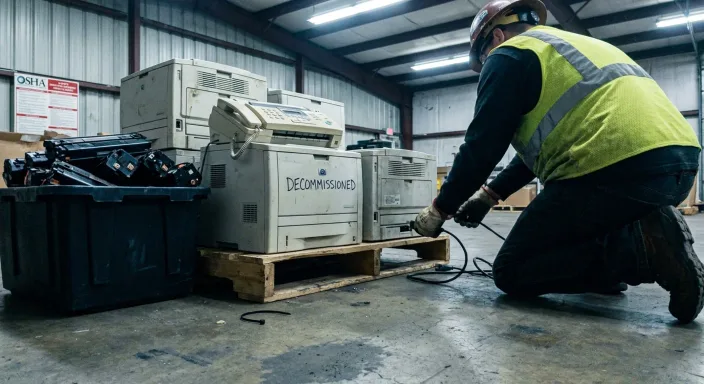
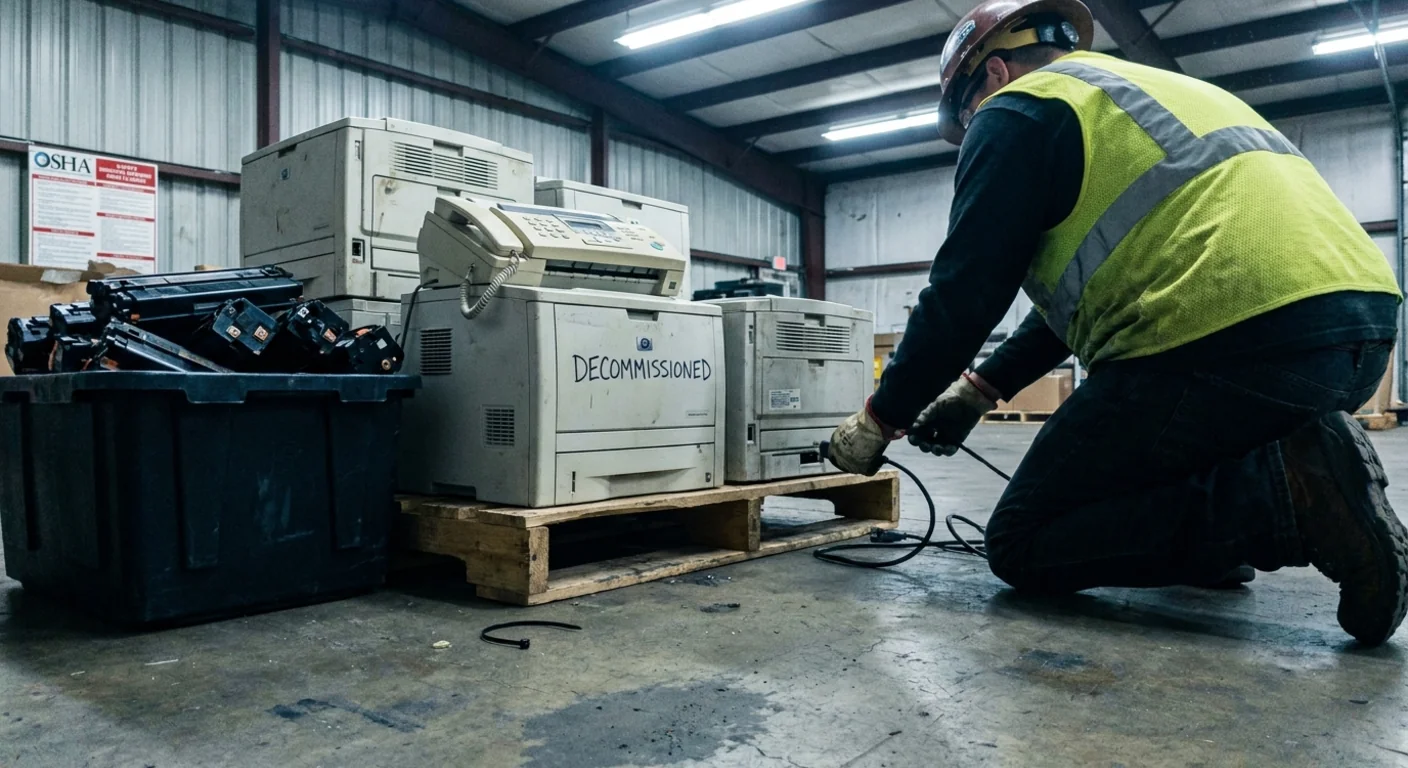
Printers and fax machines contain sensitive data, valuable materials, and hazardous components that require proper handling during disposal. Many businesses in the Chicago area accumulate outdated office equipment without a clear plan for sustainable recycling. Understanding how to properly recycle these devices protects your organization from data breaches, supports environmental compliance, and recovers valuable materials. Chicago Shredder provides secure pickup and processing services designed to address both data security and environmental responsibility for businesses throughout Illinois.
1. Why Proper Printer and Fax Machine Recycling Matters
Office equipment like printers and fax machines stores more information than many people realize. Multifunction printers often contain hard drives that retain copies of every document scanned, printed, or faxed through the device. Fax machines may store transmission logs, phone numbers, and document images in internal memory. Simply discarding these devices without proper data sanitization creates significant security risks.
Beyond data security concerns, improper disposal contributes to environmental harm. Printers and fax machines contain plastics, metals, circuit boards, and toner cartridges that should be recovered and recycled rather than sent to landfills. Many components contain materials like lead, mercury, and cadmium that pose environmental hazards when not handled properly.
Illinois businesses face increasing expectations around electronic waste management. While specific regulations vary by jurisdiction, responsible disposal practices help organizations avoid potential compliance issues and demonstrate environmental stewardship. Industry studies suggest that proper electronics recycling can recover up to 95% of materials from office equipment for reuse in manufacturing.
2. Data Security Risks in Office Printing Equipment
Modern multifunction printers function as sophisticated computers with storage capabilities that rival desktop systems. These devices typically contain hard drives ranging from 80GB to over 500GB, storing temporary and permanent copies of processed documents. Without proper data destruction, sensitive business records, financial information, client data, and proprietary documents remain accessible on discarded equipment.
Fax machines, while often simpler than printers, still pose data security risks. Many models store recent transmissions in memory, including document images and contact information. Older thermal fax machines may retain images on ribbons that can be physically extracted and read. The combination of stored data and device connectivity creates potential vulnerabilities that persist after the equipment leaves your facility.
Organizations handling protected information under HIPAA, GLBA, SOX, or FERPA regulations should treat printer and fax machine disposal with the same security protocols applied to computers and servers. Chicago Shredder's processes are designed to support compliance requirements through documented data destruction and secure chain of custody from pickup through final processing.
3. Steps for Preparing Equipment for Recycling
Before scheduling pickup, businesses should inventory all printers and fax machines designated for disposal. Document make, model, and serial numbers for asset tracking purposes. This information helps with decommissioning records and provides reference for insurance or audit requirements. Remove any obvious consumables like paper, but leave toner cartridges and ink in place as these are processed separately during recycling.
For networked printers, coordinate with IT staff to properly disconnect devices from your network and remove them from active directory systems. This prevents potential security gaps where decommissioned equipment remains listed as active network nodes. Check for removable storage media, including USB drives, SD cards, or external hard drives that users may have left connected to the equipment.
Do not attempt to remove hard drives or destroy data yourself unless you have specific expertise and proper tools. Improper handling can create safety hazards or contaminate materials, reducing recycling efficiency. Professional recyclers have specialized equipment and processes for secure data destruction that exceed what most organizations can accomplish internally. Chicago Shredder provides documented data destruction services that address security requirements while maintaining material recovery standards.
4. The Professional Recycling Process
When you schedule pickup with Chicago Shredder, trained technicians arrive at your Addison or Chicago-area location to collect equipment. All items are documented during pickup, creating a clear chain of custody from your facility through final processing. Equipment is transported in secure vehicles to prevent unauthorized access during transit.
This secure process indicates adherence to specific standards for data security, environmental responsibility, and downstream vendor management. The facility employs systematic processes for sorting, data destruction, and material recovery that align with industry best practices.
Data-bearing devices undergo thorough destruction using methods designed to render information unrecoverable. Hard drives from printers are physically destroyed using specialized equipment. Memory chips and storage components are processed to prevent data reconstruction. Materials are then sorted by type for appropriate recycling streams. Metals, plastics, circuit boards, and other components are directed to qualified downstream processors. No materials are knowingly disposed of in landfills, with processing focused on material recovery and responsible handling of any hazardous components.
5. What Happens to Different Printer Components
The recycling process separates printers and fax machines into distinct material streams. Metal components, including steel frames and aluminum parts, are recovered and sent to metal recyclers for reprocessing into new products. These materials retain value and can be repeatedly recycled without quality degradation. Circuit boards contain precious metals like gold, silver, and copper that are extracted through specialized recovery processes.
Plastic housings and components are sorted by resin type when possible. Different plastics require separate processing to maintain quality in recycled products. High-quality plastics may be reprocessed into new electronic components or other manufactured goods. Lower-grade plastics are recycled into appropriate applications based on their properties and condition.
Toner cartridges and ink cartridges follow separate recycling paths. Many cartridges can be refurbished and refilled for reuse. Those beyond refurbishment are disassembled, with plastics, metals, and residual toner processed appropriately. Glass components from scanner beds and display panels are recovered when feasible. The systematic approach to component separation maximizes material recovery and minimizes waste throughout the recycling process.
6. Choosing a Recycling Partner in the Chicago Area
When Choose a recycler that documents chain of custody and provides a Certificate of Recycling. Ask about data destruction methods and whether the provider offers certificates of destruction or recycling.
Transparency in downstream processing indicates responsible practices. Qualified recyclers should be able to explain where different materials are sent and how they verify downstream vendor practices. Avoid providers who cannot or will not disclose their processing methods, as this may indicate improper disposal or export to regions with inadequate environmental controls.
Our processes address both data security and environmental responsibility, with clear documentation from pickup through final processing. We typically respond to inquiries within one business day and can accommodate scheduled pickups or ongoing service agreements for organizations with regular disposal needs.
7. Building a Sustainable Equipment Lifecycle Plan
Proactive planning for equipment disposal creates more efficient processes and better security outcomes. Establish clear policies for when and how office equipment should be retired. Document equipment lifecycles, tracking purchase dates, warranty periods, and planned replacement schedules. This approach prevents accumulation of outdated devices and reduces last-minute disposal challenges.
Incorporate data security requirements into your equipment lifecycle policies. Specify that all printers and fax machines must go through documented disposal processes rather than informal disposal methods. Train staff on proper decommissioning procedures and establish clear approval workflows for equipment removal from your facilities.
Consider consolidating printer fleets to reduce the total number of devices requiring eventual disposal. Fewer, more capable devices often provide better functionality while reducing long-term management complexity. When purchasing new equipment, factor in disposal considerations alongside features and cost. Understanding the full lifecycle cost, including secure disposal, helps organizations make more informed procurement decisions and maintain consistent environmental and security practices throughout the Chicago area business community.
8. Frequently Asked Questions
Do I need to remove the hard drive from my printer before recycling?
No, you should not attempt to remove hard drives yourself. Professional recyclers have specialized equipment for secure hard drive destruction that exceeds what most organizations can accomplish internally. Chicago Shredder provides documented data destruction as part of our recycling services.
Can I recycle toner and ink cartridges with the printer?
Yes, you can leave toner and ink cartridges in the printer during recycling. These components are processed separately during the recycling process, with many cartridges refurbished for reuse or properly recycled when beyond refurbishment.
How long does the printer recycling pickup process take?
We typically respond to scheduling requests within one business day. Actual pickup timing depends on your location and volume, but most pickups in the Chicago area can be scheduled within a few business days of your initial request.
What documentation do I receive after recycling printers?
Chicago Shredder provides certificates documenting the recycling and data destruction process.
Are there items I should remove from printers before recycling?
Remove paper from trays and any personal items or removable storage media like USB drives or SD cards. Leave toner, ink cartridges, and internal components in place for proper processing during recycling.
What happens to the data stored on my fax machine?
Fax machines undergo data destruction processes designed to render stored information unrecoverable. Memory chips and storage components are physically destroyed or sanitized using methods that prevent data reconstruction, protecting your sensitive transmission records and contact information.
Proper recycling of printers and fax machines protects your organization from data security risks while supporting environmental responsibility. The combination of secure data destruction and responsible material recovery requires specialized expertise and secure processing facilities. Chicago Shredder provides businesses throughout the Chicago area with documented services that address both security and sustainability requirements. Contact us at 866-770-2650 to schedule a pickup or discuss your organization's printer and fax machine recycling needs.
Ready to schedule a pickup?
Call 866-770-2650 or request a quote online. Every pickup includes clear service documentation.