
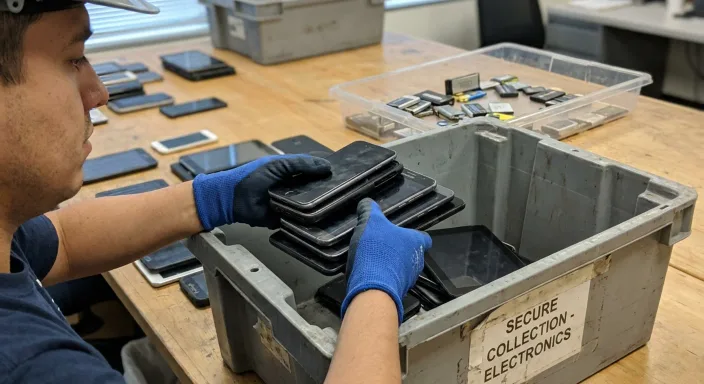
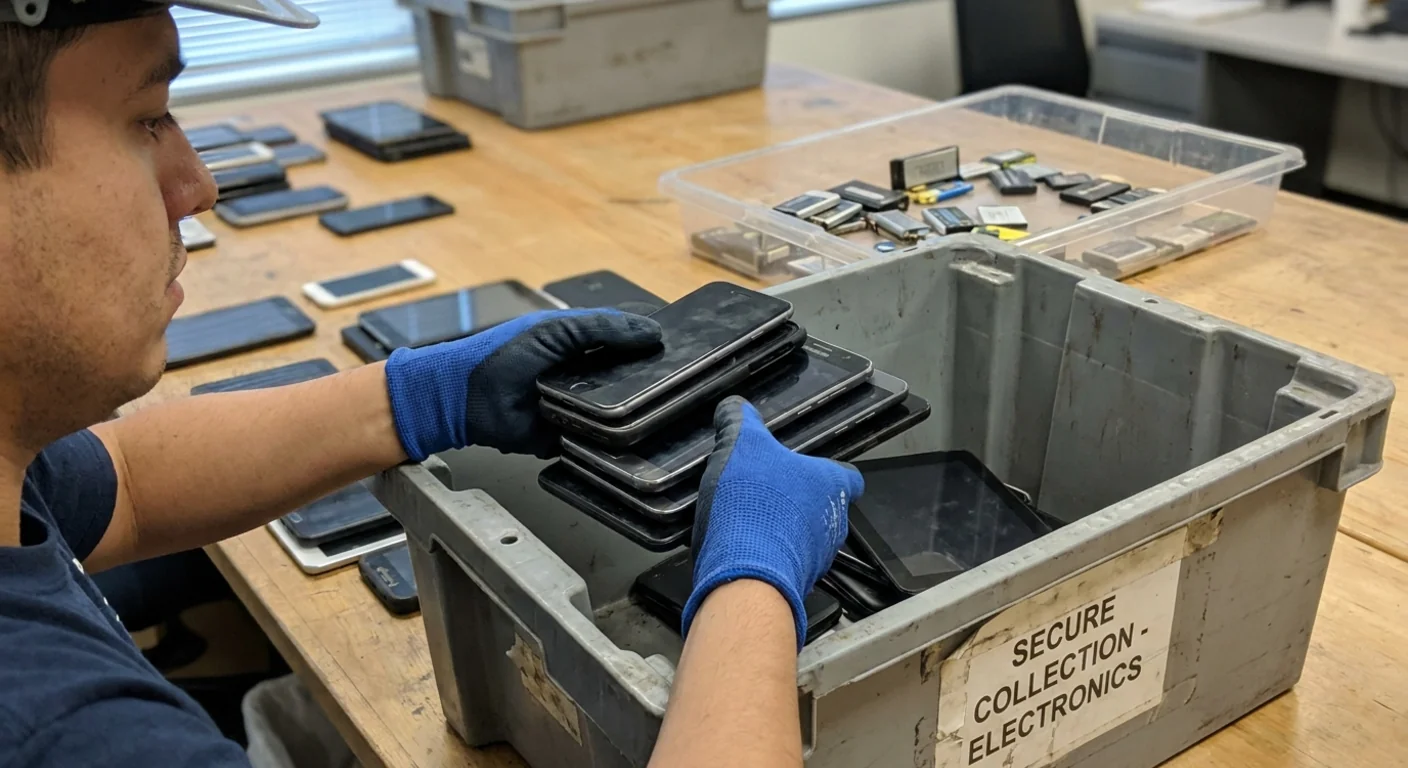
Cell phones and tablets have become essential business tools, but they also present significant challenges when it's time to retire them. These devices contain sensitive data, valuable materials, and hazardous components that require proper handling. Simply tossing old mobile devices in the trash creates environmental risks and potential data breaches.
1. Why Cell Phones and Tablets Require Special Handling
Mobile devices contain a complex mix of materials that make them particularly challenging to dispose of safely. Lithium-ion batteries can pose fire hazards if damaged or improperly processed. Circuit boards contain precious metals like gold, silver, and palladium, along with hazardous substances including lead and mercury. The glass screens often contain arsenic and other toxic elements.
Beyond the physical components, the data stored on these devices represents the primary concern for businesses. Cell phones and tablets typically contain email archives, contact lists, text messages, photos, stored passwords, and access to corporate systems. Even after a factory reset, data may remain recoverable without proper destruction methods.
Illinois businesses handling personal information must consider state data protection laws alongside federal requirements. Healthcare organizations deal with HIPAA considerations, financial services face GLBA requirements, and educational institutions must address FERPA guidelines.
2. Common Disposal Mistakes to Avoid
Many organizations make critical errors when retiring mobile devices. Relying solely on factory resets leaves data vulnerable to recovery through specialized software. Industry studies suggest that significant percentages of used devices sold online still contain recoverable personal or business information.
Donating devices without proper data sanitization creates liability risks. While charitable giving seems environmentally responsible, it transfers risk rather than eliminating it. The receiving organization may lack expertise in data destruction, and devices may eventually reach secondary markets with sensitive information intact.
Throwing devices in regular trash or recycling bins circumvents necessary security and environmental protocols. Standard waste streams lack the specialized processing required for electronics. Devices may end up in landfills where toxic materials leach into soil and groundwater, or they may be exported to facilities operating without environmental controls.
3. Data Destruction Methods for Mobile Devices
Effective data destruction for cell phones and tablets requires methods designed to make information unrecoverable. Software-based sanitization uses specialized programs that overwrite storage multiple times, following standards like DoD 5220.22-M or NIST SP 800-88 guidelines. These approaches work well for devices being refurbished or resold, though they require the device to be functional.
Physical destruction provides certainty when devices are no longer needed or when maximum security is required. Physical destruction renders both the device and its data completely unusable.
This secure process demonstrates adherence to rigorous environmental and data security standards throughout the recycling process.
4. The Mobile Device Recycling Process
Professional electronics recycling follows a structured approach designed to maximize both security and environmental responsibility. The process begins with secure collection, either through scheduled pickups or drop-off at authorized facilities. Devices are tracked through chain-of-custody documentation that provides accountability at every stage.
Once received, devices undergo evaluation to determine the appropriate processing path. Functional devices suitable for reuse receive secure data sanitization before refurbishment. Devices beyond economical repair proceed to material recovery, where components are systematically separated. Batteries are removed and processed separately due to their chemical composition.
The dismantling phase separates plastics, metals, glass, and circuit boards into distinct material streams. Precious metals are recovered through specialized processes, while hazardous materials receive treatment designed to neutralize environmental risks. No materials are knowingly disposed of in landfills. Instead, recovered materials enter manufacturing supply chains as raw inputs for new products.
5. Preparing Devices for Disposal
Organizations should follow specific steps before turning devices over for recycling. Begin by backing up any necessary data to secure storage systems. Remove SIM cards and memory cards, as these components are easily overlooked but often contain sensitive information.
Disable activation locks and sign out of all accounts, including cloud services, email, and app-based authentication systems. For businesses managing multiple devices through mobile device management platforms, ensure devices are properly removed from administrative systems to prevent orphaned assets.
Document device serial numbers and asset tags for internal records. Maintain records showing when devices were retired and through which disposal method, as regulatory frameworks often require proof of proper handling.
For devices with particularly sensitive information, consider requesting physical destruction rather than refurbishment. While this approach may not maximize environmental recovery, it provides the highest level of data security assurance.
6. Regulatory Considerations for Illinois Businesses
Illinois law includes specific provisions regarding electronics recycling and data protection. The Illinois Personal Information Protection Act requires businesses to implement reasonable security measures, including proper disposal of records containing personal information. This extends to electronic devices storing such data.
Certain industries face additional requirements. Healthcare organizations must ensure disposal methods support HIPAA's requirement for making protected health information unrecoverable. Financial institutions need processes designed to support GLBA provisions regarding customer information protection. Educational institutions handling student records face FERPA considerations.
Working with recycling providers helps organizations demonstrate due diligence in meeting these requirements. These certificates serve as evidence during audits or in response to regulatory inquiries.
7. Environmental Impact and Material Recovery
The environmental benefits of proper mobile device recycling extend beyond keeping hazardous materials out of landfills. Cell phones and tablets contain significant quantities of recoverable materials. A typical smartphone contains small amounts of gold, silver, copper, and platinum, along with rare earth elements used in screens and electronics.
Mining virgin materials for new devices requires substantial energy and generates environmental impacts. Recovering materials from existing devices reduces the need for new extraction. Industry studies suggest that recycling electronics uses significantly less energy than producing the same materials from ore.
Proper battery handling prevents environmental contamination while recovering valuable lithium and cobalt. As battery technology advances and electric vehicles increase lithium demand, recovering these materials from mobile devices becomes increasingly important. Glass from screens can be processed for use in new products, while various plastics are sorted and reprocessed.
Chicago-area businesses choosing secure recycling contribute to these environmental benefits while ensuring their retired devices don't end up in developing countries where informal recycling creates worker safety and environmental hazards.
8. Frequently Asked Questions
Can I just perform a factory reset before recycling my business phones?
Factory resets provide basic data removal but may not make information completely unrecoverable. Specialized software can sometimes retrieve data even after reset. For devices containing sensitive business information, professional data destruction methods designed to meet DoD 5220.22-M or NIST SP 800-88 guidelines provide higher security assurance.
What happens to phones and tablets after Chicago Shredder collects them?
Devices are transported to secure processing facilities where they undergo secure data destruction followed by systematic dismantling. Components are separated into material streams for recovery, with batteries handled separately.
How long does it take to schedule a pickup for business mobile devices?
Chicago Shredder typically responds to pickup requests within one business day. Scheduling depends on your location in the Chicago area and the volume of devices. For ongoing needs, regular pickup schedules can be arranged to match your device retirement cycles.
Can broken or non-functional devices be recycled?
Absolutely. Devices in any condition can be recycled, including those with cracked screens, water damage, or complete failure. Non-functional devices proceed directly to material recovery rather than refurbishment, with data destruction accomplished through physical methods.
Is there a minimum quantity required for business pickups?
Chicago Shredder accommodates businesses of all sizes, from small offices with a few devices to large organizations retiring hundreds of units. Contact us at 866-770-2650 to discuss your specific needs and determine the most efficient collection approach for your volume.
Properly disposing of cell phones and tablets protects your business data, supports environmental responsibility, and helps meet regulatory requirements. The combination of secure data destruction and responsible material recovery ensures that sensitive information remains secure while valuable resources return to productive use. Chicago-area businesses need partners who understand both the security and environmental dimensions of electronics disposal. Whether you're retiring a handful of devices or managing an enterprise-wide refresh, proper disposal starts with a simple phone call. Contact Chicago Shredder at 866-770-2650 or schedule a pickup to ensure your mobile devices receive the secure, environmentally responsible handling they require.
Ready to schedule a pickup?
Call 866-770-2650 or request a quote online. Every pickup includes clear service documentation.