
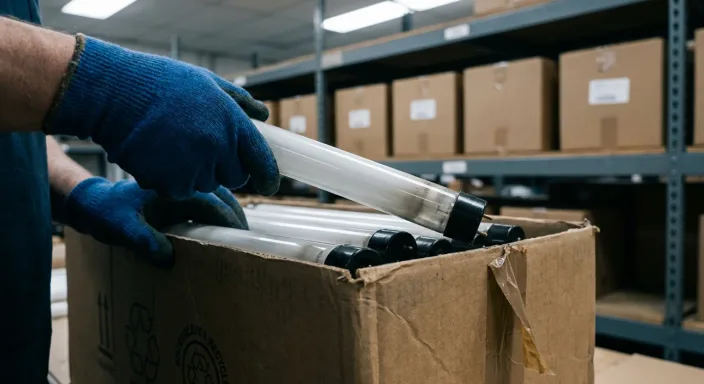
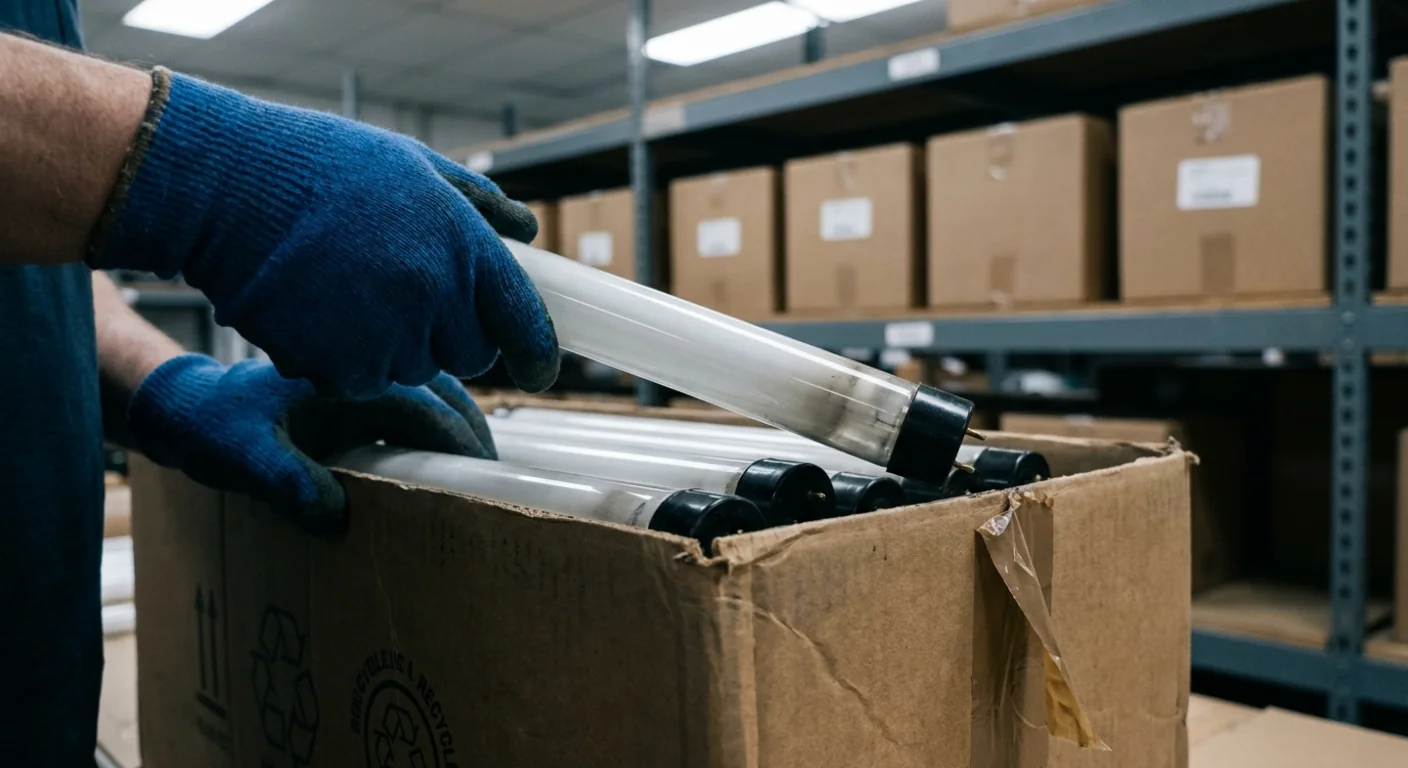
Fluorescent lamps contain mercury and other hazardous materials that require specialized handling when they reach end of life. Businesses across the United States generate thousands of spent fluorescent tubes annually, and improper disposal can lead to environmental contamination and regulatory violations. Understanding the best recycling programs available helps Illinois companies protect public health while meeting federal and state waste management requirements.
1. Why Fluorescent Lamp Recycling Matters for Businesses
Fluorescent lamps, including linear tubes and compact fluorescent bulbs, contain small amounts of mercury vapor that enables their energy-efficient operation. When these lamps break or end up in landfills, mercury can leach into soil and groundwater, eventually entering the food chain. The EPA classifies spent fluorescent lamps as universal waste, requiring specific handling and disposal procedures.
Businesses that generate fluorescent waste face compliance requirements under the Resource Conservation and Recovery Act and state-level regulations. Illinois businesses must follow the state's universal waste rules, which establish storage time limits and proper labeling standards. Facilities accumulating large quantities may need to register as universal waste handlers.
Beyond regulatory compliance, responsible lamp recycling recovers valuable materials including mercury, phosphor powder, aluminum end caps, and glass. Industry studies suggest that proper recycling can recover up to 99 percent of lamp components for reuse in new products. This circular approach reduces demand for virgin materials and minimizes environmental impact.
Companies in healthcare, education, retail, and office sectors typically generate the most fluorescent waste due to extensive interior lighting systems. Warehouse facilities and manufacturing plants also accumulate significant quantities during fixture upgrades and maintenance cycles.
2. National Fluorescent Lamp Recycling Programs
Several established programs operate across the United States to help businesses manage fluorescent lamp disposal. The largest national services include mail-back programs where facilities receive prepaid shipping containers, schedule regular pickups, and track recycling certificates online. These services work well for businesses generating moderate quantities of lamps on predictable schedules.
Retailer take-back programs offer another option, with some home improvement and hardware chains accepting fluorescent bulbs from consumers and small businesses at designated collection points. These programs typically limit quantities and may restrict commercial participation, making them more suitable for very small offices or occasional disposal needs.
Municipal household hazardous waste programs sometimes accept fluorescent lamps from local businesses, though policies vary significantly by jurisdiction. Some communities welcome commercial participation during collection events, while others restrict programs to residential users only. Illinois municipalities often coordinate with county-level waste management districts to provide periodic collection opportunities.
Manufacturer stewardship programs represent a growing category, where lamp producers establish collection networks to recover their products at end of life. These initiatives support extended producer responsibility principles but currently operate in limited geographic areas.
3. Evaluating Recycling Program Quality and Documentation
Not all lamp recycling services maintain the same environmental and safety standards. Businesses should Choose a recycler that documents chain of custody and provides a Certificate of Recycling.
Quality recycling programs provide documentation proving proper handling and final disposition. Certificates of recycling should detail the types and quantities of materials processed, processing methods used, and confirmation that mercury and other hazardous components received appropriate treatment.
Businesses should ask potential recycling partners about their mercury recovery processes, whether they crush lamps on-site or ship intact units, and what happens to recovered materials. Transparent answers to these questions indicate professional operations committed to genuine recycling rather than simple waste transfer.
4. Chicago Area Solutions for Fluorescent Lamp Disposal
Illinois businesses benefit from local recycling options that reduce transportation costs and support regional environmental goals. Chicago Shredder provides fluorescent lamp recycling services for commercial clients throughout the greater Chicago area, including facilities in Cook, DuPage, Lake, Kane, and Will counties.
The company coordinates lamp collection through scheduled pickups that align with other electronics recycling and secure destruction services. This consolidated approach allows businesses to manage multiple waste streams efficiently rather than coordinating separate vendors for computers, monitors, lighting, and other items. Facilities planning office cleanouts, technology refreshes, or building renovations can address all their disposal needs through a single service provider.
Businesses can schedule pickups by calling 866-770-2650 to discuss their specific lamp quantities and collection timing. Chicago Shredder typically responds within one business day to arrange service details. The team works with facility managers to determine optimal collection methods based on lamp types, storage constraints, and site accessibility.
For companies operating multiple locations across Illinois, Chicago Shredder can establish regular pickup schedules that keep pace with ongoing lamp replacement programs.
5. Best Practices for Managing Fluorescent Lamps Before Recycling
Proper interim storage protects worker safety and prevents environmental releases while lamps await recycling. Businesses should designate a specific area for accumulating spent fluorescent tubes, preferably in a location protected from weather and physical damage. Storage containers should prevent breakage during handling and transport.
Many companies use the original lamp boxes for temporary storage, as these cardboard containers provide adequate protection for intact tubes. Specialized fluorescent lamp recycling boxes with foam inserts offer enhanced protection and clearly identify contents. Broken lamps require different handling, with fragments and debris collected in sealed containers labeled as hazardous waste.
Facilities should train maintenance staff on safe lamp removal and storage procedures. Workers should understand how to handle tubes carefully to prevent breakage, what to do if a lamp breaks during removal, and where to place spent lamps for accumulation. Simple written procedures and designated storage locations reduce confusion and improve compliance.
Labeling requirements under universal waste regulations specify that containers must be marked with the words "Universal Waste - Lamps" or similar identifying language. Businesses should also track accumulation start dates, as regulations limit storage duration before recycling becomes mandatory. Most facilities can store universal waste lamps for up to one year from the accumulation start date.
6. Cost Considerations and Return on Investment
Fluorescent lamp recycling costs vary based on lamp types, quantities, and service frequency. Linear fluorescent tubes typically cost less per unit to recycle than specialty lamps or high-intensity discharge bulbs. Businesses generating larger volumes often qualify for better per-unit pricing through consolidated pickups.
While recycling requires upfront investment, responsible lamp disposal helps companies avoid potential fines for improper waste management. The reputational damage from environmental violations also carries significant business impact.
Many facilities find that combining lamp recycling with comprehensive electronics recycling services provides the best overall value. When Chicago Shredder picks up computers, servers, monitors, and other IT assets, adding fluorescent lamps to the collection minimizes incremental costs. This bundled approach also reduces administrative burden by consolidating vendor management.
Companies should consider the total cost of lamp management, including staff time for handling, storage space requirements, liability exposure, and compliance documentation. Professional recycling services address all these factors while providing certificates that demonstrate environmental responsibility to customers, investors, and regulatory agencies.
7. Future Trends in Lighting and Recycling Requirements
The lighting industry continues shifting toward LED technology, which eliminates mercury and reduces recycling complexity. As businesses replace fluorescent fixtures with LED alternatives, they generate large quantities of fluorescent lamps requiring one-time disposal. Chicago area companies undertaking lighting retrofits should plan for proper lamp recycling as part of their project budgets.
Regulatory trends suggest increasing emphasis on extended producer responsibility, where manufacturers assume greater responsibility for product end-of-life management. Several states have proposed or implemented legislation requiring lighting manufacturers to fund collection and recycling programs. While Illinois has not yet adopted such requirements, businesses should monitor regulatory developments that may affect their disposal obligations.
Environmental reporting expectations continue expanding, with more companies disclosing waste diversion rates and circular economy metrics to stakeholders. Proper lamp recycling with documented material recovery supports these sustainability communications.
Advances in recycling technology improve mercury recovery rates and enable more complete material separation. Industry studies suggest that next-generation processing methods may achieve even higher recovery percentages while reducing processing costs. These improvements benefit businesses by making responsible handling more accessible and economical.
8. Frequently Asked Questions
Can I throw fluorescent bulbs in regular trash?
No, fluorescent lamps contain mercury and are classified as universal waste requiring specialized handling. Illinois businesses must follow state universal waste regulations for proper storage and recycling. Disposing of fluorescent lamps in regular trash violates environmental regulations and creates contamination risks.
How long can my business store fluorescent lamps before recycling?
Under universal waste rules, most Illinois businesses can accumulate fluorescent lamps for up to one year from the date accumulation begins. Facilities must label containers with accumulation start dates and arrange recycling before exceeding this storage limit. Larger quantity generators may face shorter time limits.
What happens to fluorescent lamps after they are recycled?
Professional recycling facilities separate lamp components including mercury, phosphor powder, glass, and metal end caps. Mercury undergoes specialized recovery for reuse in new products or proper disposal. Glass and metals are processed into raw materials for manufacturing, while phosphor powder may be recovered for various applications.
Do LED bulbs require special recycling?
LED bulbs do not contain mercury and are not classified as universal waste, but they do contain electronic components and should be recycled rather than landfilled. Many electronics recycling programs accept LED bulbs along with other electronic items. Chicago Shredder can coordinate LED bulb recycling as part of comprehensive electronics recycling services.
How much does fluorescent lamp recycling cost?
Recycling costs depend on lamp types, quantities, and service arrangements. Linear fluorescent tubes are generally the most economical to recycle, while specialty lamps may cost more per unit. Businesses can often reduce costs by consolidating lamp recycling with other electronics recycling pickups and scheduling regular service rather than one-time collections.
What documentation will I receive after lamp recycling?
Professional recycling services provide certificates of recycling documenting the types and quantities of lamps processed, processing date, and confirmation of proper material handling.
Fluorescent lamp recycling protects public health, supports regulatory compliance, and recovers valuable materials for reuse. Businesses throughout the Chicago area can access responsible lamp disposal services through local providers who Choose a recycler that documents chain of custody and provides a Certificate of Recycling. By partnering with recycling providers and implementing proper storage procedures, companies minimize environmental impact while managing their universal waste obligations effectively. Chicago Shredder helps Illinois businesses coordinate fluorescent lamp recycling alongside electronics recycling and secure data destruction services. Contact our team at 866-770-2650 to discuss your lamp recycling needs and schedule a pickup that works with your facility's operational requirements.
Ready to schedule a pickup?
Call 866-770-2650 or request a quote online. Every pickup includes clear service documentation.