

When Chicago businesses need to dispose of old hard drives containing sensitive data, choosing the right destruction method is critical. Data breaches cost companies an average of millions in damages, and improper disposal of storage media creates ongoing liability. Physical destruction remains the most reliable method for ensuring data is designed to be unrecoverable. This guide explores the leading hard drive destruction options available to Chicago area businesses and what factors to consider when selecting a provider.
1. Why Physical Destruction Matters for Data Security
Data wiping software can leave forensic traces, and formatting drives does nothing to actually remove information. Physical destruction creates a permanent solution. When a hard drive is physically destroyed through crushing, shredding, or punching, the platters containing magnetic data are damaged beyond functional use.
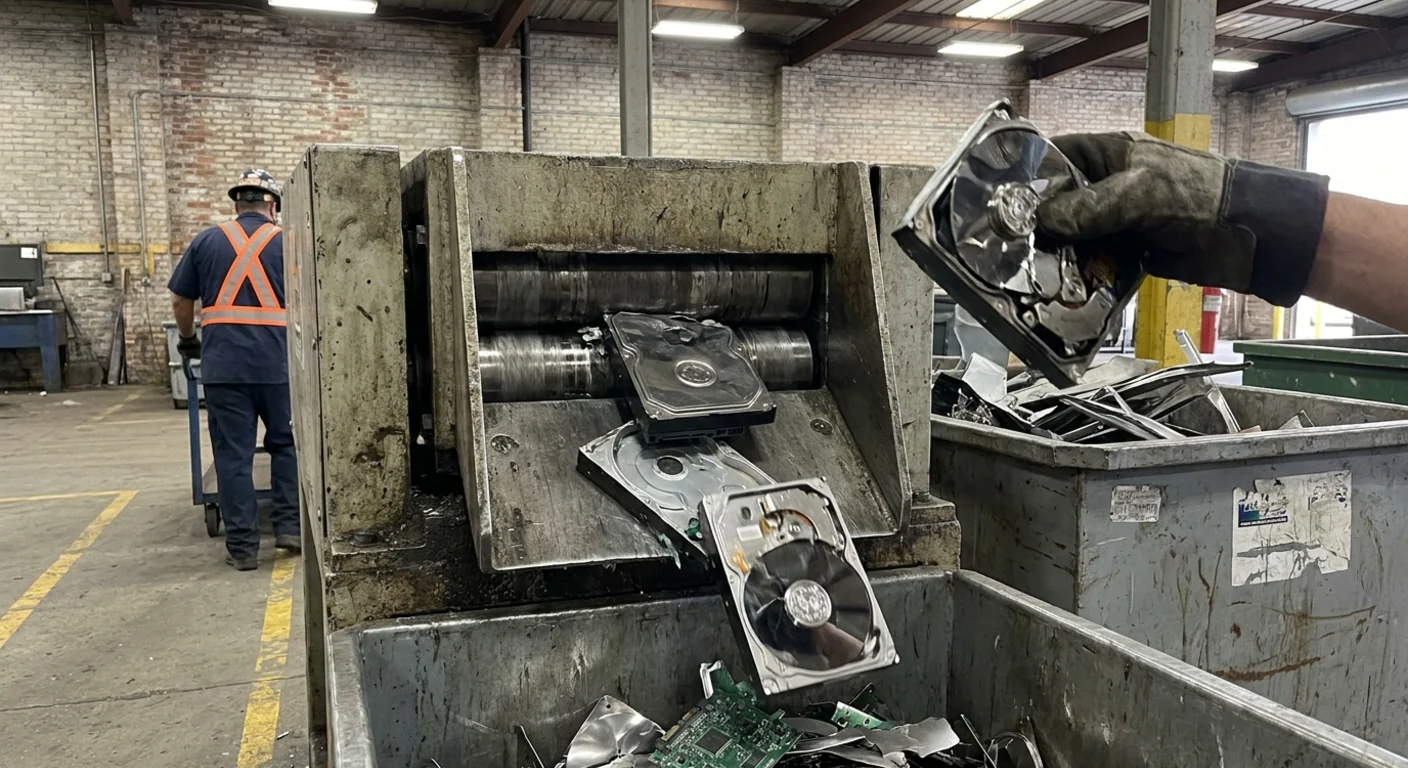
Chicago Shredder operates an on-site hard drive crusher at its Addison, Illinois facility that flattens drives to ensure platters are compromised. This method creates immediate, verifiable destruction that eliminates the risk of data recovery. Unlike software-based methods that require trust in the erasure process, physical destruction provides visible proof.
For organizations handling protected health information, financial records, or personally identifiable information, physical destruction helps address regulatory requirements. While data wiping may be appropriate for devices being redeployed, drives headed for disposal should undergo physical destruction to eliminate any possibility of future data exposure.
2. Understanding Destruction Methods: Shredding vs Punching vs Crushing
Three primary physical destruction methods dominate the Chicago market: shredding, punching, and crushing. Each offers different benefits depending on your volume, timeline, and verification needs.
Shredding reduces hard drives to small particles, typically passing through industrial shredders that cut drives into pieces measuring less than one inch. This method works well for high-volume destruction and produces material suitable for downstream recycling. The result is complete obliteration of the drive casing, circuit boards, and magnetic platters.
Punching uses a hydraulic press to drive a hardened steel punch through the drive, creating holes that pass through the platters. While faster than shredding for smaller quantities, punching leaves larger pieces that may require additional processing. Some compliance frameworks question whether punching alone provides sufficient destruction.
Crushing applies thousands of pounds of pressure to flatten the entire drive assembly. Chicago Shredder's on-site crusher at the Addison facility bends and breaks platters, designed to make data recovery infeasible. Crushing combines speed with thorough destruction, and the flattened drives can be witnessed by clients who want visual confirmation before materials leave their sight.
3. Alignment with DoD 5220.22-M Standard and NIST SP 800-88 Guidelines
The DoD 5220.22-M standard and NIST SP 800-88 guidelines provide frameworks for secure data sanitization. DoD 5220.22-M is a standard that originally addressed data wiping through multiple overwrites, while NIST SP 800-88 guidelines offer recommendations for various media types including hard drives, solid state drives, and magnetic tape.
NIST SP 800-88 specifically recognizes physical destruction as an acceptable sanitization method and categorizes it as "destroy" in its hierarchy of techniques. For hard disk drives, the guidelines note that destruction through disintegration, pulverization, melting, or incineration renders data recovery infeasible. Crushing and shredding both fall within these recognized categories.
Chicago Shredder's physical destruction processes align with these frameworks. These procedures support organizations seeking to demonstrate compliance with data protection requirements that reference these standards and guidelines.
4. Certificates of Destruction and Chain of Custody Documentation
A certificate of destruction serves as legal proof that your hard drives were destroyed on a specific date using a specified method. This documentation becomes essential during audits, litigation, or regulatory inquiries. Without proper certificates, organizations cannot definitively prove they met their data destruction obligations.
Chicago Shredder provides detailed certificates that include the date of destruction, description of materials destroyed, method used, and facility location. These certificates support compliance documentation for industries subject to HIPAA, GLBA, FACTA, and similar regulations.
Chain of custody tracking documents every step from pickup to destruction. Serialized manifests record when drives leave your facility, who transported them, and when they arrived at the destruction site. For organizations with strict data governance policies, this unbroken chain of custody creates accountability and reduces insider threat risks. Some Chicago clients request witnessed destruction, where their representatives observe the crushing process before materials proceed to recycling.
5. Compliance Support for HIPAA, GLBA, and FACTA Requirements
Healthcare organizations face HIPAA requirements for protecting electronic protected health information throughout its lifecycle, including disposal. The HIPAA Security Rule requires covered entities to implement policies for final disposition of ePHI and the hardware that stores it. Physical hard drive destruction is designed to support these requirements by making ePHI unrecoverable.
Financial institutions subject to the Gramm-Leach-Bliley Act must safeguard customer information and properly dispose of consumer report information under the FACTA Disposal Rule. These regulations require businesses to take reasonable measures to protect against unauthorized access during disposal. Physical destruction provides a clear method that addresses these obligations.
Chicago Shredder's processes are designed to support compliance requirements across these frameworks.
6. Why Local Chicago Businesses Choose Chicago Shredder
Location matters when selecting a hard drive destruction provider. Chicago Shredder's Addison facility sits within easy reach of businesses throughout the metropolitan area, reducing transportation time and associated risks. Shorter distances mean less time that drives spend in transit, which many security officers prefer.
The on-site crusher allows for immediate destruction upon arrival. Unlike providers who collect drives and ship them to distant facilities for eventual processing, Chicago Shredder can destroy materials the same day they arrive. This rapid turnaround reduces the window during which data exists in recoverable form.
Local businesses also value responsive communication. Chicago Shredder typically responds to inquiries within one business day and can often accommodate urgent destruction needs. The company serves healthcare facilities, professional services firms, educational institutions, and financial organizations throughout the Chicago area. Pickup services eliminate the need for businesses to transport drives themselves, and flexible scheduling works around operational requirements.
This downstream processing ensures no materials are knowingly disposed of in landfills, supporting corporate sustainability goals alongside data security objectives.
7. Evaluating Providers: Questions to Ask Before Choosing
When comparing Chicago hard drive destruction providers, ask about their physical destruction methods and whether you can witness the process. Providers should clearly explain how drives are destroyed and what happens to materials afterward. Transparency in these areas indicates operational maturity.
Choose a recycler that documents chain of custody and provides a Certificate of Recycling. Ask providers to explain how their processes align with NIST SP 800-88 guidelines and the DoD 5220.22-M standard.
Inquire about documentation practices. Certificate of destruction formats vary, and some provide more detail than others. Ask to see sample certificates and chain of custody forms. Determine whether the provider offers serialized tracking, witnessed destruction, or video documentation for high-security needs.
Finally, consider response times and service flexibility. A provider who cannot accommodate your scheduling needs or takes days to respond to inquiries may create operational friction. Chicago Shredder's local presence and commitment to responsive service address these practical considerations that impact your team's efficiency.
8. Frequently Asked Questions
Is physical destruction better than data wiping software for hard drives?
Physical destruction provides permanent, verifiable elimination of data that is designed to be unrecoverable. While software wiping works for drives being redeployed, physical destruction is the preferred method for drives being retired because it eliminates any possibility of data recovery through forensic techniques.
What happens to hard drives after they are crushed?
Metals and components are recovered for reuse, and no materials are knowingly disposed of in landfills.
How long does it take to get a certificate of destruction?
Certificates of destruction are typically provided shortly after the destruction process is complete. For standard service, clients receive documentation within a few business days of the destruction event.
Can we witness the destruction of our hard drives?
Yes, Chicago Shredder can accommodate witnessed destruction requests at its Addison, Illinois facility. This allows your representatives to observe the crushing process before materials proceed to downstream recycling.
Does hard drive destruction meet HIPAA requirements?
Physical destruction is designed to support HIPAA requirements for disposing of electronic protected health information.
What types of storage media can be physically destroyed?
Chicago Shredder destroys hard disk drives, solid state drives, backup tapes, and other electronic storage media. The crushing process accommodates various drive formats including laptop drives, desktop drives, and enterprise storage devices.
Physical destruction through crushing, shredding, or punching provides permanent data elimination that software methods cannot match. Chicago Shredder's on-site crusher at its Addison, Illinois facility delivers immediate destruction with certificates and chain of custody documentation. If your Chicago area business needs secure hard drive destruction, call 866-770-2650 or schedule a pickup to discuss your specific requirements.
Ready to schedule a pickup?
Call 866-770-2650 or request a quote online. Every pickup includes clear service documentation.