
Selecting an IT asset disposition (ITAD) provider is a critical decision for organizations managing technology refreshes, office relocations, or equipment retirements. ITAD encompasses the secure collection, data destruction, and environmentally responsible processing of retired IT equipment. The right provider ensures compliance with data privacy regulations, protects sensitive information, and maximizes asset value through refurbishment or sustainable recycling. For businesses across Chicago and Illinois, understanding the core elements of ITAD services helps make informed decisions that protect both security and the environment.
1. Understanding IT Asset Disposition
IT asset disposition refers to the complete lifecycle management of retired technology equipment. This process begins when computers, servers, networking gear, or other electronics reach end-of-life and continues through secure data destruction and final processing. ITAD differs from basic electronics recycling by emphasizing chain of custody, comprehensive documentation, and data security protocols.
A professional ITAD provider manages each step with documented procedures. This includes asset inventory at pickup, serialized tracking throughout the process, and certificates of destruction or recycling. For organizations in regulated industries, these documentation requirements support compliance with HIPAA, GLBA, SOX, and FERPA obligations.
The goal extends beyond simply disposing of old equipment. Effective ITAD balances security requirements with environmental responsibility and potential asset recovery. Equipment that retains value can be securely wiped and refurbished for resale, while end-of-life items are broken down for materials recovery. This dual approach maximizes returns while minimizing environmental impact.
2. Asset Inventory and Chain of Custody Documentation
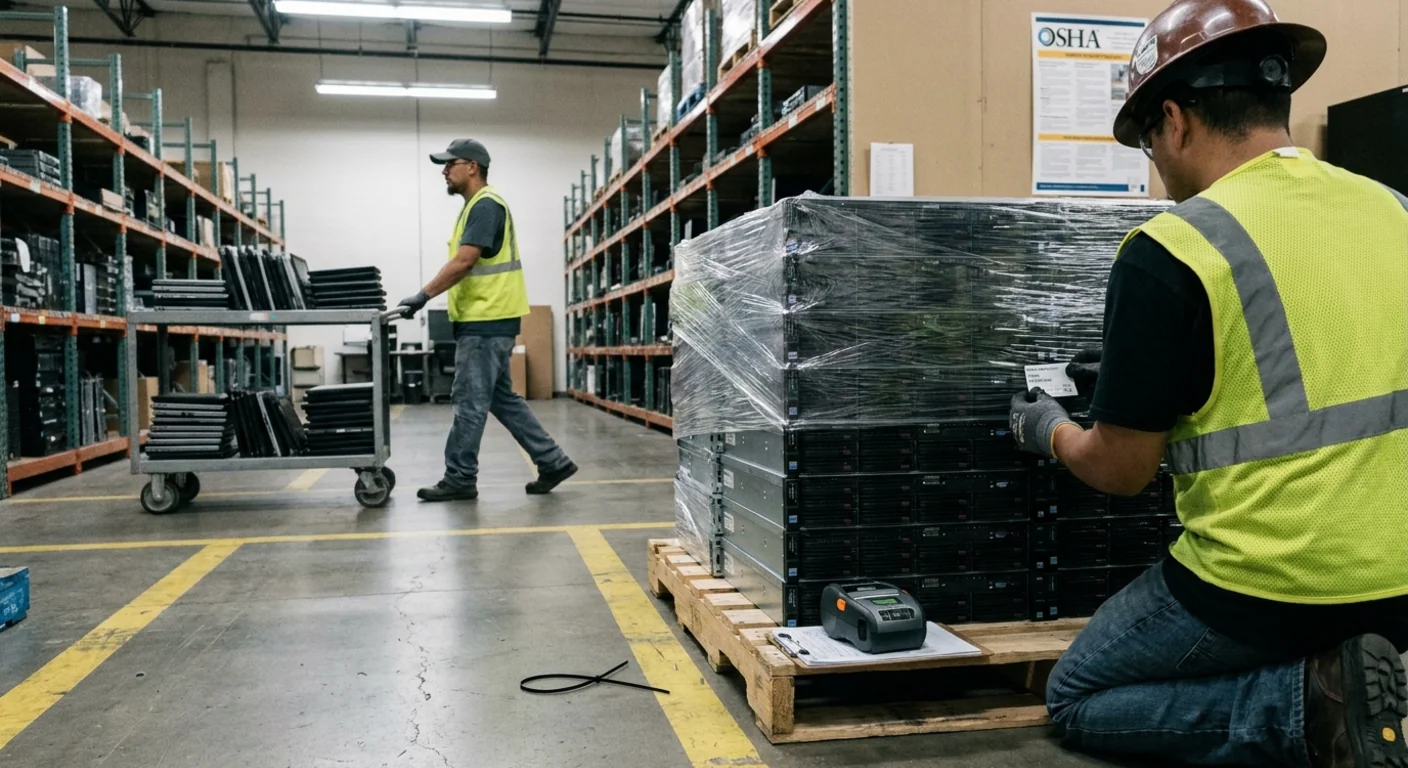
The ITAD process begins with comprehensive asset inventory. When a provider arrives for pickup, each piece of equipment should be cataloged with make, model, serial number, and asset tag information. This initial inventory creates the foundation for tracking throughout the disposition process.
Chain of custody documentation tracks each asset from pickup through final processing. Every movement, transfer, or processing step is recorded with dates, locations, and responsible parties. This unbroken documentation trail proves critical during audits or compliance reviews. Organizations can demonstrate exactly what happened to each device and verify that sensitive data was properly destroyed.
For Chicago Shredder clients, this documentation begins at our Addison, Illinois facility. Equipment arriving at the facility is re-verified against pickup manifests, and any discrepancies are immediately addressed. Detailed records support internal audit requirements and provide the evidence needed to satisfy regulatory obligations. Industry studies suggest that organizations without proper chain of custody face significantly higher risks during compliance audits.
3. Secure Data Destruction Standards and Methods
Data destruction represents the most critical component of ITAD services. Before any device leaves your control, the data it contains must be rendered unrecoverable. The method depends on the storage media type, security requirements, and equipment condition.
For hard drives, three primary methods exist: software-based data wiping, degaussing, and physical destruction. Software wiping using Department of Defense 5220.22-M standard or NIST SP 800-88 guidelines overwrites data multiple times, making recovery extremely difficult. This method works well for equipment destined for refurbishment. Degaussing uses powerful magnetic fields to scramble data on magnetic media. Physical destruction provides the highest security level by rendering drives mechanically unusable.
Chicago Shredder operates an on-site hard drive crusher at our Addison facility, providing immediate physical destruction for high-security requirements. This local destruction capability eliminates transportation risks and provides same-day certificates of destruction.
Solid-state drives (SSDs) require different approaches than traditional hard drives. The NIST SP 800-88 guidelines recognize that SSDs cannot be reliably degaussed due to their flash memory architecture. Software wiping specifically designed for SSDs or physical destruction are the recommended methods. A qualified ITAD provider understands these technical distinctions and applies appropriate methods for each media type.
4. The Refurbish Versus Recycle Decision
Not all retired IT equipment needs to be destroyed. Many devices retain significant value and can be securely wiped, refurbished, and resold. The decision between refurbishment and recycling depends on equipment age, condition, market demand, and security requirements.
Equipment suitable for refurbishment typically includes computers less than five years old, recent-generation servers with upgrade potential, and networking equipment from major manufacturers. After secure data destruction through software wiping, these items are tested, cleaned, and sold into secondary markets. The revenue from resale can offset ITAD costs or even generate returns for the original owner.
Recycling becomes necessary when equipment is obsolete, physically damaged, or contains outdated technology with no market demand. Items are disassembled, and materials like metals, plastics, and circuit boards are separated for commodity recovery. This process recovers valuable materials while keeping hazardous substances like lead and mercury out of landfills.
The evaluation requires technical expertise. A computer that appears functional may have limited value if the processor generation is outdated. Conversely, specialized equipment in niche markets may retain value beyond typical consumer electronics. Experienced ITAD providers assess each item individually and recommend the path that balances security requirements with maximum value recovery.
5. More to Consider
This secure process addresses environmental management, worker health and safety, security protocols, and downstream vendor management.
When Choose a recycler that documents chain of custody and provides a Certificate of Recycling. This structure ensures that every device receives secure processing while maintaining the local service and relationships clients expect from a Chicago-area provider.
This secure process requires annual audits, documented procedures, and strict controls on downstream vendors. Processing facilities can only send materials to other processors or verified end markets. This prevents the export of hazardous e-waste to developing countries where it may be processed unsafely.
6. Data Disposal Considerations
Organizations in healthcare, financial services, education, and government face specific data protection requirements. HIPAA mandates secure disposal of electronic protected health information. GLBA requires financial institutions to protect customer data throughout its lifecycle. FERPA imposes obligations on educational institutions handling student records. SOX affects publicly traded companies maintaining financial records.
An ITAD provider designed to support these compliance requirements offers several key capabilities. Detailed documentation proving data destruction satisfies audit requirements. Chain of custody records demonstrate that equipment never left authorized custody. Certificates of destruction or recycling provide evidence for compliance reports.
The provider's own security practices matter as well. Facilities should maintain physical security controls, background-checked employees, and documented data handling procedures. When auditors review your data disposal practices, they will examine your vendor's qualifications and processes. Choose a recycler that documents chain of custody and provides a Certificate of Recycling.
Chicago businesses benefit from working with local ITAD providers familiar with regional compliance expectations. While regulations are federal, auditors and enforcement agencies may have regional priorities or interpretation patterns. A provider working regularly with Chicago-area organizations in your industry brings relevant experience to compliance discussions.
7. Chicago Area Logistics and Service Advantages
Geographic proximity affects ITAD service quality in several ways. Local providers respond faster to pickup requests, reducing the time sensitive equipment sits waiting for collection. Transportation distances are shorter, minimizing the risk window when devices are in transit. On-site services like hard drive destruction can be provided at your facility or nearby locations.
Chicago Shredder's Addison facility serves businesses throughout the Chicago metropolitan area and across Illinois. This central location enables efficient pickup scheduling and quick response to urgent requests. Equipment typically arrives at our facility the same day as pickup, accelerating the data destruction and processing timeline.
Local service also means direct communication with the team handling your equipment. Questions about specific devices, documentation requirements, or pickup scheduling are answered by people familiar with your account. This relationship-based approach contrasts with national providers where you may speak with different representatives each time.
For organizations managing multiple locations, a provider with Chicago-area expertise can coordinate pickups across suburban and urban sites efficiently. Understanding local traffic patterns, building access procedures, and regional logistics challenges improves service reliability. When equipment needs to be removed quickly due to lease expirations or office moves, local knowledge prevents delays.
8. Frequently Asked Questions
What is the difference between ITAD and electronics recycling?
ITAD encompasses the complete asset disposition process including inventory, chain of custody, data destruction, and final processing. Electronics recycling typically focuses only on the materials recovery phase. ITAD providers emphasize security, documentation, and compliance support throughout the entire lifecycle.
How long does the ITAD process take from pickup to completion?
Timeline varies based on service requirements and volume. Chicago Shredder typically processes equipment and provides certificates within one week of pickup. On-site hard drive destruction at our Addison facility can provide same-day certificates of destruction when required.
Can I witness the destruction of my hard drives?
Yes, Chicago Shredder offers witnessed destruction services at our Addison, Illinois facility. Clients can observe the physical destruction of hard drives using our on-site crusher, ensuring complete confidence in the data destruction process.
How does an ITAD provider determine if equipment should be refurbished or recycled?
The decision depends on equipment age, condition, market demand, and your security requirements. Recent-generation computers and servers with functional components are candidates for secure wiping and refurbishment. Obsolete or damaged equipment is disassembled for materials recovery. Experienced providers evaluate each item individually.
What documentation will I receive after ITAD services are completed?
You should receive certificates of destruction for data-bearing devices, certificates of recycling for processed equipment, and detailed manifests listing all assets by serial number. The specific formats vary by provider and your industry requirements.
Choosing an IT asset disposition provider requires Choose a recycler that documents chain of custody and provides a Certificate of Recycling. For Chicago-area businesses, local service advantages include faster response times, relationship-based communication, and regional logistics expertise. To discuss your IT asset disposition requirements or schedule a pickup, call 866-770-2650 or contact our team at our Addison facility.
Ready to schedule a pickup?
Call 866-770-2650 or request a quote online. Every pickup includes clear service documentation.