

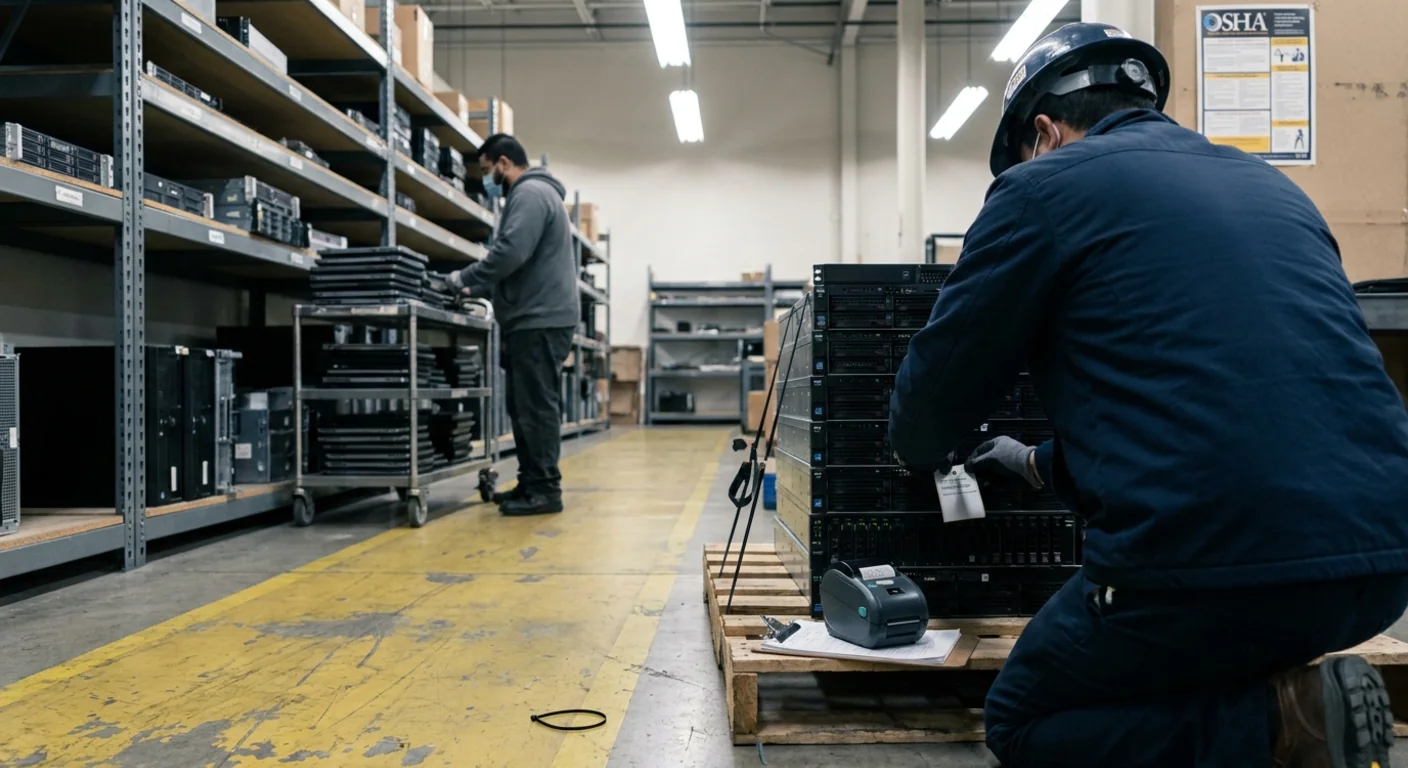
IT Asset Disposition (ITAD) is the process of safely and responsibly retiring technology equipment while protecting sensitive data and recovering value where possible. For Illinois businesses handling computers, servers, mobile devices, and networking equipment, choosing the right ITAD partner directly impacts data security, regulatory compliance, and environmental responsibility. The wrong choice can expose organizations to data breaches, compliance violations, or hidden costs. This guide examines the critical factors Illinois companies should Choose a recycler that documents chain of custody and provides a Certificate of Recycling.
1. Understanding ITAD and Why Partner Selection Matters
ITAD encompasses the entire lifecycle of retiring IT equipment, from initial asset inventory through final disposition. The stakes are considerable for Illinois companies across healthcare, finance, education, and professional services sectors.
A qualified ITAD partner provides documented processes that support compliance requirements under regulations like HIPAA, GLBA, SOX, and FERPA. They maintain chain of custody documentation from the moment equipment leaves your facility until final disposition. This paper trail becomes essential during audits or if questions arise about how specific devices were handled.
The consequences of inadequate ITAD services extend beyond theoretical risk. Data breaches resulting from improperly handled retired equipment can result in notification costs, regulatory penalties, and reputation damage. Environmental violations from improper electronics disposal carry their own legal and financial consequences. For Illinois businesses, selecting an ITAD partner represents a risk management decision as much as a vendor selection.
2. Asset Inventory and Chain of Custody Documentation
Comprehensive asset tracking begins the moment an ITAD provider takes possession of your equipment. Reputable partners create detailed inventory lists that include make, model, serial numbers, and asset tags for each piece of equipment. This inventory serves multiple purposes: it provides your organization with documentation of what was retired, supports internal asset management processes, and creates the foundation for chain of custody records.
Chain of custody documentation tracks each asset through every stage of the ITAD process. This includes transportation from your facility, receipt at the processing location, data destruction activities, and final disposition whether through refurbishment, recycling, or component recovery. Each transfer point and processing step should be logged with dates, personnel involved, and actions taken.
For Illinois companies subject to regulatory oversight, this documentation proves essential during compliance audits. When auditors ask how specific equipment containing protected data was handled, detailed chain of custody records provide clear answers. The documentation should be readily accessible and maintained for periods consistent with your industry's record retention requirements.
3. Secure Data Destruction Methods and Standards
Data destruction represents the most critical component of ITAD services. Retired equipment often contains sensitive customer information, proprietary business data, employee records, and confidential communications. Simply deleting files or reformatting drives leaves data recoverable through readily available forensic tools. Effective ITAD partners employ methods designed to render data unrecoverable.
For hard drives and solid-state drives, data destruction typically follows either physical destruction or software-based sanitization protocols. Chicago Shredder operates an on-site hard drive crusher at our Addison, Illinois facility, providing physical destruction services that render drives inoperable and data unrecoverable. Software sanitization follows established protocols like DoD 5220.22-M standard or NIST SP 800-88 guidelines, overwriting data multiple times to prevent recovery.
The appropriate method depends on the data sensitivity, equipment type, and your organization's security policies. Some Illinois companies require physical destruction for all storage media, while others accept secure sanitization for lower-risk data. Your ITAD partner should offer multiple destruction options and provide certificates of destruction documenting the specific method used, date performed, and serial numbers of destroyed devices. This secure process becomes part of your compliance documentation.
4. Evaluating Recycler Documentation and Downstream Processing
When Choose a recycler that documents chain of custody and provides a Certificate of Recycling.
This secure process ensures that downstream processing partners are vetted, that no materials are knowingly disposed of in landfills, and that environmental and data security standards are maintained throughout the recycling chain. For Illinois businesses, this means confidence that equipment doesn't end up in overseas dumps or improperly handled by uncertified processors.
5. The Refurbish vs. Recycle Decision Process
Not all retired IT equipment follows the same path. Some assets retain functional and market value, making them candidates for refurbishment and resale. Others have reached end of life and move directly to recycling for material recovery. A qualified ITAD partner evaluates each asset and makes appropriate disposition decisions that can return value to your organization.
The refurbish versus recycle assessment considers equipment age, condition, market demand, and remaining useful life. Computers and laptops less than five years old with functional components often qualify for refurbishment after complete data sanitization. Older equipment, damaged devices, or obsolete technology typically moves to recycling where materials like precious metals, copper, and plastics are recovered for reuse in manufacturing.
For Illinois companies, this decision process can generate financial returns that offset ITAD service costs. Equipment with refurbishment potential may qualify for revenue sharing arrangements or service credits. Your ITAD partner should provide transparent reporting on what equipment was refurbished versus recycled, market values obtained, and any financial returns. This transparency helps your organization make informed decisions about IT refresh cycles and budget planning. Chicago Shredder evaluates all incoming assets for refurbishment potential while maintaining security throughout the process, ensuring data destruction occurs before any equipment enters secondary markets.
6. Data Disposal Considerations
Illinois businesses operate under various regulatory frameworks depending on their industry. Healthcare organizations must address HIPAA requirements for protecting patient information. Financial institutions face GLBA obligations for customer data security. Public companies navigate SOX requirements for record retention and information security. Educational institutions handle FERPA protections for student records.
This includes written data destruction policies, employee background checks and training for personnel handling sensitive equipment, facility security measures, and the detailed documentation discussed earlier.
When your organization needs to demonstrate how retired equipment was handled, your ITAD partner should provide prompt access to relevant records and certificates. They should be available to answer auditor questions about their processes and chain-of-custody records. Our services are designed to support compliance requirements across HIPAA, GLBA, SOX, and FERPA frameworks relevant to Illinois businesses.
7. Chicago-Area Logistics and Service Advantages
For Illinois companies, working with a Chicago-area ITAD partner offers practical advantages that impact cost, convenience, and risk management. Local providers reduce transportation distances and associated costs, offer more flexible scheduling for pickups, and provide faster response times when urgent needs arise.
Transportation represents a critical security concern in ITAD. Every mile equipment travels and every transfer point in the logistics chain creates potential vulnerability. Equipment containing sensitive data should spend minimal time in transit and pass through fewer hands between your facility and the secure processing location. Chicago-area providers can often schedule same-day or next-day pickups, reducing the window where retired equipment sits waiting for collection.
Local partnerships also facilitate site visits and relationship building. This transparency builds confidence that your ITAD partner operates as described. Chicago Shredder's Addison, Illinois facility welcomes site visits from current and prospective clients, providing visibility into our asset processing, data destruction, and documentation procedures. Our local presence means we understand Illinois business environments, can accommodate Chicago-area pickup scheduling, and provide the responsive service that regional businesses require.
8. Frequently Asked Questions
How long should ITAD documentation be retained?
Retention periods depend on your industry's regulatory requirements. Healthcare organizations subject to HIPAA typically retain records for six years. Financial institutions under GLBA often maintain documentation for five to seven years. Educational institutions following FERPA guidelines vary based on state requirements. Consult with your compliance team to determine appropriate retention periods for your organization, and ensure your ITAD partner can provide documentation that meets these timelines.
Can an ITAD partner provide on-site data destruction services?
Many ITAD providers offer on-site hard drive destruction using mobile shredding trucks for organizations with heightened security requirements or policies prohibiting data-containing devices from leaving the premises. This service typically costs more than facility-based processing but provides witnessed destruction and eliminates transportation risk. Chicago Shredder can discuss whether on-site services make sense for your specific security requirements.
What happens to equipment after data destruction?
After secure data destruction, equipment follows one of several paths depending on condition and market value. Functional devices may be refurbished for resale after complete sanitization. End-of-life equipment moves to material recovery where components are separated and processed for metals, plastics, and other materials.
How do ITAD providers handle different types of storage media?
Different storage technologies require different destruction approaches. Traditional hard drives can be physically destroyed through shredding or crushing, or sanitized using software overwrite methods. Solid-state drives (SSDs) require physical destruction or specialized sanitization due to wear-leveling technology that complicates software-based erasure. Magnetic tapes typically undergo shredding or degaussing. Mobile devices may require physical destruction of integrated storage. Your ITAD partner should have appropriate methods for all storage types your organization uses.
What information should appear on a certificate of destruction?
Certificates of destruction should include your organization's name, the date destruction occurred, the destruction method used (such as physical shredding or software sanitization to specific standards), serial numbers or asset tags of destroyed devices, the quantity and types of equipment destroyed, and the signature of an authorized representative from the ITAD provider.
Selecting an ITAD partner for your Illinois company requires evaluating multiple factors beyond cost alone. They offer transparent communication, detailed reporting, and local presence for responsive service. If your organization is evaluating ITAD partners or needs to schedule a pickup for retiring IT equipment, contact Chicago Shredder at 866-770-2650 to discuss your requirements and learn how our services support Illinois businesses across industries.
Ready to schedule a pickup?
Call 866-770-2650 or request a quote online. Every pickup includes clear service documentation.