

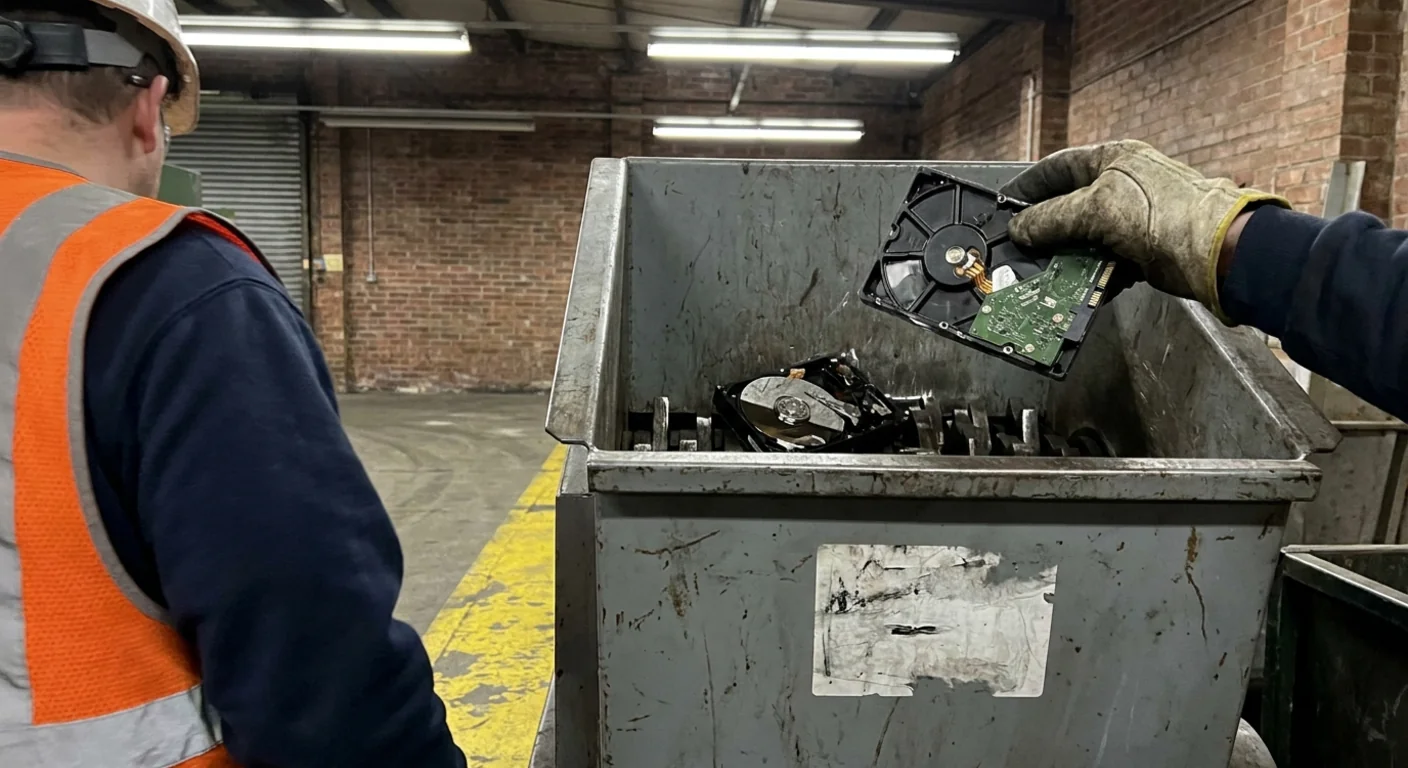
Hard drives store sensitive business data, customer records, and confidential information that requires proper disposal when equipment reaches end-of-life. Many Chicago businesses struggle to determine the right time to destroy hard drives and which destruction method provides adequate security. Delaying destruction creates data breach risks, while premature disposal may waste functional equipment. Understanding the warning signs that indicate it's time for physical hard drive destruction helps organizations protect sensitive information while maintaining regulatory compliance and operational efficiency.
1. Warning Signs Your Hard Drive Needs Destruction
Several clear indicators signal that a hard drive requires secure destruction rather than continued use or standard recycling. Equipment age represents a primary factor, as drives older than five years face increased failure rates and may lack encryption capabilities found in newer models. When computers are decommissioned, upgraded, or replaced, the drives they contain should undergo destruction even if still functional, particularly if they previously stored regulated data.
Physical damage to drives creates another urgent destruction scenario. Dropped laptops, water-damaged devices, or equipment showing signs of mechanical failure may seem unusable, but data often remains recoverable through forensic methods. Organizations replacing failed drives under warranty should never return the original drive to manufacturers without first ensuring destruction of sensitive content.
Regulatory triggers also dictate destruction timing. When employees with access to protected health information leave the organization, when lease terms end on equipment containing financial records, or when retention periods expire for archived data, physical destruction provides the most reliable protection. Industry studies suggest that over 40 percent of used hard drives sold on secondary markets contain recoverable data from previous owners, highfacility equipment why timely destruction matters.
2. Physical Destruction Methods and Security Levels
Physical destruction renders data unrecoverable through mechanical processes that damage drive platters beyond repair. Chicago Shredder operates an on-site hard drive crusher at our Addison, IL facility, which physically deforms drives to ensure data cannot be reconstructed. This crushing process creates visible, permanent damage that eliminates any possibility of data recovery through conventional or forensic means.
Shredding represents another physical destruction method, reducing drives to small particles typically one inch or smaller. This granulation approach works well for organizations requiring visual confirmation of complete destruction. Punching or piercing creates holes through drive platters but may leave some data intact on undamaged portions, making it less secure than crushing or shredding for highly sensitive information.
Data wiping or software-based erasure follows standards like DoD 5220.22-M and guidelines such as NIST SP 800-88, but these methods require functional drives and time to complete multiple overwrite passes.
3. Compliance Requirements Driving Destruction Decisions
Healthcare organizations handling protected health information under HIPAA face specific requirements designed to support compliance when disposing of electronic media. The Security Rule requires covered entities to implement policies for final disposition of electronic protected health information and the hardware containing it. Physical destruction provides a clear, defensible method that satisfies these requirements when patient data existed on drives.
Financial institutions subject to the Gramm-Leach-Bliley Act and the FTC's Safeguards Rule must properly dispose of customer information. The GLBA Disposal Rule specifically addresses destruction of consumer report information, and physical hard drive destruction offers financial services companies a reliable approach designed to support these compliance obligations. Similarly, organizations subject to the Fair and Accurate Credit Transactions Act face requirements for proper disposal of consumer information.
Public companies navigating Sarbanes-Oxley requirements and educational institutions handling student records under FERPA also benefit from documented destruction processes. While regulations vary in specific language, the common thread involves rendering data unreadable and unrecoverable. Physical destruction accomplishes this goal with certainty, particularly when accompanied by certificates of destruction and documented chain of custody from collection through final processing.
4. Certificate of Destruction and Documentation
Proper documentation separates professional destruction services from informal disposal methods. A certificate of destruction provides legal proof that hard drives were destroyed according to specified standards and timelines. This certificate typically includes serial numbers of destroyed equipment, destruction date and method, facility location, and authorized signatures confirming the process.
Chain of custody documentation tracks drives from the moment they leave your facility until final destruction. This paperwork creates an auditable trail showing who handled the equipment at each stage, when transfers occurred, and where processing took place. For organizations facing regulatory audits or legal discovery, this documentation demonstrates due diligence in protecting sensitive information throughout the disposal process.
Chicago Shredder provides certificates of destruction following processing at our Addison, IL facility. Organizations should retain these certificates according to their record retention policies, as they may be required during audits or investigations. The documentation also protects against liability claims related to data breaches from improperly disposed equipment.
5. On-Site Crushing at the Addison Facility
Chicago Shredder operates an on-site hard drive crusher at our Addison, IL facility, providing local businesses with convenient access to secure destruction services. The crushing process physically deforms drive housings and platters, creating damage designed to make data unrecoverable through any known recovery method. This mechanical destruction occurs at our facility after secure transport from your location.
The on-site crusher allows for efficient processing of large volumes while maintaining security throughout the destruction process. Drives remain in a controlled environment from arrival through crushing and subsequent recycling. This localized approach means Chicago-area businesses can rely on a nearby facility rather than shipping drives to distant processing centers, reducing transportation risks and supporting faster turnaround times.
After crushing, destroyed drives enter the electronics recycling stream where metals and other materials are recovered for reuse. This combination of secure destruction and sustainable recycling addresses both data security and environmental stewardship concerns for Chicago businesses.
6. Why Chicago Businesses Choose Local Destruction Services
Geographic proximity offers practical advantages when selecting hard drive destruction services. Chicago businesses working with local providers benefit from shorter transportation distances, reducing the time drives spend in transit and the associated security risks. Local services also facilitate on-site pickup scheduling that accommodates business operations without lengthy advance notice requirements.
Understanding Illinois-specific business environments and compliance landscapes represents another advantage of local providers. Chicago-area companies face particular concerns related to data privacy laws, industry concentrations in healthcare and finance, and the competitive pressures that make data security essential. Local destruction providers familiar with these dynamics can offer relevant guidance and service configurations.
Chicago Shredder serves businesses throughout the Chicago metropolitan area from our Addison, IL facility. Our understanding of local business needs, combined with documented destruction processes and certificates of destruction, supports organizations in protecting sensitive information. Whether you operate in healthcare, financial services, professional services, manufacturing, or another industry, timely hard drive destruction reduces risk and demonstrates commitment to data security.
7. Creating an Internal Destruction Policy
Organizations benefit from establishing clear internal policies that define when and how hard drives should be destroyed. These policies should specify destruction triggers, such as equipment age thresholds, decommissioning procedures, employee departure protocols, and regulatory retention period expirations. Written policies ensure consistent treatment across departments and locations.
Designated responsibilities within the organization prevent drives from being overlooked during disposal processes. IT departments typically identify equipment for destruction, but facilities management, security teams, and compliance officers may all play roles in the process. Clear assignment of these responsibilities, along with periodic audits to verify compliance with internal policies, strengthens overall data protection.
Your destruction policy should also address documentation requirements, approved service providers, and escalation procedures for situations involving particularly sensitive data. Regular policy reviews ensure that procedures remain aligned with current regulatory requirements and business needs. Organizations that implement structured destruction policies find that compliance becomes routine rather than reactive, reducing both risk and the administrative burden of managing end-of-life IT assets.
8. Frequently Asked Questions
How long does hard drive destruction take at the Addison facility?
Processing times vary based on volume, but Chicago Shredder typically completes destruction within a few business days after drives arrive at our Addison, IL facility. We typically respond to pickup requests within one business day and can accommodate urgent destruction needs for time-sensitive situations.
Can hard drives be wiped instead of physically destroyed?
Data wiping using methods aligned with DoD 5220.22-M standard or NIST SP 800-88 guidelines works for functional drives when properly executed, but physical destruction provides higher assurance for damaged drives or extremely sensitive information. Many compliance frameworks accept either approach, though destruction eliminates concerns about wiping software failures or incomplete erasure.
What happens to hard drives after they are crushed?
After crushing at our Addison facility, destroyed drives enter the electronics recycling stream where metals and components are recovered.
Do I need to remove hard drives from computers before pickup?
Chicago Shredder can handle both loose hard drives and complete computer systems. If you prefer to remove drives yourself, we can provide guidance on safe removal procedures, but we also accept full systems and handle drive extraction as part of our service for added convenience.
What information appears on the certificate of destruction?
Certificates of destruction typically include serial numbers or asset tags of destroyed drives, destruction date and method, the Addison, IL facility location, and authorized signatures.
Is hard drive destruction required by law for all businesses?
Specific requirements vary by industry and the type of data stored on drives. Healthcare, financial services, and other regulated industries face requirements designed to support compliance with HIPAA, GLBA, FACTA, and similar regulations. Even without regulatory mandates, destruction represents best practice for protecting customer and business information from data breaches.
Recognizing when hard drives require destruction protects your organization from data breaches, supports regulatory compliance, and demonstrates responsible information management. Whether triggered by equipment age, decommissioning schedules, physical damage, or regulatory requirements, timely destruction eliminates the risks associated with recoverable data on disposed devices. Chicago Shredder's on-site crusher at our Addison, IL facility provides Chicago-area businesses with local access to secure hard drive destruction, complete with certificates of destruction and documented chain of custody. If you have hard drives ready for secure destruction or questions about establishing a destruction program, call us at 866-770-2650 or schedule a pickup to protect your sensitive information with professional destruction services.
Ready to schedule a pickup?
Call 866-770-2650 or request a quote online. Every pickup includes clear service documentation.