
Healthcare organizations in Illinois manage thousands of IT assets containing protected health information (PHI), from imaging workstations to electronic medical record servers. When these devices reach end of life, proper IT asset disposition (ITAD) becomes critical to prevent data breaches, support HIPAA compliance requirements, and ensure environmental responsibility. Chicago Shredder provides comprehensive ITAD services designed specifically for healthcare facilities throughout the Chicago area and across Illinois, combining secure data destruction with secure electronics recycling processes.
1. Understanding IT Asset Disposition in Healthcare Settings
For healthcare organizations, ITAD goes far beyond simply discarding old computers. The process encompasses detailed asset inventory, data sanitization or destruction, equipment evaluation for potential reuse, and environmentally sound recycling of components that cannot be refurbished.
Healthcare ITAD differs significantly from standard corporate asset retirement due to the sensitivity of protected health information. A single hard drive from a radiology workstation might contain thousands of patient imaging files. An outdated server could hold years of billing records and treatment histories. Even seemingly minor devices like desktop computers used at nurse stations or administrative tablets can store cached login credentials and patient lookup histories.
The stakes for improper disposal are substantial. Industry studies suggest that data breaches involving improper device disposal can affect thousands of patient records in a single incident. Healthcare organizations face potential HIPAA violation penalties, reputation damage, and patient trust erosion when retired equipment is not handled through proper ITAD protocols. Establishing a relationship with a qualified ITAD provider creates a defensible process that addresses both security and regulatory requirements.
2. Asset Inventory and Chain of Custody Documentation
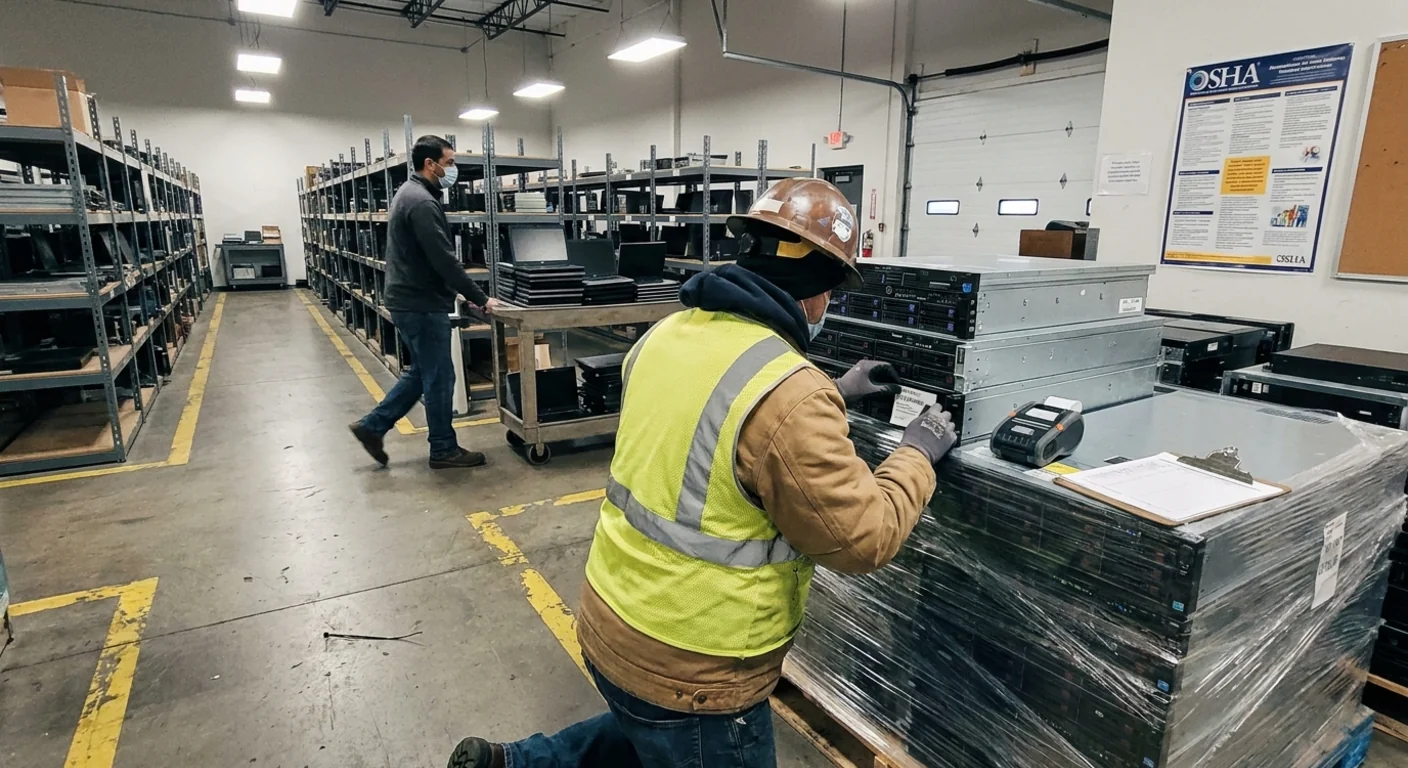
Effective ITAD begins with comprehensive asset tracking from the moment equipment is designated for retirement. Chicago Shredder provides detailed inventory documentation that records each device by serial number, asset tag, and equipment type. This initial cataloging creates the foundation for chain of custody tracking throughout the entire disposition process.
Chain of custody documentation serves multiple critical functions for healthcare organizations. The records demonstrate that devices containing PHI were transferred to a qualified vendor and processed according to established protocols. For organizations subject to regulatory review, these records provide evidence of due diligence in protecting patient information.
The inventory process also identifies devices requiring special handling. Networking equipment, backup systems, and database servers typically demand more rigorous data destruction methods than standard workstations. Medical imaging devices may contain embedded storage that requires specific technical expertise to access and sanitize. Chicago Shredder's intake process categorizes equipment appropriately, ensuring that high-risk devices receive the level of attention their data sensitivity warrants. All documentation is maintained according to record retention requirements, providing long-term accountability for asset disposition decisions.
3. Secure Data Destruction for Healthcare IT Assets
Data destruction represents the most critical component of healthcare ITAD. Protected health information must be rendered unrecoverable before any device leaves your organization's control or enters secondary markets through refurbishment. Chicago Shredder employs multiple destruction methods based on device type, data sensitivity, and organizational security policies.
For hard drives and solid-state storage devices, physical destruction provides the highest assurance of data irrecoverability. Chicago Shredder operates an on-site hard drive crusher at our Addison, Illinois facility, allowing healthcare organizations to witness the destruction process when desired. The industrial crushing equipment deforms drive platters and circuit boards to the point where data recovery becomes infeasible. This method aligns with the most stringent data destruction requirements and provides clear visual confirmation that storage media has been destroyed.
Certain situations allow for data sanitization through software-based overwriting methods as an alternative to physical destruction. When healthcare organizations wish to redeploy equipment internally or maximize residual value through certified refurbishment channels, data sanitization performed according to NIST SP 800-88 guidelines can render information unrecoverable while preserving device functionality. However, these methods require specialized verification processes and are typically reserved for lower-sensitivity devices. For storage media that contained electronic protected health information, physical destruction remains the recommended approach for most healthcare organizations.
All data destruction activities are documented with certificates of destruction that specify the method used, the date of destruction, and identifying information for each processed device.
4. Refurbishment vs. Recycling Decision Framework
Not every retired IT asset requires immediate destruction. Healthcare organizations can often recover value from equipment that still has functional life, provided data destruction is handled properly first. Chicago Shredder evaluates each device to determine the most appropriate disposition path based on condition, market demand, and security requirements.
Equipment evaluation considers multiple factors. Devices less than three to five years old with current operating system support may be candidates for refurbishment after data destruction. Desktop computers, laptops, tablets, and monitors in good physical condition can often be prepared for secondary markets, generating residual value that offsets disposition costs. This evaluation process happens only after data-bearing components have been removed and destroyed or sanitized to healthcare data security standards.
Devices that are not suitable for refurbishment enter the recycling stream. Older servers, broken peripherals, obsolete networking equipment, and devices with physical damage are processed for material recovery. This secure process addresses downstream vendor accountability, material tracking, and environmental protection requirements.
The decision framework balances multiple considerations including equipment age, functionality, market value, data security requirements, and organizational policies regarding device reuse. Chicago Shredder provides recommendations based on each device's characteristics, but healthcare organizations retain final authority over disposition decisions. Some facilities maintain policies requiring physical destruction of all data-bearing devices regardless of potential residual value, while others implement tiered approaches based on the sensitivity of information the device accessed.
5. Secure Processing and Environmental Responsibility
Environmental stewardship represents a significant consideration for healthcare ITAD beyond regulatory compliance and data security. Electronic waste contains valuable materials including precious metals, copper, aluminum, and engineered plastics that can be recovered and returned to manufacturing supply chains. Secure, transparent recycling also prevents hazardous materials from entering landfills or being exported to facilities with substandard environmental and labor practices.
This secure process provides assurance that retired healthcare IT assets are processed according to industry-recognized environmental and security standards.
For healthcare organizations with sustainability commitments or environmental responsibility goals, working with recycling providers demonstrates measurable progress toward reducing environmental impact.
Material recovery rates for electronic equipment typically exceed 95% by weight, with materials separated into categories for specialized processing. Metals are sent to smelters, plastics to polymer processors, and glass to appropriate recycling streams. No materials are knowingly disposed of in landfills, aligning with healthcare sustainability initiatives that extend environmental responsibility beyond clinical operations into support functions like IT asset management.
6. Supporting HIPAA Compliance Requirements
The Health Insurance Portability and Accountability Act (HIPAA) establishes requirements for protecting patient information throughout its lifecycle, including during the disposal of electronic media containing protected health information. While HIPAA does not mandate specific disposal methods, the Security Rule requires covered entities to implement policies and procedures for final disposition of electronic protected health information and the hardware or media on which it is stored.
Chicago Shredder's ITAD services are designed to support healthcare organizations' HIPAA compliance requirements through documented processes, certified destruction methods, and comprehensive chain of custody tracking. The combination of physical destruction for data-bearing media, detailed inventory documentation, and certificates of destruction provides evidence of reasonable and appropriate safeguards for PHI during asset disposition.
Compliance considerations extend beyond federal HIPAA requirements. Illinois state law includes additional privacy protections for health information that may impose obligations on healthcare providers. Industry-specific standards such as those from the National Institute of Standards and Technology (NIST) provide technical guidance that many healthcare organizations adopt as part of their security programs. Chicago Shredder's data destruction methods align with NIST SP 800-88 guidelines for media sanitization, supporting organizations that have adopted these standards.
Documentation from ITAD activities supports both internal compliance monitoring and external audits. When reviewing data security practices, auditors typically request evidence that disposed equipment containing PHI was handled appropriately.
7. Chicago-Area Logistics Advantages for Illinois Healthcare
Geographic proximity creates practical advantages for healthcare organizations working with locally based ITAD providers. Chicago Shredder's Addison, Illinois location provides convenient access for hospitals, medical practices, and healthcare systems throughout the Chicago metropolitan area and across Illinois. Local service delivery reduces transportation costs, simplifies logistics coordination, and enables faster response times compared to national providers operating from distant facilities.
On-site pickup services eliminate the need for healthcare IT staff to transport equipment to recycling facilities. Chicago Shredder coordinates pickup scheduling to minimize disruption to clinical operations, accommodating the 24/7 operating requirements of many healthcare facilities. Pickup teams are trained in proper handling of IT equipment and understand the security sensitivity of healthcare environments. Equipment can be securely packaged and removed from facilities with minimal involvement from already-stretched IT departments.
For organizations with large-scale ITAD projects such as facility closures, EMR system replacements, or major IT infrastructure upgrades, local presence enables better project coordination. On-site hard drive destruction services can be arranged for situations where maximum security visibility is desired. Healthcare organizations can visit the Addison facility to observe processing operations and verify that procedures meet their security and environmental standards.
The ability to develop ongoing relationships with a local provider creates consistency in ITAD practices over time. Rather than researching vendors for each disposition project, healthcare organizations can establish standardized processes with a trusted partner who understands their specific requirements, security policies, and compliance obligations. This relationship approach reduces administrative burden while improving security outcomes through familiarity with organizational needs.
8. Frequently Asked Questions
What happens to hard drives from healthcare servers during ITAD?
Hard drives containing protected health information are physically destroyed using industrial crushing equipment at our Addison, Illinois facility. The crushing process deforms platters and circuit boards, making data recovery infeasible.
Can our organization recover any value from retired medical IT equipment?
Equipment in good condition may retain residual value after proper data destruction. Newer devices like workstations, laptops, and monitors can sometimes be refurbished for secondary markets. However, data destruction always occurs first, and some organizations maintain policies requiring destruction of all devices that accessed PHI regardless of potential value.
What documentation will we receive for compliance audits?
You will receive detailed inventory records documenting each asset by serial number and type, certificates of destruction for data-bearing devices specifying destruction methods and dates, and chain of custody documentation tracking equipment from pickup through final processing. These records support HIPAA compliance reviews and internal security audits.
Do you provide on-site services for healthcare facilities?
Yes, Chicago Shredder coordinates on-site pickup services throughout Illinois. We schedule pickups to minimize disruption to clinical operations and can arrange on-site hard drive destruction for situations requiring maximum security visibility. Our team understands healthcare facility security requirements and handles equipment accordingly.
How quickly can you respond to ITAD requests from healthcare organizations?
We typically respond to inquiries within one business day and work with your team to schedule services according to your timeline. For urgent situations such as facility closures or security incidents requiring immediate equipment removal, we can often accommodate expedited scheduling based on project scope and location.
IT asset disposition for healthcare organizations requires specialized expertise that addresses data security, regulatory compliance, and environmental responsibility simultaneously. Chicago Shredder provides comprehensive ITAD services designed specifically for Illinois healthcare facilities, combining secure data destruction with responsible electronics recycling. Our services support HIPAA compliance requirements through documented processes, provide chain of custody tracking for audit purposes, and ensure that retired equipment is processed according to environmental standards. Healthcare organizations throughout the Chicago area and across Illinois can partner with a local provider who understands the unique requirements of medical IT asset retirement. Call 866-770-2650 or schedule a pickup.
Ready to schedule a pickup?
Call 866-770-2650 or request a quote online. Every pickup includes clear service documentation.