

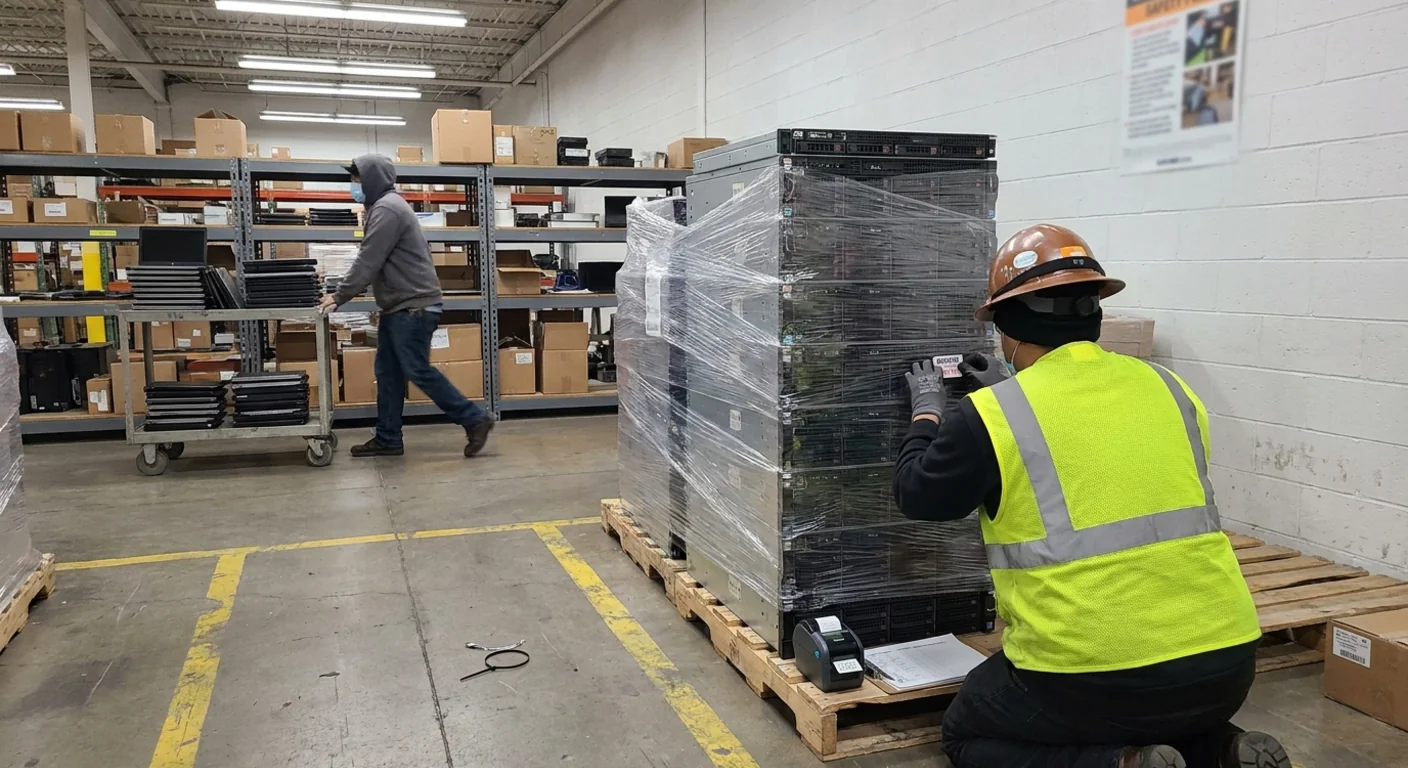
Financial institutions handle sensitive customer data across thousands of devices, from branch computers to ATM systems and server infrastructure. When these IT assets reach end-of-life, proper disposition becomes critical for regulatory compliance, data security, and environmental responsibility. IT Asset Disposition (ITAD) encompasses the entire lifecycle of retiring technology assets, from secure data destruction to sustainable recycling. For banks, credit unions, and investment firms in the Chicago area, partnering with qualified ITAD providers helps manage risk while recovering value from retired equipment.
1. Understanding IT Asset Disposition for Financial Services
For financial institutions, ITAD goes far beyond simply discarding old computers. The process includes asset inventory documentation, secure data sanitization, equipment refurbishment when feasible, and secure, transparent recycling of materials that cannot be reused.
Financial services organizations face unique challenges during IT asset retirement. Customer account information, transaction records, and internal financial data reside on hard drives, solid-state drives, and backup systems. A single unsanitized device could expose thousands of customer records. Industry studies suggest that data breaches from improperly disposed devices can cost financial institutions millions in remediation, regulatory fines, and reputational damage.
This documented framework addresses environmental responsibility, worker health and safety, and downstream vendor accountability.
2. Asset Inventory and Chain of Custody Documentation
Comprehensive asset tracking begins the moment equipment is identified for retirement. Financial institutions need detailed records showing what equipment was collected, where it came from, and how it was processed. This documentation trail supports audit requirements and provides accountability throughout the disposition process.
A proper chain of custody starts with complete asset inventory. Each device receives documentation including make, model, serial number, and asset tag information. This inventory is cross-referenced against the institution's internal records to ensure all retired equipment is accounted for. For organizations with multiple branch locations across the Chicago area, maintaining accurate records across dozens or hundreds of pickup locations becomes essential.
Chicago Shredder maintains detailed documentation throughout the ITAD process. Clients receive certificates of destruction for data-bearing devices and recycling documentation showing the responsible processing of all materials. Pickup services throughout the Chicago metropolitan area include on-site asset tagging and inventory verification before equipment leaves your facility.
3. Secure Data Destruction Standards for Financial Data
Data destruction represents the most critical component of ITAD for financial institutions. Customer financial records, internal communications, and proprietary business information must be rendered unrecoverable before any device can be recycled or resold. Multiple data destruction methods exist, each appropriate for different device types and security requirements.
Hard drive destruction at Chicago Shredder's Addison, Illinois facility includes physical crushing that deforms platters and renders data designed to be unrecoverable. The on-site crusher processes drives efficiently while maintaining chain of custody. For devices where physical destruction is not immediately feasible, data sanitization follows NIST SP 800-88 guidelines, which provide a framework for secure data clearing, purging, and destruction based on device type and data sensitivity.
Financial institutions should Choose a recycler that documents chain of custody and provides a Certificate of Recycling. The DoD 5220.22-M standard and NIST SP 800-88 framework provide recognized methodologies for secure data sanitization. Chicago Shredder's processes are designed to support compliance requirements under regulations including GLBA (Gramm-Leach-Bliley Act), which requires financial institutions to protect customer information through its entire lifecycle, including disposal.
4. Refurbishment Versus Recycling Decision Framework
Not all retired IT assets require immediate recycling. Many devices retain functional value and can be refurbished for secondary markets, generating cost recovery for financial institutions while extending equipment lifecycle. The decision between refurbishment and recycling depends on equipment condition, age, market demand, and data security considerations.
Functional computers, monitors, and networking equipment from branch upgrades often qualify for refurbishment after complete data sanitization. Equipment must meet quality standards for resale markets and pass functionality testing. Devices that are obsolete, damaged beyond economic repair, or contain data security risks that make sanitization impractical move directly to recycling streams.
The refurbishment decision requires balancing potential value recovery against security risks and processing costs. Financial institutions with large equipment volumes may realize significant value from functional equipment resale. However, the data destruction process must be completed before any device enters secondary markets. Chicago Shredder evaluates equipment condition during the intake process and provides recommendations based on your security requirements and value recovery goals.
5. Secure Processing and Downstream Accountability
Environmental responsibility extends beyond the initial ITAD provider to include every downstream processor that handles retired equipment.
This secure process represents the latest version of this standard, incorporating updated requirements for data security, environmental health and safety, and materials tracking. Facilities must demonstrate that commodities extracted from electronics, including precious metals, plastics, and glass, are sent to legitimate recycling operations rather than landfills or export to countries lacking environmental protections.
This secure process provides financial institutions with assurance that retired equipment is handled according to recognized environmental and security standards. The facility maintains documentation of downstream processors and conducts periodic audits to verify responsible handling. For organizations concerned about environmental impact and regulatory compliance, working with processors helps demonstrate due diligence in vendor selection.
6. More to Consider
Financial institutions operate under multiple regulatory frameworks that address data protection and environmental responsibility. The Gramm-Leach-Bliley Act requires financial institutions to protect customer information and properly dispose of consumer report information. The SEC and FINRA impose recordkeeping requirements on investment firms. State regulations, including Illinois data protection laws, add additional compliance layers.
When auditors review disposal practices, financial institutions need evidence that retired equipment was handled securely. Documentation from qualified ITAD providers demonstrates that the organization took reasonable steps to protect sensitive information throughout the asset lifecycle.
Certificates of destruction confirm that data-bearing devices were processed using methods designed to render information unrecoverable. Asset manifests show what equipment was collected and how it was processed. These records support audit requirements under various regulatory frameworks and help financial institutions demonstrate their commitment to data protection and environmental responsibility.
7. Chicago-Area Logistics and Service Advantages
Location matters for ITAD services. Financial institutions with multiple branch locations across the Chicago metropolitan area need providers who understand local logistics and can coordinate pickups efficiently. Quick response times minimize the period that retired equipment sits in storage, reducing security risks and freeing up valuable space.
Chicago Shredder maintains operations in the Chicago area with a processing facility in Addison, Illinois. This local presence enables responsive service for organizations throughout the region. Whether coordinating a single pickup from a downtown Chicago headquarters or scheduling multiple collections across suburban branches, proximity reduces transportation time and costs. The company typically responds to service requests within one business day.
For financial institutions planning major IT refreshes or branch consolidations, advance planning ensures smooth equipment retirement. Chicago Shredder works with clients to schedule pickups that align with technology deployment timelines and minimize disruption to branch operations.
8. Frequently Asked Questions
What documentation should financial institutions expect from ITAD providers?
Financial institutions should receive detailed asset manifests listing all equipment collected, certificates of destruction for data-bearing devices, and recycling documentation showing responsible processing. Chain of custody records should track equipment from pickup through final disposition, providing the audit trail needed for compliance purposes.
What documentation should you request from a recycler?
Processing facilities must document downstream vendors, maintain worker safety programs, and ensure materials are handled responsibly. This secure process helps financial institutions demonstrate due diligence in vendor selection and supports environmental responsibility goals.
Can financial institutions recover value from retired IT equipment?
Yes, functional equipment often retains resale value after complete data sanitization. Computers, monitors, and networking gear from technology refreshes may qualify for secondary markets. The decision depends on equipment condition, market demand, and security requirements, with all devices requiring complete data destruction before any resale consideration.
What data destruction methods are appropriate for financial institution hard drives?
Physical destruction through crushing or shredding renders hard drive data designed to be unrecoverable and is often preferred for financial services due to the sensitivity of customer data. For devices requiring data sanitization rather than physical destruction, methods following NIST SP 800-88 guidelines provide recognized frameworks for secure data clearing based on device type and security requirements.
How should multi-branch financial institutions coordinate ITAD services?
Organizations with multiple locations should work with ITAD providers who can coordinate pickups across all sites while maintaining consistent documentation and security protocols. A single provider managing all locations ensures uniform data destruction standards, simplifies vendor management, and provides centralized reporting for compliance purposes.
What compliance requirements does ITAD help financial institutions address?
Proper ITAD processes are designed to support compliance requirements under GLBA, which mandates protection of customer information including during disposal. ITAD documentation also helps address SEC and FINRA recordkeeping requirements, state data protection laws, and environmental regulations. Certificates of destruction and recycling records provide evidence of responsible equipment disposal during audits.
IT Asset Disposition for financial institutions requires specialized expertise in data security, regulatory compliance, and environmental responsibility. Chicago Shredder provides financial services organizations throughout the Chicago area with ITAD solutions designed for the unique security requirements of the banking and investment industries. Contact Chicago Shredder at 866-770-2650 to discuss your IT asset disposition needs or schedule a pickup for your retired technology equipment.
Ready to schedule a pickup?
Call 866-770-2650 or request a quote online. Every pickup includes clear service documentation.