
Healthcare providers face unique challenges when retiring IT equipment. Patient data security, regulatory compliance, and environmental responsibility all converge at the point of technology disposal. For Chicago-area medical facilities, hospitals, and clinics, partnering with a local ITAD provider offers logistical advantages and peace of mind. This guide explores best practices and the benefits of professional ITAD services designed specifically for healthcare environments.
1. What IT Asset Disposition Means for Healthcare
IT Asset Disposition encompasses the entire lifecycle of retiring technology assets, from initial inventory and secure data destruction through refurbishment, resale, or sustainable recycling. Unlike basic electronics recycling, ITAD treats each device as a potential data security risk and financial asset. Healthcare providers handle protected health information (PHI) across servers, workstations, laptops, tablets, medical imaging devices, and even copiers with hard drives. Each piece of equipment requires documented handling to support HIPAA compliance requirements.
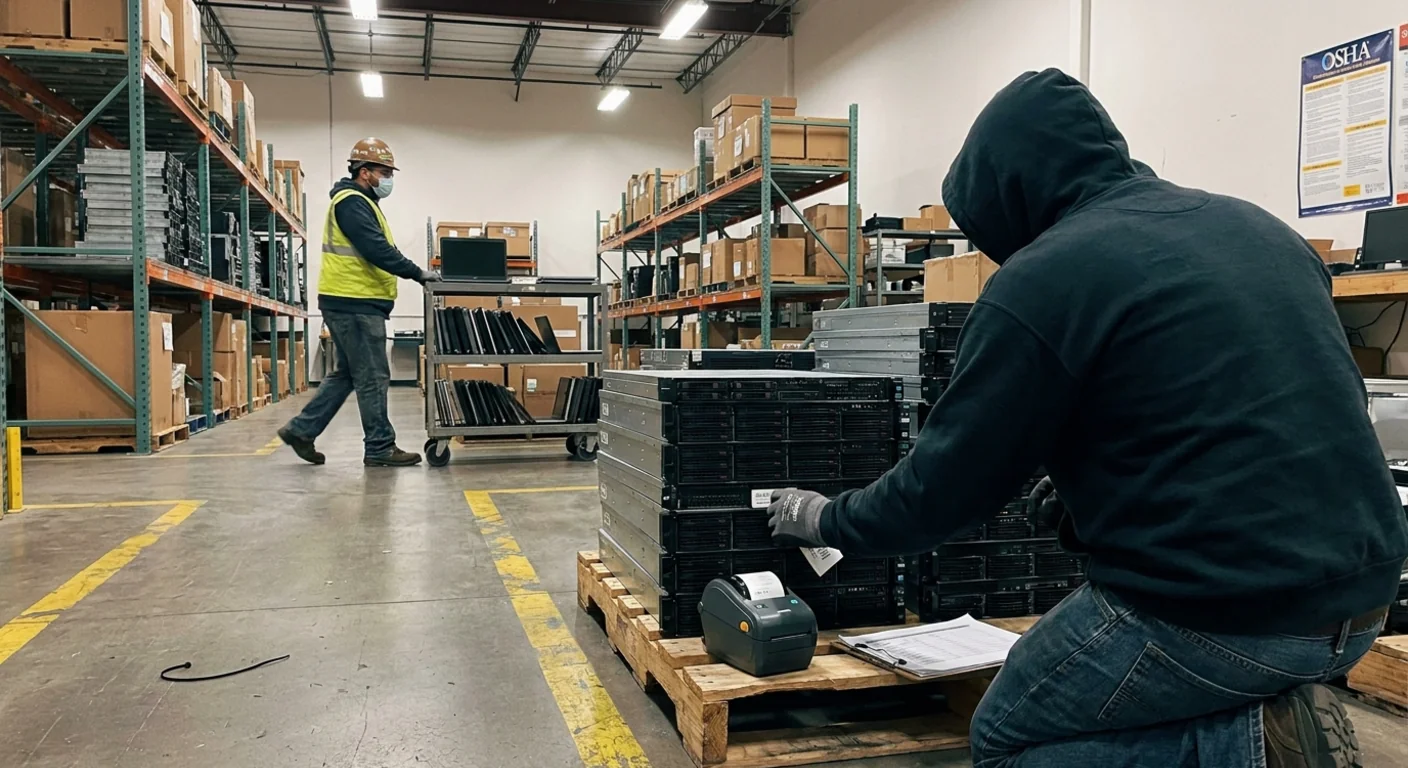
A comprehensive ITAD program begins the moment equipment is identified for retirement. Asset tags are verified, serial numbers recorded, and chain of custody documentation initiated. This tracking continues through every stage, from pickup to final disposition. Healthcare organizations benefit from detailed reporting that demonstrates due diligence in protecting patient information. The process addresses both the data security imperative and the need to maximize residual value from functional equipment.
Chicago Shredder serves healthcare facilities throughout Illinois with services designed to meet the sector's strict requirements. This documented framework ensures responsible handling and environmental stewardship throughout the disposition process.
2. Asset Inventory and Chain of Custody Documentation
Effective ITAD begins with thorough asset inventory. Healthcare providers should catalog every device leaving the facility, including make, model, serial number, asset tag, and storage media type. This inventory serves multiple purposes. It establishes accountability, helps identify equipment containing PHI, supports internal audit requirements, and provides the foundation for certificate of destruction documentation.
Chain of custody tracking documents each transfer of equipment from the healthcare facility through final disposition. Reputable ITAD providers maintain detailed logs showing who handled assets, when transfers occurred, where equipment moved, and what processes were applied. The records become part of the organization's overall risk management strategy.
Digital tracking systems have replaced paper manifests at many ITAD providers. Barcoding and scanning create real-time visibility into asset location and status. Healthcare IT managers can access web portals showing which devices have been received, processed, and recycled. This transparency builds confidence and simplifies reporting to compliance officers and auditors. Detailed inventory management also identifies opportunities to recover value from equipment that can be refurbished rather than recycled.
3. Secure Data Destruction as the Foundation of ITAD
Data destruction sits at the heart of healthcare ITAD. No amount of process documentation matters if PHI remains accessible on disposed devices. Healthcare organizations face significant penalties for data breaches, making destruction methodology a critical selection criterion when choosing an ITAD partner. Multiple approaches exist, each suited to different device types and security requirements.
For hard drives and solid-state drives, physical destruction provides the highest assurance. Chicago Shredder operates an on-site hard drive crusher at our Addison, Illinois facility. This industrial equipment renders drives inoperable by deforming platters and circuit boards beyond any possibility of data recovery. The crushing process can be witnessed by clients who prefer to observe destruction firsthand. Physical destruction eliminates concerns about remnant data and provides clear evidence that information is designed to be unrecoverable.
Software-based sanitization offers an alternative for equipment destined for refurbishment and reuse. Overwriting techniques follow NIST SP 800-88 guidelines, which provide a framework for clearing, purging, or destroying data based on media type and sensitivity. Healthcare organizations should understand that NIST SP 800-88 represents guidelines rather than a certification program. The choice between physical destruction and sanitization depends on equipment value, reuse potential, and organizational risk tolerance.
4. The Refurbish Versus Recycle Decision
Not all retired healthcare IT equipment requires immediate recycling. Many devices retain functional value and can be refurbished for secondary markets. This decision point carries both financial and environmental implications. Equipment that can be resold or donated reduces the overall cost of ITAD services while extending product lifecycles and reducing electronic waste.
The refurbish versus recycle analysis considers several factors. Age and condition top the list, as newer equipment in good working order commands higher resale value. Market demand fluctuates by device category, with laptops and tablets typically maintaining stronger secondary markets than desktop computers. Technical specifications matter, particularly processor generation, memory capacity, and storage type. Healthcare providers should work with ITAD partners who understand current market conditions and can make informed recommendations about which equipment merits refurbishment efforts.
Critical to healthcare applications, data destruction must occur before any equipment enters refurbishment channels. Drives are removed and destroyed separately, then replaced with clean storage media for resale. This separation ensures PHI protection while capturing residual asset value. Revenue sharing arrangements allow healthcare organizations to offset ITAD costs with proceeds from equipment sales. Environmental benefits accrue as well, as extending device lifecycles reduces raw material extraction and manufacturing impacts associated with new electronics production.
5. Secure Processing and Downstream Accountability
Healthcare organizations bear responsibility for ensuring that downstream vendors handle electronics properly, even after equipment leaves their facility. This extended stewardship aligns with both environmental values and compliance frameworks.
This documented framework addresses key concerns for healthcare providers. It requires documented data destruction protocols, prohibits the export of non-working electronics to developing countries, and mandates tracking of materials through the recycling stream. Processing facilities undergo regular audits to verify continued compliance with program requirements.
Downstream vendor management extends beyond the initial processor. This chain of accountability ensures that hard drive components, circuit boards, and other materials are handled responsibly through final disposition. For healthcare organizations, partnering with secure providers demonstrates due diligence in vendor selection and supports broader sustainability initiatives. No materials are knowingly disposed of in landfills when processed through processing channels, addressing environmental stewardship goals alongside data security requirements.
6. Data Disposal Considerations
Healthcare providers operate within a complex regulatory environment. HIPAA's Security Rule requires appropriate administrative, physical, and technical safeguards to protect electronic PHI. The Privacy Rule mandates proper disposal of protected information. State breach notification laws create additional obligations.
Documentation forms the compliance backbone. Certificates of destruction provide evidence that data sanitization or physical destruction occurred. Chain of custody records demonstrate continuous control over PHI-containing devices. Asset inventory reports account for all equipment removed from the facility. These documents support compliance efforts and provide evidence during audits or in response to regulatory inquiries. Healthcare organizations should retain ITAD documentation according to their record retention policies, typically matching the timeframe for other compliance records.
Beyond HIPAA, healthcare organizations may face additional regulatory frameworks. GLBA requirements apply to financial information handling. FERPA governs educational records at teaching hospitals and medical schools. SOX compliance affects publicly traded healthcare companies. The goal is creating an audit trail that demonstrates reasonable steps to protect sensitive information throughout the asset disposition process.
7. Chicago-Area Logistics Advantages for Illinois Healthcare Providers
Geography matters in ITAD service delivery. Local providers offer responsiveness, reduced transportation costs, and the ability to accommodate urgent disposal needs. For healthcare facilities throughout Illinois, working with Chicago-area ITAD services provides practical advantages that distant providers cannot match.
Chicago Shredder's Addison facility serves hospitals, clinics, medical practices, and healthcare systems across the region. Proximity enables flexible scheduling for equipment pickup, including accommodating off-hours collections that minimize disruption to patient care operations. Transportation distances are measured in miles rather than hundreds of miles, reducing both carbon footprint and the window during which equipment remains in transit. Shorter supply chains mean faster turnaround on certificates of destruction and other compliance documentation.
These site visits are particularly valuable when organizations face audits or need to demonstrate vendor due diligence to regulators. Local partnerships also facilitate ongoing communication, making it easier to address questions, adjust service levels, or coordinate large-scale equipment refreshes that generate significant volumes of retired assets.
8. Frequently Asked Questions
How long does the ITAD process take from pickup to receiving certificates of destruction?
Timeline varies based on volume and service level selected. Standard processing typically completes within two weeks of pickup, with certificates of destruction issued upon completion.
Can healthcare staff witness the physical destruction of hard drives containing PHI?
Yes, witnessed destruction services are available at our Addison, Illinois facility. Advance scheduling is required to coordinate witnessed destruction appointments.
What happens to medical devices with embedded storage like imaging equipment or patient monitors?
Medical devices receive specialized handling based on storage media type and equipment configuration. Storage components are identified, removed when possible, and destroyed separately. Equipment that cannot be disassembled undergoes physical destruction to ensure any embedded storage is rendered inoperable.
How does ITAD pricing work for healthcare organizations with varying equipment volumes?
Pricing considers equipment type, volume, data destruction requirements, and service level. Some items with resale value may offset service costs. We provide transparent quotes based on your specific needs. Contact us at 866-770-2650 to discuss your healthcare facility's requirements and receive customized pricing information.
What documentation do we receive to support HIPAA compliance audits?
All documentation is designed to support compliance efforts and provide evidence of proper PHI handling throughout the disposition process.
Do you service healthcare facilities outside the immediate Chicago area?
Yes, we serve healthcare providers throughout Illinois and surrounding states. While Chicago-area facilities benefit from shortest response times, we coordinate pickups across our broader service territory. Contact our team to confirm service availability in your specific location and discuss logistics for your facility.
Healthcare providers carry unique responsibilities when disposing of IT equipment. Patient data security, regulatory compliance, and environmental stewardship all demand professional ITAD services designed for the healthcare sector. From comprehensive asset tracking and secure data destruction through downstream processing, each step protects both sensitive information and the organization's compliance posture. Chicago-area healthcare facilities benefit from local expertise, responsive service, and the ability to verify processes firsthand. Contact us at 866-770-2650 to discuss your facility's needs or schedule a pickup for your end-of-life healthcare IT assets.
Ready to schedule a pickup?
Call 866-770-2650 or request a quote online. Every pickup includes clear service documentation.