

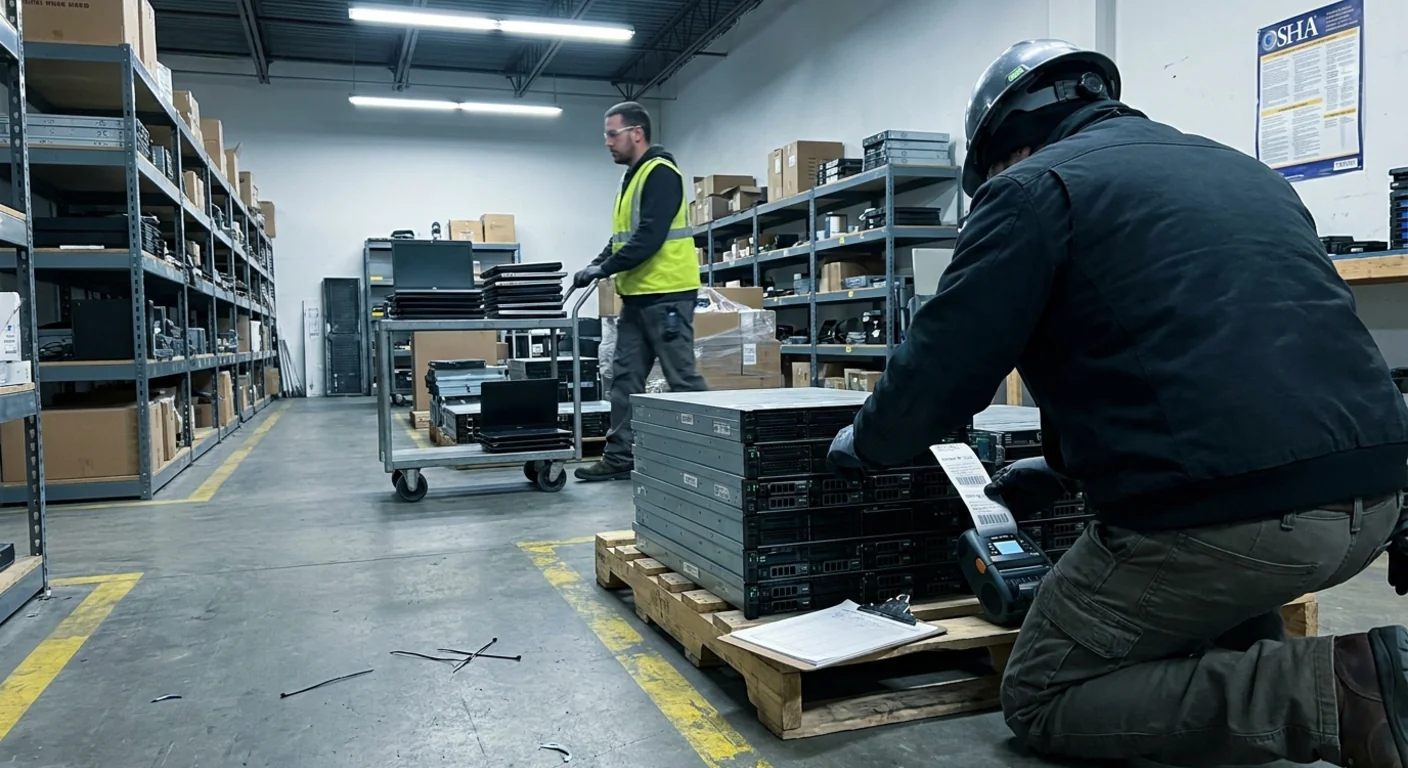
Information Technology Asset Disposition (ITAD) has evolved beyond simple equipment disposal into a strategic business function that supports circular economy principles. As organizations across Chicago and the broader Illinois region upgrade technology infrastructure, understanding how ITAD connects to circular economy goals helps companies make informed decisions about retiring equipment while protecting sensitive data and supporting sustainability objectives.
1. Understanding ITAD in the Circular Economy Context
Information Technology Asset Disposition refers to the secure and environmentally responsible management of retiring IT equipment. This includes computers, servers, networking hardware, mobile devices, and data storage equipment that organizations replace during technology refresh cycles. ITAD encompasses the entire process from equipment removal through final disposition, whether through refurbishment for reuse, component recovery, or sustainable recycling.
The circular economy framework emphasizes keeping materials and products in use at their highest value for as long as possible. This approach contrasts with traditional linear models where equipment moves from purchase to use to disposal. Within a circular model, ITAD serves as the critical transition point that determines whether retiring assets continue productive life through refurbishment, contribute components for repair and remanufacturing, or return to the materials stream through proper recycling.
For Illinois businesses, ITAD decisions directly impact both operational efficiency and environmental outcomes. Equipment that retains functional value can be refurbished and remarketed, recovering portion of original investment. Components from non-functional equipment can support repair operations. Materials from equipment beyond repair can be processed to recover metals, plastics, and other resources.
2. Asset Inventory and Chain of Custody Documentation
Effective ITAD begins with comprehensive asset inventory and tracking. Before equipment leaves your facility, creating detailed records of each asset provides the foundation for value recovery, compliance documentation, and security accountability. This inventory typically includes make, model, serial numbers, asset tags, and general condition assessments that inform downstream processing decisions.
Chain of custody documentation tracks each asset from the moment it leaves your control through final disposition. This documentation serves multiple purposes including security auditing, compliance reporting, and verification that assets were handled according to your organization's requirements. For businesses managing sensitive data or operating under regulatory frameworks, unbroken chain of custody provides evidence that equipment was handled appropriately throughout the ITAD process.
The circular economy depends on transparent material flows that allow accurate tracking of how equipment moves through refurbishment, repair, and recycling channels. Detailed inventory and custody records enable businesses to report on sustainability outcomes, quantify materials diverted from disposal, and verify that equipment reached appropriate end markets. These records also support internal asset management by identifying patterns in equipment lifecycle, informing future purchasing decisions, and highfacility equipment opportunities to extend useful life through better maintenance or redeployment strategies.
Chicago Shredder provides detailed inventory documentation and chain of custody tracking for all equipment collected from Illinois business locations. This documentation supports both your internal record-keeping requirements and provides the transparency needed to verify circular economy outcomes.
3. Secure Data Destruction in ITAD Programs
Data security remains the primary concern for most organizations implementing ITAD programs. Retiring IT equipment often contains sensitive business information, customer data, financial records, and proprietary materials that must be rendered unrecoverable before equipment leaves organizational control. Secure data destruction practices form the foundation of responsible ITAD, enabling organizations to pursue circular economy goals without compromising information security.
Data destruction methods vary based on equipment type, data sensitivity, and whether the equipment will be refurbished for reuse or processed for recycling. For equipment destined for refurbishment, data sanitization using software-based overwriting methods following NIST SP 800-88 guidelines removes data while preserving equipment functionality. For equipment being recycled, physical destruction methods provide the highest security assurance. Chicago Shredder operates an on-site hard drive crusher at our Addison, Illinois facility, physically destroying drives before materials enter the recycling stream.
The relationship between data destruction and circular economy goals requires balancing security requirements with material recovery opportunities. Destroying equipment that could be refurbished eliminates potential value recovery and increases material processing requirements. However, destroying data storage devices that cannot be reliably sanitized protects against data breaches that could result from refurbished equipment. Industry standards including DoD 5220.22-M standard and NIST SP 800-88 guidelines provide frameworks for making appropriate destruction decisions based on data sensitivity and equipment condition.
This documentation typically includes detailed inventories of destroyed devices, destruction methods used, dates of destruction, and certificates of destruction that verify completion.
4. Refurbish Versus Recycle Decision Framework
Maximizing circular economy outcomes requires evaluating each retiring asset to determine its highest-value disposition path. This evaluation considers equipment functionality, remaining useful life, market demand, data security requirements, and processing costs. Equipment that retains significant functional value and can be securely sanitized represents the best opportunity for life extension through refurbishment and resale into secondary markets.
The refurbish decision begins with functional testing to assess whether equipment operates as designed. Working equipment with current specifications may have substantial secondary market value, particularly for businesses or educational institutions with less demanding performance requirements. Equipment with minor defects may be economical to repair if replacement parts are available and labor costs remain reasonable relative to market value. Non-functional equipment typically moves to the recycling stream, though some devices may provide parts for repairing similar models.
Data security requirements significantly influence refurbish versus recycle decisions. Equipment containing highly sensitive data or operating in regulated environments may require physical destruction regardless of functionality, as organizations cannot accept any data recovery risk. Equipment with lower sensitivity data may be suitable for refurbishment after thorough sanitization. Making appropriate determinations requires understanding both your organization's data classification system and the technical capabilities of various sanitization methods.
Market conditions also affect optimal disposition decisions. Equipment models with strong secondary demand justify greater refurbishment investment, while obsolete equipment with minimal market value moves directly to recycling.
5. Secure Processing and Downstream Accountability
For Illinois businesses pursuing circular economy goals, working with processors provides assurance that materials are handled responsibly throughout the recycling chain and that no materials are knowingly disposed of in landfills when viable recycling or recovery options exist.
Processing facilities must document where materials flow after leaving their control, ensuring that equipment sold for reuse reaches appropriate markets and that materials sent for further processing go to facilities with documented capabilities to handle them responsibly. This downstream tracking prevents equipment from reaching informal processing operations where materials may be mishandled.
Circular economy principles depend on material transparency and accountability throughout processing chains. Supplier requirements for downstream tracking align with circular economy goals by ensuring materials remain in documented channels where they can be properly recovered and returned to manufacturing supply chains. This transparency enables businesses to report meaningful sustainability outcomes rather than simply transferring materials to vendors with unknown practices.
6. Data Disposal Considerations
Understanding how ITAD intersects with various regulatory frameworks helps organizations design programs that meet legal obligations while pursuing sustainability goals.
Data protection requirements vary by industry and data type. Healthcare organizations handling protected health information operate under HIPAA requirements designed to protect patient privacy. Financial institutions managing customer financial data address GLBA requirements for information security. Public companies maintaining financial records address SOX requirements for record retention and destruction. Educational institutions handling student information address FERPA requirements. While these frameworks differ in specifics, all emphasize secure data handling throughout the information lifecycle including proper destruction when data is no longer needed.
Environmental compliance requirements in Illinois include responsible management of electronic waste and proper handling of hazardous materials contained in some electronic equipment. The Illinois Electronic Products Recycling and Reuse Act establishes requirements for electronics recycling, though it primarily addresses manufacturers and collectors rather than end users. However, businesses benefit from working with processors that maintain documented environmental management systems and can provide verification that materials were handled according to applicable requirements.
While outsourcing ITAD services transfers some compliance responsibilities to the processor, organizations retain accountability for vendor selection and oversight.
7. Chicago-Area Logistics Advantages for ITAD Services
Location factors significantly into effective ITAD program implementation. Chicago's position as a major business center with extensive logistics infrastructure provides Illinois businesses with access to processing facilities, secondary markets, and material recovery operations that support efficient ITAD operations. Proximity to processing infrastructure reduces transportation costs, shortens equipment custody periods, and enables more frequent pickups that prevent retiring equipment from accumulating at business locations.
The Chicago metropolitan area hosts significant electronics refurbishment and recycling infrastructure serving businesses throughout Illinois and surrounding states. This regional processing capacity means retiring equipment can reach processing facilities quickly without extensive transportation through multiple jurisdictions. Shorter transportation distances reduce both costs and environmental impacts while enabling better chain of custody management. For businesses with multiple Illinois locations, regional processing facilities can efficiently handle collections from various sites while maintaining consolidated reporting.
Secondary markets for refurbished equipment also benefit from Chicago's logistics advantages. The region's diverse business base creates demand for refurbished equipment across multiple sectors including small businesses, nonprofits, educational institutions, and startups seeking cost-effective technology solutions. Strong local secondary markets improve the economics of refurbishment operations, making it viable to refurbish equipment that might otherwise be recycled in regions with weaker demand.
Chicago Shredder serves businesses throughout the Chicago metropolitan area and broader Illinois region from our Addison, Illinois facility. This location provides efficient access to businesses throughout the region while connecting to the broader logistics infrastructure that supports material recovery and secondary market distribution. Our local presence enables responsive service including equipment pickups scheduled to accommodate your operational requirements while minimizing disruption to business activities.
8. Frequently Asked Questions
How does ITAD differ from simply recycling old computers?
ITAD encompasses the entire disposition process including asset inventory, data security, value recovery assessment, and appropriate processing through refurbishment or recycling channels. Simple recycling focuses only on material recovery, potentially missing opportunities for equipment reuse or failing to address data security requirements. Comprehensive ITAD evaluates each asset to determine its highest-value disposition while maintaining security and compliance standards.
What data destruction method is most appropriate for equipment being refurbished?
Equipment destined for refurbishment typically requires data sanitization methods that remove data while preserving functionality. Software-based overwriting following NIST SP 800-88 guidelines provides effective data removal for most business applications. Equipment containing highly sensitive data or operating under strict regulatory requirements may require physical destruction regardless of functionality, eliminating refurbishment as an option for those specific assets.
How can I verify that my retiring equipment was processed responsibly?
Request documentation including detailed inventory records, chain of custody tracking, certificates of data destruction or recycling, and downstream processing information.
What equipment types can be refurbished versus recycled?
Functional equipment with current specifications and strong secondary market demand represents the best refurbishment candidates, including recent-generation computers, servers, networking equipment, and mobile devices. Older equipment, non-functional devices, obsolete technology, and equipment requiring expensive repairs typically move directly to recycling. Data security requirements also influence this decision, as equipment with highly sensitive data may require physical destruction regardless of functionality.
How does ITAD support circular economy goals?
ITAD serves as the critical decision point that determines whether retiring equipment continues productive use through refurbishment, provides components for repair operations, or returns materials to manufacturing supply chains through recycling. Effective ITAD maximizes value retention by channeling assets to their highest-value outcome while maintaining security and environmental standards. This approach keeps materials in productive use longer and reduces demand for virgin resource extraction.
By Choose a recycler that documents chain of custody and provides a Certificate of Recycling. The Chicago region's processing infrastructure and logistics advantages position Illinois businesses to implement efficient ITAD operations that serve both business and environmental objectives. Contact us at 866-770-2650 to discuss how our services can support your organization's ITAD requirements and circular economy objectives, or schedule a pickup to begin responsibly managing your retiring IT equipment.
Ready to schedule a pickup?
Call 866-770-2650 or request a quote online. Every pickup includes clear service documentation.