
IT asset disposition (ITAD) represents a strategic opportunity for Chicago businesses to recover value from retired technology while meeting security and compliance requirements. When computers, servers, and networking equipment reach end of life, organizations face critical decisions about data protection, environmental responsibility, and potential asset recovery.
1. Understanding IT Asset Disposition
IT asset disposition encompasses the business processes and services involved in retiring technology equipment while maximizing value recovery and minimizing risk. Unlike simple equipment disposal, ITAD includes asset inventory, data sanitization, equipment evaluation, refurbishment decisions, recycling coordination, and documentation throughout the entire chain of custody.
Chicago organizations ranging from healthcare facilities to financial services firms to manufacturing operations generate continuous streams of retired IT equipment. Desktop computers typically operate for three to five years before replacement, while servers and networking equipment follow similar cycles. This constant refresh creates both challenges and opportunities for businesses seeking to manage technology transitions efficiently.
The financial impact of professional ITAD extends beyond simple equipment disposal costs. The choice between treating retired equipment as waste versus treating it as assets with remaining value fundamentally changes the economic equation.
2. Asset Inventory and Chain of Custody Documentation
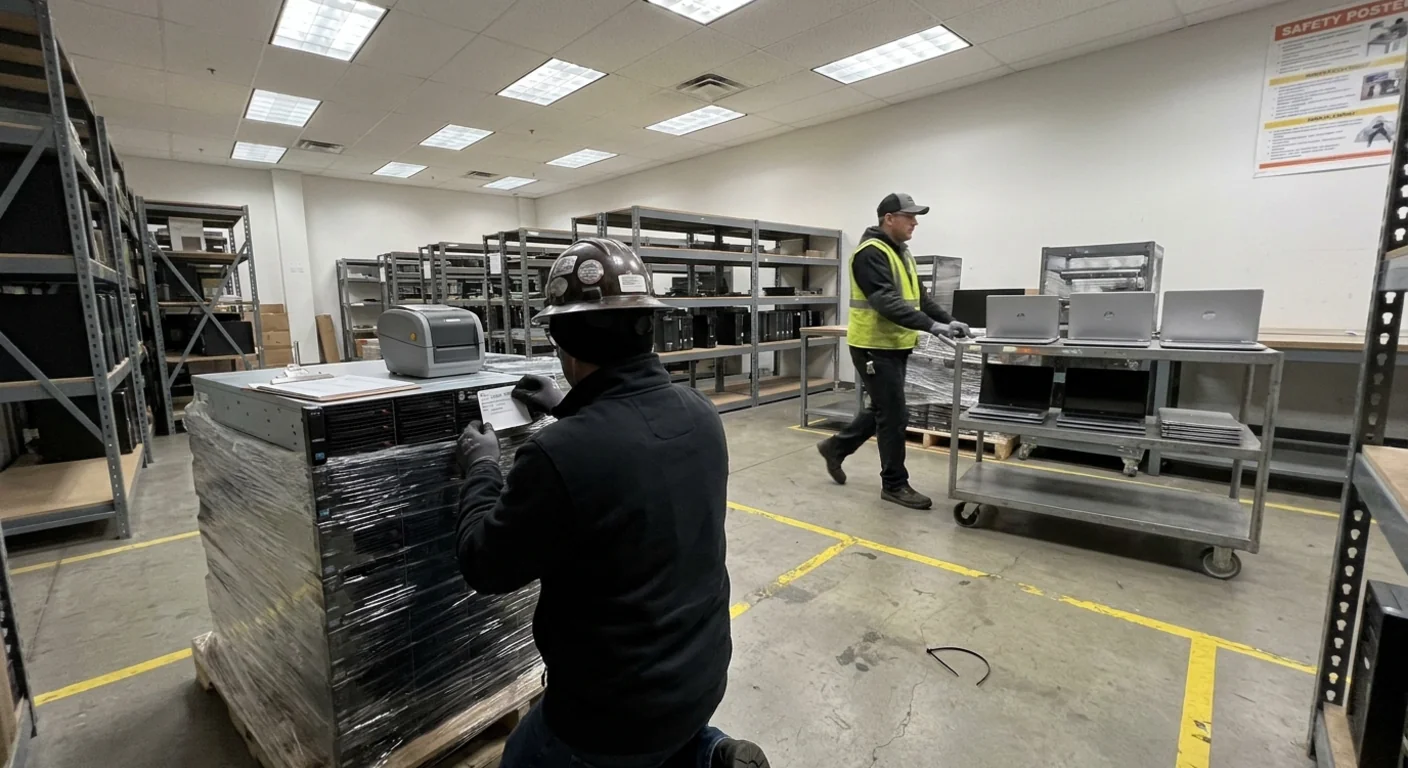
Effective ITAD begins with detailed asset inventory that captures serial numbers, equipment types, and relevant specifications for every item entering the disposition process. This inventory forms the foundation for tracking equipment through each subsequent step, creating an auditable record that many compliance frameworks require.
Chain of custody documentation tracks each piece of equipment from the moment it leaves your facility through final disposition, whether that means resale, component recovery, or material recycling. This documentation includes pickup records, transport manifests, processing records, and certificates of destruction or recycling. Organizations subject to regulatory oversight often need this documentation to demonstrate proper handling of equipment that previously stored sensitive information.
The inventory process also enables accurate valuation of retiring equipment. Computers and servers that remain functional may generate revenue through remarketing channels, while equipment beyond economical repair still contains valuable materials including precious metals and recyclable components. Understanding what you have allows for optimization decisions that maximize overall return.
3. Secure Data Destruction in the ITAD Process
Data security represents the most critical element of IT asset disposition. Hard drives, solid state drives, and other storage media retain information until properly sanitized, creating potential exposure if equipment enters secondary markets or recycling streams without adequate data destruction.
Chicago Shredder operates an on-site hard drive crusher at our Addison, Illinois facility, providing physical destruction that renders data unrecoverable. This method addresses the highest security requirements and provides definitive assurance that information cannot be reconstructed through any means. Physical destruction proves particularly important for equipment that stored regulated information including healthcare records, financial data, or personally identifiable information.
For equipment designated for resale or redeployment, data sanitization software meeting NIST SP 800-88 guidelines provides an alternative approach that preserves equipment functionality while removing data. The choice between physical destruction and software sanitization depends on your security requirements, compliance obligations, and whether equipment will be remarketed.
All data destruction services include detailed certificates documenting the serial numbers of destroyed devices, the destruction method employed, and the date of destruction.
4. Refurbish Versus Recycle Decision Framework
Maximizing ROI from retiring IT assets requires systematic evaluation of which equipment merits refurbishment for resale versus recycling for material recovery. This decision impacts both the financial return and the environmental benefit of the disposition process.
Equipment evaluation considers factors including age, condition, market demand, and refurbishment costs. Desktop computers and laptops less than five years old with functional components often generate meaningful resale value, particularly when processors, memory, and storage meet current market requirements. Servers and networking equipment follow similar patterns, though enterprise equipment may maintain value longer due to different replacement cycles.
Equipment that falls below economical repair thresholds enters material recovery streams where valuable components and materials are extracted. Modern electronics contain recoverable metals including gold, silver, copper, and palladium, along with recyclable plastics and glass. While material recovery generates lower returns than equipment resale, it still produces value while supporting environmental objectives.
The evaluation process also identifies equipment suitable for donation programs, which may provide tax benefits while extending useful life. Chicago Shredder works with clients to identify opportunities across the full spectrum from resale through donation to material recovery, optimizing returns while meeting your specific organizational objectives.
5. More to Consider
Environmental responsibility in IT asset disposition extends beyond individual equipment to encompass downstream processing of all materials.
This secure structure provides assurance that equipment entering the ITAD process receives environmentally responsible handling regardless of final disposition. Components unsuitable for reuse enter established recycling streams where materials are recovered and reintroduced into manufacturing supply chains, closing the loop on electronic product lifecycles.
Certificates of recycling detail the materials processed and Choose a recycler that documents chain of custody and provides a Certificate of Recycling.
6. Data Disposal Considerations
IT asset disposition intersects with multiple regulatory and compliance frameworks depending on your industry and the types of data your equipment processed. Healthcare organizations face HIPAA requirements for protecting patient information, financial services firms must address GLBA and SOX considerations, and educational institutions navigate FERPA obligations.
Documentation represents a critical compliance element across all frameworks. Certificates of destruction prove that storage devices containing regulated information received appropriate sanitization. Chain of custody records demonstrate continuous control of assets from your facility through final disposition. Asset inventories establish what equipment was processed and when, supporting audit requirements and retention schedule compliance.
Data destruction methods must meet or exceed standards referenced in applicable regulations. Physical security during transport and processing must prevent unauthorized access to equipment or data.
Chicago Shredder maintains processes designed to support compliance requirements across healthcare, financial services, education, and other regulated industries.
7. Chicago-Area Logistics Advantages
Location significantly impacts the economics and efficiency of IT asset disposition programs. Chicago Shredder's Addison, Illinois facility provides Chicago-area businesses with logistics advantages that reduce costs and improve service responsiveness compared to distant processing facilities.
Local pickup services eliminate the need for businesses to transport equipment to distant facilities or coordinate complex shipping arrangements. Our team schedules pickups that align with your operational requirements, whether you need single-event service for major technology refreshes or recurring pickups for ongoing equipment retirement. Proximity enables flexibility that distant providers cannot match.
The transportation component of ITAD carries both cost and risk implications. Shorter transport distances reduce the time equipment spends in transit, minimizing exposure to potential security incidents. Local processing also reduces the carbon footprint associated with equipment disposition, supporting environmental objectives beyond the recycling process itself.
Chicago's position as a major business center means local ITAD providers understand the operational realities of the region's diverse industries. From healthcare networks spanning multiple suburban locations to downtown financial firms with concentrated equipment deployments to manufacturing operations throughout the metro area, Chicago Shredder works with organizations across the full spectrum of local business operations.
For businesses evaluating ITAD service providers, geographic proximity translates into practical advantages including faster response times, easier coordination, and the ability to visit processing facilities to verify operations firsthand.
8. Frequently Asked Questions
What types of IT equipment does Chicago Shredder accept for disposition?
We accept comprehensive IT equipment including desktop computers, laptops, servers, networking equipment, storage devices, monitors, printers, and peripherals. Our ITAD services accommodate both small-scale dispositions from individual offices and large-scale projects involving hundreds or thousands of units from enterprise technology refreshes.
How does Chicago Shredder ensure data security during the ITAD process?
Data security incorporates multiple layers including documented chain of custody from pickup through processing, secure transport procedures, and physical destruction of storage devices at our on-site hard drive crusher in Addison, Illinois.
Can equipment be picked up from multiple Chicago-area locations?
Yes, we coordinate pickups across multiple locations throughout the Chicago metropolitan area. Whether you operate from a single downtown office or maintain facilities spanning the suburbs, our logistics team schedules efficient pickup routes that consolidate equipment collection while minimizing disruption to your operations.
How quickly can Chicago Shredder schedule equipment pickup?
We typically respond to pickup requests within one business day and can often accommodate expedited scheduling for urgent needs. For ongoing ITAD requirements, we establish recurring pickup schedules aligned with your technology refresh cycles and operational preferences.
Does Chicago Shredder handle IT equipment that stored regulated healthcare or financial data?
Yes, our ITAD processes are designed to support compliance requirements for organizations subject to HIPAA, GLBA, SOX, FERPA, and other regulatory frameworks.
IT asset disposition represents far more than equipment disposal when approached strategically. If your organization faces upcoming equipment retirements or seeks to optimize your existing disposition processes, contact Chicago Shredder at 866-770-2650 to discuss your specific requirements or schedule a pickup for retiring IT equipment.
Ready to schedule a pickup?
Call 866-770-2650 or request a quote online. Every pickup includes clear service documentation.