

Electronics disposal presents unique challenges for businesses throughout the Chicago area. Unlike traditional waste, electronic devices contain both valuable materials that should be recovered and sensitive data that must be protected. Improper disposal can lead to data breaches, regulatory compliance issues, and environmental harm. Understanding the proper approach to electronics recycling helps businesses protect their information, meet their responsibilities, and contribute to a sustainable community. This guide walks through the essential considerations for safe and secure electronics disposal in the Chicago region.
1. Why Proper Electronics Disposal Matters for Chicago Businesses
Electronic devices have become central to business operations across every industry, from healthcare facilities in the Loop to manufacturing companies in suburban Cook County. These devices store enormous amounts of sensitive information, including customer records, financial data, employee information, and proprietary business intelligence. When equipment reaches end of life, that data remains on hard drives, solid-state drives, and internal memory chips.
Simply deleting files or reformatting drives does not eliminate data. Information remains on storage media and can be recovered using readily available software tools. This creates significant risk when devices are discarded through standard waste channels or sold without proper data sanitization. Data breaches resulting from improper disposal can lead to regulatory penalties, customer notification costs, legal liability, and lasting damage to business reputation.
Beyond data security concerns, electronics contain materials that require specialized handling. Heavy metals, flame retardants, and other substances can harm the environment when electronics end up in landfills. Illinois regulations and federal guidelines establish requirements for responsible electronics management. Businesses that ignore these obligations face potential fines and legal consequences. Proper disposal through processors addresses both the security and environmental dimensions of electronics retirement.
2. Understanding Data Security Requirements in Electronics Disposal
Different industries face different regulatory frameworks that establish expectations for data protection during the disposal process. Healthcare organizations working with protected health information must consider HIPAA requirements designed to support patient privacy throughout the data lifecycle. Financial institutions handling customer financial records operate under regulations including the Gramm-Leach-Bliley Act. Educational institutions managing student records must address FERPA considerations.
While specific requirements vary by industry and data type, the fundamental principle remains consistent: organizations must ensure that sensitive information is rendered unrecoverable before devices leave their control. This applies to obvious storage devices like hard drives and backup tapes, but also to copiers with internal hard drives, multifunction printers with memory, mobile devices, and even networking equipment that may cache data.
Data sanitization methods fall into three general categories: physical destruction, degaussing for magnetic media, and software-based overwriting. Each approach has appropriate use cases. Physical destruction provides the highest assurance for highly sensitive data. Chicago Shredder maintains an on-site hard drive crusher at the Addison, Illinois facility, allowing for immediate physical destruction under client supervision when desired. For devices that will be refurbished for reuse, certified data wiping following NIST SP 800-88 guidelines provides an alternative approach. The key is matching the sanitization method to the sensitivity of the data and the intended disposition of the equipment.
3. The Electronics Recycling Process: From Pickup to Processing
Proper electronics recycling involves multiple steps designed to protect data, recover valuable materials, and handle hazardous components responsibly. The process begins with secure collection from the business location. Reputable processors provide documented chain of custody, tracking equipment from the moment it leaves your facility through final disposition. This documentation serves as evidence of proper disposal for audit and compliance purposes.
Upon arrival at the processing facility, equipment undergoes inventory and data sanitization according to the service level selected.
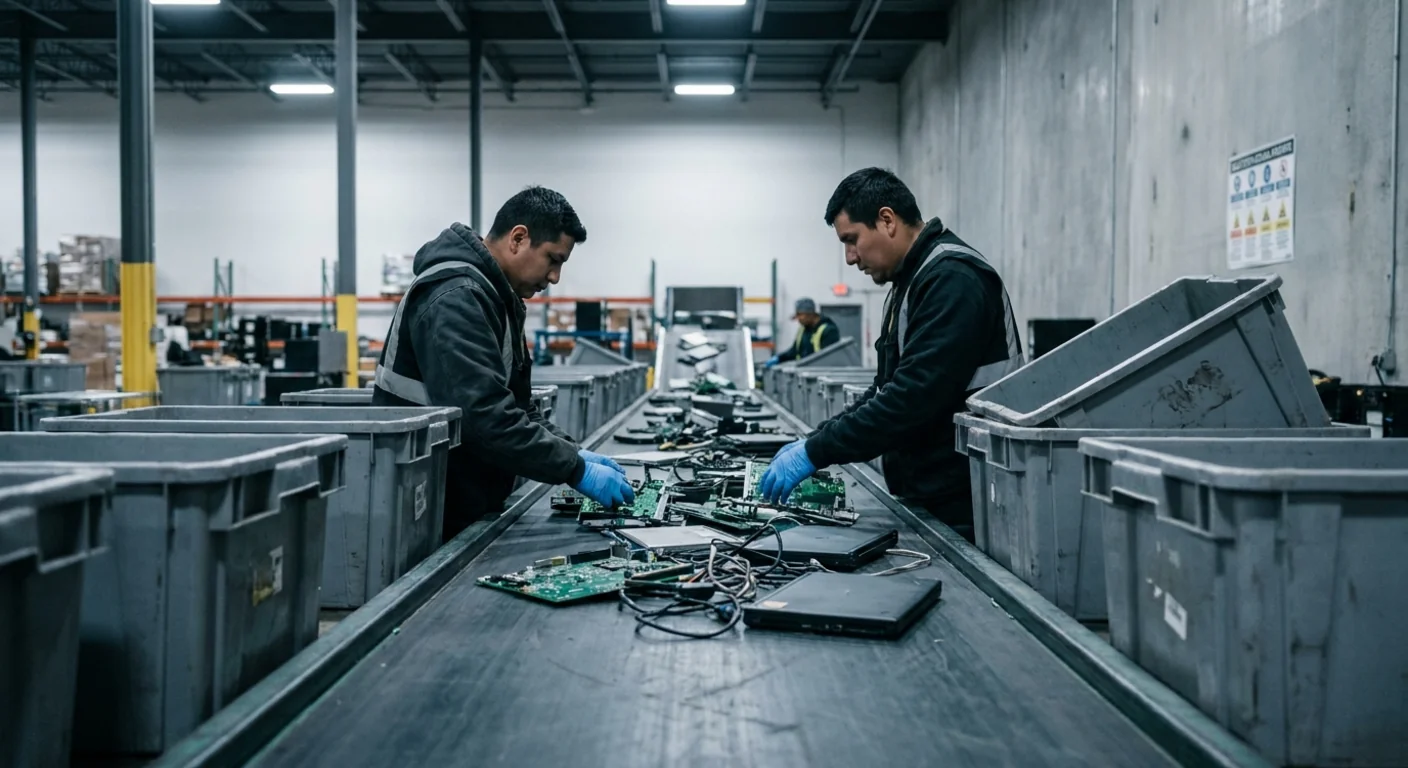
After data sanitization, equipment enters the recycling stream. Items that retain functional value may be tested, refurbished, and remarketed to extend their useful life and maximize value recovery. Equipment that cannot be reused is carefully disassembled. Materials are sorted into categories: ferrous and non-ferrous metals, plastics, glass, circuit boards, and components requiring specialized handling. These material streams are directed to appropriate downstream processors.
4. What Equipment Requires Secure Disposal
Most businesses underestimate the range of electronic devices that contain sensitive data or require specialized disposal. Desktop computers and laptops are obvious candidates, but the list extends much further. Servers, storage arrays, and backup systems contain vast amounts of business-critical data. Mobile devices including smartphones and tablets store email, contacts, and access credentials. Copiers and multifunction printers frequently have internal hard drives that retain images of every document processed.
Networking equipment presents often-overlooked security concerns. Routers, switches, and firewalls may store configuration data, network credentials, and logs of network activity. Point-of-sale systems in retail environments contain customer payment information. Security camera systems and digital video recorders store surveillance footage. Even desk phones and conference room equipment may cache call logs and contact information.
Beyond IT equipment, businesses generate electronic waste from other sources. Audio-visual equipment, kitchen appliances in break rooms, manufacturing equipment with electronic controls, and medical devices all require proper disposal. The common thread is that these items contain materials requiring specialized recycling and potentially store information about business operations. A comprehensive electronics disposal program accounts for the full range of devices rather than focusing solely on obvious IT assets.
5. Choosing a Secure Electronics Recycling Partner
Selecting the right partner requires looking beyond price to evaluate credentials, processes, and accountability.
Chicago businesses should Choose a recycler that documents chain of custody and provides a Certificate of Recycling. Certificates of recycling or destruction provide evidence that items were handled properly, information that may be needed for audit purposes or in the event of a data breach investigation. Processors should be transparent about their downstream vendors and willing to discuss how different material types are managed.
Location matters for both logistical and oversight reasons. Working with a processor based in the Chicago area allows for easier coordination, potential facility tours to observe operations firsthand, and faster response times. Chicago Shredder serves businesses throughout the Chicago metropolitan area from the Addison facility, providing convenient access for organizations across the region. The ability to witness on-site hard drive destruction gives clients direct verification that data has been rendered unrecoverable before devices enter the recycling stream.
6. Implementing an Electronics Disposal Program
Effective electronics disposal starts with clear internal policies and procedures. Organizations should establish guidelines for how equipment is retired, who is responsible for coordinating disposal, and what documentation must be maintained. The policy should address the full lifecycle: procurement decisions that consider end-of-life implications, asset tracking during use, and proper retirement procedures when equipment is no longer needed.
Employee education helps prevent accidental data exposure. Staff should understand that they cannot simply discard old electronics in regular trash or donate equipment without approval. Even well-intentioned donations can create data security issues if devices are not properly sanitized first. All electronics should be collected through designated channels and processed by secure recycling providers. Some organizations establish central collection points where employees can bring retired devices, while others prefer department-level coordination with regular scheduled pickups.
Documentation protects the organization and demonstrates compliance with regulatory requirements and internal policies. Maintain records of what was disposed of, when disposal occurred, how data was sanitized, where equipment was processed, and what happened to different material streams. Certificates of recycling and destruction should be retained according to the organization's record retention policies.
7. How Chicago Shredder Supports Safe Electronics Disposal
Chicago Shredder provides comprehensive electronics disposal services designed to address both data security and environmental responsibility for businesses throughout the Chicago area.
Services include secure on-site collection with documented chain of custody, multiple data destruction options including on-site hard drive crushing at the Addison facility, and complete processing of the full range of business electronics. Clients receive certificates of recycling and destruction documenting the disposition of their equipment. The team works with businesses to develop pickup schedules that match their needs, whether one-time cleanouts of accumulated equipment or regular ongoing service.
The Addison facility location provides convenient access for organizations across the Chicago metropolitan area, from downtown offices to suburban business parks throughout Cook, DuPage, Lake, Kane, Will, and surrounding counties. For businesses that prefer to witness the destruction of their most sensitive storage devices, on-site crushing services are available. This direct observation provides a high level of assurance that data has been physically destroyed and is designed to be unrecoverable.
8. Frequently Asked Questions
How do I know my data is actually destroyed and not just accessed by someone else?
Working with processors provides independent verification of data destruction practices. Choose a recycler that documents chain of custody and provides a Certificate of Recycling. On-site destruction services allow you to witness the physical destruction of storage devices, providing direct verification that data is rendered unrecoverable.
What happens to electronics after they are collected from my business?
Items are then sorted for reuse or recycling, with functional equipment potentially being refurbished and materials from end-of-life devices being separated and directed to appropriate downstream processors.
Can I just delete files and donate our old computers instead of recycling them?
Simply deleting files does not remove data from storage devices, as information remains recoverable using common software tools. If you wish to donate functional equipment, it should first undergo secure data sanitization to protect your organization's information. Many recycling processors offer data wiping services that prepare devices for reuse while ensuring data security, or you can arrange for physical destruction followed by donation of non-data-bearing components.
How much does electronics recycling cost for businesses?
Costs vary based on the volume and type of equipment, whether you need on-site services, the level of data destruction required, and the frequency of pickups. Some items may have commodity value that offsets processing costs, while others require fees for proper handling. Many businesses find that establishing a regular pickup schedule is more cost-effective than ad hoc disposal, and proper recycling often costs less than the potential consequences of a data breach from improper disposal.
Do you recycle all types of electronics or just computers?
Comprehensive electronics recycling services handle the full range of business electronic equipment, including computers, servers, networking equipment, printers, copiers, mobile devices, telecom equipment, audio-visual systems, and other electronic devices. This broad scope ensures businesses can consolidate their electronics disposal through a single provider rather than managing multiple vendors for different equipment types.
How often should our business schedule electronics recycling pickups?
The ideal frequency depends on your equipment refresh cycles, storage capacity for retired devices, and data security policies. Some organizations prefer quarterly or semi-annual scheduled pickups, while others arrange service as needed when sufficient volume accumulates. Regular scheduled service prevents retired equipment from sitting in storage where it may present security risks and ensures timely disposal. Chicago Shredder typically responds to scheduling requests within one business day to accommodate your timeline.
Safe and secure electronics disposal protects your business data, supports regulatory compliance, and demonstrates environmental responsibility. By understanding the risks of improper disposal, implementing clear internal procedures, and partnering with processors, Chicago-area businesses can confidently manage the retirement of electronic equipment. The combination of proper data destruction and secure, transparent recycling ensures that sensitive information remains protected while valuable materials are recovered and hazardous components are handled appropriately. If your organization needs electronics disposal services, Chicago Shredder provides secure recycling and secure data destruction for businesses throughout the Chicago area. Call 866-770-2650 or schedule a pickup to discuss how we can support your electronics retirement needs.
Ready to schedule a pickup?
Call 866-770-2650 or request a quote online. Every pickup includes clear service documentation.