

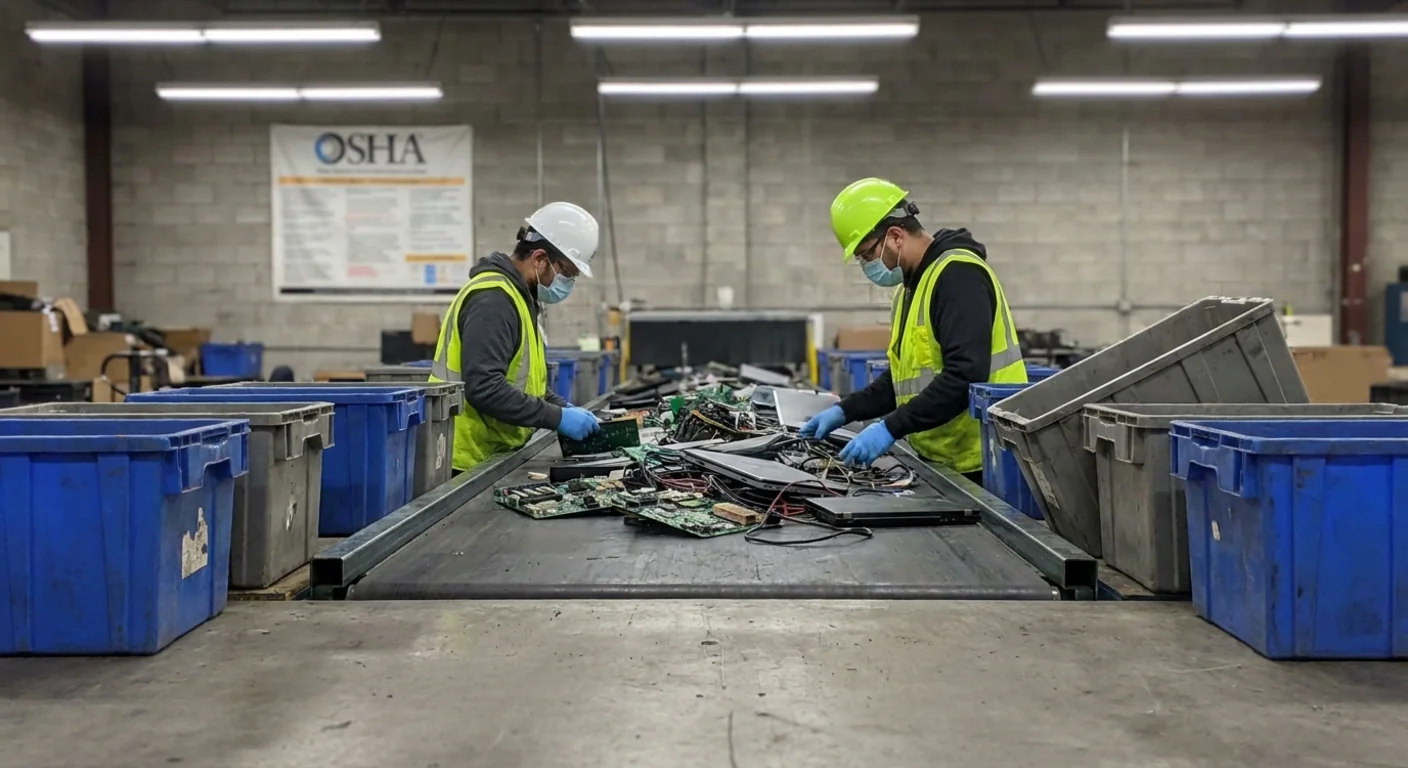
Computer equipment reaches end-of-life faster than ever, leaving Chicago area businesses with growing stacks of outdated desktops, laptops, and servers. Safe disposal requires more than tossing old hardware in the trash. Sensitive data stored on hard drives poses security risks, while improper disposal creates environmental hazards from toxic materials like lead and mercury. This guide covers practical steps for responsible computer equipment recycling, focusing on data security protocols and secure processing methods available to Illinois organizations.
1. Why Computer Equipment Requires Specialized Disposal
Computer equipment contains hazardous materials that demand careful handling. Circuit boards contain lead solder, monitors may include mercury, and batteries contain heavy metals that contaminate soil and groundwater when landfilled. Illinois regulations address these concerns, making proper disposal not just environmentally responsible but legally required for many business electronics.
Beyond environmental considerations, data security drives disposal requirements. Hard drives retain information even after standard deletion or formatting. Industry studies suggest that a significant percentage of resold drives contain recoverable data from previous owners, including financial records, customer information, and proprietary business data. Organizations subject to HIPAA, GLBA, or other regulatory frameworks face particular risks when disposing of equipment without proper data destruction.
The combination of environmental and security concerns makes computer equipment disposal a specialized process. Chicago area businesses need partners who understand both compliance requirements and sustainable recycling practices, ensuring equipment is processed safely while data remains protected throughout the disposal chain.
2. Data Destruction: The Critical First Step
Before any computer equipment leaves your facility, data destruction must occur. Simply deleting files or reformatting drives leaves data vulnerable to recovery through readily available forensic software. Professional data destruction follows documented protocols designed to make information unrecoverable.
Chicago Shredder operates an on-site hard drive crusher at our Addison, Illinois facility, providing physical destruction for drives that cannot be sanitized through software methods. Physical destruction creates a verifiable endpoint for data, particularly important for organizations with strict compliance requirements. The crushing process renders drives mechanically destroyed, eliminating any possibility of data recovery while creating material suitable for secure, transparent recycling.
For drives that can be sanitized, data destruction follows established standards like DoD 5220.22-M or adheres to NIST SP 800-88 guidelines. These approaches overwrite data multiple times, designed to support compliance requirements across various regulatory frameworks. Certificates of destruction provide documentation for your records, supporting audit requirements and demonstrating due diligence in protecting sensitive information.
3. The Secure Electronics Recycling Process
After data destruction, computer equipment enters the recycling stream. Not all recycling operations meet the same standards. Some facilities export equipment to developing countries where environmental and labor protections remain minimal, while others dispose of materials through methods that create environmental harm.
The recycling process separates computer equipment into component materials. Metals like copper, aluminum, and steel are recovered for reuse in manufacturing. Plastics are sorted and processed for material recovery. Hazardous components receive specialized handling to prevent environmental contamination.
4. Planning Your Computer Equipment Disposal
Effective disposal begins with planning. Create an inventory of equipment ready for retirement, noting which items contain hard drives or other data storage media. This inventory supports both security protocols and logistics, ensuring nothing gets overlooked during the disposal process.
Consider timing and volume. Accumulating equipment over time allows for efficient pickup scheduling, particularly beneficial for organizations with multiple locations across the Chicago area. However, avoid storing equipment so long that it creates security risks or takes up valuable space. Finding the right balance depends on your specific operational needs and facility constraints.
Document your disposal process. Maintain records of what equipment was disposed, when it left your facility, and what data destruction methods were applied. Certificates of destruction and recycling documentation should be retained according to your organization's record retention policies, typically three to seven years depending on regulatory requirements.
5. Compliance Considerations for Chicago Businesses
Different industries face varying compliance requirements around computer equipment disposal. Healthcare organizations must consider HIPAA requirements when disposing of systems that stored protected health information. Financial institutions address GLBA obligations. Educational institutions navigate FERPA protections for student records. Each framework establishes expectations for data protection throughout the disposal process.
Illinois state regulations add another compliance layer. The Electronic Products Recycling and Reuse Act prohibits landfill disposal of many electronics, including computers, monitors, and related equipment. Working with a disposal partner designed to support compliance requirements simplifies this process. While ultimate compliance responsibility remains with your organization, partnering with qualified service providers reduces risk and demonstrates good faith efforts to meet regulatory obligations.
6. What Happens to Your Computer Equipment After Pickup
Understanding the downstream process provides confidence in your disposal decisions. After pickup from your Chicago area facility, equipment is transported to our Addison location for initial processing. Hard drives undergo immediate destruction, either through physical crushing or data sanitization protocols, depending on equipment condition and your specific requirements.
Components are then sorted for processing. Complete systems may be tested for potential reuse markets, extending equipment life when feasible and reducing demand for new manufacturing. Equipment beyond reuse is disassembled, with materials separated by type. This sorting maximizes material recovery rates and ensures appropriate handling for hazardous components.
Processed materials enter commodity markets where they become feedstock for new products. The metals recovered from computer equipment offset virgin material extraction. Plastics are reprocessed for various applications. This circular approach reduces environmental impact while supporting the economic viability of environmentally sound recycling operations, creating a sustainable model for electronics disposal in the Chicago region.
7. Scheduling Your Computer Equipment Pickup
Chicago Shredder makes computer equipment disposal straightforward for Illinois businesses. Our service area covers the Chicago metropolitan region, with pickup capabilities scaled to your volume needs. Whether disposing of a few desktop computers or decommissioning an entire data center, we provide appropriate solutions.
Pickup scheduling accommodates your operational requirements. We typically respond to requests within one business day, working with you to find convenient times that minimize disruption to your facility operations. For organizations with regular disposal needs, establishing a recurring schedule ensures consistent service while simplifying internal planning.
Pricing reflects the volume and type of equipment being disposed. Some items have commodity value that offsets disposal costs, while others require processing fees based on material composition and handling requirements. We provide transparent pricing information upfront, allowing you to budget appropriately and avoid surprises. Contact our team to discuss your specific needs and receive a customized quote based on your equipment inventory and disposal timeline.
8. Frequently Asked Questions
What computer equipment can Chicago Shredder recycle?
We handle all types of business computer equipment, including desktop computers, laptops, servers, monitors, keyboards, mice, printers, and related peripherals. Hard drives receive specialized data destruction before recycling. Our service covers complete IT equipment disposal for Chicago area businesses.
How is data destruction verified?
We provide certificates of destruction documenting the data destruction process for your records. Hard drives processed through our on-site crusher at our Addison, Illinois facility are physically destroyed, making data recovery impossible. Certificates include equipment serial numbers and destruction dates, supporting your compliance documentation requirements.
Does computer equipment disposal cost money?
Pricing depends on equipment type and volume. Items with commodity value like desktop computers may offset disposal costs, while monitors and other components typically involve processing fees. We provide transparent pricing based on your specific equipment inventory before scheduling pickup.
Can you handle large-scale computer equipment disposal projects?
Yes, we manage projects of all sizes across the Chicago area, from small office cleanouts to complete data center decommissioning. Our team coordinates logistics, provides appropriate labor and equipment, and ensures efficient project completion while maintaining security protocols throughout the process.
How quickly can you schedule a pickup?
We typically respond to pickup requests within one business day. Actual scheduling depends on your location, equipment volume, and preferred timing. Our team works with you to find convenient pickup times that accommodate your operational needs while ensuring prompt service.
Safe disposal of computer equipment protects both your organization's sensitive data and the environment. Chicago area businesses need partners who understand the intersection of data security requirements and secure, transparent recycling practices. Through secure processing, documented data destruction, and transparent service delivery, proper computer equipment disposal becomes a manageable component of your IT lifecycle. Contact us at 866-770-2650 to discuss your computer equipment disposal requirements, or schedule a pickup through our website to begin the process today.
Ready to schedule a pickup?
Call 866-770-2650 or request a quote online. Every pickup includes clear service documentation.