

Hard drives contain sensitive data that can pose serious risks if not properly destroyed. For Chicago businesses managing end-of-life electronics, understanding the difference between data wiping and physical destruction is critical. Whether you're managing patient records, financial data, or proprietary business information, these insights will help you make informed decisions about protecting your organization's sensitive information.
1. Why Physical Destruction Matters for Data Security
Data wiping software can be effective, but it leaves the hard drive physically intact. This creates a risk if the wiping process fails or if sophisticated recovery techniques are applied to the drive. Physical destruction eliminates this risk by rendering the drive mechanically inoperable.
Industry studies suggest that a significant percentage of used hard drives sold online still contain recoverable data, even after attempts at deletion or formatting. Physical destruction addresses this vulnerability by ensuring that data is designed to be unrecoverable through any known means.
For organizations handling protected health information, financial records, or personal customer data, physical destruction provides an added layer of certainty. The drive components are damaged to the point where reassembly and data recovery become impractical. This approach aligns with security best practices for high-sensitivity data environments.
2. On-Site Hard Drive Crusher at Chicago Shredder's Addison Facility
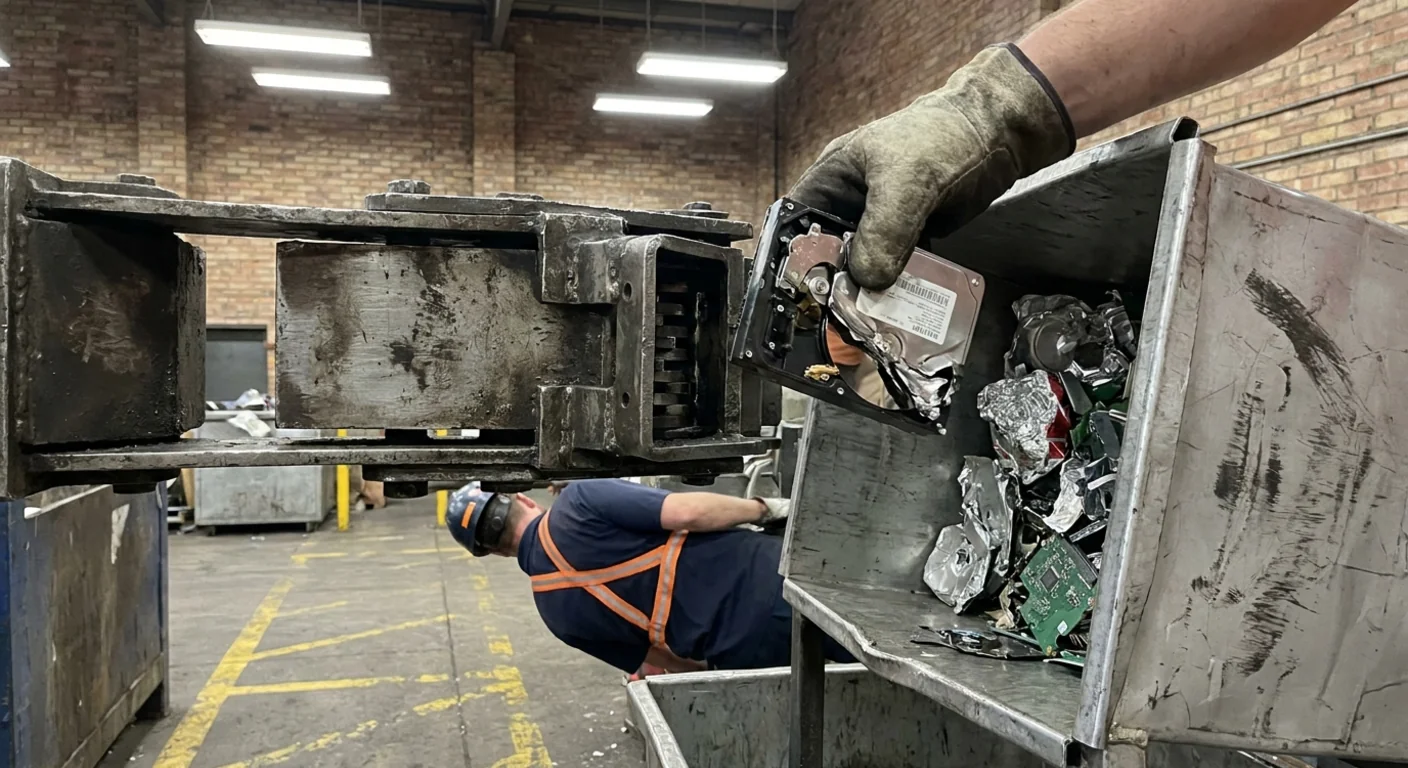
Chicago Shredder operates an on-site hard drive crusher at our Addison, Illinois facility. This equipment physically deforms hard drives, destroying the platters and internal components that store data. The crushing process creates visible damage that makes data recovery attempts extremely difficult.
The on-site crusher allows for immediate processing of hard drives upon arrival at our facility. Drives don't sit waiting for transport to another location, reducing the time window during which they could potentially be accessed. This streamlined approach supports organizations with strict data retention policies and disposal timelines.
After crushing, the destroyed drives are processed for materials recovery. This ensures that no materials are knowingly disposed of in landfills while maintaining the security of your destroyed data.
3. Comparing Destruction Methods: Shredding, Punching, and Wiping
Three primary methods exist for rendering hard drive data inaccessible: physical shredding, punching, and data wiping. Each has specific applications and security levels.
Physical shredding reduces hard drives to small particles, typically less than one inch in size. This method provides the highest level of physical destruction, making any data recovery attempt impossible through conventional or advanced means. Shredding is recommended for drives containing classified or highly sensitive information.
Punching creates holes through the hard drive platters and casing. While less thorough than shredding, punching renders drives inoperable and destroys significant portions of the data storage surface. This method balances security with processing efficiency for large volumes of drives.
Data wiping uses software to overwrite existing data multiple times. The DoD 5220.22-M standard specifies a wiping methodology, though it's important to note this is a standard rather than a certification. NIST SP 800-88 guidelines provide additional framework for media sanitization. Wiping allows drives to be reused but requires verification that the process completed successfully. For maximum security assurance, many organizations combine wiping with physical destruction.
4. Alignment with DoD 5220.22-M Standard and NIST SP 800-88 Guidelines
The DoD 5220.22-M standard outlines a data sanitization methodology involving multiple overwrite passes. While this standard is no longer actively maintained by the Department of Defense, it remains a recognized benchmark in data destruction protocols. Chicago Shredder's physical destruction methods exceed the security level achieved by software-based approaches that follow this standard.
NIST SP 800-88 guidelines categorize media sanitization into clear, purge, and destroy. Physical destruction falls under the "destroy" category, which NIST describes as the most secure option when reuse of the media is not required. Our crushing and shredding processes are designed to support compliance with these guidelines.
For Chicago businesses subject to regulatory requirements, understanding these frameworks helps demonstrate due diligence in data protection. Physical destruction provides documentation that data was destroyed beyond recovery, which can be important during audits or compliance reviews. The combination of industry-recognized standards and physical destruction methods creates a comprehensive approach to data security.
5. Certificates of Destruction and Chain of Custody Documentation
A certificate of destruction serves as documented proof that your hard drives were securely destroyed. Chicago Shredder provides certificates detailing the date of destruction, description of materials processed, and destruction method used.
Chain of custody tracking documents the movement of hard drives from your facility to our destruction site. This includes pickup details, transport security measures, and receiving confirmation at our Addison location. Maintaining chain of custody helps verify that drives were not accessed or compromised during the destruction process.
These documents become part of your compliance records and can be presented during audits or regulatory reviews. For organizations in healthcare, finance, or education sectors, maintaining thorough destruction records demonstrates commitment to data protection requirements. Certificates and chain of custody documentation should be retained according to your industry's record retention schedules.
6. Compliance Support for HIPAA, GLBA, and FACTA Requirements
Healthcare organizations subject to HIPAA regulations must ensure that electronic protected health information is rendered unreadable and indecipherable. Physical hard drive destruction is designed to support compliance with HIPAA's disposal requirements by making data recovery impractical.
Financial institutions operating under GLBA and FACTA regulations face similar requirements for customer information disposal. The FACTA Disposal Rule specifically requires that consumer information be properly disposed of to prevent unauthorized access. Physical destruction methods address these requirements by eliminating the possibility of data recovery from disposed drives.
Chicago Shredder's services are designed to support compliance requirements across various regulatory frameworks. For questions about how our services align with your specific requirements, our team typically responds within one business day at 866-770-2650.
7. Why Chicago Businesses Choose Chicago Shredder for Hard Drive Destruction
Local businesses throughout the Chicago area select Chicago Shredder for convenient, secure hard drive destruction services. Our Addison, Illinois facility provides accessibility for organizations across Cook County, DuPage County, and surrounding regions. This local presence means faster turnaround times and the ability to schedule pickups that align with your operational needs.
Chicago-area businesses across healthcare, finance, education, legal, and professional services sectors rely on our hard drive destruction services. Whether you're decommissioning a single server or managing a complete data center refresh, our team can accommodate varying volume requirements.
8. Frequently Asked Questions
How is physical destruction more secure than data wiping software?
Physical destruction renders the hard drive mechanically inoperable by damaging the platters and internal components that store data. Even if data wiping software completes successfully, the drive remains intact and theoretically vulnerable to sophisticated recovery techniques. Physical destruction eliminates this risk entirely by making the drive unusable.
What information is included on the certificate of destruction?
Certificates of destruction include the date of destruction, description of materials processed, and the destruction method used.
Can solid-state drives (SSDs) be destroyed using the same methods as traditional hard drives?
Yes, physical destruction methods such as crushing and shredding are effective for both traditional hard drives and solid-state drives. While the internal architecture differs, physical destruction damages the storage components in both drive types, making data recovery designed to be impractical.
How does Chicago Shredder handle chain of custody during transport?
Chain of custody documentation tracks your hard drives from pickup at your facility through arrival at our Addison location. This includes pickup details, transport security measures, and receiving confirmation. This documentation helps verify that drives were not accessed during the destruction process.
What happens to hard drives after they are physically destroyed?
After destruction, hard drive materials are processed for recovery of metals and other components. No materials are knowingly disposed of in landfills, supporting environmental responsibility alongside data security.
How quickly can Chicago Shredder schedule a pickup for hard drive destruction?
We typically respond to pickup requests within one business day. Scheduling flexibility depends on volume and location, but our local Addison facility allows us to serve Chicago-area businesses with convenient turnaround times. Contact us at 866-770-2650 to discuss your specific timeline requirements.
Secure hard drive destruction requires understanding the differences between data wiping and physical destruction methods. For Chicago businesses managing sensitive information, physical destruction provides the highest level of security assurance by rendering data designed to be unrecoverable. Whether you're managing a single drive or coordinating enterprise-scale destruction, our local team can accommodate your requirements. Contact Chicago Shredder at 866-770-2650 or schedule a pickup to discuss secure hard drive destruction services for your organization.
Ready to schedule a pickup?
Call 866-770-2650 or request a quote online. Every pickup includes clear service documentation.