
IT asset disposition, or ITAD, is the process of safely retiring and responsibly managing end-of-life technology equipment. For Chicago-area organizations, ITAD encompasses everything from initial asset inventory and secure data destruction to refurbishment, resale, or environmentally sound recycling. When executed properly, ITAD protects sensitive information, supports compliance requirements, and diverts electronic waste from landfills. Chicago Shredder offers comprehensive ITAD services designed to help businesses, healthcare facilities, educational institutions, and government agencies manage technology transitions with confidence and environmental responsibility.
1. What IT Asset Disposition Means for Your Organization
IT asset disposition refers to the entire lifecycle of retiring technology assets, from computers and servers to networking equipment and mobile devices. The process begins when equipment reaches end-of-life status, whether due to hardware failure, technology upgrades, lease expirations, or organizational changes.
For organizations in Chicago and throughout Illinois, ITAD has become increasingly important as data privacy regulations evolve and environmental awareness grows. Equipment retirement is no longer simply a matter of discarding old computers. Organizations must document chain of custody, Choose a recycler that documents chain of custody and provides a Certificate of Recycling. Industry studies suggest that improper disposal of electronic devices remains a leading cause of data breaches, making secure ITAD processes essential for risk management.
Chicago Shredder approaches ITAD as a comprehensive service that addresses these interconnected needs. Rather than treating data destruction, equipment refurbishment, and electronics recycling as separate activities, we integrate these processes into a coordinated workflow. This approach ensures nothing falls through the cracks and organizations maintain complete documentation throughout the disposition process.
2. Asset Inventory and Chain of Custody Documentation
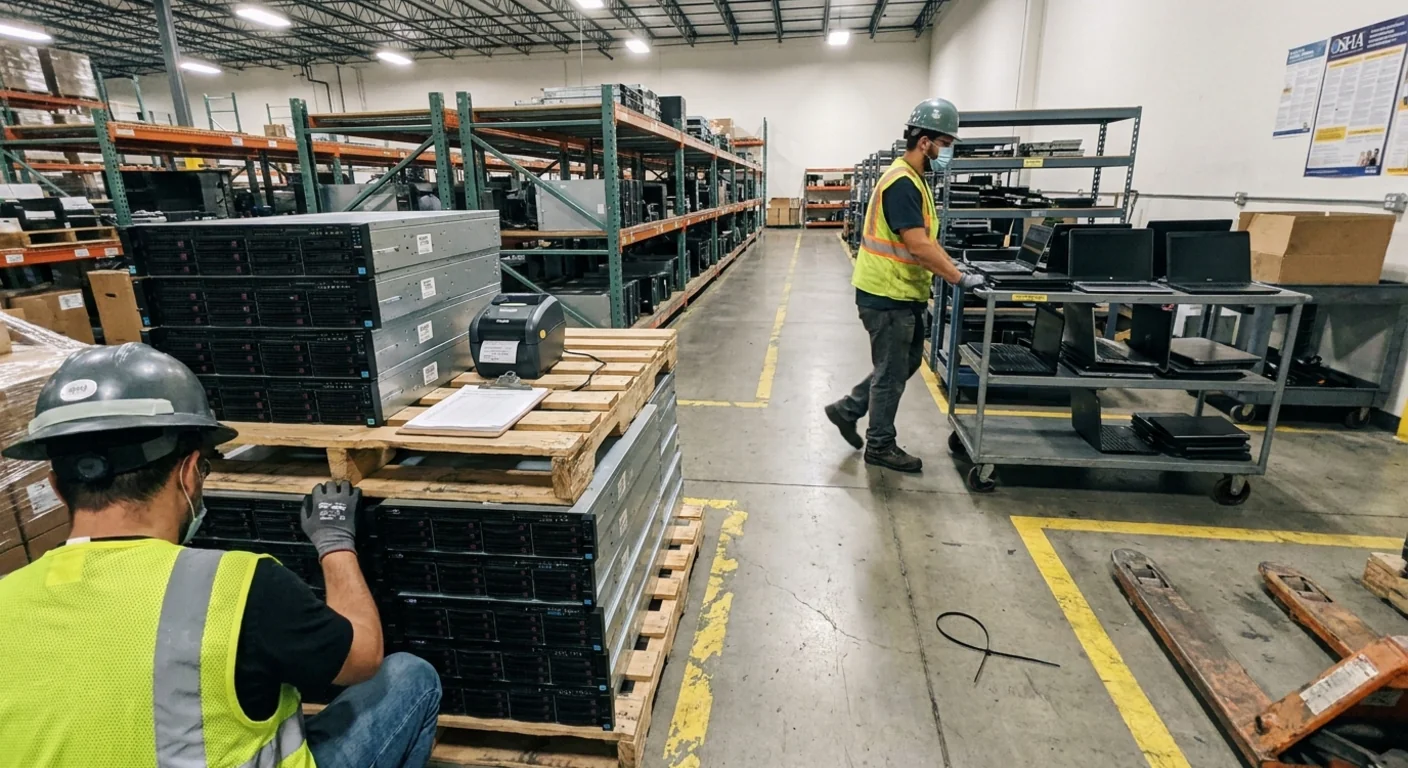
Effective ITAD begins with thorough asset inventory and tracking. When equipment arrives at our Addison, Illinois facility, each item receives detailed documentation including make, model, serial number, and asset tag information when available. This inventory process creates the foundation for chain of custody documentation that follows equipment throughout the disposition process.
Chain of custody tracking becomes particularly important when equipment contains sensitive data or when organizations must demonstrate compliance with industry regulations. Healthcare organizations must account for devices that may have contained protected health information. Financial institutions need documentation showing proper handling of equipment that accessed customer data. Educational institutions must demonstrate responsible stewardship of technology purchased with public funds.
The inventory process also enables organizations to make informed decisions about equipment disposition. By cataloging equipment condition, age, and specifications, we can identify devices suitable for refurbishment and resale versus those requiring recycling. This assessment helps organizations maximize residual value recovery while ensuring equipment that cannot be reused is processed responsibly. For Chicago-area organizations managing large technology refreshes, this systematic approach brings order to what could otherwise become an overwhelming logistical challenge.
3. Secure Data Destruction as Part of ITAD
Data destruction represents the most critical component of IT asset disposition for most organizations. Before any equipment leaves organizational control, all data storage devices must be sanitized or destroyed to prevent unauthorized data recovery. Chicago Shredder provides multiple data destruction options depending on equipment type, data sensitivity, and organizational policies. For hard drives and solid-state drives, we offer both data wiping using software that follows NIST SP 800-88 guidelines and physical destruction using our on-site hard drive crusher at our Addison facility.
Our hard drive crushing process physically destroys drive platters and components, rendering data unrecoverable through any known means. This method is particularly appropriate for drives containing highly sensitive information or when organizational policy requires physical destruction. The crushing process occurs at our facility, and organizations can witness the destruction process if desired. Following destruction, crushed drives are processed for materials recovery, with metals and other materials separated for sustainable recycling.
Whether equipment contained patient records, financial data, student information, or proprietary business intelligence, our data destruction processes are designed to be comprehensive and fully documented.
4. Refurbish Versus Recycle Decision Making
Not all end-of-life IT equipment requires immediate recycling. Many devices retain significant functional value and can be refurbished for continued use, either within secondary markets or through donation programs. The decision between refurbishment and recycling depends on multiple factors including equipment age, condition, market demand, and the presence of hazardous materials or obsolete components. Chicago Shredder evaluates each piece of equipment to determine the most appropriate disposition path.
Equipment suitable for refurbishment typically includes recent-generation computers, laptops, tablets, and mobile devices that remain functional and have market value. After secure data destruction, these devices can be tested, refurbished if necessary, and remarketed. This approach maximizes value recovery for organizations while extending equipment lifespan and reducing environmental impact. Equipment donation represents another refurbishment option, allowing organizations to support community programs while potentially qualifying for tax benefits.
Equipment requiring recycling includes older devices without resale value, broken equipment beyond economical repair, and items containing hazardous materials requiring specialized processing. This equipment enters the recycling stream where components are dismantled and materials are separated for recovery. This secure process ensures materials are handled according to secure, transparent recycling standards, with no materials knowingly disposed of in landfills. The decision between refurbishment and recycling is made with both economic value and environmental responsibility in mind.
5. More to Consider
Environmental responsibility in ITAD requires more than good intentions. It requires verified processes, well-managed facilities, and documented downstream tracking of all materials.
These requirements address the entire recycling process, from facility management and worker safety to downstream vendor verification and environmental protection. Processing includes documenting the disposition of all materials, maintaining detailed tracking systems, and verifying that downstream processors meet specific environmental and operational standards. This multi-layered approach ensures materials are handled responsibly at every stage, not just at the initial collection point.
Rather than simply collecting equipment and passing it to unknown downstream vendors, this approach requires documented verification of processing methods and destinations. This transparency supports organizational sustainability goals and provides the documentation necessary for environmental reporting and stakeholder communications.
6. Data Disposal Considerations
Different industries face different compliance requirements when disposing of IT assets. Healthcare organizations must address HIPAA requirements for protecting patient information. Financial institutions must consider GLBA and other regulations governing customer data. Educational institutions must comply with FERPA protections for student records. Government agencies face additional requirements around data security and asset accountability.
Chain of custody tracking shows equipment movement from organizational control through final disposition. Certificates of data destruction document sanitization or destruction methods and dates. This comprehensive documentation supports internal audit requirements and provides evidence for regulatory examinations.
For healthcare organizations, we ensure all devices that may have contained protected health information receive appropriate data destruction before any refurbishment or recycling activities. For financial institutions, we provide the tracking and verification necessary to meet customer data protection requirements. For educational institutions, we support responsible stewardship requirements and provide documentation for equipment purchased with public funds.
7. Chicago-Area Logistics Advantages
Location matters in ITAD services. Organizations need providers who understand local requirements, can respond quickly to service requests, and offer convenient logistics for equipment pickup and processing.
Our Chicago-area location enables responsive service for organizations throughout the region. We typically respond to service requests within one business day and can coordinate pickup schedules that minimize disruption to business operations. For organizations managing office moves, technology refreshes, or facility consolidations, local logistics support simplifies project coordination and reduces transportation costs and environmental impact associated with long-distance shipping.
The combination of local service with processing capabilities provides Chicago-area organizations with an ideal ITAD solution. This approach delivers the convenience of local service with the assurance of secure processing, all while keeping transportation distances minimal and supporting the regional economy through local business relationships.
8. Frequently Asked Questions
What types of IT equipment does Chicago Shredder accept for disposition?
We accept virtually all types of business IT equipment including computers, laptops, servers, networking equipment, mobile devices, tablets, monitors, printers, and related peripherals. Both functional equipment suitable for refurbishment and broken equipment requiring recycling are accepted. Contact us at 866-770-2650 to discuss specific equipment types or unusual items.
How does Chicago Shredder ensure data security during IT asset disposition?
All data storage devices receive secure data destruction before any refurbishment or recycling activities. We offer both software-based data wiping following NIST SP 800-88 guidelines and physical destruction using our on-site hard drive crusher at our Addison facility. All data destruction is documented with certificates detailing the method used, date of destruction, and asset information.
What happens to IT equipment after it's collected for disposition?
Equipment first receives complete asset inventory and chain of custody documentation. Data storage devices are securely destroyed, then equipment is evaluated for refurbishment potential. Functional equipment may be refurbished for resale or donation.
Which regulatory requirements may apply to this topic?
Our documentation is designed to support compliance requirements across healthcare, financial services, education, and other regulated industries.
Can organizations receive payment for equipment with residual value?
Equipment disposition options vary based on equipment type, condition, age, and market demand. Functional, recent-generation equipment may have residual value that can offset service costs or generate payment to organizations. During the asset evaluation process, we identify equipment with resale potential and discuss value recovery options with organizations.
Sustainable IT asset disposition requires more than simply discarding old equipment. Effective ITAD integrates secure data destruction, responsible materials processing, compliance documentation, and value recovery into a comprehensive program that protects both organizational interests and environmental resources. Whether your organization is managing a small equipment refresh or a large-scale technology transition, we provide the expertise, documentation, and secure processing to support your ITAD needs. Contact Chicago Shredder at 866-770-2650 or schedule a pickup to discuss how our IT asset disposition services can support your organization's technology, security, and sustainability goals.
Ready to schedule a pickup?
Call 866-770-2650 or request a quote online. Every pickup includes clear service documentation.