

When Chicago businesses face the question of hard drive destruction costs, the real question is not about price but about risk. A single data breach can result in regulatory fines, legal liability, and irreparable damage to reputation. The cost of proper hard drive destruction represents a fraction of the potential losses from exposed sensitive data. For organizations handling protected health information, financial records, or personally identifiable information, physical destruction is not optional. It is a necessary investment in security and compliance.
1. Why Physical Destruction Matters for Data Security
Software-based data wiping methods have their place, but they cannot match the security certainty of physical destruction. Even when following the DoD 5220.22-M standard or NIST SP 800-88 guidelines for data sanitization, software methods leave the physical media intact. This creates potential risk if the drive is lost, stolen, or improperly handled during the disposition process.
Physical destruction renders the platters and storage components unreadable at a mechanical level. No software recovery tool, forensic technique, or data reconstruction method can restore information from physically destroyed media. For organizations subject to regulatory requirements under HIPAA, GLBA, FACTA, or similar frameworks, this level of assurance is often necessary.
Chicago Shredder addresses this need through physical destruction methods designed to make data unrecoverable. The process creates a verifiable end-of-life event for storage media, removing uncertainty about data remnants. This approach aligns with best practices for organizations that cannot accept any residual risk of data exposure.
2. The On-Site Hard Drive Crusher at the Addison Facility
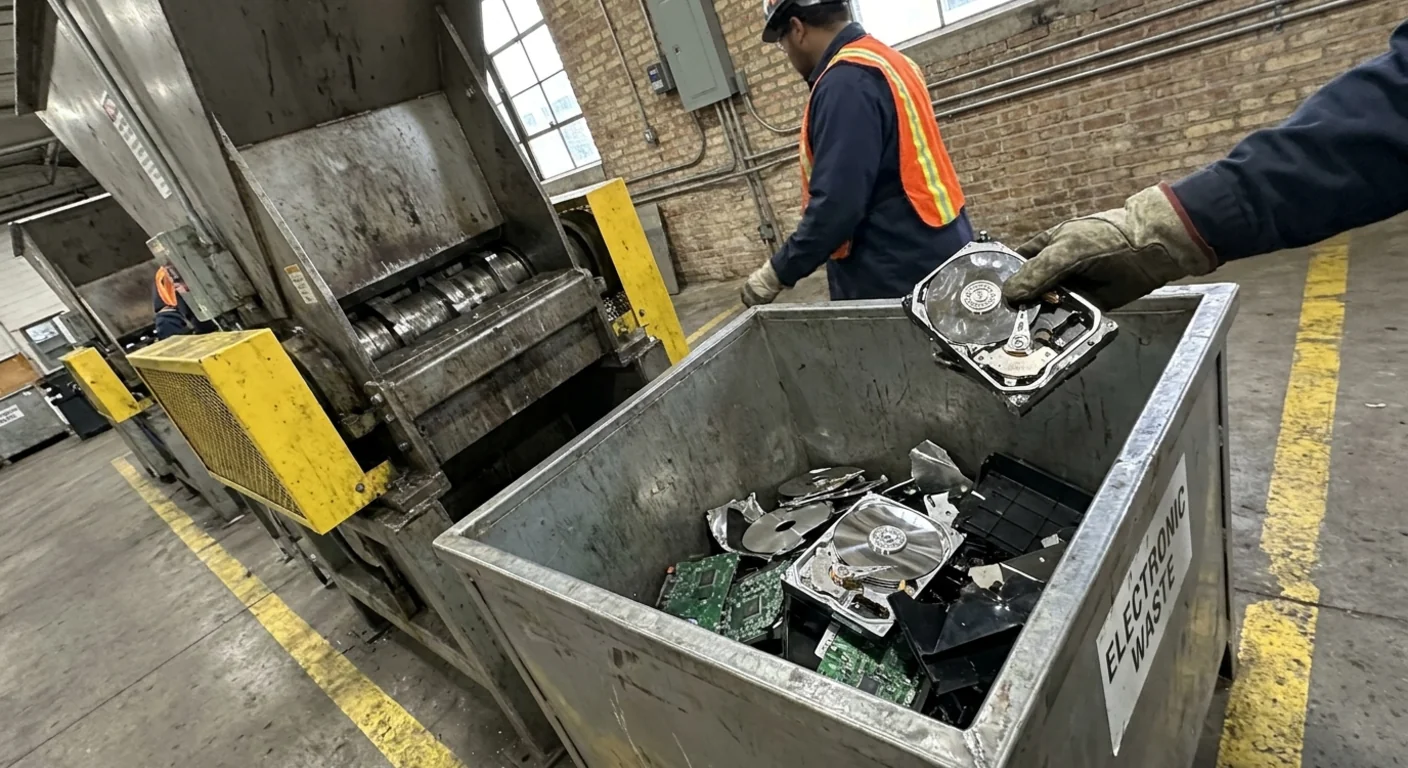
Chicago Shredder operates an on-site hard drive crusher at the Addison, Illinois facility, providing local businesses with immediate physical destruction capabilities. The crusher applies thousands of pounds of force to hard drives, bending platters and destroying the magnetic surfaces where data is stored. This mechanical process happens on-site, reducing the time media spends in transit or temporary storage.
The on-site crusher supports both scheduled destruction events and responsive service for urgent needs. This transparency helps satisfy chain-of-custody requirements that some compliance frameworks expect.
This documented framework includes requirements for documented processes, environmental responsibility, and proper handling of end-of-life electronics. The combination of physical security and secure processing provides a comprehensive approach to IT asset disposition.
3. Shredding vs. Punching vs. Wiping: Understanding the Methods
Different destruction methods serve different security requirements and budget considerations. Hard drive shredding uses industrial equipment to reduce drives to small particles, typically less than one inch. This method provides the highest level of physical destruction and is appropriate for highly sensitive data or regulatory environments with strict requirements.
Hard drive punching or crushing creates permanent deformation of the platters without reducing the drive to particles. This method is faster and often more cost-effective while still rendering data designed to be unrecoverable through normal means. The crusher at the Addison facility uses this approach, creating visible damage that makes the drive mechanically unreadable.
Data wiping uses software to overwrite storage media multiple times according to the DoD 5220.22-M standard or NIST SP 800-88 guidelines. This approach allows for potential drive reuse in low-security applications but requires functional hardware and does not provide the same assurance level as physical destruction. For drives containing protected data, physical methods remain the preferred approach for most compliance frameworks.
Chicago Shredder can help organizations determine which method aligns with their specific security requirements and budget constraints. The choice often depends on regulatory obligations, internal policies, and the sensitivity of the data involved.
4. Alignment with Data Sanitization Standards and Guidelines
The DoD 5220.22-M standard outlines software-based overwriting procedures originally developed for Department of Defense use. While widely referenced, this standard applies primarily to functional drives being sanitized for reuse or disposal through non-destructive means. Physical destruction methods go beyond this standard by eliminating the possibility of any data recovery.
NIST SP 800-88 guidelines provide a framework for media sanitization decisions, including clear, purge, and destroy categories. Physical destruction falls under the destroy category, recommended when media will not be reused and when the highest level of security is required. These guidelines recognize that physical destruction provides assurance that other methods cannot match.
Chicago Shredder's physical destruction processes are designed to support compliance requirements under various frameworks. Organizations subject to HIPAA requirements for protected health information, GLBA requirements for financial data, or FACTA requirements for consumer information can use documented destruction as evidence of proper data disposal. The service is designed to help organizations demonstrate due diligence in protecting sensitive information throughout the IT asset lifecycle.
5. Certificate of Destruction and Chain of Custody Documentation
Every hard drive destruction service through Chicago Shredder includes a certificate of destruction. This document provides a formal record of the destruction event, typically including the date, method, and general description of media destroyed. The certificate serves as evidence for compliance audits, internal controls, and regulatory requirements.
Chain of custody documentation tracks media from the point of collection through final destruction. This documentation creates an auditable record showing who handled the media, when transfers occurred, and where the media was located at each step.
The certificate of destruction and chain of custody records become part of an organization's compliance documentation. During regulatory audits or internal reviews, these records demonstrate that proper procedures were followed for end-of-life data disposal.
6. Compliance Support for HIPAA, GLBA, and FACTA Requirements
Healthcare organizations subject to HIPAA requirements must ensure that protected health information on electronic media is properly disposed of when no longer needed. The HIPAA Security Rule requires covered entities to implement policies for final disposition of electronic protected health information and the hardware that stored it. Physical destruction provides a method designed to support these requirements.
Financial institutions governed by GLBA must protect customer information throughout its lifecycle, including proper disposal. The GLBA Safeguards Rule and the FTC's Disposal Rule establish expectations for secure destruction of consumer information. Physical destruction of hard drives containing financial data helps organizations demonstrate compliance with these disposal obligations.
FACTA requirements extend to any business that maintains consumer report information. The FACTA Disposal Rule requires proper disposal of information derived from consumer reports to protect against unauthorized access. Hard drive destruction services designed to support compliance requirements help businesses of all sizes meet these obligations without maintaining specialized destruction equipment internally.
7. Why Chicago Businesses Choose Chicago Shredder
The Addison facility location provides convenient access for Chicago-area organizations, reducing logistics complexity and transportation costs. Local service means faster response times and the ability to schedule destruction events around business needs rather than distant facility availability.
No materials are knowingly disposed of in landfills. Metal and components from destroyed drives are processed for commodity recovery, supporting circular economy principles while maintaining security.
Transparent pricing without hidden fees helps organizations budget accurately for IT asset disposition. Whether handling a one-time project or establishing ongoing destruction services, businesses can understand costs upfront. The investment in professional hard drive destruction is modest compared to the potential costs of a data breach, making it a straightforward risk management decision.
Chicago Shredder serves organizations across industries, from healthcare systems and financial institutions to professional services firms and educational institutions. The service scales from single-drive destruction to large-scale decommissioning projects, providing flexibility for organizations at different stages of IT asset lifecycle management.
8. Frequently Asked Questions
How much does hard drive destruction typically cost in Chicago?
Pricing varies based on volume, service level, and specific requirements. Factors include the number of drives, on-site versus facility-based destruction, and documentation needs. Chicago Shredder provides transparent quotes based on specific project details, and most organizations find the cost modest compared to the risk of data exposure.
Is physical destruction required for compliance, or is data wiping sufficient?
Requirements depend on the specific regulatory framework and the sensitivity of data involved. While software wiping following NIST SP 800-88 guidelines may be acceptable in some contexts, physical destruction provides higher assurance for sensitive data. Healthcare, financial, and legal organizations often choose physical destruction to eliminate any residual risk of data recovery.
What happens to hard drives after they are crushed or destroyed?
Metal components and materials are recovered for commodity recycling. No materials are knowingly disposed of in landfills, supporting environmental responsibility while maintaining data security throughout the process.
Can I witness the destruction of my organization's hard drives?
Yes, witnessing destruction can be arranged at the Addison facility for organizations with specific compliance or internal policy requirements. This option provides additional assurance and documentation for sensitive disposal events. Contact Chicago Shredder at 866-770-2650 to discuss witness requirements for your project.
How quickly can Chicago Shredder respond to urgent destruction needs?
Chicago Shredder typically responds within one business day to service requests. Actual destruction timing depends on volume and scheduling, but the local Addison facility enables faster response than distant processing centers. For urgent needs related to security incidents or time-sensitive compliance requirements, expedited service can often be arranged.
What documentation will I receive after hard drive destruction?
Every destruction service includes a certificate of destruction documenting the date, method, and general description of media destroyed. Chain of custody documentation tracks media from collection through destruction.
The cost of hard drive destruction in Chicago represents a necessary investment in data security and regulatory compliance. When measured against the potential costs of a data breach, including regulatory fines, legal liability, and reputational damage, professional destruction services provide clear value. Contact Chicago Shredder at 866-770-2650 or schedule a pickup to discuss your hard drive destruction requirements.
Ready to schedule a pickup?
Call 866-770-2650 or request a quote online. Every pickup includes clear service documentation.