

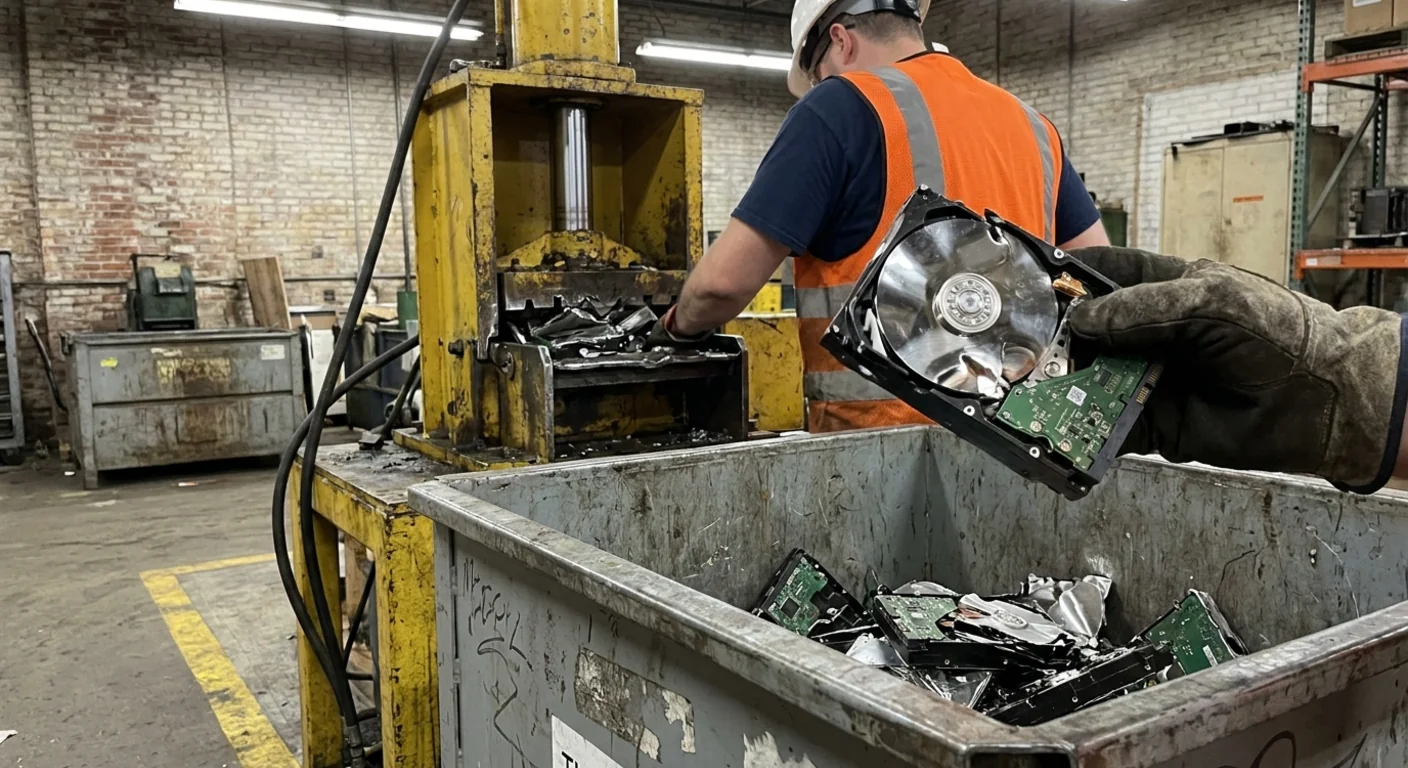
Medical practices across Chicago handle sensitive patient information daily, from electronic health records to billing data. When hard drives reach end-of-life, simply deleting files or reformatting drives leaves data vulnerable to recovery. Physical destruction provides the highest level of security for retired storage media. For healthcare organizations managing Protected Health Information (PHI), proper hard drive destruction is not just a best practice but a critical component of data security designed to support HIPAA compliance requirements.
1. Why Physical Destruction Matters for Medical Data
Software-based data deletion methods, including standard formatting and file deletion, do not permanently remove data from hard drives. Sophisticated recovery tools can often retrieve information from drives that appear empty. Medical practices storing years of patient records, treatment histories, insurance details, and payment information cannot afford the risk of data exposure.
Physical destruction renders drives completely unusable and data unrecoverable. Unlike software wiping methods that leave the hardware intact, physical destruction permanently damages the platters where data is magnetically stored. This approach eliminates the possibility of data reconstruction, even with advanced forensic tools.
For medical practices, the stakes are particularly high. A single data breach can result in regulatory penalties, loss of patient trust, and potential legal liability. Industry studies suggest that healthcare data breaches cost organizations an average of hundreds of dollars per compromised record. Physical destruction provides measurable risk reduction that software methods cannot match.
2. On-Site Hard Drive Crushing at the Addison Facility
Chicago Shredder operates an on-site hard drive crusher at our Addison, Illinois facility, providing mechanical destruction that physically deforms drive components beyond any possibility of data recovery. The crushing process applies thousands of pounds of force to bend platters, destroy read/write heads, and render the entire assembly non-functional.
This method offers distinct advantages for Chicago medical practices. The crushing process is quick, verifiable, and produces immediate results. Practice administrators can witness the destruction process if desired, providing additional assurance that devices are permanently destroyed. The on-site crusher allows for efficient processing of large volumes of drives from multi-location practices or healthcare systems consolidating retired equipment.
This secure process demonstrates adherence to sustainable recycling practices, ensuring that destroyed materials are handled according to environmental and data security standards. Medical practices benefit from both data security and responsible material management in a single service.
3. Destruction Methods: Shredding, Punching, and Wiping Compared
Medical practices evaluating destruction options encounter several methods, each with different security profiles. Physical shredding reduces hard drives to small particles, typically less than one inch, making data reconstruction essentially impossible. This method is ideal for practices with the highest security requirements or those managing exceptionally sensitive research data.
Hard drive punching creates multiple holes through the drive platters, damaging the magnetic surface where data resides. While less thorough than shredding, punching effectively destroys data and provides a faster, more economical option for standard medical practice needs. The method is designed to be unrecoverable using conventional data recovery techniques.
Data wiping, sometimes called sanitization, uses software to overwrite existing data multiple times. Methods aligned with the DoD 5220.22-M standard typically perform multiple overwrite passes. NIST SP 800-88 guidelines provide additional frameworks for media sanitization. However, these are software approaches that leave hardware intact and functional. For medical practices, physical destruction provides greater certainty than wiping alone, particularly when device age or condition makes complete wiping verification difficult.
4. Certificate of Destruction and Chain of Custody
Documentation proves essential when medical practices must demonstrate compliance with data protection requirements. A Certificate of Destruction provides formal documentation that specific devices were destroyed on a particular date using specified methods. This certificate serves as evidence during audits, compliance reviews, or in response to patient inquiries about data handling.
Chain of custody documentation tracks devices from the moment they leave the medical practice until final destruction. This record includes collection date, transportation details, facility receipt, and destruction completion. For practices managing PHI, this documentation demonstrates continuous control over sensitive devices, a key element in supporting HIPAA compliance requirements.
Chicago Shredder provides both certificates and chain of custody documentation as standard components of our destruction services. Medical practices receive detailed records suitable for compliance documentation, internal audits, and regulatory inquiries. These documents provide the paper trail necessary to demonstrate responsible data handling throughout the device lifecycle.
5. Supporting HIPAA, GLBA, and FACTA Compliance
HIPAA regulations require covered entities to implement safeguards protecting PHI confidentiality, including proper disposal of electronic media containing health information. The Security Rule specifically addresses device and media controls, requiring policies for final disposition of electronic PHI. Physical hard drive destruction is designed to support these compliance requirements by ensuring data designed to be unrecoverable after disposal.
Medical practices that handle payment card information or provide financing may also fall under GLBA (Gramm-Leach-Bliley Act) requirements for financial data protection. FACTA (Fair and Accurate Credit Transactions Act) mandates proper disposal of consumer information. Hard drive destruction addresses these overlapping regulatory frameworks simultaneously, providing a comprehensive solution for practices managing multiple data types.
During regulatory audits or incident investigations, certificates of destruction and chain of custody records show that the practice implemented appropriate safeguards.
6. Why Chicago Medical Practices Choose Local Destruction Services
Proximity matters when selecting a hard drive destruction provider. Shorter transportation distances reduce the time devices spend in transit, minimizing exposure windows and accelerating the destruction timeline.
Local providers offer flexibility that distant services cannot match. Chicago Shredder typically responds to inquiries within one business day, allowing practices to schedule destruction services around operational needs. Whether managing a small practice equipment refresh or a large healthcare system consolidation, local service means faster turnaround and easier coordination.
Cost considerations also favor local providers. Reduced transportation expenses, consolidated pickup schedules for multiple Chicago locations, and elimination of long-distance shipping fees make local destruction services more economical. Medical practices can schedule regular pickups, coordinate destruction with equipment replacement cycles, or arrange immediate service for urgent needs. The combination of security, compliance support, and operational convenience makes local hard drive destruction a practical choice for Chicago healthcare organizations.
7. Frequently Asked Questions
Can deleted patient files be recovered from old hard drives?
Yes, deleted files can often be recovered using specialized software, even after formatting or standard deletion. Only physical destruction ensures data is designed to be unrecoverable. For medical practices managing PHI, physical destruction provides the highest security level.
How long does the hard drive destruction process take?
The physical destruction process itself takes only minutes per drive using crushing or shredding equipment. Total service time depends on pickup scheduling, volume, and transportation to the Addison facility. Chicago Shredder typically responds to service requests within one business day.
What happens to hard drive materials after destruction?
After destruction, materials are processed through environmentally sound recycling channels.
Do medical practices need to wipe drives before destruction?
Pre-destruction wiping is not necessary when using physical destruction services. The crushing or shredding process renders data unrecoverable regardless of prior deletion attempts. Medical practices can send drives for destruction in their current state, simplifying the disposal process.
What documentation do we receive after hard drive destruction?
Chicago Shredder provides a Certificate of Destruction documenting the specific devices destroyed, destruction date, and method used. Chain of custody documentation is also available, tracking devices from collection through final destruction, supporting compliance documentation needs for HIPAA and other regulations.
Can we witness the destruction of our medical practice hard drives?
Yes, witnessing destruction at the Addison facility can often be arranged for practices requiring additional verification. This allows practice administrators to observe the physical destruction process firsthand, providing extra assurance that devices are permanently destroyed and data rendered unrecoverable.
Chicago medical practices face unique data security challenges managing years of patient information on aging hard drives. Physical destruction provides the most reliable method for ensuring PHI designed to be unrecoverable from retired storage devices. From the on-site crusher at the Addison facility to comprehensive documentation supporting HIPAA compliance requirements, Chicago Shredder delivers destruction services designed specifically for healthcare data security needs. To schedule hard drive destruction services or discuss your practice's specific needs, call 866-770-2650 or contact us to arrange a pickup.
Ready to schedule a pickup?
Call 866-770-2650 or request a quote online. Every pickup includes clear service documentation.