

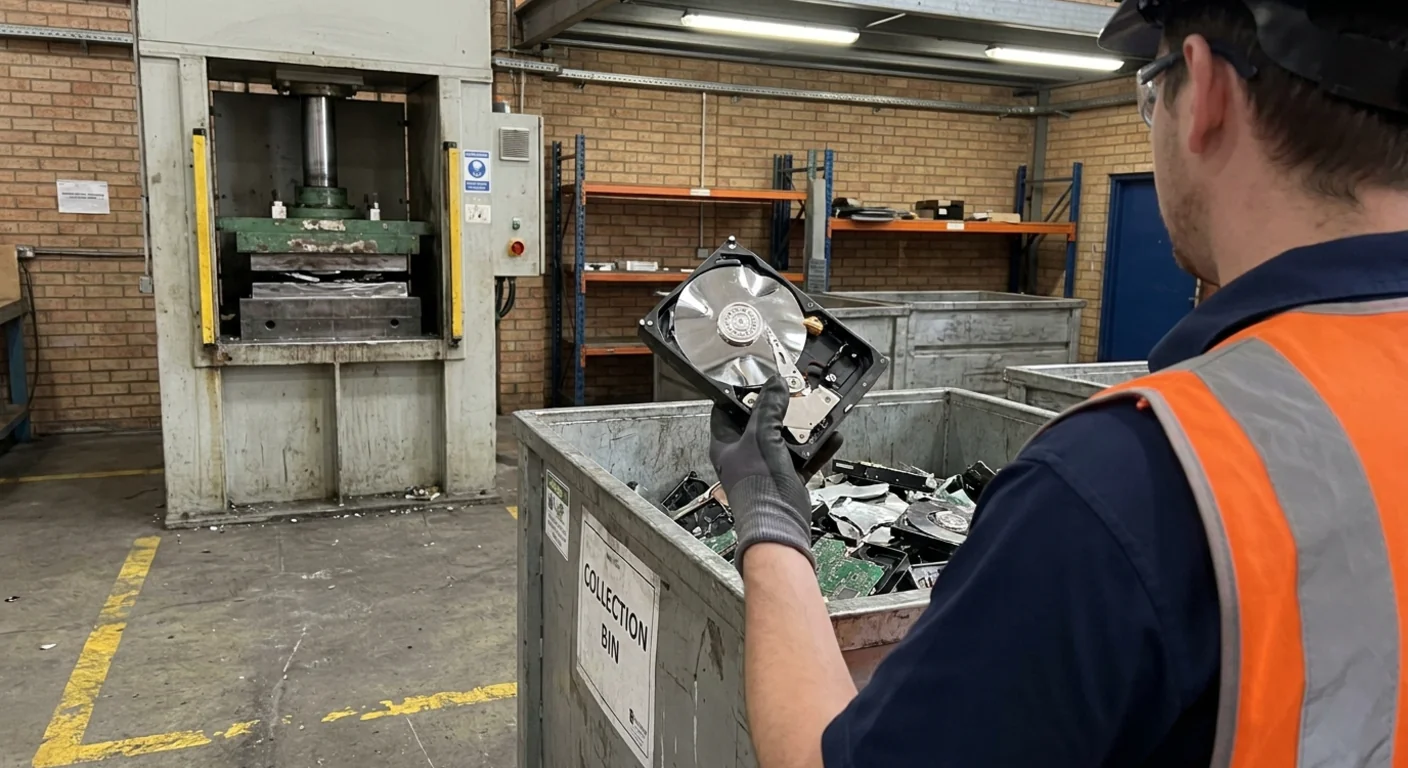
Hard drive destruction seems straightforward, but many Chicago businesses make critical errors that leave sensitive data vulnerable. From choosing inadequate methods to skipping documentation, these mistakes can result in data breaches, compliance failures, and regulatory penalties. Understanding proper hard drive destruction practices protects your organization from unnecessary risk.
1. Mistake 1: Relying Solely on Software Wiping
One of the most common mistakes is assuming software-based data wiping provides sufficient security for all disposal scenarios. While data sanitization software following NIST SP 800-88 guidelines can be effective for certain use cases, it relies on the hard drive functioning properly and the software executing completely. Damaged drives, drives with bad sectors, or interruptions during the wiping process can leave recoverable data.
Physical destruction eliminates these variables entirely. When a hard drive is physically destroyed, the platters containing data are rendered unreadable regardless of the drive's condition or functionality.
Chicago Shredder utilizes an on-site hard drive crusher at our Addison, Illinois facility. This method physically deforms the drive platters and internal components, designed to make data recovery infeasible. For businesses prioritizing maximum security, physical destruction represents the gold standard in data disposal.
The choice between wiping and destruction often depends on your specific compliance framework and risk tolerance. Many organizations implement a tiered approach, wiping drives for reuse when appropriate and physically destroying drives containing the most sensitive data or when retirement is planned.
2. Mistake 2: Using Inadequate Physical Destruction Methods
Not all physical destruction methods provide equal security. Some businesses attempt DIY approaches like drilling holes through drives or using hammers to damage casings. These methods often fail to destroy all data-bearing surfaces and can leave significant portions of platters intact and potentially recoverable with specialized equipment.
Drilling a single hole through a hard drive, for example, may damage only a small percentage of the data surface. The remaining platter area can still contain thousands of files that forensic recovery tools could extract. Similarly, simply damaging the external casing or circuit board leaves the internal platters completely intact.
Professional hard drive destruction employs industrial equipment designed specifically for this purpose. Hard drive crushers apply thousands of pounds of pressure to bend and break internal platters into unusable fragments. Shredding processes reduce drives to small particles, typically under one inch, ensuring no readable data surfaces remain.
Chicago Shredder's on-site crusher at our Addison facility provides witnessed destruction services. Clients can observe their hard drives being destroyed, ensuring chain of custody remains intact from pickup through final destruction. This level of verification is particularly important for organizations with stringent compliance or security requirements.
3. Mistake 3: Failing to Maintain Chain of Custody Documentation
Many organizations overlook the importance of documenting the entire destruction process. Chain of custody documentation tracks each hard drive from the moment it enters the disposal process until final destruction is complete.
Compliance frameworks including HIPAA, GLBA, FACTA, and others often require documented proof of data destruction. During audits or in the event of a security incident, you need to demonstrate that proper disposal procedures were followed. Missing documentation can result in compliance failures even when destruction was performed correctly.
A comprehensive chain of custody process includes several elements. Initial inventory records document each drive by serial number or asset tag. Transportation manifests track movement from your facility to the destruction location. Destruction logs record the date, time, method, and personnel involved in the destruction process.
Chicago Shredder provides certificates of destruction for all hard drive destruction services. These certificates include specific details about the drives destroyed, the destruction method used, and verification that the process aligns with the DoD 5220.22-M standard and NIST SP 800-88 guidelines.
4. Mistake 4: Delaying Hard Drive Destruction
Businesses frequently allow decommissioned hard drives to accumulate in storage rooms, closets, or warehouses. This practice creates unnecessary risk by expanding the window during which data could be compromised. The longer drives sit in unsecured or semi-secured storage, the greater the chance of theft, loss, or unauthorized access.
Accumulating drives also makes tracking more difficult. As collections grow, maintaining accurate inventories becomes challenging. Drives may be moved between locations, mixed with active equipment, or simply forgotten. When destruction finally occurs, you may be unable to account for all drives that should have been included.
Establishing a regular destruction schedule minimizes these risks. Rather than waiting for large accumulations, schedule quarterly or semi-annual pickups based on your disposal volume. This approach keeps storage requirements minimal and reduces the time sensitive data remains vulnerable.
Chicago Shredder offers flexible scheduling for hard drive pickups throughout the Chicago area. Whether you need a one-time service for a large decommissioning project or regular scheduled pickups, we can accommodate your timeline. Our service typically responds within one business day to destruction requests, allowing you to maintain security without unnecessary delays.
5. Mistake 5: Ignoring Compliance Requirements
Different industries face different regulatory requirements for data destruction. Healthcare organizations must address HIPAA regulations, financial institutions must consider GLBA and SOX requirements, and educational institutions must account for FERPA. Businesses handling consumer information face FACTA obligations. Failing to understand and implement appropriate destruction practices designed to support these compliance frameworks creates significant liability.
Some regulations require specific technical standards for data sanitization or destruction. Others mandate particular retention periods for destruction records or specific elements that must be included in destruction certificates.
Working with a destruction provider familiar with these requirements helps ensure your process aligns with applicable regulations.
Chicago Shredder's hard drive destruction services are designed to support compliance requirements across multiple regulatory frameworks. Our destruction processes align with the DoD 5220.22-M standard and NIST SP 800-88 guidelines, and our certificates of destruction include the specific details needed for compliance documentation.
6. Mistake 6: Choosing Price Over Security and Compliance
Cost considerations are legitimate, but selecting a destruction provider based solely on the lowest price can prove expensive if data is compromised or compliance failures occur. The cheapest option may cut corners on security, skip important documentation, or use inadequate destruction methods.
Evaluating destruction providers requires looking beyond price to the complete service offering. A provider charging slightly more but offering superior security and compliance support often represents better value.
Transparency is another important factor. Reputable providers clearly explain their processes, allow facility tours or witnessed destruction, and provide detailed documentation. If a provider is vague about their methods or unwilling to provide specific information about their processes, this should raise concerns.
Our on-site crusher at the Addison, Illinois facility provides physical destruction designed to render data unrecoverable. We provide detailed certificates of destruction, maintain complete chain of custody documentation, and our services are designed to support compliance with HIPAA, GLBA, FACTA, and other regulatory frameworks.
7. Why Local Chicago Businesses Choose Professional Destruction
Chicago businesses across healthcare, finance, legal, education, and government sectors rely on professional hard drive destruction to protect sensitive information and meet compliance obligations. The risks associated with improper disposal, from data breaches to regulatory penalties, far outweigh the cost of professional services.
Professional destruction provides several advantages over DIY approaches. Industrial equipment ensures complete destruction that DIY methods cannot achieve. Experienced providers understand regulatory requirements and can advise on best practices for your specific situation.
Local providers offer additional benefits for Chicago-area businesses. Proximity reduces transportation risks and allows for faster response times. Local providers understand regional business needs and can provide flexible scheduling that accommodates your operations. The ability to visit facilities or witness destruction provides additional assurance for organizations with strict security requirements.
Chicago Shredder serves businesses throughout the Chicago metropolitan area from our Addison, Illinois facility. Our on-site crusher allows for witnessed destruction when required, and our certificates of destruction provide the detailed documentation your auditors expect.
8. Frequently Asked Questions
Is physical destruction always necessary, or is data wiping sufficient?
The appropriate method depends on your compliance requirements and risk tolerance. Data wiping following NIST SP 800-88 guidelines can be effective when drives will be reused and are functioning properly. Physical destruction provides maximum security for drives being retired or containing highly sensitive data, eliminating variables associated with software-based methods.
What should a certificate of destruction include?
A comprehensive certificate should include the date of destruction, method used, description of materials destroyed (ideally including serial numbers or asset tags), verification that the process aligns with recognized standards like DoD 5220.22-M and NIST SP 800-88 guidelines, and the name and signature of the person performing or witnessing the destruction.
Can I witness the destruction of my hard drives?
Yes, Chicago Shredder offers witnessed destruction services at our Addison, Illinois facility. This allows you to observe your hard drives being physically destroyed, providing additional assurance that your specific drives were properly processed and maintaining chain of custody throughout the destruction process.
How long should I keep certificates of destruction?
Retention requirements vary by regulatory framework. HIPAA requires maintaining disposal records for six years from creation or last use. Other regulations may specify different periods. Consult with your compliance team to determine appropriate retention periods for your industry and specific obligations.
What happens to hard drives after they are destroyed?
After physical destruction, the resulting materials enter the recycling stream. This ensures that no materials are knowingly disposed of in landfills and that downstream processing meets environmental responsibility standards.
Do you provide hard drive destruction services for home users or only businesses?
Chicago Shredder primarily serves business clients including healthcare organizations, financial institutions, legal firms, educational institutions, and government entities. We typically respond within one business day to service requests from Chicago-area businesses.
Avoiding these common hard drive destruction mistakes protects your organization from data breaches, compliance failures, and regulatory penalties. From physical destruction methods designed to render data unrecoverable to comprehensive chain of custody documentation, proper hard drive disposal requires expertise and appropriate equipment. Contact us at 866-770-2650 or schedule a pickup to discuss your hard drive destruction needs.
Ready to schedule a pickup?
Call 866-770-2650 or request a quote online. Every pickup includes clear service documentation.