

Chicago businesses face multiple options, from physical destruction techniques like shredding and crushing to data sanitization methods like wiping and degaussing. Understanding these differences helps you select the most appropriate method for your specific situation and risk profile.
1. Why Physical Hard Drive Destruction Matters for Data Security
Physical destruction remains the gold standard for hard drive disposal because it creates a permanent barrier to data recovery. Unlike software-based methods that leave the physical media intact, physical destruction renders the storage platters or memory chips mechanically unusable. This approach eliminates the risk that advanced forensic techniques might recover residual data from supposedly wiped drives.
For organizations handling protected health information, financial records, or other regulated data, physical destruction offers the highest confidence level. The method aligns with the NIST SP 800-88 guidelines for media sanitization, which recognize physical destruction as appropriate for high-security scenarios. When drives contain extremely sensitive information or have reached end-of-life, physical destruction provides certainty that no data remains accessible.
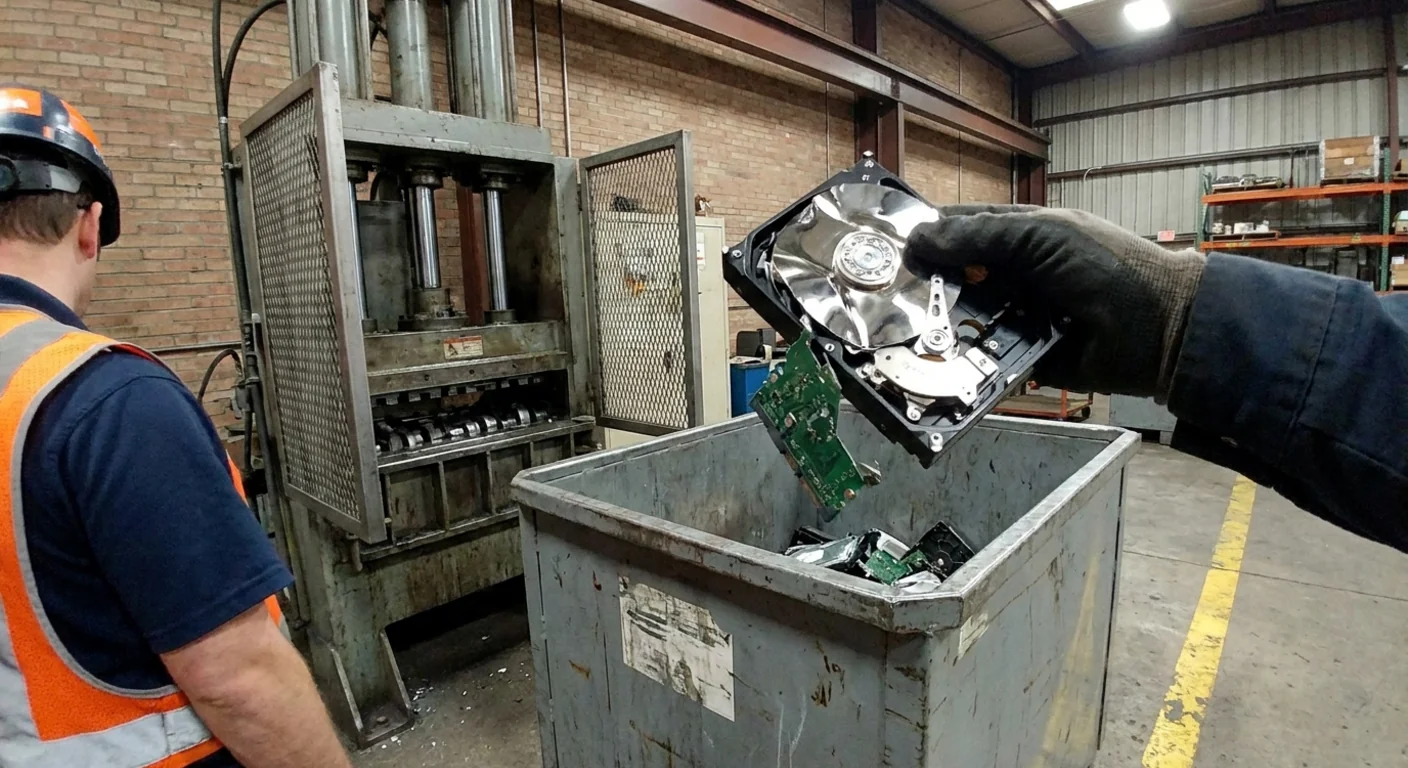
Chicago Shredder operates an on-site crusher at our Addison, Illinois facility, allowing businesses to witness the destruction process if desired. This transparency supports chain-of-custody requirements and gives clients visual confirmation that their storage media has been permanently destroyed. The crusher reduces hard drives to small fragments, ensuring that magnetic platters and electronic components are thoroughly compromised.
2. Hard Drive Shredding: Complete Physical Destruction
Industrial shredding represents the most comprehensive physical destruction method available. Specialized shredders process entire hard drives, including the metal housing, platters, circuit boards, and all internal components. The equipment reduces drives to particles typically measuring less than one inch, making data reconstruction infeasible.
The primary advantage of shredding is its thoroughness. The process destroys all components simultaneously, leaving no opportunity for partial recovery. Shredding accommodates drives of various sizes and formats without requiring disassembly, making it efficient for bulk destruction projects. The resulting material can often be recycled as scrap metal, supporting environmental responsibility alongside data security.
However, shredding requires specialized industrial equipment that makes on-site service impractical for most locations. Drives typically must be transported to a processing facility for processing. Chicago Shredder addresses this limitation by providing secure chain-of-custody procedures and certificates of destruction that document the entire process.
The cost per drive for shredding tends to be higher than some alternatives, making it most appropriate for organizations with strict security requirements or regulatory obligations. Industries handling highly sensitive data, including healthcare providers, financial institutions, and legal firms, frequently choose shredding for its unmatched assurance level.
3. Hard Drive Crushing and Punching: Targeted Physical Damage
Crushing and punching methods apply focused mechanical force to hard drives, creating permanent physical damage that prevents the platters from spinning and the read-write heads from functioning. A crusher applies hydraulic pressure to bend and break the drive housing and internal components, while a punch drives a steel spike through the drive casing and platters.
These methods offer several practical advantages. The equipment is more compact than industrial shredders, making on-site destruction feasible in many cases. Chicago Shredder's on-site crusher at our Addison facility allows clients to witness destruction without transporting drives off-site, an important consideration for organizations with strict data handling policies. The process is quick, typically taking only seconds per drive, which enables efficient processing of large quantities.
Crushing and punching effectively destroy traditional spinning hard drives by rendering the magnetic platters unreadable. The physical deformation prevents normal drive operation and makes platter recovery extremely difficult. These methods align with the DoD 5220.22-M standard for physical destruction when properly executed, creating damage patterns designed to be unrecoverable through conventional means.
The limitation of these approaches lies in their coverage. While crushing and punching create substantial damage, they may not completely destroy every fragment of the storage media. For organizations requiring absolute certainty, or when dealing with solid-state drives where data is distributed across multiple memory chips, shredding may be preferable. However, for most business applications, properly executed crushing provides an excellent balance between security, cost, and convenience.
4. Degaussing: Magnetic Field Neutralization
Degaussing uses powerful magnetic fields to scramble the magnetic domains on hard drive platters, effectively erasing all stored data. Industrial degaussers generate magnetic fields many times stronger than those used during normal drive operation, randomizing the magnetic patterns that encode information.
For traditional magnetic hard drives, degaussing offers the advantage of complete data sanitization without physical destruction of the hardware. This can be valuable when the drive housing or components have reuse or resale value. The process is relatively quick and leaves no residual data that software tools could recover. Degaussing aligns with NIST SP 800-88 guidelines as an acceptable purge method for magnetic media.
However, degaussing has significant limitations in modern environments. The method only works on magnetic storage media, making it completely ineffective for solid-state drives, which store data electronically rather than magnetically. Additionally, degaussing renders the drive permanently inoperable, preventing any future use even though the physical device remains intact.
Degaussed drives should still undergo physical destruction in most cases. While the magnetic data is neutralized, the intact drive housing creates potential liability concerns if it enters the secondary market with your organization's asset tags still attached. Combining degaussing with subsequent crushing or shredding provides both data sanitization and physical destruction, addressing multiple security dimensions. Chicago businesses typically find that physical destruction alone offers a more straightforward and cost-effective approach for most hard drive disposal scenarios.
5. Data Wiping: Software-Based Sanitization
Software wiping, also called data sanitization or secure erasure, uses specialized programs to overwrite all storage sectors with random data patterns. Multiple overwrite passes help ensure that no recoverable data remains. This method keeps the drive physically intact and potentially functional for reuse or resale.
The primary advantage of data wiping is economic. Functional drives retain value after sanitization, allowing organizations to redeploy them internally or sell them in secondary markets. This can offset IT equipment refresh costs while supporting sustainability goals.
Data wiping aligns with the DoD 5220.22-M standard when performed correctly, typically using a minimum of three overwrite passes. The NIST SP 800-88 guidelines also recognize software-based purging as acceptable for certain security levels and media types. For organizations with active asset recovery programs or environmental commitments to extend equipment lifecycles, wiping offers a viable option.
However, software wiping presents several significant limitations. The drive must be functional for wiping to work, which excludes failed or damaged drives from this method. Solid-state drives require specialized sanitization commands, as traditional overwriting may not address data stored in reserved areas or wear-leveling algorithms. Most importantly, wiping relies on trust that the software executed properly and completely, without hardware failures or firmware-level data persistence.
For these reasons, many Chicago organizations reserve wiping for drives being redeployed internally while choosing physical destruction for drives leaving their control. This hybrid approach balances asset recovery with security assurance.
6. Compliance Considerations and Certificate of Destruction
Healthcare organizations must address HIPAA requirements for protecting electronic protected health information. Financial institutions navigate GLBA provisions for safeguarding customer data. Businesses handling consumer credit information must consider FACTA disposal rules.
While no single destruction method is universally mandated, regulators generally expect organizations to implement reasonable safeguards appropriate to the sensitivity of the data involved. Physical destruction methods like shredding and crushing are designed to support compliance requirements across multiple frameworks because they provide high assurance that data designed to be unrecoverable. Documentation becomes equally important, demonstrating that your organization followed deliberate processes with appropriate controls.
Chicago Shredder provides certificates of destruction for all hard drive disposal services, documenting the date, method, and quantity of media destroyed. These certificates serve as essential compliance evidence, particularly during audits or investigations. The documentation includes serial numbers when provided, creating a complete chain of custody from your facility through final destruction.
This integrated approach addresses both information protection and responsible electronics recycling, helping Chicago businesses meet multiple regulatory obligations through a single vendor relationship.
7. Why Chicago Businesses Choose Chicago Shredder for Hard Drive Destruction
Local businesses select Chicago Shredder because we understand the specific challenges facing Illinois organizations. Our Addison facility provides convenient access for companies throughout the Chicago metropolitan area, minimizing transportation time and costs. The on-site crusher allows for witnessed destruction when your policies or compliance requirements make visual confirmation valuable.
We offer flexible service options tailored to different business needs. One-time purge projects for office closures or equipment refreshes receive the same attention as ongoing scheduled pickup programs for organizations with continuous disposal needs. Our team typically responds to inquiries within one business day, providing quotes and scheduling information promptly so you can maintain project timelines.
The combination of local presence and processing capabilities sets Chicago Shredder apart.
Our approach emphasizes transparency throughout the process. From initial consultation through certificate of destruction delivery, you receive clear communication about how your equipment is handled, transported, and processed. For organizations new to formal IT asset disposal programs, we can provide guidance on developing policies that balance security requirements, budget constraints, and environmental responsibilities.
8. Frequently Asked Questions
Which hard drive destruction method is most secure?
Industrial shredding provides the highest security level by reducing drives to small particles, making data reconstruction infeasible. For most business applications, crushing offers an excellent balance between security assurance and cost-effectiveness, creating permanent damage designed to be unrecoverable through conventional means.
Can solid-state drives be destroyed the same way as traditional hard drives?
Physical destruction methods like shredding and crushing work effectively for both SSDs and traditional hard drives. However, degaussing only affects magnetic media and has no effect on solid-state drives. Data wiping requires specialized commands for SSDs and may not address all memory locations, making physical destruction the preferred option for most organizations.
How do I know my hard drives were actually destroyed?
Chicago Shredder provides certificates of destruction documenting the date, method, and quantity of drives processed. Clients can witness destruction at our Addison facility when desired, providing visual confirmation.
What happens to hard drive materials after destruction?
After physical destruction, the resulting materials are processed for recycling when possible. Metal components, circuit boards, and other materials are separated and directed to appropriate recycling streams, ensuring that no materials are knowingly disposed of in landfills.
How much does hard drive destruction cost in Chicago?
Costs vary based on the destruction method, drive quantity, and service requirements. Crushing typically offers lower per-unit costs than shredding, while data wiping may be most economical when drives have resale value. Chicago Shredder provides customized quotes based on your specific needs, balancing security requirements with budget considerations.
Do I need to remove hard drives from computers before destruction?
While hard drive destruction services focus on the drives themselves, Chicago Shredder also handles complete computer and server disposal. We can remove drives from equipment at our facility or provide guidance for on-site removal if you prefer. This flexibility accommodates different organizational preferences and internal policies around equipment handling.
Selecting the right hard drive destruction method depends on your specific security requirements, compliance obligations, and budget parameters. Physical destruction methods like shredding and crushing provide high assurance appropriate for sensitive data, while software wiping may suit drives being redeployed internally. Chicago Shredder combines convenient Addison-area location with processing capabilities, transparent chain-of-custody procedures, and comprehensive certificates of destruction. Contact Chicago Shredder at 866-770-2650 or schedule a pickup to discuss your hard drive destruction needs.
Ready to schedule a pickup?
Call 866-770-2650 or request a quote online. Every pickup includes clear service documentation.