

When businesses retire old computers and servers, many assume that simply deleting files or reformatting drives provides adequate protection. This misconception creates serious vulnerabilities. Data recovery experts can retrieve information from drives that appear wiped, exposing sensitive customer records, financial data, and proprietary information. For Chicago organizations handling protected data under HIPAA, GLBA, or FACTA, the stakes are even higher. Physical destruction represents the only truly reliable method to render data unrecoverable, and understanding the specific risks of inadequate hard drive disposal is essential for protecting your business and your clients.
1. Why Deletion and Reformatting Are Not Enough
When you delete a file or reformat a hard drive, the operating system removes the reference to that data, but the actual information remains on the disk platters until new data overwrites it. This creates a window of vulnerability that data recovery specialists can exploit using readily available forensic tools.
Industry studies suggest that a significant percentage of used drives sold on secondary markets contain recoverable data, including personal health information, banking credentials, and business records. Even drives that have been through basic wiping procedures may retain fragments of sensitive information in bad sectors or hidden partitions that standard erasure software cannot reach.
For organizations in Chicago's healthcare, financial services, and legal sectors, this represents an unacceptable risk. A single improperly disposed drive containing protected information could trigger regulatory investigations, civil penalties, and reputational damage that far exceeds the cost of proper destruction.
2. Physical Destruction: The Gold Standard for Data Security
Physical destruction eliminates the possibility of data recovery by rendering the storage media itself unusable. This approach provides the highest level of security because it addresses the fundamental physical structure where data resides, rather than relying on software processes that may leave recoverable information behind.
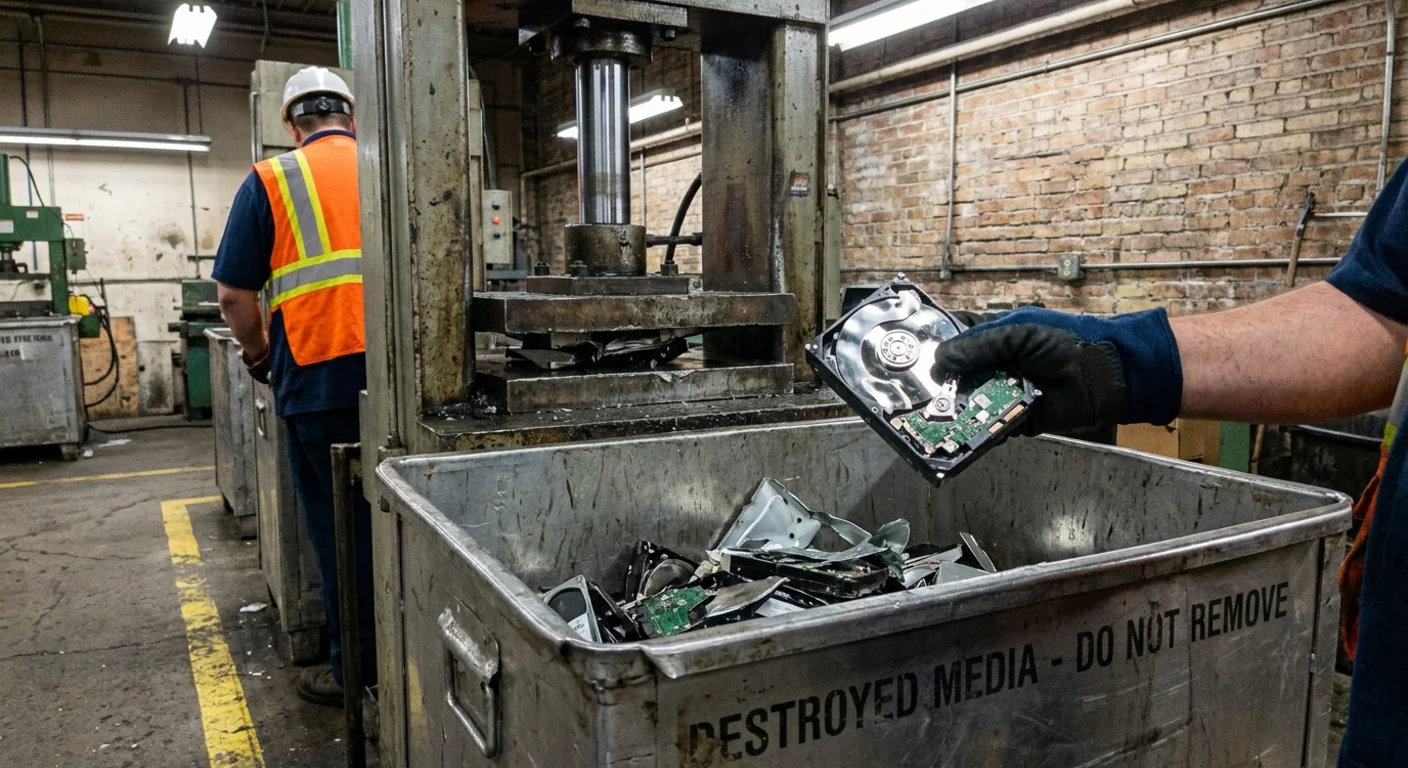
Chicago Shredder operates an on-site hard drive crusher at our Addison, IL facility, designed to physically deform drive platters beyond any possibility of reconstruction. This industrial-grade equipment applies thousands of pounds of pressure to bend and break the internal components, ensuring that magnetic patterns containing your data become permanently unreadable.
The process creates a clear, verifiable endpoint for data security. Unlike software-based methods that require trust in the erasure process, physical destruction provides visible evidence that the drive can no longer function as a storage device. This tangible proof becomes especially important when documenting compliance efforts for regulatory audits.
3. Understanding Destruction Methods: Shredding, Crushing, and Punching
Different physical destruction methods offer varying levels of security and efficiency. Shredding reduces hard drives to small particles, typically less than two inches, making reassembly impossible. This method provides the highest security level but requires specialized equipment and generates material that requires careful handling during recycling.
Crushing applies hydraulic pressure to bend the drive chassis and platters, creating permanent deformation that destroys the magnetic surfaces where data is stored. The on-site crusher at Chicago Shredder's Addison facility uses this approach, providing immediate, verifiable destruction without transporting drives off-site. This method aligns with both DoD 5220.22-M standard and NIST SP 800-88 guidelines for physical media sanitization.
Punching drives a hardened steel spike through the platters, creating holes that interrupt data patterns. While faster than shredding, this method may leave portions of platters intact, potentially allowing partial data recovery in some cases. For organizations handling highly sensitive information, crushing or shredding provides more comprehensive protection.
The choice among methods depends on your security requirements, volume of drives, and compliance obligations. Chicago businesses working with protected health information or financial records typically opt for crushing or shredding to ensure complete data destruction.
4. Alignment with DoD and NIST Standards
The Department of Defense developed the DoD 5220.22-M standard to provide clear guidance for sanitizing magnetic media. While this document primarily addresses software-based overwriting procedures, it acknowledges that physical destruction represents the most reliable method for rendering data unrecoverable, particularly for drives that may contain classified or highly sensitive information.
NIST SP 800-88 guidelines provide a comprehensive framework for media sanitization, categorizing methods by effectiveness and appropriate use cases. These guidelines recognize physical destruction as the only method that provides absolute assurance of data elimination, especially for damaged drives, drives with unknown histories, or situations where regulatory requirements demand the highest level of security.
Chicago Shredder's destruction processes are designed to support compliance requirements under these standards.
For Chicago organizations subject to regulatory oversight, aligning destruction practices with recognized standards provides a defensible foundation for compliance documentation. While neither DoD 5220.22-M nor NIST SP 800-88 represent certifications, following their guidance demonstrates a commitment to industry best practices.
5. Certificates of Destruction and Chain of Custody Documentation
Proper documentation transforms hard drive destruction from a disposal task into a verifiable compliance activity.
Chicago Shredder provides detailed certificates documenting the destruction process, including serial numbers when available, destruction date, method used, and facility location. This documentation becomes critical during HIPAA audits, GLBA examinations, or legal discovery processes where organizations must demonstrate proper handling of sensitive information.
Chain of custody tracking follows drives from collection through final destruction, documenting each transfer point and preventing unauthorized access during transport. For Chicago businesses handling protected data, maintaining an unbroken chain of custody ensures that drives remain secure throughout the entire disposal process, not just at the final destruction point.
This documentation serves multiple purposes: it satisfies regulatory record-keeping requirements, provides evidence of due diligence in breach investigations, and creates accountability for organizations entrusted with sensitive information. Maintaining these records for the appropriate retention period protects against future compliance questions.
6. Supporting HIPAA, GLBA, and FACTA Compliance in Chicago
Healthcare organizations in Chicago face strict HIPAA requirements for protecting electronic protected health information throughout its lifecycle, including disposal. The Security Rule specifically requires implementation of policies and procedures to address final disposition of electronic media, and the Breach Notification Rule imposes significant penalties when improper disposal leads to unauthorized disclosure.
Financial institutions must comply with GLBA Safeguards Rule provisions requiring secure disposal of customer information. Similarly, FACTA disposal rules apply to any business handling consumer reports or information derived from them. These regulations create legal obligations that extend beyond general data security best practices.
For Chicago businesses in regulated industries, working with a local provider who understands these compliance frameworks reduces the administrative burden of vendor management while ensuring that destruction practices meet regulatory expectations.
7. Why Chicago Businesses Choose Local Hard Drive Destruction
Geographic proximity provides tangible advantages when managing sensitive data disposal. Chicago Shredder's Addison, IL location allows businesses throughout the metro area to schedule convenient pickups without extended transport times that increase security risks and chain of custody complexity.
Local service providers offer greater transparency and accountability than distant facilities. Businesses can visit the destruction site, observe processes, and establish direct relationships with the team handling their sensitive materials. This visibility becomes particularly important for organizations with internal compliance requirements or board-level governance mandates.
Responsiveness represents another critical factor. Chicago Shredder typically responds to inquiries within one business day, allowing businesses to address disposal needs quickly when retiring equipment, closing facilities, or responding to security incidents. This accessibility supports the just-in-time destruction scheduling that many organizations require.
Working with a provider embedded in the Chicago business community also creates alignment around local regulatory environments and industry practices.
8. Frequently Asked Questions
Can data really be recovered from a formatted hard drive?
Yes, formatting only removes file system references, not the actual data stored on magnetic platters. Forensic recovery tools can often retrieve substantial information from formatted drives until new data overwrites the original locations. This is why physical destruction provides superior security compared to software-based methods.
How does the on-site crusher at Chicago Shredder work?
Our Addison, IL facility houses an industrial crusher that applies thousands of pounds of hydraulic pressure to permanently deform hard drive platters and internal components. This physical destruction renders the magnetic surfaces unreadable and makes data recovery designed to be unrecoverable, providing immediate, verifiable sanitization.
What documentation will I receive after hard drive destruction?
Chicago Shredder provides certificates of destruction documenting the date, method, and location of destruction, along with serial numbers when available. This documentation supports compliance requirements under HIPAA, GLBA, FACTA, and other regulations requiring secure disposal records.
Do I need to remove hard drives from computers before pickup?
No, Chicago Shredder can handle complete systems. Our technicians can remove drives on-site or accept entire computers for processing.
How long should I keep certificates of destruction?
Retention requirements vary by industry and regulation. HIPAA requires retaining disposal documentation for six years from creation or last effective date. GLBA and other financial regulations may impose different timeframes. Consult with your compliance officer to determine appropriate retention periods for your organization.
Is crushing as secure as shredding for hard drive destruction?
Both methods provide high security when performed correctly. Crushing deforms platters and destroys magnetic surfaces, while shredding reduces drives to small particles. For most business applications, crushing provides adequate security and aligns with DoD 5220.22-M standard and NIST SP 800-88 guidelines for physical destruction. Organizations with extremely high security requirements may prefer shredding.
The risks of improper hard drive disposal extend far beyond data security concerns. Chicago businesses face regulatory penalties, legal liability, and reputational damage when sensitive information escapes through inadequate destruction practices. Physical destruction at Chicago Shredder's Addison, IL facility provides verifiable, compliant sanitization designed to support HIPAA, GLBA, and FACTA requirements. Our on-site crusher delivers immediate destruction with comprehensive documentation, eliminating the vulnerabilities inherent in software-based wiping or simple deletion. If your organization needs reliable hard drive destruction with proper chain of custody tracking and certificates of destruction, call Chicago Shredder at 866-770-2650 or schedule a pickup today. Protecting your data requires more than good intentions, it requires proven processes and local accountability.
Ready to schedule a pickup?
Call 866-770-2650 or request a quote online. Every pickup includes clear service documentation.